


Naples is a city of strong personalities, and nowhere is that more obvious than in its neighborhoods. If you are torn between staying up in leafy Vomero or down by the water in stylish Chiaia, you are really choosing between two different versions of the city. Both districts are safe by Naples standards, well connected and packed with cafes and boutiques, yet they feel very different on the ground. This guide breaks down those differences with concrete examples so you can decide which area fits your travel style better.
Get the latest updates straight to your inbox!
Getting Your Bearings: Hilltop Vomero vs Seafront Chiaia
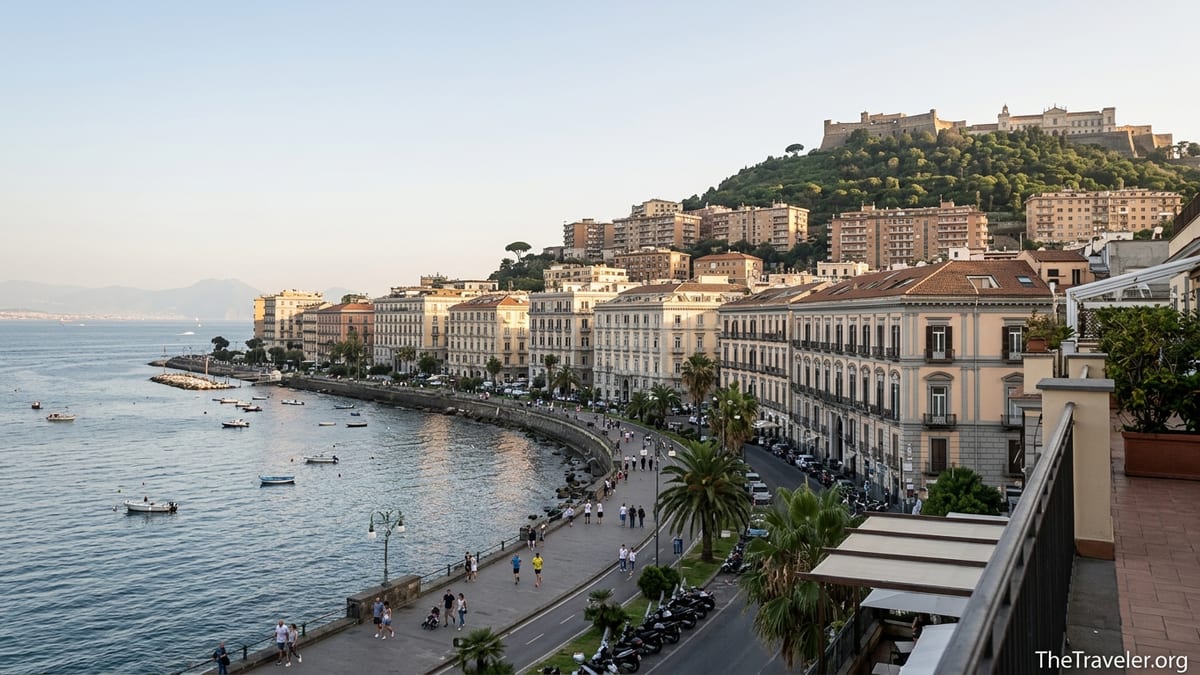
Vomero sits on a hill about 150 meters above sea level, looking out over the Bay of Naples and Mount Vesuvius. It feels almost like a separate town perched above the chaos below, with wide avenues such as Via Scarlatti and Via Luca Giordano, tree shade and plenty of local families pushing strollers in the evening. Chiaia stretches along the waterfront between Piazza Vittoria and Mergellina, a ribbon of elegant streets and 19th century palaces facing the bay. Where Vomero feels breezy and residential, Chiaia feels polished and urban, with the sea practically at your doorstep.
For most visitors, Chiaia means being able to stroll out of your apartment and be on the seafront promenade in a couple of minutes, watching locals jog along Via Caracciolo at sunset with Capri and Vesuvius on the horizon. Vomero, by contrast, offers panoramic terraces from above, such as the viewpoints near Castel Sant’Elmo and the Certosa di San Martino, where you look down over the city, the port and the entire coastline. Both give you classic Naples views, but from very different angles.
Orientation also matters for sightseeing. From Chiaia you can walk to Piazza del Plebiscito, the Royal Palace and the San Carlo opera house in around 10 to 15 minutes. From Vomero you reach the historic center by funicular or Metro Line 1 in roughly the same time, but you will not walk it; the hill is steep and the historic staircases like the Pedamentina or the Petraio are scenic but not something you want to hike every day with luggage. If you like to step outside and already be close to the royal waterfront, Chiaia has the edge. If you prefer to retreat above it all at night, Vomero is more appealing.
Atmosphere & Vibe: Elegant Waterfront vs Relaxed Hilltop
Chiaia is often described as Naples at its most refined. Along Via dei Mille, Via Chiaia and the streets around Piazza dei Martiri you will find designer boutiques, sleek wine bars and patisseries with immaculate glass counters. On a Friday night, young professionals gather for aperitivo on streets like Vicoletto Belledonne or around Piazza San Pasquale, sipping spritzes at outdoor tables until late. You will see more high heels, tailored jackets and small dogs here than almost anywhere else in the city.
Vomero’s mood is more neighborhood than showcase. Its pedestrian streets fill with Neapolitan families rather than tourists, and much of the nightlife revolves around casual pizzerias, gelato stands and local bars where people stand at the counter for a quick espresso. Piazza Vanvitelli, effectively the main square, is packed with teenagers in the afternoon and couples strolling after dinner. You are more likely to see school kids with backpacks and grandparents on benches than luxury shopping bags, although there are plenty of mid-range Italian brands and chain stores.
If you picture Naples as gritty and loud, both neighborhoods will surprise you. Chiaia can feel more cosmopolitan, especially around the seafront where outdoor terraces look out on yachts moored in the marina. Vomero feels more “everyday Italian city,” somewhere many locals aspire to live because it balances lively streets with good services, schools and parks like Villa Floridiana. Travelers who enjoy blending into local life, grabbing a coffee in a bar where the barista knows everyone’s name, often feel more at home in Vomero.
Budget, Hotels & Apartments: What You Get for Your Money
In both Vomero and Chiaia, you will mostly be choosing between small hotels, boutique guesthouses and short term apartments rather than large international chains. Prices fluctuate with season, but as a rough guide, in 2025 and early 2026 many mid-range rooms in either district run around 100 to 180 euro per night for a double, with simpler guesthouses starting closer to 80 to 100 euro. Chiaia tends to run slightly higher on average, especially for places right near the waterfront or close to Piazza dei Martiri.
In Chiaia, a one bedroom apartment with a balcony near Via Caracciolo or Riviera di Chiaia might cost noticeably more than a similar place a few blocks inland, because people are paying for the sea view and the ability to walk everywhere on the flat. You are also paying to be in what is widely considered one of the wealthiest districts in Naples, where rents are high and many buildings house long term residents with substantial means. For travelers, that translates into fewer budget guesthouses and more high quality apartments and boutique hotels.
Vomero offers good value if you do not mind using public transport every day. Because it is primarily residential, you will find more options that cater to locals as much as tourists: bed and breakfasts on quieter side streets, family run guesthouses and apartments aimed at students or professionals that happen to rent short term in the summer. A couple could easily find a comfortable apartment near Piazza Vanvitelli or along Via Luca Giordano that costs a bit less than an equivalent place down in Chiaia. On the flip side, if you specifically want a sea view and a glamorous address, no discount in Vomero will compensate for not being by the water.
For shoestring travelers, neither Chiaia nor Vomero are the cheapest parts of Naples; the central train station area and some parts of the historic center often have lower nightly rates. But those areas also bring more of the city’s intensity. If you prefer to spend slightly more for a calmer base, both Vomero and Chiaia make financial sense, with Vomero very slightly more forgiving on the average budget.
Food, Cafes & Nightlife: Where You Will Eat and Stay Out Late
Food is excellent in both neighborhoods, but the character is a bit different. In Vomero you will find classic Neapolitan pizzerias that largely serve locals, plus plenty of trattorias where daily specials are scribbled on a board and a plate of pasta alla genovese or seafood risotto will feel hearty and unpretentious. Many travelers mention that menus here are often slightly cheaper than in the more glamorous seafront areas, and that getting a table without a reservation on a weekday is relatively easy if you are willing to eat where local families do.
Chiaia, meanwhile, leans toward the fashionable. Along the side streets off Riviera di Chiaia you can find contemporary bistros doing modern takes on Neapolitan classics, wine bars offering long lists of Campanian labels by the glass, and dessert bars that stay open late. Aperitivo culture is strong; between 6 and 9 p.m., streets near Piazza Amedeo or Piazza dei Martiri fill with people sharing small plates and cocktails rather than sitting down for a full meal. There are still excellent traditional pizzerias and osterias tucked into the grid of streets, but you will see more polished interiors and international touches on the menus.
Nightlife also diverges. Vomero has a busy evening scene focused on locals meeting friends, going to the cinema or theater and grabbing gelato after dinner, but most venues close at a reasonable hour. It is lively but not wild. Chiaia, particularly the stretch between Piazza San Pasquale and the waterfront, stays energetic much later into the night, with bars and lounge style spots packed on weekends. If you like to walk home from a bar at 1 a.m. surrounded by people on the street, Chiaia will suit you. If you prefer to leave the noise behind at midnight and sleep with the windows open, Vomero is the quieter choice.
Getting Around: Funiculars, Metro & Daily Logistics
Transport is where the difference between hill and waterfront really shows. Vomero is connected to the lower city by three funicular railways and by Metro Line 1, with major stops at Vanvitelli and Quattro Giornate. A standard Naples urban ticket, which can be used on the metro, bus and funicular within a set time window, remains relatively inexpensive by European standards, and daily integrated tickets cost only a few euros more while allowing unlimited rides. In practice, this means that travelers staying in Vomero can ride down to Montesanto or Toledo in about 10 minutes, explore the historic center on foot, and then glide back up the hill in the evening without spending much.
The catch is operating hours and crowds. Funiculars and metro lines do not run all night, and at peak times carriages can be packed with commuters. If you expect to stay out very late in other parts of the city, you should be comfortable either catching one of the last funiculars back up the hill or taking a taxi. A taxi from the historic center up to Piazza Vanvitelli might cost you the equivalent of a couple of funicular tickets, which adds up if you are doing it frequently.
Chiaia, by contrast, is simply flatter and more walkable to many key sights. You can stroll from a hotel along Via Caracciolo to Piazza del Plebiscito and then continue along Via Toledo into the historic center without ever stepping onto a train if you enjoy walking. There are metro and funicular connections as well, particularly from Mergellina up to Vomero or along Line 2, but many visitors find they only use public transport for occasional longer trips, such as reaching the archaeological museum or the train station.
For day trips, both neighborhoods work. From Chiaia you are closer to Molo Beverello and Mergellina, from which ferries leave for Capri, Ischia and Procida, and you can reach the Circumvesuviana trains to Pompeii and Sorrento with a quick metro ride. From Vomero you will almost always change transport once: metro or funicular down, then connect to ferries or trains. If your itinerary is heavy on early morning ferries and trains, Chiaia’s location saves you a bit of time and hassle. If you value having easy access to the funicular and can plan your departures around it, Vomero remains very convenient.
Safety, Noise & Who Will Feel Most Comfortable
Both Vomero and Chiaia are generally regarded by locals as among the safer districts in Naples, with lower petty crime levels than some parts of the historic center or the area around the main train station. That does not mean you can ignore basic precautions; as in any major city, you should keep an eye on your belongings in crowds and be cautious late at night. Many solo travelers, including women, report feeling relatively at ease in both areas, especially along the main shopping streets and near well lit squares.
Noise is often the deciding factor. Vomero’s residential nature means that even busy streets tend to quieten down earlier than in central nightlife zones. You may still hear scooters, conversations and the occasional late night shout, but you are less likely to be directly above a bar with outdoor speakers. In Chiaia, staying near the most popular aperitivo streets or the waterfront can mean noise late into the night on weekends, especially in warmer months when everyone is outside. If you are sensitive to sound, consider asking your accommodation for a room facing an internal courtyard in either neighborhood.
Think about your own comfort level and habits. If you like to step into a grocery store where staff recognize regulars, walk in parks full of children and older locals during the day and retreat to a relatively quiet flat at night, Vomero feels reassuring and familiar. If you draw energy from being in the most stylish part of town, browsing high end shops, watching well dressed crowds and having a choice of cocktail bars within a five minute walk, Chiaia will likely feel more exciting.
Which Area Fits Your Travel Style Best?
If you are a first time visitor to Naples who wants easy access to the historic center, major monuments and ferry ports but also values a scenic, upscale base, Chiaia makes a lot of sense. You can have your morning cappuccino on a waterfront terrace, walk to the Royal Palace and Castel dell’Ovo, and still retreat to a relatively calm neighborhood that feels removed from the most hectic alleys of the old town. Travelers who see themselves splitting their time between sightseeing and leisurely strolls along the bay, perhaps with more of a focus on food, shopping and evening drinks than on museums, tend to gravitate here.
Vomero, on the other hand, is ideal if you want to experience a more quotidian side of Naples while still being very well connected. It suits travelers who do not mind relying on public transport, enjoy viewpoints and parks, and are happy to swap a seafront promenade for panoramic terraces and leafy streets. If you imagine yourself spending your afternoons wandering through Castel Sant’Elmo, the Certosa di San Martino and Villa Floridiana, then taking the funicular down into the historic center for dinner before gliding back up to sleep, Vomero will feel like a rewarding compromise.
For longer stays of a week or more, Vomero can serve as a comfortable base that feels “liveable,” particularly if you are working remotely or traveling with children. Chiaia works beautifully for a shorter, more intensive visit where you want to be down by the water, walk to most of what you want to see and maybe indulge in a bit of shopping or bar hopping. Some travelers even split their time: a few nights in Chiaia to soak up the waterfront atmosphere, then a few nights in Vomero to slow down and enjoy the hilltop calm.
The Takeaway
Choosing between Vomero and Chiaia is less about right or wrong and more about matching your base to the way you like to travel. Both neighborhoods offer a softer landing into Naples than the more chaotic central districts and both give you access to excellent food, solid transport links and characterful streets.
If your dream Naples trip involves waterfront walks, elegant boutiques, aperitivo on lively terraces and being able to walk to royal squares and the main promenade, Chiaia will probably make you happiest. You will pay a bit more and may need to tolerate some late night noise on weekends, but you will wake up every day a short stroll from the bay.
If you are drawn to leafy avenues, local family life, hilltop parks and sweeping views over the whole city, with the fun of riding a funicular down into the old town when you want a dose of historic chaos, Vomero is likely your match. You might ride public transport more often, but you gain calm, space and the feeling of living in a real Neapolitan neighborhood rather than a showcase.
Whichever you choose, remember that Naples is compact enough that you can easily explore the other district in an afternoon. Take the funicular from Chiaia up to Vomero for sunset at Castel Sant’Elmo, or ride down from Vomero to walk the seafront in Chiaia. After a day of comparing them in person, you will know exactly which one feels like “your” Naples.
FAQ
Q1. Is Vomero or Chiaia better for first time visitors to Naples?
For a first visit focused on classic sights and the seafront, Chiaia is usually a better fit because you can walk to key landmarks like Piazza del Plebiscito and the waterfront promenade, while still having a relatively calm and upscale base. Vomero works well if you value a quieter, more residential atmosphere and do not mind using the funicular or metro daily.
Q2. Which neighborhood is safer, Vomero or Chiaia?
Both Vomero and Chiaia are considered among the safer areas of Naples, with a strong local residential presence and generally lower levels of petty crime than some central districts. Normal urban precautions still apply in both, but most visitors report feeling comfortable walking around the main streets and squares, especially in the early evening when they are busiest.
Q3. Where will I spend less on accommodation, Vomero or Chiaia?
On average, Vomero offers slightly better value for money, especially for apartments and smaller guesthouses aimed at locals as well as tourists. Chiaia tends to be a bit more expensive, particularly for properties close to the waterfront or on prestigious streets, because you are paying for the sea level location and the neighborhood’s upscale reputation.
Q4. Is Vomero too far from the historic center of Naples?
No, but you cannot rely on walking for daily sightseeing because of the hill. From Vomero, the funiculars and Metro Line 1 connect you to central stations like Toledo or Montesanto in around 10 to 15 minutes, so you can be in the historic center quickly if you plan around public transport schedules. Many travelers enjoy the routine of riding up and down the hill as part of their day.
Q5. Does Chiaia have a real local feel or is it only for tourists?
Chiaia definitely has a strong local character, with many residents who have lived there for generations, but it is also one of the city’s most polished and international feeling districts. You will find plenty of locals shopping, jogging along the seafront and meeting friends for aperitivo, alongside visitors attracted by the waterfront and elegant streets.
Q6. Which area is better if I want nightlife within walking distance?
If staying out late is a priority, Chiaia is the better choice. The streets between the waterfront and squares like Piazza Amedeo offer a dense mix of bars, wine bars and late opening cafes, especially on weekends. Vomero has a lively evening scene with pizzerias, gelato and local bars, but it quietens down earlier and is less focused on late night drinking.
Q7. Is Vomero a good base for families with children?
Yes, Vomero is very family friendly, with parks like Villa Floridiana, wide tree lined streets and plenty of everyday services such as supermarkets and bakeries. The hilltop location keeps the immediate surroundings calmer than the city center, and public transport makes it easy to go down for sightseeing during the day and return to a quieter base in the evening.
Q8. Can I easily visit the other neighborhood if I stay in one?
Absolutely. From Chiaia you can ride the Mergellina funicular up to Vomero in a few minutes, and from Vomero you can take the funicular or metro down toward the seafront and walk into Chiaia. Many visitors stay in one area but plan at least one afternoon or evening exploring the other to experience both the hilltop views and the waterfront atmosphere.
Q9. Which neighborhood is better for shopping?
Chiaia is the top choice if you are interested in designer labels, chic boutiques and high end Italian brands, especially along streets like Via dei Mille and Via Chiaia. Vomero still offers good shopping, but it is more focused on mid range Italian chains, everyday clothing stores and local shops that primarily serve residents rather than destination shoppers.
Q10. If I only have three days in Naples, should I pick Vomero or Chiaia?
With just three days, most travelers will get more immediate convenience out of Chiaia, since you can walk to many major sights and enjoy the bay without relying heavily on transport. However, if you particularly value peace and a strong local neighborhood feel, choosing Vomero and using the funicular to reach the center each day can still work very well in a short stay.