


The Bosphorus is where Istanbul shows its most magnetic face. Between Europe and Asia, cargo ships slip past wooden yalıs, fishermen line the railings, and call to prayer drifts across the water. For travelers, this strait is not just a backdrop but a place to ride ferries with commuters, wander palace halls, sip tea in old neighborhoods, and watch the city dissolve into golden light at sunset. This guide focuses on the most rewarding ways to experience the Bosphorus, from public ferries and historic fortresses to waterfront walks, mosques, and the classic Maiden’s Tower view.
Get the latest updates straight to your inbox!
Getting Oriented: How to Experience the Bosphorus
The Bosphorus is the 30-kilometer waterway separating Istanbul’s European and Asian shores, connecting the Black Sea to the Sea of Marmara. On the European side, names like Beşiktaş, Ortaköy, Arnavutköy, Bebek and Rumeli Hisarı fan out northeast from the historic center. Across the water on the Asian side, Üsküdar and Kuzguncuk anchor the most atmospheric stretches. For first-time visitors, it helps to think of the Bosphorus as a long waterfront corridor that you can sample in pieces rather than trying to “do it all” in one sweep.
The simplest way to get a feel for the strait is to combine one or two ferry rides with short walks in neighborhoods that catch your eye. For instance, you might ride from Eminönü or Karaköy to Üsküdar, stroll the promenade there, then later take a local ferry up to Beşiktaş to continue on to Ortaköy or Bebek by taxi or on foot. If you have a full day, a classic long Bosphorus cruise adds perspective, while shorter hops give more chances to explore on land.
Most visitors underestimate distances along the waterfront. Walking the whole European stretch from Dolmabahçe Palace up to Rumeli Fortress in one go can take several hours especially if you stop for photos and tea. Instead, plan the Bosphorus in sections: a palace and mosque section around Dolmabahçe and Beşiktaş, a village feel around Arnavutköy and Bebek, and a historic military section around Rumeli Fortress. On the Asian side, Üsküdar and the Maiden’s Tower area pair naturally with sunset.
Public transport is key to unlocking all this. Ferries handle the cross-Bosphorus jumps, while trams, metro lines and taxis connect you back to your hotel. Plan to use an Istanbulkart for nearly everything on the water, and be prepared to stand on ferries during busy commuting hours; the payoff is being surrounded by locals rather than other tourists.
Bosphorus Ferries: The Essential Experience
Public ferries are still the most authentic way to be out on the Bosphorus. Operated by the municipal company Şehir Hatları, these white-and-yellow boats run like floating city buses between major piers such as Eminönü, Karaköy, Beşiktaş, Üsküdar and Kadıköy. At the time of writing, a standard inner-city ferry ride paid with Istanbulkart typically costs the rough equivalent of a few euros, making it one of the best-value sightseeing experiences in the city. The price can change with local fare updates, but it remains inexpensive compared with private cruise boats.
For a dedicated sightseeing route, Şehir Hatları operates Short and Long Bosphorus Tours that trace the length of the strait. The Long Tour usually runs from Eminönü all the way up to Anadolu Kavağı near the Black Sea and back, taking around six hours including a lunch break in the fishing village at the far end. The Short Bosphorus Tour, often about two hours round trip, is better suited if you only have half a day. Tickets for these tours are higher than a simple commuter crossing but still generally far cheaper than private yacht cruises sold in tourist areas.
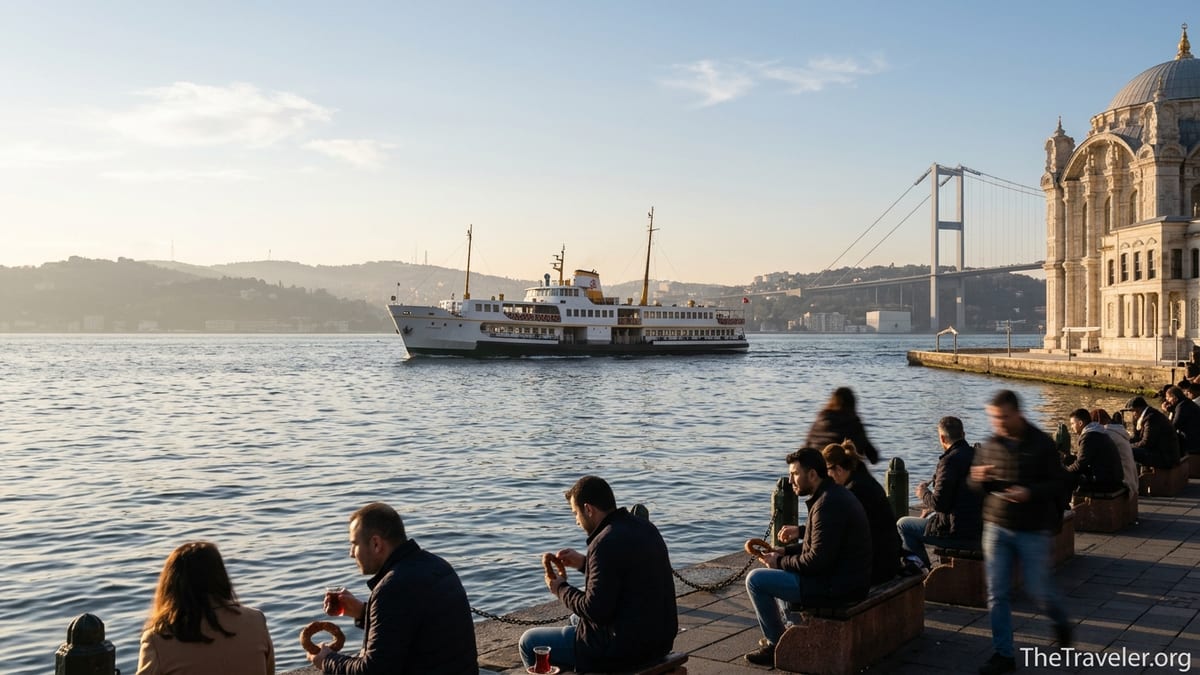
If you prefer a more local feel, turn any ordinary ferry into your own mini cruise. For example, boarding a ferry from Karaköy to Beşiktaş gives sweeping views of the Galata Tower, Dolmabahçe Palace and the Bosphorus bridges in about 20 minutes. Grabbing a simit from a quay vendor before boarding and ordering tea from the on-board café turns the ride into a very Turkish ritual. Morning and late afternoon sailings tend to be busiest with commuters, while midday crossings are usually calmer.
When buying tickets, you rarely need to prebook. Head straight to the pier, tap your Istanbulkart at the turnstiles and join the boarding line. Private cruise operators may approach you around Eminönü and Kabataş, offering hour-long tours on smaller boats. Some are good value, but always confirm the duration, whether commentary is included, and whether it is a shared boat or a small-group yacht. For budget travelers, the public ferries remain the standout choice.
Dolmabahçe Palace and the European Waterfront
Dolmabahçe Palace sits almost at the water’s edge between Kabataş and Beşiktaş and is one of the grandest stops along the Bosphorus. Built in the 19th century as the Ottoman Empire’s main administrative center, it replaced Topkapı Palace as the seat of power. Today visitors wander crystal-chandeliered halls, gilded ceilings and a vast ceremonial staircase, often noting that the interiors feel more European than Ottoman. Current official ticket prices for foreign adults are in the high hundreds to low thousands of Turkish lira range, depending on whether you enter only the main palace or also the harem and museums. Expect the cost to be roughly similar to other major top-tier attractions in the city.
The palace has fixed opening hours that usually run from morning to late afternoon, with the ticket office closing about an hour earlier than the site itself. Mondays are typically a closure day for national palaces, so plan around that and always double-check hours shortly before your visit, as seasonal adjustments are common. Audio guides and guided tours are available and recommended; many visitors report that without context the endless succession of ornate rooms can feel overwhelming.
After touring Dolmabahçe, it is worth spending time on the adjacent waterfront. Just outside the palace, the public promenade near the tram and funicular stations offers clear views of the Bosphorus and the July 15 Martyrs Bridge. Local families come here to stroll in the evenings, and it can be a pleasant pause in your day, especially if you are connecting by tram from Sultanahmet to the Bosphorus neighborhoods further north.
From the palace area it is a short taxi or bus ride to reach Beşiktaş Ferry Terminal, a lively hub for boats crossing to Üsküdar and Kadıköy. The streets behind the pier are full of casual fish restaurants, meyhanes and coffee shops. Many travelers combine a morning at Dolmabahçe with lunch in Beşiktaş and then continue along the waterfront to Ortaköy by a short taxi ride or a 30 to 40 minute walk following the shoreline as much as possible.
Ortaköy, Arnavutköy and Bebek: Village Feel in the City
North of Beşiktaş, the Bosphorus tightens and neighborhoods feel more residential. Ortaköy is the first major stop and has become an iconic postcard view of Istanbul: the ornate Ortaköy Mosque, officially the Büyük Mecidiye Mosque, framed by the first Bosphorus bridge behind it. The square outside is lined with kumpir stands baking stuffed jacket potatoes, waffle stalls, and cafés that spill onto the cobbles. On weekends the area is crowded with both locals and visitors, especially around sunset when the mosque facade glows pastel pink.
Ortaköy Mosque has undergone several rounds of restoration in recent decades, and when it is fully open you can usually enter between prayer times with modest dress. Even if the interior is temporarily restricted, the exterior and surrounding square are still worth the detour. Ferries do not stop directly at Ortaköy on the main tourist routes, so most travelers arrive by taxi, bus, or on foot from Beşiktaş. Traffic on the coastal road can be slow, especially on sunny weekend afternoons, so factor in extra time or choose to walk part of the way.
A short ride further north lies Arnavutköy, often overlooked despite being one of the prettiest stretches of wooden Bosphorus houses. Its waterfront road is lined with restored 19th-century mansions painted in pastel colors, some now serving as boutique restaurants or bars. The side streets climb steeply and hide small bakeries, local grocers and simple tea houses. In the evenings, people gather at the low stone wall along the water to chat, fish and watch boats pass. This is a good place to stop for a seafood dinner that feels more local than the louder clusters in central tourist areas.
Bebek follows, a neighborhood known today for its stylish cafés, ice cream shops and an upscale vibe. The small park near the pier makes a fine coffee stop, with runners and dog walkers constantly looping along the jogging path. Prices at waterfront venues here can be noticeably higher than in Arnavutköy or Beşiktaş, so it is common to see travelers buy takeaway coffee or simit and simply sit on the benches facing the water. From Bebek, the fortress at Rumeli Hisarı is a short taxi ride or about a 25-minute walk along a route that alternates between waterfront promenades and narrow backstreets.
Rumeli Fortress and the Northern Bosphorus
Rumeli Fortress, or Rumeli Hisarı, is a steep stone complex that climbs the hillside opposite the Asian-side Anadolu Hisarı. Built in the 15th century before the Ottoman conquest of Constantinople, it once controlled naval traffic on the Bosphorus. Today it is an open-air museum and one of the best vantage points for feeling how narrow the strait becomes at its midpoint. The fortress is included on many museum pass schemes, and individual tickets are usually modest in price compared with palaces.
The site consists mainly of walls, towers and grassy courtyards rather than furnished rooms, so a visit of one to two hours is enough for most travelers. Steps can be very steep and uneven, and sections may be closed in wet weather, so good footwear is important. On clear days, however, climbing to the higher towers reveals panoramic views over both continents, the Bosphorus bridges and the constant flow of ships. Photographers often come in the morning when the sun lights the European side.
Just outside the fortress, the waterfront road dips past family-run fish restaurants with outdoor terraces. Many Istanbulites plan leisurely weekend breakfasts here with full Turkish breakfast spreads and bottomless tea, turning it into a half-day outing. The vibe is calmer than in the inner-city districts, and the water feels closer, with cormorants perched on rocks and small fishing boats bobbing in the current.
From Rumeli Hisarı, you can continue north by bus or taxi toward the second and third Bosphorus bridges and, if you have time, all the way to villages like Sarıyer. For most short stays, though, combining the fortress with a stop in Bebek or Arnavutköy gives enough taste of the northern Bosphorus without overextending your schedule. It also balances historical exploration with time to simply watch the strait’s everyday life.
Üsküdar, Maiden’s Tower Views and Sunset Rituals
The Asian-side district of Üsküdar offers one of the most atmospheric Bosphorus experiences, especially at sunset. Frequent ferries link Üsküdar with Eminönü, Karaköy and Beşiktaş in 10 to 20 minutes, depositing passengers directly onto a broad waterfront promenade. From the quay, the skyline across the water takes in the historic peninsula’s domes, modern skyscrapers and, further south, the Princes’ Islands on clear days. Street vendors sell roasted chestnuts in winter and corn on the cob in summer, while local families sit on the low walls dangling their feet above the waves.
A short walk south along the promenade leads to the popular viewing areas opposite the Maiden’s Tower, the small islet fortress that has guarded the southern entrance to the Bosphorus for centuries. After being closed for an extended restoration, the tower reopened to visitors in 2024 and now functions as a monument and museum. Access is by small boat from designated points on both shores. Whether or not you go onto the islet itself, the classic Bosphorus photograph is taken from the Üsküdar promenade, where the tower lines up between sea and sky.
Sunset is the prime time to be here. As the sun sinks behind the European side, silhouettes of mosques and towers sharpen, and the Bosphorus surface catches bands of orange and purple light. Many visitors pick up takeaway tea in tulip-shaped glasses from kiosks along the promenade and sit on plastic stools set up facing the water. At busy times, spaces closest to the railing fill quickly, but the shoreline stretches far enough that you can usually find a quiet patch if you keep walking.
If your schedule allows, consider timing your day so that you start on the European side, explore Dolmabahçe or Ortaköy in the morning, continue up to Bebek or Rumeli Hisarı after lunch, then cross to Üsküdar for sunset. Ferries back to the historic peninsula keep running into the evening, and the city lights on the return trip give a very different mood from a daytime crossing.
Waterfront Walks and Everyday Bosphorus Life
Walking along the Bosphorus reveals how essential the strait is to Istanbul’s daily rhythms. On the European side, one of the most pleasant stretches for a casual walk is between Ortaköy and Bebek. The route is not perfectly continuous; at points you must detour inland because private properties and embassies occupy the shore. Still, you re-emerge repeatedly onto sections where runners, cyclists and couples strolling hand in hand share a narrow ribbon of path between the road and the water.
Benches line many parts of the promenade, and it is socially acceptable to linger with nothing more than a simit and a bottle of water. You will see retirees playing backgammon at portable tables, teenagers filming videos, and anglers carefully propping their rods against the railings. Summer evenings in particular feel like a citywide living room, with families bringing snacks and staying out until late while ferries and cargo ships glide past.
On the Asian side, Üsküdar north toward Kuzguncuk has a charming, slightly more low-key atmosphere. Kuzguncuk’s waterfront is framed by colorful wooden houses and leafy streets that run back from the shore. Small neighborhood grocery stores and patisseries serve regulars, and you can duck into side streets to find traditional pastry shops or modest lokantas serving home-style dishes. This is an excellent option if you are seeking a slower, less commercialized Bosphorus experience.
Practical details matter when planning walks. Some sections of the Bosphorus can be windy, especially in spring and autumn, so a light jacket is wise even when the city center feels warm. Comfortable shoes are essential; the distances can be deceptive, and pavements are not always level. When in doubt, plan shorter segments and use buses or taxis to bridge gaps. Because the Bosphorus is a working waterway, be prepared for occasional noise from ships and traffic, but know that pockets of quiet still exist, especially away from major ferry piers.
The Takeaway
Experiencing the Bosphorus is less about ticking off isolated sights and more about linking them together on the water. A public ferry ride with commuters, a slow walk past wooden yalıs, tea at an Üsküdar kiosk facing the Maiden’s Tower, an hour climbing Rumeli Fortress walls, or an afternoon drifting between Ortaköy and Bebek can all become standout memories in a trip to Istanbul. Taken together, they show how the city breathes through its strait.
When planning your days, mix one or two headline stops such as Dolmabahçe Palace, Ortaköy Mosque or Rumeli Hisarı with open time to simply sit on the waterfront. Watch the shipping lanes, listen to the layered sounds of traffic, gulls and call to prayer, and notice how the light changes from morning haze to sharp midday blues and soft evening pastels. Even if you only have a couple of days in the city, devoting a full afternoon and evening to the Bosphorus can anchor your understanding of Istanbul’s geography and spirit.
Prices, ferry timetables and opening hours can shift with economic conditions and seasons, so treat any figures in this guide as approximate and always confirm close to your travel date. With a little flexibility, though, the Bosphorus rewards curiosity in any conditions. Even in winter rain or summer heat, there is always a sheltered café, a new view from a ferry window, or a stretch of promenade that feels briefly your own.
Most of all, remember that millions of Istanbul residents use this waterway daily. By sharing ferries, promenades and neighborhood tea gardens, you step for a moment into their routines. That, more than any single monument, is what makes the Bosphorus an essential part of any Istanbul itinerary.
FAQ
Q1. What is the best time of year to experience the Bosphorus?
The Bosphorus is enjoyable year-round, but late spring and early autumn usually offer the most comfortable temperatures, softer light and fewer crowds than peak summer.
Q2. Do I need to book Bosphorus ferry rides in advance?
For regular public ferries between major piers you can simply tap your Istanbulkart at the pier and board. Only some longer sightseeing cruises and private yacht trips require advance reservations.
Q3. How much should I budget for a day around the Bosphorus?
Allow for several inexpensive ferry rides, meals in mid-range cafés, and at least one paid attraction such as Dolmabahçe Palace or Rumeli Fortress. Many waterfront walks and views are free, so costs depend mainly on how many ticketed sites and restaurants you choose.
Q4. Is the Bosphorus area suitable for children and strollers?
Yes, especially promenades in Üsküdar, Beşiktaş and parts of Bebek which are flat and stroller-friendly. Some historic sites, like Rumeli Fortress, involve steep stairs and uneven paths and are less suitable for very young children or anyone with mobility challenges.
Q5. Can I visit Ortaköy Mosque and Dolmabahçe Palace in the same day?
Yes, they are relatively close along the European shore. Many travelers visit Dolmabahçe in the morning, have lunch around Beşiktaş or Ortaköy, then explore Ortaköy Mosque and the surrounding square in the afternoon or at sunset.
Q6. Is it worth going onto the Maiden’s Tower, or is the view better from the shore?
Views from the Üsküdar promenade with the Maiden’s Tower in the foreground are iconic and free. Visiting the tower itself adds the experience of being in the middle of the water, but some travelers are satisfied with photos from the shore.
Q7. Are Bosphorus cruises included in city passes?
Some Istanbul tourist passes and private discount cards include specific Bosphorus cruise operators, but municipal ferries generally use pay-as-you-go fares. Check what is covered by any pass you buy and confirm whether it uses public ferries or private tour boats.
Q8. What should I wear when visiting mosques along the Bosphorus?
Dress modestly with shoulders and knees covered. Women should carry a scarf to cover their hair, and both men and women will usually be asked to remove shoes before entering prayer areas. Simple, respectful clothing is sufficient; you do not need special attire.
Q9. Is it safe to walk along the Bosphorus at night?
Main promenades like those in Beşiktaş, Ortaköy, Bebek and Üsküdar are usually busy and feel safe into the evening, especially on weekends. As in any big city, keep an eye on your belongings and avoid very quiet or poorly lit side streets late at night.
Q10. How many days should I allocate to the Bosphorus in my Istanbul itinerary?
If you have limited time, one long afternoon and evening can cover a ferry ride, a palace or fortress, and a sunset view. With more days, you could return to explore additional neighborhoods like Arnavutköy, Kuzguncuk or the northern villages at a relaxed pace.