


More news on this day
Flight disruption across Dubai and the wider Middle East is intensifying this week, as Emirates, Etihad and other regional airlines adjust schedules, cancel select services and reroute flights in response to ongoing political tensions and airspace constraints.
Get the latest news straight to your inbox!
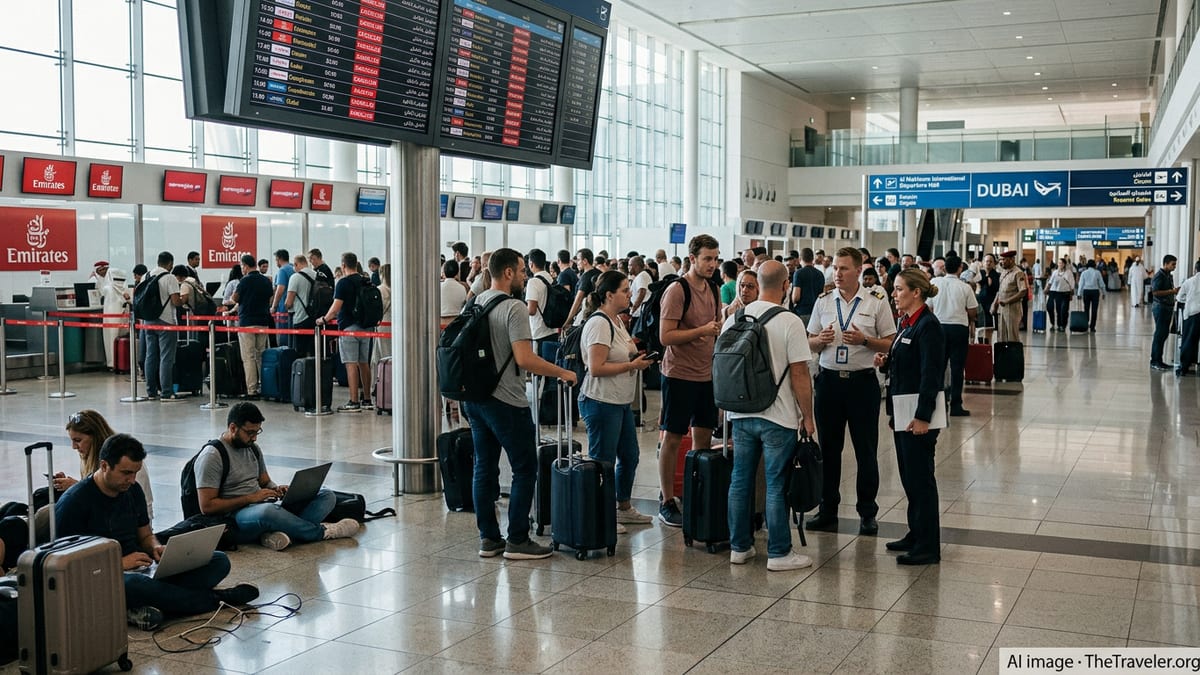
Regional tensions ripple through key Gulf hubs
Published coverage indicates that Middle East political tensions and related security concerns are continuing to affect airline operations at major Gulf hubs, including Dubai and Abu Dhabi. Reports highlight a combination of constrained airspace, precautionary rerouting and intermittent airport disruptions around the region, which together are producing delays and targeted cancellations on busy summer routes.
According to recent reporting, Dubai and Abu Dhabi remain operational as international hubs, but airlines are navigating tighter routing options and congestion as traffic is funneled through fewer available corridors. This has increased the likelihood of knock-on delays across hub-and-spoke networks, where late inbound flights can easily cascade into missed connections and rescheduled departures for travelers transiting the UAE.
Analysis of travel and aviation advisories shows that airlines are treating the current situation as an evolving operational challenge rather than a full shutdown. Schedules are still largely intact on long haul sectors, while thinner regional routes and high-frequency services are seeing the most frequent adjustments as carriers work to balance safety, demand and aircraft availability.
Emirates reshapes services while maintaining global network
Publicly available information on Emirates operations shows that the Dubai-based carrier has restored the vast majority of its global network in 2026, but continues to operate with targeted constraints on certain regional routes. Earlier in the year, the airline moved to a reduced schedule when regional airspace closures briefly affected some services, before restoring most long haul flights and focusing adjustments on short sectors around the Gulf.
Recent Gulf-focused coverage notes that Emirates has intermittently cancelled or retimed flights on select Dubai to Bahrain services as tensions have flared, while continuing to operate its broader schedule from Dubai International. Monitoring of airline disruption trackers and consumer advisory sites also shows that a limited number of flights connecting the UAE with nearby markets such as Kuwait and other Gulf states have been altered, even as the carrier emphasizes that its network remains broadly intact.
In its customer-facing guidance on disrupted travel, Emirates directs passengers to check flight status before heading to the airport and to keep contact details updated in booking profiles for operational notifications. The airline outlines options such as rebooking on the next available flight or choosing alternative dates when schedules are modified, signaling an effort to manage disruption within established policies while conditions remain unpredictable.
Etihad and fellow Gulf airlines juggle Bahrain and Kuwait routes
Reports from regional aviation outlets indicate that Etihad Airways has also made repeated adjustments to its short haul operations, especially services between Abu Dhabi, Bahrain and Kuwait. Earlier this month, coverage highlighted that the airline was resuming flights to both destinations after a three week suspension tied by observers to renewed security incidents and missile activity affecting parts of the Gulf.
Data compiled by passenger rights and flight disruption platforms points to a continuing pattern of selective cancellations and frequency cuts on Bahrain and Kuwait routes among several UAE-based carriers. For Etihad, this has meant operating some Abu Dhabi to Bahrain services as normal while keeping other flight numbers on hold for days at a time, reflecting a cautious approach to scheduling where near term conditions are reassessed repeatedly.
Other regional carriers, including Air Arabia and flydubai, have similarly been cited in recent advisories for cancelling or retiming individual flights linking UAE airports with neighboring Gulf states. While these airlines have maintained their overall networks, the pattern underlines how shorter, high-frequency routes are being used as a pressure valve, with frequencies scaled up or down in response to security assessments and airspace availability.
Knock-on impact for passengers across the Middle East
Travel industry guidance suggests that the present wave of disruption is being felt most acutely by passengers on regional itineraries, multi-stop journeys, and tight connections through Dubai and Abu Dhabi. As hub carriers absorb delays into their schedules, some flights are departing late to protect onward connections, while others are being consolidated, leading to day-of-travel changes for customers across the Middle East and beyond.
Consumer platforms tracking delays from UAE airports this month reference multiple cases of flights departing several hours behind schedule, with airline staff attributing the disruption variously to airspace congestion and wider regional tensions. Travelers on popular South Asian and Levant routes, which often rely on Dubai and Abu Dhabi as connection points, have reported longer waits as carriers adjust rotation plans and reshuffle aircraft.
Despite the challenges, operational data and commentary from industry analysts indicate that Gulf hubs remain among the most resilient in the region. With ground infrastructure functioning normally and airlines maintaining core long haul schedules, the focus has shifted to tactical schedule management, including swapping aircraft types, trimming frequencies on short sectors and using spare capacity where possible to clear backlogs and protect peak departure banks.
What travelers flying via Dubai and the Gulf should do now
For travelers planning to transit Dubai, Abu Dhabi or other regional hubs in the coming days, airline and airport advisories are broadly aligned on a few key recommendations. Passengers are urged to monitor their flight status closely through official channels on the day of travel, arrive earlier than usual for departures involving connections, and remain prepared for last minute gate changes or retimings as airlines react to shifting airspace conditions.
Guidance published by UAE-based carriers emphasizes the importance of up to date contact details in bookings so that schedule changes trigger email or SMS alerts. Travelers are also encouraged to use airline apps and websites rather than third party trackers for the most current information, especially when disruption is linked to real time security or routing decisions that may not immediately appear on external platforms.
Travel rights organizations note that standard passenger protections continue to apply, even when disruption is caused by security-related factors. Depending on the route and governing regulations, this can include options for rerouting, refunds on cancelled flights, and assistance such as meals or accommodation during extended waits. However, observers also caution that rules differ by jurisdiction and airline, so passengers should review the terms attached to their specific ticket and destination.
With tensions still elevated and regional airspace patterns subject to rapid change, most aviation analysts expect Gulf carriers to retain a flexible stance on schedules into the early autumn period. For now, the message from publicly available travel updates is that essential connectivity through Dubai and the wider Middle East continues, but with a heightened risk of disruption that makes careful pre-travel planning more important than ever.
Condé Nast Traveller Middle East: Dubai and Middle East flight disruption coverage
Gulf News: UAE flights today and regional cancellations