


Grotto Falls is one of the Great Smoky Mountains’ classic waterfall hikes, thanks to its rare walk-behind cascade, emerald mossy rocks, and relatively short approach on the Trillium Gap Trail. Its beauty and easy access from Gatlinburg also make it one of the park’s most crowded spots in peak season. Timed right, though, you can enjoy a cooler, quieter trail and far better photos than the typical midday crush allows. Here is how to plan your visit for fewer crowds, softer light, and a more relaxed experience at this Smokies favorite.
Get the latest updates straight to your inbox!
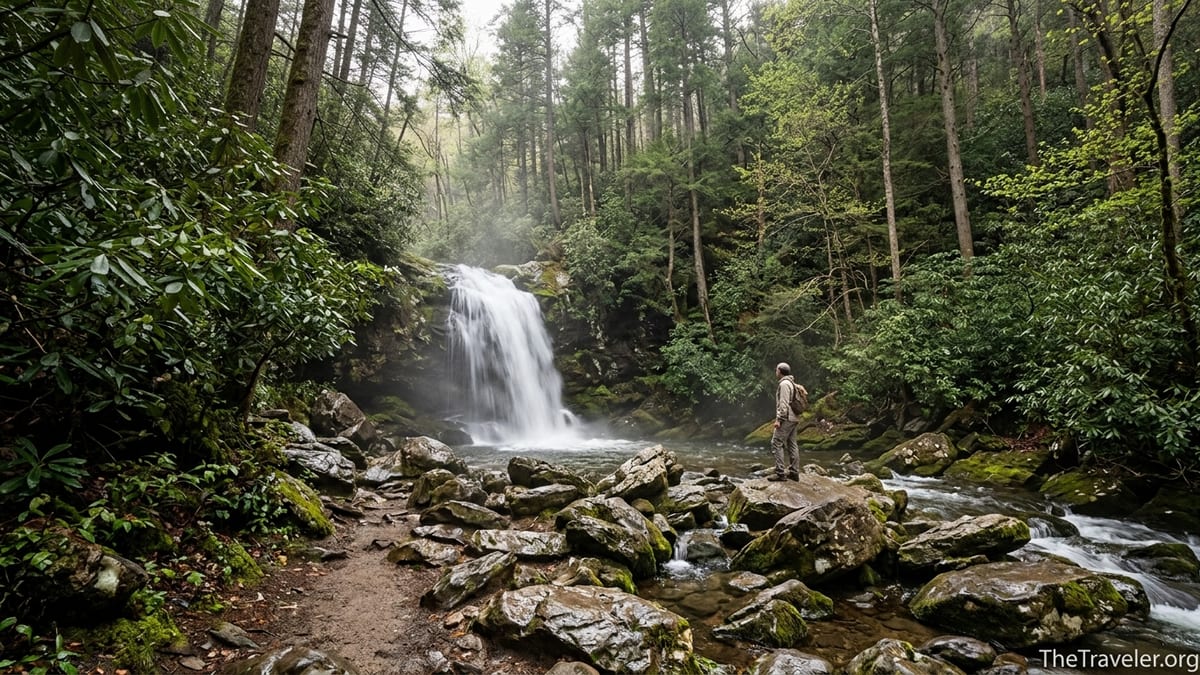
Understanding Grotto Falls and How Access Works
Grotto Falls sits along the Trillium Gap Trail in Great Smoky Mountains National Park, about 7.5 miles from downtown Gatlinburg in Tennessee. The waterfall is roughly 25 feet high, with a small rock shelf behind the curtain of water that lets you actually walk behind the falls. The hike from the trailhead to the falls is about 1.3 miles one way, for a round trip of roughly 2.6 to 3 miles depending on where you turn around. Elevation gain is moderate, so most reasonably fit visitors can complete the outing in a couple of hours at a relaxed pace.
Most visitors reach the trailhead via the Roaring Fork Motor Nature Trail, a narrow, seasonal one-way loop road. The Trillium Gap parking area is directly off this loop, with only a limited number of official spaces and just a short stretch of legal roadside parking. On busy summer Saturdays, cars often circle repeatedly waiting for a spot. During shoulder seasons or early and late in the day, you may pull in and park immediately, which can make the difference between a relaxed hike and a stressful experience before you even set foot on the trail.
Because the trail continues well beyond Grotto Falls toward Mount Le Conte, you will also meet backpackers, trail runners, and llama trains resupplying LeConte Lodge on designated days in the main visitor season. These additional users mean that even when casual day-hiker crowds thin out, the trail is rarely completely empty. Planning around the park’s overall visitation patterns, daily temperature swings, and road schedule is the key to a quieter hike.
Grotto Falls sits at a higher elevation and in a shaded hollow, so temperatures here are often several degrees cooler than in Gatlinburg on a summer afternoon. That natural air-conditioning is one reason the falls are so popular in July and August, but it also means spring and fall mornings can feel chilly. Choosing the right month and time of day helps you get the coolness you want without shivering in every photo.
Season by Season: When Crowds Peak and Temperatures Cool
Great Smoky Mountains National Park ranks among the most visited parks in the United States, drawing well over 10 million people most years. Recent visitation reports from the National Park Service show that since about 2010, the park typically sees over a million visitors per month from roughly April through October, with July and October especially busy. That overall pattern drives traffic at Grotto Falls, since many of those visitors base in Gatlinburg and seek short, scenic waterfall hikes.
Spring from late March through May is one of the best seasons for Grotto Falls if you want a mix of lighter crowds, cool air, and lush scenery. April usually brings mild daytime highs in the 60s Fahrenheit at mid-elevations, with cool mornings and evenings. Wildflowers begin to bloom along the Trillium Gap Trail, and water flow is often strong from winter and early spring rains. On a midweek April morning, you might share the falls with just a handful of other hikers, compared with dozens at the same hour on a Saturday in June.
Summer from June through August is high season in the Smokies. Gatlinburg hotel rates, cabin rentals, and traffic along the parkway all spike. At midday during these months, parking at Grotto Falls commonly fills by 8 or 9 a.m. on weekends, and the trail can feel like a steady procession. The upside is warm temperatures and a welcome cool-down at the falls, where mist often hangs in the air. If summer is the only time you can visit, you will need to rely more on time-of-day strategies than on seasonal quiet.
Fall from mid-September into early November brings another surge as leaf-peepers arrive. October is often one of the most crowded months in the park overall, particularly on weekends when fall colors are at their peak. Temperatures are typically comfortable for hiking, often in the 50s and 60s Fahrenheit during the day at mid-elevations, while the shaded grotto feels crisp and refreshing. If you aim for a weekday in late September or early November instead of peak color weekends, you can often enjoy the autumn palette with noticeably fewer people on the trail.
Road Seasons, Winter Conditions, and Off-Peak Possibilities
A critical factor for planning a quieter visit is the seasonal status of Roaring Fork Motor Nature Trail. The National Park Service treats this as a seasonal road, typically opening it in spring and closing it in late fall before winter. Recent seasonal schedules and local lodging guides have listed late March or early April as typical opening times and late November as closing, though exact dates can shift with construction, storms, or budget decisions. Because the trailhead parking lot for Grotto Falls is on this road, the opening and closing dates directly affect how and when you can access the falls.
In winter, when the motor nature trail is closed to vehicles, determined hikers and local cyclists sometimes reach the Trillium Gap Trailhead by walking or biking the otherwise quiet road from the Cherokee Orchard area. That adds several miles to the outing and is only recommended for those comfortable with longer, colder treks, but the payoff can be a nearly empty trail and the chance to see Grotto Falls rimmed with icicles or dusted in snow after cold snaps. Images shared by winter hikers in recent years show snow-coated hemlocks, frozen spray curtains, and very few footprints leading up to the falls.
Winter weather in the Smokies is unpredictable. At higher elevations, snow and ice can linger in shaded places like the Grotto Falls grotto even when Gatlinburg streets are clear. The park’s weather information notes that conditions often change rapidly and that trails can be slick from freeze-thaw cycles. If you aim for a low-crowd winter visit, traction devices for your boots, warm layers, and checking the park’s road and weather updates the morning of your hike are essential safety steps rather than optional extras.
For most visitors, the sweet spot between ease of access and moderate crowds comes in the shoulder weeks near the beginning and end of Roaring Fork’s vehicle season. Visiting in late April or early May, or again in early November just before the seasonal closure, typically means cooler hiking temperatures, available parking outside peak hours, and a far more relaxed experience on the trail than in midsummer or peak fall-color weekends.
Beating the Daily Rush: Best Times of Day for Fewer People
Regardless of the month, the time of day you start your hike has as much impact on crowd levels as the season itself. Visitor anecdotes and recent trip reports for Grotto Falls show that during high visitation months, the small parking lot often fills soon after sunrise on weekends. Some hikers report arriving at 7:30 a.m. in July and getting one of the last spaces, while others mention circling repeatedly at 10:00 a.m. without success. That pattern is predictable: the bulk of casual visitors tend to start late morning and early afternoon once they have had breakfast in town.
For a noticeably quieter experience, aim to be at the trailhead right around sunrise or in the final hours before sunset. In June, for example, this could mean starting your hike around 6:30 or 7:00 a.m. for morning light, or leaving the parking lot around 5:30 p.m. for a late-afternoon outing. Morning hikers often report sharing the falls with only a few other groups, while mid-afternoon visitors in the same week describe a line of people waiting for their turn under the water curtain.
Even if you are not an early riser, timing lunch strategically can thin the crowds. In busy months like July and October, many families leave the trail between 11:30 a.m. and 1:00 p.m. to find food in Gatlinburg. Arriving at the trailhead around midday can sometimes mean snagging a vacated parking spot and encountering lighter traffic on your way up, especially on weekdays. The trade-off is that the sun is higher and harsher, so photography conditions are less flattering compared with early morning or late afternoon.
In winter and early spring, shorter daylight hours mean you should leave extra time to return before dark. Starting in the mid-afternoon allows you to reach the falls as crowds thin while still finishing the descent safely. A practical benchmark is to begin the 2.6- to 3-mile round-trip hike at least two and a half hours before local sunset, giving you time for photos, breaks, and a relaxed pace back to the car.
Chasing Cooler Temperatures and Comfortable Hiking Weather
One of the pleasures of Grotto Falls is the cooler microclimate around the waterfall itself. The shaded, north-facing hollow, combined with evaporative cooling from the falling water, can make the area feel significantly cooler than open sections of trail or the streets of Gatlinburg. On a July afternoon when the town hovers near 85 Fahrenheit, the grotto may feel closer to the mid-70s, especially if a breeze catches the mist. That is perfect for wading your feet in the stream or standing behind the falls briefly.
To enjoy this natural coolness without an uncomfortable approach, consider visiting in late spring or early fall. In May, for instance, average highs at mid-elevation trailheads often run in the 70s, with cooler mornings ideal for uphill hiking. You can start the climb in a light fleece, remove it as you warm up, and still appreciate the refreshing chill of the grotto once you arrive. Similarly, in late September, daytime highs typically remain pleasant, while evenings begin to crisp up enough that the mist feels invigorating rather than cold.
In peak summer heat, starting early in the morning offers the best combination of cool temperatures and manageable crowds. Beginning at sunrise, you will hike the uphill portion in relatively mild air and reach the falls before midday heat builds. Families who have tried this strategy during recent hot spells report finishing the hike by late morning and then cooling off in air-conditioned attractions or at a riverside picnic elsewhere in the park during the hottest part of the day.
In winter, cooler hiking can quickly become cold hiking if you are not prepared. Because you may get damp from the mist or spray, it is wise to carry a waterproof shell or at least a light rain jacket, plus gloves and a hat on chilly days. The rocks behind and below the falls can be slick from ice and algae, even when the air temperature feels moderate, so sturdy footwear with good grip is essential in every season.
Getting Better Photos at Grotto Falls
Light and crowd levels are the two main ingredients for strong photos at Grotto Falls. In the middle of a bright summer day, sunlight filtering through the trees can create harsh contrast, with bright hotspots on the water and dark shadows in the grotto. Combine that with a steady stream of hikers walking behind the falls, and you may find yourself snapping quick, imperfect images between groups.
Arriving in the first couple of hours after sunrise or the last couple of hours before sunset generally produces the most pleasing light for photos. Early morning often brings diffuse, cool-toned light that enhances the greens of the moss-covered rocks and rhododendron leaves. Late afternoon, especially on partly cloudy days, can give the water a warmer glow and soften shadows under the rock overhang. If you are using a smartphone, you can take advantage of these softer conditions to capture detail in both the bright water and the darker grotto without complicated editing.
For visitors carrying cameras, a few simple techniques can make a significant difference. A small travel tripod or a smartphone clamp allows you to take longer exposures, smoothing the waterfall into a silky stream while keeping the surrounding rocks sharp. On a mirrorless camera or DSLR, using a wide-angle lens in the 16 to 24 millimeter range on a full-frame body lets you capture the entire grotto and stream in one frame. Shooting at a slower shutter speed around 1/4 to 1 second with a low ISO, and a narrow aperture like f/8 or f/11, can create classic waterfall images, provided you time your shots during brief lulls in foot traffic.
Because the area behind the falls is small, it is polite to take turns. In practice, this often means a rotating rhythm of visitors moving under the falls, taking a few photos, and stepping back to the side to let the next group through. If you want a frame without people, be prepared to wait patiently for a few minutes. Weekday mornings in spring or late fall often produce those rare moments when you can frame the waterfall with no one else in view, a stark contrast to summer weekends when even a 10-second window may be hard to find.
Practical Strategies for a Smoother, Less Crowded Visit
Beyond timing your visit by season and time of day, a few practical strategies can make a tangible difference on the ground. First, consider your base in or near Gatlinburg. Lodging on the south side of town, closer to the park entrance, cuts your morning drive time and makes sunrise or early-morning starts more realistic. For example, a simple motel just off the main parkway near traffic light number 8 will let you drive to Cherokee Orchard Road and on to Roaring Fork within minutes, rather than sitting in downtown traffic.
Second, pair your Grotto Falls hike with less-crowded destinations in the same part of the park. On a busy summer weekend, you might hike to Grotto Falls at dawn, then drive the rest of the Roaring Fork Motor Nature Trail loop while traffic is still light, spotting historic homesteads and roadside cascades such as the Place of a Thousand Drips. By late morning, as congestion builds, you could move to lesser-known pullouts off Cherokee Orchard Road or head to quieter picnic areas elsewhere in the park.
Third, pack for minor delays. Because the access road is narrow and one-way, any stalled vehicle or minor incident can briefly halt traffic. Locals occasionally mention situations where a broken-down car or treefall backed up the loop drive for an hour or more. Carrying water, snacks, and patience in your vehicle reduces the stress of such surprises. In the same spirit, always have a backup hiking plan. If the Grotto Falls lot is completely full and a ranger is turning vehicles back, you might shift to another waterfall hike like Laurel Falls or to a scenic drive toward Newfound Gap for the day instead.
Finally, remember that Great Smoky Mountains National Park now requires parking tags for most vehicles stopping longer than a few minutes. Before heading to Grotto Falls, purchase the appropriate tag from a visitor center, kiosk, or authorized vendor in town and display it clearly. That way, you can focus on finding a legal spot and enjoying the hike, rather than worrying about a citation on your windshield when you return.
The Takeaway
Visiting Grotto Falls with fewer crowds, better photos, and a cooler hiking experience is less about luck and more about timing and preparation. Seasonally, shoulder periods like late April to early May and late September to early November generally offer the best balance of comfortable temperatures and manageable visitation, especially on weekdays. Off-season winter visits, when the Roaring Fork Motor Nature Trail is closed to vehicles, can provide near-solitude for those willing to hike extra miles in colder conditions.
On a daily scale, arriving around sunrise or in the final hours before sunset does more than any other single decision to reduce crowding and improve your photography light. Combining that timing with realistic expectations about parking, current park regulations such as parking tags, and variable mountain weather will help you avoid the most intense congestion that now characterizes many popular Smokies destinations.
Grotto Falls has earned its popularity, and you are unlikely to have it entirely to yourself at any time of year. Yet with thoughtful planning, you can trade the midday summertime shuffle for a quieter trail, a cooler breeze in the grotto, and photographs that show more moss and water than people. For many travelers, that small shift turns a box-checking stop into one of the most memorable hikes of a Smokies trip.
FAQ
Q1. What is the best month to visit Grotto Falls for fewer crowds?
Late April, early May, and late September into early November on weekdays usually offer fewer crowds than peak summer or prime fall-color weekends, while still providing comfortable hiking weather.
Q2. How early should I arrive at the Grotto Falls trailhead in summer?
In June, July, and August, aim to arrive around sunrise, roughly 6:30 to 7:00 a.m., especially on weekends. By 8:30 or 9:00 a.m., the small parking lot often fills on busy days.
Q3. Is Grotto Falls accessible in winter?
When Roaring Fork Motor Nature Trail is closed to vehicles, you can sometimes reach the Trillium Gap Trailhead by walking or biking the closed road, but this adds distance and requires caution with possible snow and ice.
Q4. What time of day has the best light for photos?
The first two hours after sunrise and the last two hours before sunset usually provide the softest, most flattering light, with gentler shadows and more detail in both the water and the grotto.
Q5. How long does the Grotto Falls hike take?
Most visitors complete the 2.6- to 3-mile round trip in about two to three hours, including time for photo stops and a short break at the falls, depending on pace and trail conditions.
Q6. Do I need special gear to get good photos at Grotto Falls?
No, a smartphone can capture excellent images if you visit during good light, but a small tripod or phone clamp and a wide-angle lens on a camera can help you create smoother, longer-exposure waterfall shots.
Q7. Is Grotto Falls a good hike for children and beginners?
Yes, many families hike to Grotto Falls because the distance and elevation gain are moderate, but sturdy footwear, water, snacks, and close supervision near wet rocks are important for safety.
Q8. How does weather affect trail and photo conditions?
After rain, water flow increases and photos can be dramatic, but roots, rocks, and the area behind the falls become slick. Dry spells reduce flow slightly, yet the falls usually remain photogenic year-round.
Q9. Can I swim at Grotto Falls?
There is a shallow pool and stream where people often wade or splash their feet, but it is not a designated swimming area, and the water is typically cold, even in summer.
Q10. Do I need a parking tag to hike to Grotto Falls?
Yes, Great Smoky Mountains National Park requires most vehicles that park longer than a few minutes to display a paid parking tag, so purchase and display one before leaving your car at the trailhead.