


Some moments on a trip surprise you by how deeply they stick. On my most recent visit to Great Smoky Mountains National Park, it wasn’t the famous overlooks or the tallest peaks that stayed with me. It was the cool, echoing hush of standing behind Grotto Falls, watching a curtain of water pour down just inches from my face. That brief pause in the spray felt like one of the purest, most joyful moments of my entire Smokies trip.
Get the latest updates straight to your inbox!
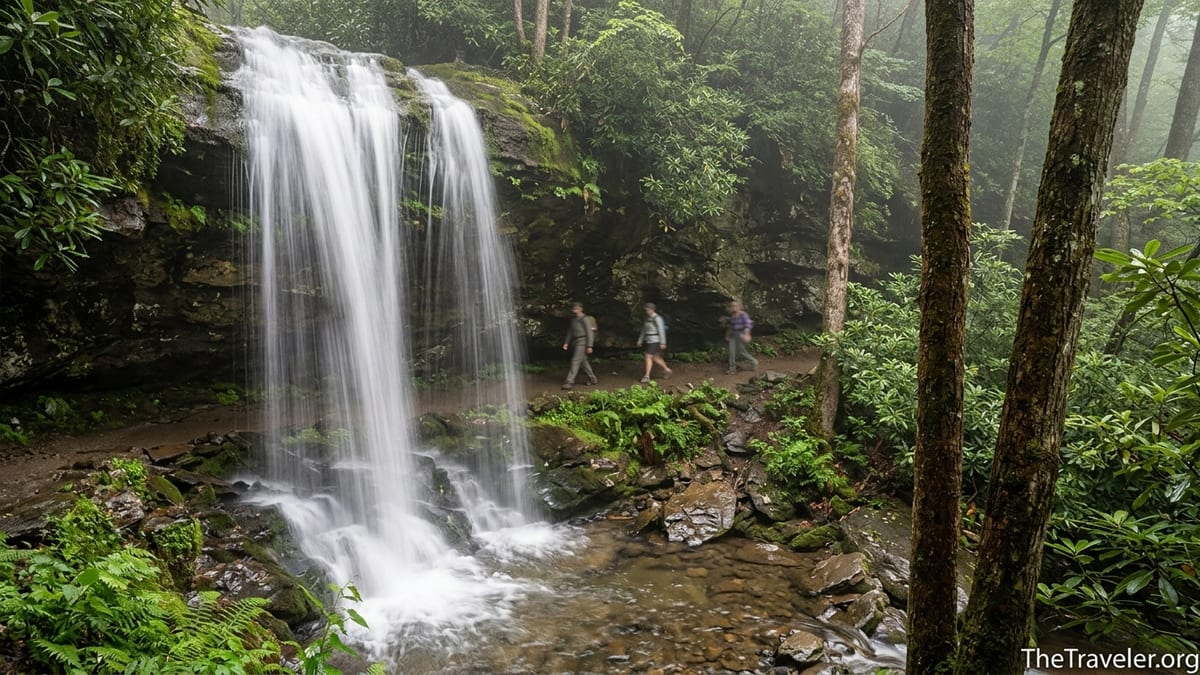
Finding Grotto Falls in the Heart of the Smokies
Grotto Falls sits on the Tennessee side of Great Smoky Mountains National Park, reached by the Trillium Gap Trail. The trailhead is along the Roaring Fork Motor Nature Trail, a narrow, seasonal one-way road that begins just outside Gatlinburg. Drivers follow Historic Nature Trail Road from town to the Cherokee Orchard entrance, then continue until the road narrows and the Roaring Fork loop officially begins. A couple of miles into the drive, a signed parking area for the Grotto Falls / Trillium Gap trailhead appears on the right.
The hike itself is relatively short by Smokies standards, about 2.6 miles round trip on Trillium Gap Trail, with an elevation gain in the range of 500 to 600 feet. The National Park Service describes it as a moderate hike, and that feels accurate: the trail climbs steadily but not aggressively, and most reasonably active visitors who are comfortable walking on uneven terrain can make it to the falls at an unhurried pace. The payoff, especially on a humid summer afternoon, is enormous compared to the effort.
Access depends on timing. Roaring Fork Motor Nature Trail is generally open spring through late fall and closes in winter for seasonal conditions. Recent trip reports suggest that when the road is closed, the Grotto Falls parking lot is not accessible by car, and hikers would need to add many miles from other trailheads. For most travelers, that means planning a visit between roughly late March and late November, and always checking current road and trail conditions with the park before you go.
If you are staying in Gatlinburg, the logistics are straightforward. On a clear weekday in shoulder season, you might drive from a downtown hotel or cabin to the trailhead in 20 to 30 minutes. In peak summer or October leaf season, heavy traffic on the parkway and the narrow nature trail can easily stretch that to 45 minutes or more, not counting the time it takes to find a parking space.
The Trail Experience: Old-Growth Forest and Mountain Streams
The approach to Grotto Falls is more than just a way to reach a waterfall. From the Trillium Gap trailhead, the path enters a shady forest of hemlock, maple, and tulip poplar, part of the old-growth pockets that make the Great Smoky Mountains famous. The air feels noticeably cooler under the tree canopy, especially in midsummer. In early June, I stepped from a sun-baked parking lot into what felt like natural air conditioning, the damp scent of moss and leaf litter replacing hot asphalt in a few strides.
The trail itself is a classic Smokies path: a dirt tread with roots and occasional rocks, never technical but rarely perfectly smooth. It crosses several small streams on stones and logs, spots where children tend to stop and toss pebbles or dip fingers in the cold water. Families with grade-school kids often turn the hike into a half-day adventure, stopping frequently for snacks and photos. You will not be alone here; Grotto Falls is one of the park’s most popular shorter hikes, and on a sunny Saturday morning in July the parking lot may be full by 9 a.m.
Despite the crowds, the forest does offer quieter stretches. If you start early, you may share the trail with just a handful of other hikers, a few trail runners, and perhaps a Park Service crew or llama train heading up Trillium Gap to resupply LeConte Lodge higher on the mountain. Those llamas are a minor legend in the Smokies, and catching a glimpse of them is a bonus memory. They use the same path, so hikers often step aside to let them pass, a nice reminder that this is a working backcountry route as well as a day hike.
As the trail gains height, glimpses of the creek appear below the slope. Rhododendron thickets line the path, especially striking in late spring when their blossoms add soft pink and white clusters along the green corridor. Even on hot days, pockets of cool air drift down from the higher ridges, and you can hear the steady sound of water well before you reach the falls themselves.
That First Step Behind the Waterfall
Grotto Falls is not the tallest or loudest waterfall in the park. At roughly 25 feet high, its single white ribbon drops into a shallow pool framed by mossy rock ledges. But what makes it unforgettable is the narrow, naturally formed recess behind the stream of water. The trail continues all the way behind the curtain, allowing visitors to walk from one side of the cove to the other, passing directly underneath the constant spray.
Arriving at the falls, most hikers fan out along the slick rocks and boulders at the base. Some people sit on logs or drop their packs on the dry patches of ground to soak in the scene. The sound is a steady roar, not deafening but loud enough that normal conversation becomes raised voices. In midsummer, mist hangs in the air, catching the light whenever the sun breaks through the treetops. It is only when you edge closer, shoes gripping cautiously on damp stone, that you feel how powerful the water really is.
Walking behind the falls is both simple and surprisingly emotional. There is no handrail, no constructed walkway, just a sloping band of rock that curves behind the spill of water. In some spots it is barely shoulder-width. On my visit, I timed my attempt between groups. I stepped quickly along the rock, feeling the temperature drop several degrees as I crossed through the mist. For a second, the world narrowed to the pounding rush inches from my face, the cool spray on my arms, and the dim, echoing space tucked behind the sheet of water.
In that moment, the crowds and camera shutters faded to a soft blur behind me. I could look out through the watery veil and see the forest refracted into shimmering fragments: shapes of hikers on the trail, the deep green of rhododendron leaves, the dark, wet sheen of boulders. It felt surprisingly intimate for such a popular place, a kind of temporary doorway into a hidden room in the landscape. You come out a little damp, shoes slightly wetter than before, but with a grin that is hard to shake for the rest of the day.
Planning Your Visit: Timing, Parking, and Crowds
Because Grotto Falls is so accessible, thoughtful planning makes the difference between a crowded, stressful stop and a highlight of your Smokies trip. Parking is limited at the Trillium Gap trailhead, and the National Park Service warns that spaces often fill early in the day during peak seasons. When I arrived around 8:30 a.m. on a May weekday, only a handful of spots remained. By the time I returned from the hike a couple of hours later, cars were circling for openings and some visitors were waiting in their vehicles for others to pull out.
The most reliable strategy is to aim for an early-morning start, particularly in June, July, and October. Reaching the gate to the Roaring Fork Motor Nature Trail soon after it opens gives you a better chance at a parking spot and a less congested trail. Late afternoon can also be pleasant, but in summer thunderstorms often build after 2 or 3 p.m., and you do not want to be on exposed rocks near a waterfall when lightning is in the forecast. Shoulder seasons like late April or early November typically see fewer visitors, though weekends can still be busy.
It is also important to factor in the park’s relatively new parking tag system. Most visitors who will park longer than a quick drop-off need a daily or weekly parking tag displayed in their vehicle. Fees are modest compared with the overall cost of a Smokies trip, but you should purchase and print or pick up your tag before driving to Roaring Fork. Rangers do check for compliance, and fines are an unpleasant way to remember an otherwise beautiful hike.
Weather should shape your plan as well. After heavy rain, the trail can become muddy and stream crossings more challenging; however, the waterfall itself becomes fuller and more dramatic, and the sound of rushing water along the entire route intensifies. In summer heat, the shaded forest and cool spray make Grotto Falls an appealing choice, while in early spring colder temperatures can make wet rocks extremely slick. Checking a Gatlinburg forecast and recent trip reports the day before you hike gives you a real-world sense of what to expect underfoot.
What to Bring and How to Stay Safe
For a short outing like Grotto Falls, it can be tempting to treat the hike as a casual stroll and leave gear behind. But the combination of damp rocks, uneven surfaces, and mountain weather means that a bit of preparation dramatically improves both comfort and safety. At minimum, wear sturdy, closed-toe shoes with good traction. Trail runners or light hiking shoes are ideal. On my visit, I watched a few people in flat-soled sandals hesitate on the wet rock ledges near the falls, clearly nervous about slipping. They moved slowly and clung to the rock wall, turning what should have been a fun moment into a stressful one.
A small daypack with a bottle of water per person, a light snack, and a rain shell is usually sufficient. Even on a short trail, dehydration sneaks up more quickly than many visitors expect, especially in July humidity. Bringing a simple reusable bottle rather than a disposable one makes it easy to refill at your lodging or a visitor center. Toss in a quick-dry towel or bandanna if you know you will want to linger in the spray behind the waterfall.
The area around Grotto Falls is also prime habitat for black bears, and visitors sometimes see them foraging near the trail or along Roaring Fork Motor Nature Trail. Keeping a respectful distance, securing all food in your pack, and never feeding wildlife are basic precautions that protect both people and animals. On crowded days, a bear sighting can quickly draw a cluster of hikers, so it is important to give the animal an easy escape route and move along instead of surrounding it for photos.
Finally, watch your footing and your time. Wet moss and algae on rocks turn certain surfaces into natural slip hazards. Staying on the established trail and well-used rock paths minimizes risk. If thunder begins to rumble or clouds build rapidly, treat that as your cue to head back toward the trailhead. The Smokies are notorious for fast-changing conditions, and getting caught in a storm beside a waterfall is not the story you want to bring home.
Making Grotto Falls Part of a Bigger Smokies Itinerary
One of the advantages of Grotto Falls is how easily it fits into a broader day in the park. Many visitors combine the hike with the full 5.5-mile Roaring Fork Motor Nature Trail loop, stopping at historic cabins, old farm sites, and roadside stream views along the way. It is possible to hike to the falls in the morning, continue the auto tour with leisurely photo stops, and still be back in Gatlinburg for a late lunch or early dinner.
For families, this combination works especially well. Children get an active morning on the trail, a chance to splash in safe spots near the creek, and the novelty of walking behind a waterfall. Afterward, the one-way drive allows everyone to rest while still enjoying scenery. Pullouts along Roaring Fork offer quick views and short walks, so grandparents or anyone less comfortable on uneven terrain can still feel included in the day’s experiences.
More experienced hikers sometimes use Grotto Falls as the start of a longer Trillium Gap climb toward Mount Le Conte, one of the park’s signature summits. Continuing beyond the falls adds several miles and thousands of feet of elevation gain, transforming a family-friendly stroll into a full-day mountain trek. If that appeals to you, an early pre-dawn start, layered clothing, and a detailed map become essential. Even if you are sticking to the waterfall itself, understanding that you are sharing a major backcountry route lends a sense of connection to the larger landscape.
Back in town, the contrast is striking. In Gatlinburg or nearby Pigeon Forge, neon-lit attractions, dinner shows, and souvenir shops line the main streets. You can go from the muffled roar behind Grotto Falls to the buzz of an arcade or the clatter of a family restaurant in under an hour. Many travelers find that pairing those two sides of the Smokies in the same day makes both more memorable: the wild forest feels wilder after a night on the parkway, and town comforts feel earned after a morning of mud and stone steps.
The Takeaway
Great Smoky Mountains National Park is rich with spectacular views and long, demanding hikes, but some of its most lasting memories come from small, specific moments. Walking behind Grotto Falls is one of those. It is a brief, almost playful encounter with water and rock that manages to feel both accessible and extraordinary.
From the first cool breath of old-growth forest on the Trillium Gap Trail to the final step back out from behind the falling water, the experience blends sensory detail with a sense of place. You hear the muffled thunder of the falls, feel the temperature drop, and see the forest turned into a shifting mosaic through the spray. You share the space with other travelers yet still find a sliver of stillness behind the curtain.
If you plan your timing, bring basic gear, and respect the trail’s conditions and wildlife, Grotto Falls rewards you with one of the park’s most unique perspectives. On a trip filled with scenic drives, busy overlooks, and postcard views, that fleeting passage behind a 25-foot waterfall may well be the moment you talk about longest once you are home.
FAQ
Q1. How long is the hike to Grotto Falls and how difficult is it?
The standard hike to Grotto Falls is about 2.6 miles round trip on Trillium Gap Trail, with a moderate elevation gain of roughly 500 to 600 feet. Most reasonably fit hikers, including families with active children, can complete it in 1.5 to 3 hours at a relaxed pace.
Q2. Can I really walk behind Grotto Falls, and is it safe?
Yes, the trail continues behind the 25-foot waterfall along a natural rock ledge, and that walk-behind feature is what makes Grotto Falls special. It is generally safe if you move slowly, wear good footwear, and pay attention to slick, wet rock. There are no handrails, so caution and common sense are important.
Q3. What is the best time of day and year to visit Grotto Falls?
Early morning on a clear day is ideal to avoid the heaviest crowds and secure parking. Seasonally, late spring through early fall offers the most reliable access because Roaring Fork Motor Nature Trail, which leads to the trailhead, typically closes in winter. Summer brings lush greenery and cool spray, while October adds colorful foliage but also more visitors.
Q4. Do I need any permits or passes to hike to Grotto Falls?
You do not need a backcountry permit for a simple day hike to Grotto Falls, but you do need a valid parking tag for your vehicle if you plan to park inside Great Smoky Mountains National Park. Daily and longer-duration tags are available at visitor centers and other outlets, and should be purchased before you drive to the Roaring Fork area.
Q5. What should I wear and bring for the hike?
Wear comfortable, closed-toe shoes with good traction, such as trail runners or light hiking shoes. Pack at least one bottle of water per person, a small snack, and a light rain layer. Quick-drying clothing is helpful because you may get damp from the waterfall spray, and a compact towel or bandanna can make lingering behind the falls more comfortable.
Q6. Is Grotto Falls suitable for young children or older adults?
Many families with children and active older adults hike to Grotto Falls successfully. The trail is moderate rather than easy, with roots, rocks, and some steady climbing, so it may be challenging for very young kids or anyone with balance or mobility issues. Taking frequent breaks, starting early to avoid heat, and allowing plenty of time makes the outing more enjoyable for mixed-ability groups.
Q7. How do I get to the trailhead for Grotto Falls?
From Gatlinburg, you follow Historic Nature Trail Road to the Cherokee Orchard entrance of the national park, then continue to the start of the Roaring Fork Motor Nature Trail. The signed parking area for Trillium Gap Trail and Grotto Falls lies a short distance along that one-way road. Because seasonal closures and temporary restrictions can affect access, it is wise to confirm current road status with the park before you go.
Q8. Are there restrooms or facilities near Grotto Falls?
There are basic restroom facilities near the Grotto Falls trailhead parking area but no services at the waterfall itself. There are no food vendors or water fountains along the trail, so visitors should use facilities before starting the hike and bring all needed water and snacks from town or a visitor center.
Q9. Will I see wildlife on the way to Grotto Falls?
The forest around Grotto Falls is home to black bears, deer, wild turkeys, and many smaller animals. Sightings are possible but never guaranteed. If you do encounter wildlife, keep a safe distance, store all food securely in your pack, and never attempt to feed or approach animals for photos.
Q10. Can I continue past Grotto Falls to other destinations?
Yes, Trillium Gap Trail continues well beyond Grotto Falls toward higher elevations on Mount Le Conte. Many day hikers choose to turn around at the waterfall, but experienced hikers sometimes extend their route to viewpoints or to LeConte Lodge. Extending the hike adds significant distance and elevation, so it requires an early start, appropriate gear, and careful planning.