


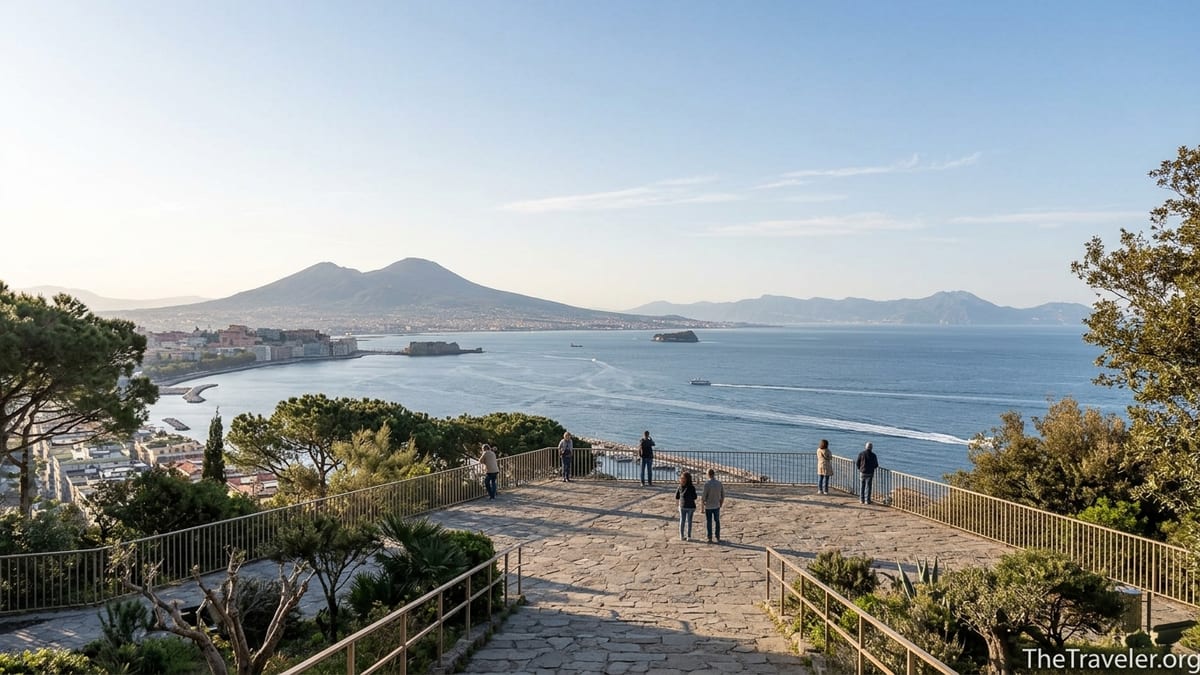
Parco Virgiliano, high on the Posillipo hill in Naples, is one of those rare places where the entire Bay of Naples seems to unfold at your feet. From its terraces you can pick out Capri and Ischia, watch ferries cut across the water, and see Mount Vesuvius rise behind the city. Choosing the right moment to visit is the difference between quietly absorbing this panorama in clear light and jostling for space on a hazy afternoon. This guide focuses on exactly that: the best seasons, days and times to visit Parco Virgiliano for crisp views and fewer crowds, with practical, real-world examples to help you plan.
Get the latest updates straight to your inbox!
Why Timing Matters at Parco Virgiliano
Parco Virgiliano is a panoramic park on Posillipo hill, laid out as a series of terraces looking onto the Gulf of Naples and the Phlegraean coastline. On a clear day you can see Nisida, Procida, Ischia, Capri, the Bagnoli waterfront, Pozzuoli, and the outline of the Sorrento and Amalfi coasts. Because the park is exposed and elevated, visibility and comfort change dramatically with the season and time of day. A July afternoon can feel hot and hazy, while an October morning often delivers sharp views and pleasant temperatures.
The park is also a popular escape for locals. Neapolitan families head up for weekend strolls, teenagers gather near the railings at sunset, and in the warm months small kiosks and cafes in the surrounding streets do brisk business in gelato and Aperol spritz. That means certain windows, such as sunny Sunday evenings in late spring, reliably draw a crowd. If your priority is photography, contemplation or a quiet picnic, you will want to work around those peaks.
Unlike ticketed sites in the historic center, Parco Virgiliano is free and open access, so there is no timed entry system to control numbers. Instead, the key variables you can play with are the season, the day of the week, and the hour you arrive. Once you factor in local school holidays, sunset times and the habits of Neapolitans, some clear patterns emerge about when the park is at its best.
Best Seasons for Clear Views
For consistently clear views, the shoulder seasons of April to early June and late September to early November are generally the sweet spot. In these periods the air over the bay tends to be cooler and less humid than in midsummer, which helps reduce haze. On many April mornings, for example, you can clearly see the contours of Capri and the cliffs of the Sorrento peninsula, details that may disappear into a blueish blur on a humid August afternoon.
Spring has the added advantage of greener slopes and milder temperatures. If you visit in late April, you might comfortably spend two hours strolling from terrace to terrace in a light jacket, lingering over the view of Nisida and the Bagnoli coastline. By contrast, in late July the same walk under a strong midday sun can feel punishing, and visitors often end up huddling in the limited shade rather than focusing on the panorama.
Autumn is equally rewarding. In October, daylight is still generous, yet the city’s summer humidity has usually eased. Many travelers who combine Naples with day trips to Pompeii or the islands choose this period specifically because the views from hillsides and ramparts around the bay are more reliable. A couple arriving in mid October, for instance, might spend a morning at the National Archaeological Museum, have lunch in the Spanish Quarter, then head to Parco Virgiliano for a late afternoon walk with a strong chance of crisp light on Vesuvius.
Winter can still offer wonderful visibility on clear high-pressure days, and you may have some terraces almost to yourself, but conditions are less predictable. Shorter daylight hours, occasional rain and cooler winds on the exposed hill mean you have to be flexible. If you are visiting in January, the best strategy is to keep an eye on the forecast and save the park for the first consistently bright, calm day rather than locking it to a specific date.
Summer Strategy: Heat, Haze and Holiday Crowds
Summer in Naples, typically late June through early September, is a time of long evenings and lively streets, but also of heat, humidity and school holidays. Daytime highs in July and August can push many locals toward the waterfront and the hills of Posillipo in search of a breeze. As a result, Parco Virgiliano becomes a popular place for sunset, especially on Fridays, Saturdays and Sundays. It is not unusual on an August Sunday around 8 pm to see the main terraces lined shoulder to shoulder with people taking photos of the sun sinking behind Ischia.
For clear views in summer, the challenge is managing both atmospheric haze and visitor numbers. The worst combination is usually found between late morning and late afternoon, when heat has built up and the park receives a steady flow of families, couples and tour groups. Haze often softens the edges of Vesuvius and the islands during these hours, which can be disappointing if you were hoping for sharp landscape photos. A family visiting in early August who arrive by bus at 2 pm, for instance, may find the light harsh, the horizon washed out and shady benches already occupied.
The workaround is to shift your visit to the bookends of the day. On a typical July day, catching the first light between about 7 am and 9 am will give you cooler air, fewer people and more contrast in the landscape. You might take a taxi from Chiaia at 7.30 am, buy a coffee and cornetto from a bar near the entrance, and have one of the side terraces virtually to yourself for an hour. Alternatively, on days with lower humidity, a late evening visit roughly an hour before sunset can still be wonderful, provided you are comfortable with a more social, atmospheric scene rather than solitude.
If you are staying for several days in summer, try to pair Parco Virgiliano with other outdoor activities that also benefit from early or late hours, such as a morning walk along the Caracciolo seafront or an evening aperitivo in Posillipo. That way you are using the cooler, clearer parts of the day for views and leaving the hottest hours to indoor sites like the National Archaeological Museum or underground tours.
Weekdays vs Weekends: Reading Local Rhythms
The day of the week matters almost as much as the season. On weekdays, especially Monday to Thursday, Parco Virgiliano is generally calmer throughout the day. You will still see local joggers, dog walkers and parents with strollers, but the flow is steady rather than dense. A solo traveler visiting on a Tuesday morning in May might share a terrace with a handful of photography enthusiasts and an older couple enjoying the benches, with plenty of space between each group.
Weekends are a different story. Saturday afternoons and Sundays from late morning onward are popular times for families and groups of friends to head up to Posillipo. In good weather, Sunday around sunset almost always brings a crowd, sometimes including informal street musicians or vendors in the neighborhood outside the park. If you are sensitive to noise or simply want unobstructed railings for photography, you should either visit earlier in the day or choose a weekday instead.
Another rhythm to keep in mind is local school and work schedules. During the Italian school year, roughly mid September to mid June, weekday mornings often feel particularly relaxed because many families are busy with classes and commutes. Visiting on a Wednesday in late October at around 10 am, for example, you are likely to find the playground area active but the panoramic terraces quiet. During school holidays, particularly from late June through early September and around Easter, more teenagers and families use the park in the morning and late afternoon.
Public holidays can also change the picture. On national holidays such as April 25 or June 2, Parco Virgiliano can feel more like a festival ground, with people using the lawns for picnics and gatherings. If your trip coincides with a major holiday and you still want a quiet experience, consider going very early in the morning or pushing your visit to the following weekday instead.
Time of Day: Light, Orientation and Photography
Parco Virgiliano’s terraces are oriented to take in a broad sweep of the bay, from the industrial area near Bagnoli to the islands and the open sea. Because of this, the quality of light changes throughout the day in ways that will be important if you care about photography or simply want the most dramatic views. In the early morning, the light tends to come from behind the city, often illuminating Vesuvius and the waterfront while leaving some foreground elements in softer shadow. This can produce very clear, three-dimensional views, especially on cool spring days.
By midday, especially between about 11 am and 3 pm, the sun is high and the light is harsher. Colors can look flatter and the reflective surface of the water may appear blown out in photographs. This is when many casual visitors arrive, because it coincides with their free time after a late breakfast or a city-center sightseeing loop. A couple staying near Piazza del Plebiscito might, for example, finish a tour of Castel dell’Ovo and head up to Parco Virgiliano just as the light becomes least flattering.
The late afternoon and golden hour before sunset can be spectacular on days with good visibility. The warm, slanting light picks out the shapes of Capri, Nisida and the headlands of the Phlegraean coast, and the city begins to glow as the sun drops. This is one reason why locals so often recommend the park as a sunset spot. If you arrive 60 to 90 minutes before the predicted sunset time, you can watch the transition from full daylight into dusk and capture a range of images, from bright panoramas to the first city lights flickering on.
For keen photographers, a practical approach is to schedule Parco Virgiliano at the beginning or end of a day that already involves Posillipo. You might take the funicular up to Vomero in the midafternoon, visit Castel Sant’Elmo for a different angle on the bay, then take a taxi or bus over to Parco Virgiliano to catch the golden hour. Bringing a moderate zoom lens, such as a 24–70 mm equivalent, will let you frame both wide vistas and details like ferries leaving Mergellina or the curve of the coastline near Pozzuoli.
Weather, Air Quality and Visibility
Beyond season and time of day, specific weather and air conditions play a major role in how clearly you can see from Parco Virgiliano. The best visibility usually comes on days with clear skies and relatively low humidity, often after a period of wind or cooler temperatures. After a strong north wind, for example, the air over the bay can feel freshly scrubbed, with distant islands and headlands appearing sharply defined. On such days, even a midday visit may reward you with unusually crisp views.
By contrast, long stretches of stagnant, hot weather can produce a noticeable haze, particularly in July and August. From the terraces, Vesuvius might appear as a pale silhouette and the horizon between sea and sky becomes harder to distinguish. Travelers who only have one day in Naples in the height of summer sometimes arrive at the park to find the view more subdued than the postcards suggested. In those cases, focusing on the immediate foreground, such as the patterns of the terraced paths, the vegetation and the play areas, can still yield satisfying photos, but you should temper expectations about dramatic long-range vistas.
Rainy or overcast days can still work, especially if you prefer a moody atmosphere and solitude over sunshine. On a November afternoon with broken clouds, the light shifting across the bay can be striking, and you may share the space with only a few locals. Just be prepared for cooler winds at the railings and bring a waterproof layer. Because the park is largely open, sudden showers have nowhere to be absorbed, so some paths can become slick; appropriate footwear makes a difference here.
Checking a detailed local forecast on the morning of your planned visit is a simple but effective step. If visibility or air quality is flagged as poor, you might swap your schedule and head instead to indoor attractions, leaving Parco Virgiliano for a clearer day. Conversely, if you wake up to exceptionally clear skies after a night of rain in late September, consider adjusting your itinerary to prioritize the park that morning even if you had originally slotted it for later in the trip.
Practical Examples: Building Parco Virgiliano Into Your Naples Itinerary
To see how all of this plays out in practice, imagine a three-day visit to Naples in late May. On day one you tour the historic center and underground sites, largely indoors. On day two you take the train to Pompeii, returning to the city in the early evening. Day three is more flexible. This is an ideal moment to schedule Parco Virgiliano for a weekday morning. After breakfast near Piazza del Gesù, you could take a taxi up to Posillipo around 9.30 am, spend 90 minutes exploring the terraces in gentle light and mild temperatures, then continue down toward the waterfront at Mergellina for lunch by the sea.
For a high-summer trip in early August, the same park will fit better into the very early or very late hours. Suppose you are staying in Chiaia and have reserved a midafternoon slot for the Catacombs of San Gennaro, which are underground and naturally cool. You might set an alarm and be in a taxi by 7 am to reach Parco Virgiliano before the heat builds. After an hour enjoying the breezy terraces and taking photos of Capri and Ischia in the soft morning light, you head back down for a late breakfast, spend the hot hours indoors at the catacombs and the museum, then finish the day with an evening stroll along Via Partenope.
If you are visiting in shoulder season with children, a late afternoon weekday slot works well. Picture a family in Naples in mid October. They spend the morning at the National Archaeological Museum and lunch in the nearby Materdei district. After a rest at their accommodation, they take a midafternoon taxi to the park. The kids have time to enjoy the playground and open spaces while the adults take turns exploring the terraces. As the setting sun warms the islands and the bay, they share a simple picnic from a local bakery, then head back before it is fully dark, avoiding the liveliest weekend crowds.
For photographers chasing specific light, flexibility is crucial. A traveler focused on landscape images might check sunset times and visibility forecasts for each day of their stay. When a particularly promising evening appears, they plan an early dinner in Posillipo at a neighborhood trattoria, timing it so they can walk up to the park an hour before sunset. With a compact tripod and a camera set around f/8 and ISO 100, they capture a sequence of shots from near-empty side terraces as the sky transitions from gold to deep blue.
The Takeaway
Parco Virgiliano rewards those who plan around its rhythms. For the clearest views and fewest crowds, the combination that works most reliably is a weekday visit in spring or autumn, either in the early morning or the hour leading into sunset. In summer, focus on the earliest hours of the day to sidestep heat, haze and holiday crowds, or embrace the sociable sunset scene if atmosphere matters more than solitude. In winter, stay flexible and seize bright, calm days when they appear.
Whatever the season, paying attention to local habits and the weather forecast will help you choose the right moment. Think in terms of patterns: school in session or holiday, weekday or weekend, stable sunshine or post-rain clarity. Build Parco Virgiliano into your itinerary as an anchor point for understanding the geography of Naples, whether you pair it with a stroll along the Posillipo coast, a visit to Castel Sant’Elmo or a ferry ride to Capri. With a bit of timing and a willingness to adjust your plans, you can experience the park as many Neapolitans love it best: a quiet, breezy terrace high above one of the world’s great bays.
FAQ
Q1. What is the single best time of day to visit Parco Virgiliano for clear views and fewer crowds?
The most reliable time is early morning on a weekday, roughly between 8 am and 10 am, especially in spring and autumn when the air is cooler and less hazy and locals are at work or school.
Q2. Which months offer the best balance of visibility and comfortable temperatures?
April, May, late September and October generally offer the best mix of clear views, mild weather and manageable visitor numbers, with less humidity than midsummer and longer days than winter.
Q3. Is sunset at Parco Virgiliano always crowded?
Sunset is popular, especially on Fridays, Saturdays and Sundays from late spring through early autumn, but on midweek evenings outside peak holiday periods you can often find quieter side terraces even as the main viewpoints fill up.
Q4. How busy does the park get in July and August?
In high summer, late afternoons and evenings can be quite lively, with many locals seeking a breeze after the heat of the day; for a calmer experience, aim for early morning or, if that is not possible, a weekday visit rather than a weekend.
Q5. Is winter a good time to visit Parco Virgiliano?
Winter can be excellent on clear, calm days, offering sharp visibility and very light crowds, but shorter daylight hours, cooler winds and more frequent rain make it less predictable, so it is best to stay flexible and visit when conditions look favorable.
Q6. Are weekdays always quieter than weekends?
In general, yes; Monday to Thursday tend to be significantly quieter than Saturdays and Sundays, though school holidays and public holidays can still attract more people even on weekdays, particularly in the afternoon.
Q7. Does haze really make a big difference to the view?
Yes, high humidity and stagnant air can noticeably soften the outlines of Vesuvius, Capri and the distant coastline, so visiting after a windy or cooler spell, especially in spring or autumn, often yields much sharper panoramas.
Q8. How long should I plan to spend at Parco Virgiliano?
Most visitors find that 60 to 90 minutes is enough to stroll the paths, stop at several terraces and take photos, but if you bring a picnic or want to relax while children use the playground, you might comfortably stay two hours or more.
Q9. Is it safe to visit Parco Virgiliano early in the morning or near closing time?
Early morning and early evening visits are common among locals, and the park generally feels relaxed, but as in any city, it is wise to stay in well used areas, keep an eye on your belongings and avoid wandering secluded corners alone after dark.
Q10. How should I combine Parco Virgiliano with other sights in one day?
A practical plan is to visit Parco Virgiliano in the morning for views, then continue down to Mergellina or Chiaia for lunch by the waterfront, leaving the hottest or least clear hours for indoor sites such as museums or underground tours in the historic center.