


Platis Gialos is one of Mykonos’s most convenient and popular beach bases, with golden sand, calm water and easy water-taxi connections to other south-coast beaches. Choosing when to visit is the single biggest factor that will shape your experience here. The same cove that feels relaxed and uncrowded in June can be standing-room-only in early August, and water that is perfect for long swims in late September can feel bracingly fresh in early May. This guide breaks down how weather, sea temperatures, prices and visitor numbers change through the year so you can time your stay at Platis Gialos for sunshine, swimmable seas and smaller crowds.
Get the latest updates straight to your inbox!
Understanding Platis Gialos and Mykonos Seasons
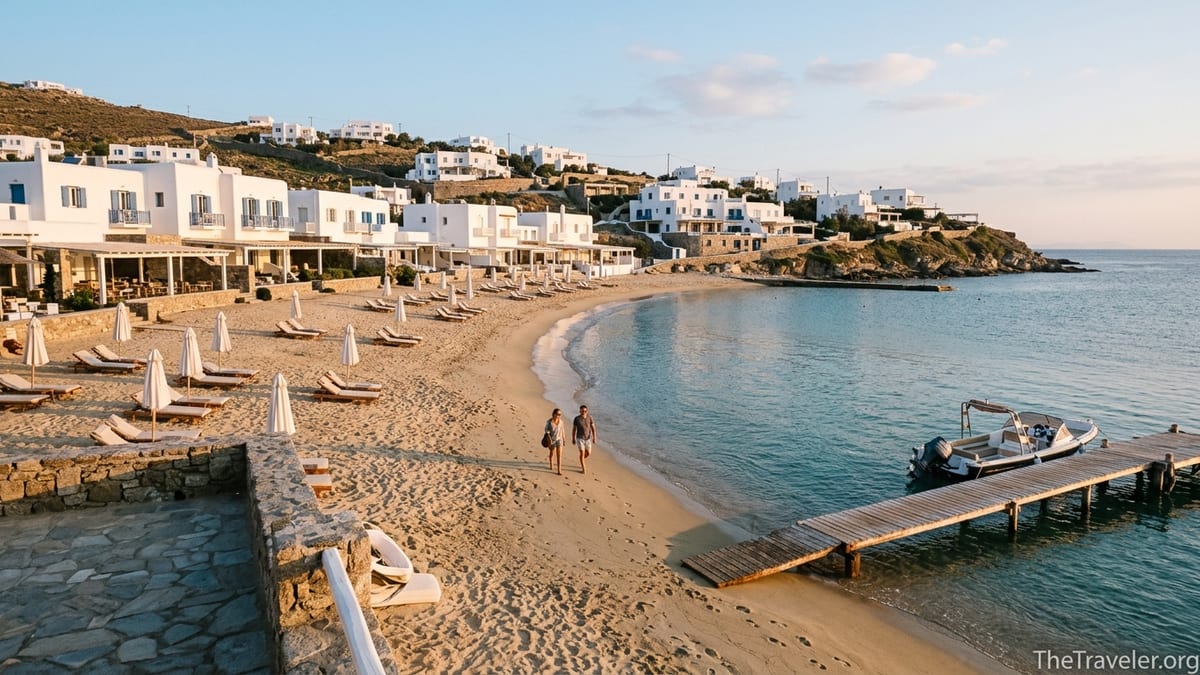
Platis Gialos sits on the south coast of Mykonos, facing a sheltered bay that is lined with hotels, tavernas and a shallow arc of sand. It is less exposed to the strong northern Meltemi winds that affect the island in midsummer, which is one reason it stays popular from late spring right into October. Even so, conditions here still follow the same seasonal rhythm as the rest of Mykonos, with a relatively quiet, breezy spring, hot and busy high summer, then a softer, more relaxed autumn.
In practical terms, tourism on Mykonos builds from around late April, peaks between late June and the end of August, then tapers off through October. Travel researchers and local tourism boards consistently describe late May to mid-June and mid-September to early October as the sweet spot for combining pleasant weather, open businesses, and more manageable crowds. Air temperatures on Mykonos in these periods generally sit in the low to mid 20s Celsius (roughly low to mid 70s Fahrenheit), compared with upper 20s to low 30s Celsius in July and August.
Although Platis Gialos has its own micro-feel, you will be influenced by island-wide factors. Ferry schedules between Athens and Mykonos ramp up significantly from May and are still strong in September, which makes it easy to include Platis Gialos in a wider island-hopping itinerary during shoulder season. By contrast, in late October and through winter, options shrink and many beachfront hotels and restaurants close, so visiting then is only appealing if you prioritise isolation over amenities.
Because Platis Gialos is purpose-built for beach holidays, the “right” time to come is really about finding your ideal balance between warm water, lively atmosphere, and personal space. For many travellers, that balance lies outside the peak of July and August.
Weather by Month: What Conditions to Expect
From a weather perspective, the usable beach season at Platis Gialos typically runs from late April through late October. April can bring sunny days around the mid-teens to high teens Celsius (around 60 to mid-60s Fahrenheit) with cool evenings and a higher chance of rain, making it pleasant for walks but marginal for swimming. By May, daytime highs on Mykonos are often around 20 to 23 degrees Celsius, and rainfall drops sharply compared with winter, so you can expect many dry, blue-sky days, though the sea still feels fresh for longer swims.
June is where conditions become reliably summery. Average highs at this time of year reach the mid-20s Celsius, the sea at Platis Gialos warms into the low 20s Celsius, and the days are long and bright. You can spend hours on a sun lounger without the oppressive heat that July and August sometimes bring. The Meltemi wind, which can blow strongly from the north in mid-summer, tends to be less forceful in early June, and the south-facing aspect of Platis Gialos offers some natural shelter when it does pick up.
July and August are hot, dry and sunny almost every day, with typical highs on Mykonos around the high 20s Celsius and plenty of days that feel hotter in direct sun. Humidity is usually moderate, and the Meltemi can provide welcome natural air-conditioning, though at its strongest it can whip up waves and make beach umbrellas on more exposed shores struggle. Platis Gialos usually remains swimmable and pleasant even on windy days, but if you are sensitive to wind chill, you may notice a difference getting in and out of the water.
From mid-September through early October, the air cools slightly into the low to mid-20s Celsius, while the sea stays warm after a whole summer of heating. Rainfall remains low in September and only begins to increase later in October. In practice, that means a September morning at Platis Gialos often starts clear and calm, with comfortable temperatures for a jog along the beach or a quiet swim before breakfast, and rolls into pleasantly warm afternoons that suit both sunbathing and boat trips.
Sea Temperature and Swimming Comfort
For many visitors, the feel of the water at Platis Gialos is as important as the air temperature. The Aegean around Mykonos is relatively cool in spring and warms slowly, with average sea temperatures climbing steadily from around the mid-teens Celsius in April to the low 20s by June and peaking in late August or early September. Independent sea temperature trackers show that Platis Gialos and nearby south-coast beaches share broadly similar readings, given their close proximity.
In practice, that means early May swimmers at Platis Gialos often describe the water as invigorating rather than warm. You can absolutely swim, especially on still, sunny days, but you might limit yourself to shorter dips or prefer a heated hotel pool. By late May and early June, most people who are comfortable in the sea find the water refreshing but manageable for longer swims, especially once you get moving or if you swim in the middle of the day when the sun is high.
By July, August and September, the sea is typically warm enough that you can float for long periods without feeling chilled, which is ideal if you plan to paddleboard from Platis Gialos around to quieter coves or spend a whole afternoon jumping on and off water taxis to nearby beaches like Paraga and Super Paradise. Many travellers consider late September particularly pleasant, because the water has had all summer to warm up while the fiercest sun and crowds have eased.
By late October, sea temperatures begin to decline again, though hardy swimmers still enjoy unhurried dips, particularly at midday. If swimming is central to your trip and you want to avoid wetsuits, the most reliable window runs from early June through early October, with the best balance of warm water and softer crowds at Platis Gialos generally landing in mid-June and mid to late September.
How Crowded is Platis Gialos in Different Months
Platis Gialos is highly popular because it combines a good sandy beach with easy access to Mykonos Town and other beaches, so crowd levels track closely with the wider island. In July and August the narrow strip of sand can be fully covered in sunbeds belonging to hotels and beach clubs, and by late morning most front-row loungers are occupied. On busy days you might find yourself paying for a pair of beds at a seafront restaurant like a casual taverna or a more upscale beach bar and sharing the shoreline with families, couples and day-trippers from cruise ships.
In shoulder months, the whole scene breathes. In late May and early June, you may still find large sections of sand where you can put down your own towel between organised lounger areas. Beachfront restaurants open all day but you can usually walk up at lunchtime without a reservation, and the water taxis to Paraga, Paradise and other beaches have space even if you do not book ahead. Locals note that hotel occupancy and nightly room rates on Mykonos climb significantly from late June into August, which is reflected in how busy Platis Gialos feels on the ground.
September sees a noticeable drop in peak-season intensity, especially after the big mid-August holiday period when many European travellers head home. There are still plenty of people around, ferries remain frequent and businesses are open, but you can more easily find quieter corners of the beach, and sunset tables at nearby tavernas are less competitive. For example, where a standard sea-view double room in a smart hotel above Platis Gialos might sell for several hundred euros per night in early August, similar rooms in mid-September are often advertised for appreciably less, reflecting this easing of demand.
By October, especially the second half of the month, crowd levels drop further as some hotels begin to close for the season. On a sunny weekday afternoon you might share the beach with only a handful of people, although some services like frequent water taxis and regular beach club events start to taper off. If you are looking for a “small island village” atmosphere in a place that is usually busy, this can be an appealing time, as long as you accept that not everything will be operating.
Price and Availability: What Your Budget Gets in Each Season
Seasonality has a direct impact on how far your budget goes at Platis Gialos. Hotel market reports for Mykonos show that rates in late June to early September can be several times higher than in late April, May or mid-October. A mid-range, well-rated hotel within a five-minute walk of Platis Gialos might advertise a double room for something like 150 to 200 euros per night in May, 250 to 400 euros in June, and well upwards of that in late July and early August, especially if it offers a pool and full sea view.
Luxury properties on Mykonos publish seasonal rate sheets that illustrate the same curve. One high-end coastal resort, for instance, lists late April and early May entry-level suites around the mid-three-figure mark per night, rising substantially from late May through late June, then peaking between late June and early September before dropping again in October. While this specific hotel is not at Platis Gialos itself, similar patterns apply across much of the island’s mid-range and upscale accommodation scene.
Flights and ferries follow comparable dynamics. Summer schedules between Athens and Mykonos are dense, but ticket prices rise around school holidays and popular weekends. In shoulder season, you are more likely to find one-way ferry fares between Athens and Mykonos that feel reasonable for the three to five-hour journey, and domestic flights that come in under typical high-summer prices. At the same time, shoulder season still offers enough daily departures to give you flexibility if one connection sells out or is delayed.
On the ground in Platis Gialos, restaurant and sunbed prices change less dramatically than accommodation, but you may still notice a difference. A pair of sun loungers and an umbrella at a simple beachfront spot might cost around 25 to 40 euros in May or late September, with minimum spends and higher fees at more fashionable venues in August. If you want to enjoy Platis Gialos’s beach infrastructure without feeling pressured by premium peak-season pricing, aim outside late June to late August.
Best Shoulder-Season Windows for Platis Gialos
If your goal is “better weather and smaller crowds,” two windows stand out for Platis Gialos: late May to mid-June and mid-September to early October. During these times, you can usually expect warm, dry days, seas that are swimmable for most people, and an atmosphere that feels lively but not chaotic. Ferries and flights are running frequent schedules, island services are fully open or close to it, and you have more freedom to improvise without advance reservations for every meal or lounger.
In late May and early June, the island is shaking off its winter quiet. Beach clubs near Platis Gialos begin hosting regular events, but not nightly “superclub” parties. You might, for instance, have breakfast on a nearly empty terrace overlooking the bay, spend a late morning swimming when the water is calmest, then walk the coastal path towards Paraga in the afternoon without feeling hemmed in by other visitors. Evenings in Mykonos Town remain atmospheric, with enough people to fill the lanes and waterfront bars but not so many that you struggle to move.
Mid-September to early October offers a slightly different shoulder-season mood. The sea is at or near its warmest, and many families have left as school resumes, leaving a higher proportion of couples and groups of friends. You can often book a sea-view table at a Platis Gialos taverna on the same day, enjoy quieter water taxis, and still find DJ sets and nightlife if you want them, especially on weekends. The sun sits a little lower, which makes late-afternoon light particularly beautiful for photography along the bay.
In both shoulder windows, you can also plan day trips without the peak-season crush. A half-day boat excursion from Platis Gialos or nearby Ornos to the archaeological site on Delos, for example, feels more relaxed when your boat is at half capacity rather than packed. Similarly, renting a car or ATV for a day to explore inland villages and more remote beaches is easier when the island roads are not at their July traffic levels.
Sample Itineraries: How a Visit Feels in Different Months
To see how timing affects your stay, imagine three short breaks at Platis Gialos in different seasons. In early June, you might land in Mykonos around midday, catch a taxi to your small hotel a few minutes’ walk from the sand, and be on the beach by late afternoon. The water feels cool at first but comfortable once you are in, and the sun is strong enough that you still want shade during the brightest hours. That evening, you walk straight into a beachfront restaurant, order grilled fish and a Greek salad, and watch as the bay settles into a peaceful twilight with just a few bar playlists drifting across the water.
In early August, a similar arrival plays out differently. Your hotel near Platis Gialos likely cost significantly more, and you may have booked it months in advance. By the time you reach the beach, nearly every lounger is occupied, and spontaneous walk-up space can be hard to find at the trendiest beach clubs. The sea is warm and inviting, but music and chatter create a constant background soundtrack. Dinner at a popular restaurant often requires a reservation, and a taxi into Mykonos Town later may involve a wait as other visitors compete for rides, especially after midnight.
In late September, the same three-night stay feels more measured. You probably secured a better accommodation rate and may have been offered a complimentary upgrade or breakfast deal, as properties look to fill remaining shoulder-season inventory. The beach is still active, but you can see stretches of open sand, and local staff have more time to chat and share tips about walks, viewpoints or quieter coves. The water retains its summer warmth, making late afternoon swims particularly pleasant, and you can comfortably sit outside in the evening with a light jacket rather than needing strong air-conditioning in your room overnight.
Thinking about your own priorities in these concrete terms helps clarify when to come. If you value quiet mornings, easy last-minute decisions and lower prices, shoulder months suit you. If your priority is maximum social energy, packed beach clubs and long, hot days, you may decide that the trade-offs of July or early August are worth it, even at Platis Gialos.
The Takeaway
For most travellers who want better weather and smaller crowds at Platis Gialos, the ideal times to visit are late May to mid-June and mid-September to early October. During these weeks you can usually count on warm, sunny days, a sea that is comfortable for swimming, and a bay that feels alive but not overcrowded. Accommodation and transport prices are more reasonable than in peak summer, and you have a far easier time finding space on the sand, in tavernas and on ferries.
July and August still deliver classic Greek-island summer conditions, with hot, dry weather and very warm water, but they also bring the highest prices and densest crowds. If you choose these months, focus on advance booking and early starts to carve out quieter pockets of time at Platis Gialos. At the other end of the spectrum, late April and late October can be beautiful in terms of light and atmosphere, yet cooler water, fewer services and occasional unsettled weather mean they suit repeat visitors or those who prioritise tranquillity over beach time.
Ultimately, the “best” time to visit depends on where you sit on the spectrum between solitude and buzz. The good news is that Platis Gialos’s sheltered position, reliable summer sunshine and long season mean you can fine-tune your trip, whether that is a relaxed early-June long weekend, a value-focused late-September escape, or a high-energy August holiday that dives into Mykonos at full tilt.
FAQ
Q1. What is the single best month to visit Platis Gialos for weather and smaller crowds?
Many travellers find June or September the best compromise. June offers long sunny days and building energy before peak crowds, while September combines warm sea temperatures with noticeably fewer visitors than July and August.
Q2. Is May warm enough for swimming at Platis Gialos?
May usually brings pleasant air temperatures and plenty of sun, but the sea can still feel cool, especially early in the month. Most people comfortable with slightly brisk water can swim, but if you want consistently warm seas, aim for June through September.
Q3. How busy does Platis Gialos get in July and August?
In July and August, Platis Gialos can be very crowded. Sunbeds often fill by late morning, beachfront restaurants are busy all day, and the overall atmosphere is lively and sometimes hectic, especially when cruise ships are in port.
Q4. Are prices really that different between June and August?
Yes, prices for accommodation on Mykonos generally rise sharply in July and August compared with May, June and September. Mid-range and upscale hotels near Platis Gialos often charge significantly more in peak season, while shoulder months can offer noticeably better value.
Q5. Will everything be open if I visit in late September or early October?
In late September, almost all hotels, restaurants and beach services at Platis Gialos are still open. By early October, most remain operating, though some places may start to reduce hours or close towards the middle and end of the month.
Q6. How does the Meltemi wind affect Platis Gialos?
The Meltemi is a strong north wind that can blow in July and August. Because Platis Gialos faces south, it is more sheltered than many beaches on the north coast, so conditions usually stay swimmable, though you may still notice choppy water or a cool breeze on windier days.
Q7. Is it better to stay at Platis Gialos or in Mykonos Town for shoulder season?
In shoulder season, Platis Gialos works very well as a base if your priority is beach time and easy access to other south-coast beaches. Mykonos Town is better if nightlife and shopping are your main focus. Many visitors split their stay between the two over four to six nights.
Q8. Do I need to reserve sunbeds in advance outside of peak months?
From late May to mid-June and in September, you can usually find sunbeds at Platis Gialos by arriving in the late morning. However, if you have your heart set on a particular beach club or front-row position, it is sensible to reserve ahead, especially on weekends.
Q9. What should I pack for an early June trip to Platis Gialos?
For early June, bring light summer clothing, swimwear, a hat and strong sun protection, plus a light jacket or sweater for breezy evenings. Comfortable shoes or sandals are useful if you plan to walk the coastal paths to nearby beaches.
Q10. Is public transport to Platis Gialos reliable in shoulder season?
Yes, during shoulder season there are usually regular buses between Mykonos Town and Platis Gialos throughout the day, along with water taxis connecting nearby beaches. Services are less frequent than in peak summer but still convenient for most visitors.