


Four Seasons occupies a rare space in travel. Its hotels are not quite the gilded, once-in-a-lifetime palaces of ultra luxury, yet they sit well above typical five-star brands on both price and service. If you have ever wondered what you really pay for when a night can run from about 300 dollars in some cities to well over 5,000 dollars in Bora Bora, this guide breaks down the real-world costs in 2026 and what is included at each step.
Get the latest updates straight to your inbox!
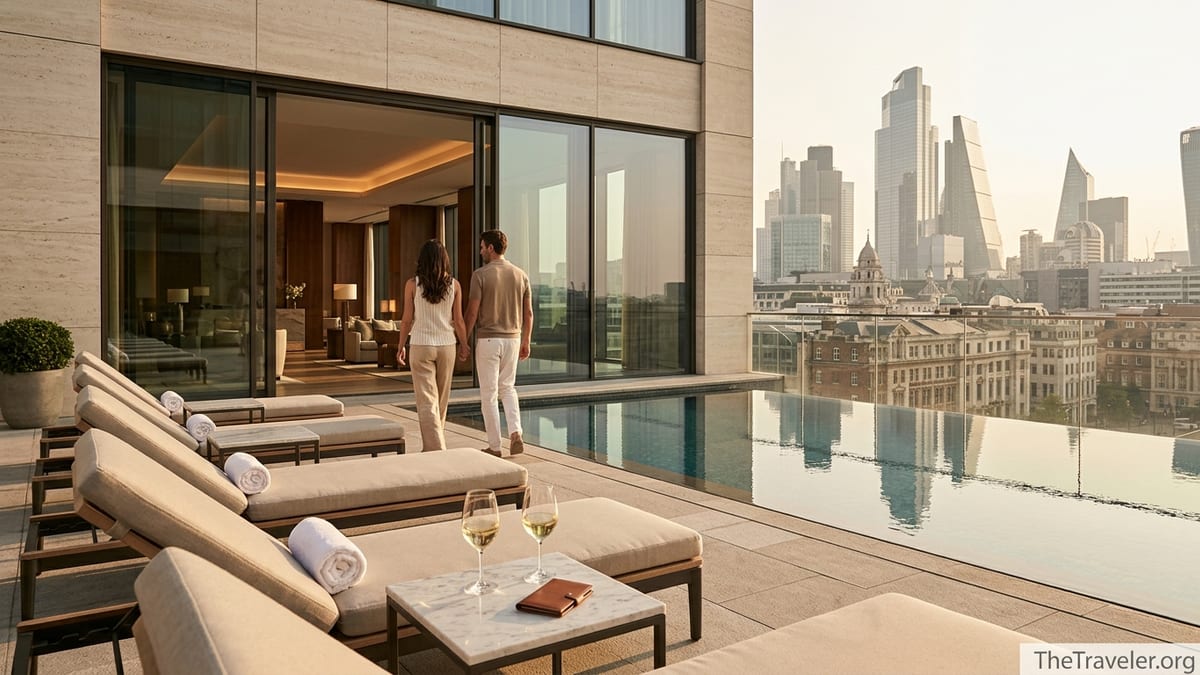
What a Night at Four Seasons Costs in 2026
Rates at Four Seasons vary dramatically by city, season, and room type, but there are now clear price bands for 2026. In many business and financial hubs, such as Seoul, Singapore, and Boston, entry-level rooms often start in the 350 to 750 dollar range on quieter dates and climb past 1,200 dollars during peak events. For example, recent live pricing for Four Seasons Hotel Seoul shows typical nightly rates running from roughly 380 to 880 dollars, while Four Seasons Hotel Singapore often ranges from just over 320 dollars to more than 1,200 dollars per night depending on demand and room category.
In classic European and resort cities, the floor is higher. At Four Seasons Hotel Firenze in Florence, a garden-view room can start near 1,100 dollars on select dates and rise toward 4,000 dollars for premium suites. In Geneva, Four Seasons Hotel des Bergues frequently sits around 1,300 dollars and above for standard rooms. Across the portfolio, independent luxury agencies tracking pricing find that standard rooms at most Four Seasons hotels now cluster between about 500 and 1,200 dollars per night, junior and one-bedroom suites between roughly 1,800 and 4,000 dollars, and villas or branded residences often from 5,000 dollars per night into the mid five figures for the most exclusive options.
The spread becomes most evident at destination resorts. Four Seasons Resort Lanai in Hawaii regularly lists rooms from around 900 dollars into the 6,000 dollar range, depending on whether you are in a garden-view king or a prime oceanfront suite. At Four Seasons Resort Maui at Wailea, some of the largest accommodations, particularly multi-bedroom oceanfront suites, can price well into five figures per night on peak winter or holiday dates. In contrast, urban properties in emerging markets, such as Four Seasons Hotel Doha or Four Seasons Hotel Istanbul at the Bosphorus, sometimes dip below 250 to 300 dollars on off-peak nights, showing that not every Four Seasons stay is eye-wateringly expensive.
Four Seasons itself reports an average rate across the portfolio well into the high hundreds of dollars per night, and independent cost trackers analyzing live data for 2026 find that most stays fall between 700 and 1,500 dollars per night before taxes and incidentals. When travelers casually say that “Four Seasons is about a thousand dollars a night,” they are broadly in the right ballpark for many flagship city hotels and popular resorts once you blend high and low seasons.
City vs Resort: Very Different Final Bills
The nature of your stay matters as much as the nightly rate. A business traveler booking Four Seasons Hotel New York Downtown in lower Manhattan might see flexible weekday rates from roughly 750 dollars into the mid 3,000 dollar range depending on suite category and dates. A two-night stay in a standard king at 900 dollars per night could produce a pre-tax room bill of 1,800 dollars. Add New York’s combined occupancy and sales taxes, which can push the effective room cost up by 14 percent or more, and you are already close to 2,050 dollars before ordering a single room-service sandwich.
By comparison, a sunny long weekend at Four Seasons Resort and Residences Napa Valley is a different financial story even if the base rate looks similar. Recent live pricing shows entry-level vineyard-view rooms around 700 to 1,000 dollars and suites well beyond that. A couple staying three nights at 900 dollars per night would see a 2,700 dollar room subtotal, but Napa’s resort-style environment often encourages more on-property spending. Daily breakfasts at the restaurant, a wine pairing dinner, spa treatments, and poolside snacks can easily add several hundred dollars per day. It is common for guests who thought they were booking a 2,700 dollar getaway to check out with a final bill north of 4,000 dollars.
The contrast becomes sharper in destination resorts. At Four Seasons Resort Scottsdale at Troon North, for instance, a summer rate just over 300 dollars might look almost modest for the brand, but guests often rent pool cabanas, book golf rounds at Troon North, and schedule spa rituals inspired by the Sonoran Desert. On a typical three-night stay, these extras can easily double the lodging spend. Likewise, at Four Seasons Hotel Las Vegas, nightly rates may start in the high 200s or 300s on certain midweek dates, yet once you add valet parking, cocktails in the lounge, and spa access, the overall cost again expands past what the sticker price suggests.
The main takeaway is that a Four Seasons city hotel often concentrates cost in the room rate and taxes, while a resort stay shifts more of the spend into experiences: dining, activities, spa, and transport. Two stays with the same nightly rate can produce very different final bills depending on destination and travel style.
Understanding the Line Items: Taxes, Fees, and Parking
When travelers first price a Four Seasons stay, they often underestimate the impact of taxes and fees. In major North American cities, local room taxes and occupancy charges commonly add 12 to 18 percent to the quoted base rate. In Boston, for example, a 750 dollar night at Four Seasons Hotel One Dalton Street can climb past 850 or 880 dollars once city and state taxes are applied. European capitals such as London or Madrid may levy smaller per-night city taxes rather than percentage-based surcharges, but the effect is still noticeable across a multi-night stay.
Resort fees are less common at Four Seasons than at some mass-market chains, but parking and spa access charges still matter. In Las Vegas, for instance, Four Seasons Hotel Las Vegas does not universally bundle a large resort fee into every booking in the same way as some neighboring casino hotels, but guests do face meaningful parking costs. Recent data shows valet parking charges in the mid 30 to mid 40 dollar per day range. On a four-night stay, that can add more than 150 dollars to the bill before tipping. In many urban Four Seasons properties, particularly in North America, overnight valet often carries a similar 40 to 70 dollar daily price tag, especially in dense downtown locations where the hotel relies on third-party garages.
Internationally, the structure can shift. At Four Seasons Resort Bali at Jimbaran Bay or Four Seasons Resort Peninsula Papagayo in Costa Rica, mandatory resort or service charges may replace the North American-style resort fee. These percentage-based service charges can sit around 10 percent or more, often applied on top of the room rate and sometimes even food and beverage. A 1,200 dollar night at a tropical resort might therefore become 1,320 dollars with service charge and then rise further with local tourism taxes.
Travelers should also anticipate incidentals that are easy to forget when budgeting. In-room dining at Four Seasons frequently reflects restaurant-level pricing, with a club sandwich in a major U.S. city often hovering around 30 dollars before tax and service, and a glass of house wine in the high teens. Daily breakfasts for two at a flagship property like Four Seasons Hotel Hong Kong or Four Seasons Hotel London at Park Lane can reach 80 to 120 dollars if taken a la carte. Over a four-night stay, simply choosing to eat breakfast in the hotel rather than at a nearby café can add several hundred dollars to your total spend.
What You Are Actually Paying For: Service, Space, and Consistency
Behind the high nightly rates lies a specific value proposition that keeps loyal guests returning. The first pillar is service. Four Seasons originated the now-common idea that luxury hotels should aim to say yes to nearly any reasonable request, whether that means a last-minute airport transfer at midnight or an off-menu dish in the restaurant. In practice, this translates to a high staff-to-guest ratio. At Four Seasons Hotel Hong Kong, for example, guests describe seeing multiple team members available on each lobby level, from dedicated concierges to pool attendants, which helps keep wait times short and interactions personal.
Second is space and hardware quality. Rooms at many Four Seasons properties start at sizes that would be considered premium elsewhere. At Four Seasons Hotel Madrid and Four Seasons Astir Palace Hotel Athens, even entry-level rooms feel residential, with thoughtful lighting, quality textiles, and proper sound insulation. Bathrooms are almost universally generous, often with separate soaking tubs and walk-in rain showers, double vanities, and high-end amenities. This hardware is expensive to build and maintain, and that cost flows into the nightly rate.
Third is consistency across continents. A traveler booking Four Seasons Hotel Tokyo at Otemachi or Four Seasons Resort Bali at Sayan can reasonably expect a similar level of housekeeping, maintenance, and problem resolution as they would in Toronto or Boston. If a room is not ready on time, or a maintenance issue arises, the brand’s culture encourages front desks to take immediate corrective action, such as upgrading rooms, waiving charges, or offering credits. For frequent travelers who value predictability and do not want to gamble on a new boutique brand, that consistency alone can justify paying a premium.
Finally, price reflects the intangibles that have become part of the Four Seasons mythos: the ability to leave belongings in your room without worry, to trust the concierge with complex restaurant reservations, and to know that dietary restrictions or accessibility needs will be handled carefully. For many guests, these psychological comforts are as important as thread count, and they are a core part of what the nightly rate buys.
When Four Seasons Is a Relative Bargain, and When It Is Not
Four Seasons will almost never be the cheapest option in a destination, but there are scenarios where it delivers strong relative value. Shoulder seasons in resort areas, such as early November in Maui or late April in the Greek islands, can see rates drop significantly from peak. At Four Seasons Resort Maui at Wailea, for example, an ocean-view room might price at roughly half its winter high on certain spring dates. Combined with mild weather and thinner crowds, that can create a sweet spot where the overall experience per dollar outperforms both high season Four Seasons pricing and some competing five-star resorts that hold firm on rates.
City hotels can also be bargains on weekends in heavy business hubs. Four Seasons Hotel Doha or Four Seasons Hotel Dubai International Financial Centre may lower rates dramatically on Thursdays and Fridays when corporate traffic dips. Travelers using flexible dates tools on booking engines sometimes see entry-level rooms drop into the low 200s in these markets, putting Four Seasons within reach of upscale rather than ultra luxury budgets.
On the flip side, there are stays where Four Seasons can feel disproportionately expensive. Ultra-remote resorts such as Four Seasons Resort Bora Bora or Naviva, A Four Seasons Resort in Mexico operate in narrow demand windows with limited inventory. At Bora Bora, independent cost trackers report that overwater bungalows commonly list from around 1,800 to 3,500 dollars per night, while special villas and peak holiday dates can run into the 6,000 to 7,000 dollar range or beyond. When flights to French Polynesia are added, total trip costs can resemble a small car purchase.
Holiday periods in major cities can also stretch value. A New Year’s Eve stay at Four Seasons Hotel London at Park Lane or Four Seasons Hotel New York Downtown can run multiple times higher than equivalent rooms in early January. Even if the stay is exceptional, travelers unwilling to pay a considerable premium for the holiday atmosphere may be better served by booking in an adjacent week or looking at high-end competitors that do not increase rates as steeply on those specific nights.
How to Trim the Bill Without Losing the Experience
While Four Seasons does not run sales in the way mid-market chains do, there are strategic ways to reduce the overall cost of a stay. One of the most effective is targeting published offers on the brand’s own site. Many properties now run “Stay Longer” or “Third Night Free” promotions that reduce the average nightly rate without appearing as a discount per se. For example, a city hotel might offer four nights for the price of three, turning a nominal 800 dollar rate into an effective 600 dollars per night before taxes. Resorts such as Four Seasons Bora Bora or Four Seasons Resort Costa Rica frequently bundle daily breakfast or resort credits, which can offset spending on meals and spa.
Booking through preferred partner travel advisors can also add quietly valuable perks at the same published rate, such as complimentary daily breakfast for two, 100 dollar spa or dining credits, and priority for room upgrades. On a four-night couples getaway, free breakfast alone can save several hundred dollars, while the onetime credit can cover a round of cocktails or part of a massage. Importantly, these arrangements generally use the hotel’s best available flexible rate rather than prepaid or opaque promotions, preserving cancellation flexibility.
Once on property, small behavioral choices help control the final bill. Choosing to have coffee and a light breakfast at a nearby café instead of in the hotel, skipping nightly cocktails at the bar, and using ride-share services rather than the hotel car can keep incidentals from spiraling. In Las Vegas, for instance, using self-parking at a neighboring structure instead of daily valet at Four Seasons can shave more than 100 dollars off a long weekend stay. At beach resorts, renting paddleboards or snorkeling gear from local operators rather than via the hotel can sometimes halve the cost, although guests should balance this against convenience and safety.
Room choice matters too. In many Four Seasons properties, the step from a city-view room to a partial or full harbor or ocean view can add hundreds of dollars per night, especially in destinations like Sydney, Hong Kong, or Maui. Travelers who spend most of the day sightseeing and only return to sleep may find that the entry-level category delivers essentially the same service and facilities access as the premium view rooms. Booking the base room but using any available upgrade benefit through an advisor or loyalty-like program is often the most cost-effective compromise.
The Takeaway
Staying at Four Seasons in 2026 usually means accepting that you will spend more than at almost any competing five-star hotel in the same city. Typical nightly rates in the 700 to 1,500 dollar range, plus double-digit percentage taxes and meaningful incidentals, make even a short stay a significant financial decision. At resorts like Bora Bora, Lanai, or Maui, nightly rates can easily reach several thousand dollars, turning weeklong holidays into five-figure commitments before flights.
In return, guests receive a combination of highly polished service, quietly luxurious design, and an unusual level of global consistency. You are paying not only for large rooms and strong housekeeping, but also for things that are harder to quantify: staff who remember your name and preferences, concierges who can solve problems before they reach you, and a sense that the hotel will make things right if something goes wrong. For travelers who value reliability and emotional comfort as much as marble lobbies, that package is worth the premium.
The smartest way to approach Four Seasons is not to ask whether it is cheap, but whether it is the right tool for a particular trip. On a quick business stopover, a well-run local boutique might be enough. For a milestone anniversary where you want every detail handled without friction, paying extra for Four Seasons can feel entirely reasonable. With thoughtful timing, smart use of offers, and some discipline on extras, you can experience the brand without overpaying for things that do not matter to you personally.
FAQ
Q1. How much does a typical night at a Four Seasons hotel cost in 2026?
For most city hotels, expect roughly 500 to 1,200 dollars per night for standard rooms, with suites usually starting around 1,800 dollars and rising into several thousand dollars.
Q2. Are Four Seasons rates always higher than other luxury brands?
Generally yes, Four Seasons tends to price at or above peers, but in some markets and off-peak periods its entry rates can be similar to other top-tier five-star hotels.
Q3. Do Four Seasons hotels charge resort fees?
Resort-style fees are less common than at some mass-market brands, but certain resorts and urban properties add service charges or local fees on top of room rates.
Q4. How much extra should I budget for taxes and fees?
In many cities, taxes and service charges add 12 to 20 percent to the base rate. At resorts, additional service charges can push this higher, especially on food and spa bills.
Q5. Is breakfast usually included in Four Seasons room rates?
Standard published rates often exclude breakfast, especially in city hotels. Many packages, and some travel advisor programs, include daily breakfast for two as a benefit.
Q6. How expensive are Four Seasons resorts like Bora Bora or Maui?
At flagship resorts, overwater bungalows or prime oceanfront suites can often run from about 1,800 dollars to well above 5,000 dollars per night on peak dates.
Q7. Can I find Four Seasons rooms for under 300 dollars per night?
It is possible in select destinations and off-peak periods, especially in business-focused or emerging-market cities, though such rates are not common at flagship properties.
Q8. Are there ways to save money on a Four Seasons stay without sacrificing quality?
Yes. Booking shoulder seasons, using “stay longer” offers, working with preferred partner advisors, and being selective about on-property dining can significantly reduce total cost.
Q9. What are the most common surprise costs on a Four Seasons bill?
Valet parking, daily breakfasts, spa treatments, in-room dining, and local taxes or service charges are the line items that most often push the bill above expectations.
Q10. Is a Four Seasons stay worth the price for most travelers?
It depends on priorities. For milestone trips and travelers who value service, consistency, and comfort over price, many feel the premium is justified; value-focused guests may prefer upscale alternatives.