


San Francisco rewards curious travelers, but it can also punish those who arrive with glossy postcard expectations instead of practical information. Between its microclimates, layered transit systems and evolving safety picture, it is easy for visitors to waste money, lose time or miss what makes the city special. Understanding the most common mistakes travelers make in San Francisco will help you enjoy the Bay City’s beauty without the avoidable headaches.
Get the latest updates straight to your inbox!
Misreading San Francisco’s Weather and Microclimates
Many first-time visitors picture California as year-round beach weather and pack accordingly. They land at San Francisco International Airport in July wearing shorts and sandals, then step into a 58-degree breeze and thick fog. Summer high temperatures in the city typically hover in the mid-60s Fahrenheit, with evenings often dropping into the low 50s, and the famous marine layer fog can roll in quickly, especially near the Golden Gate and the ocean. Travelers who assume it will feel like Los Angeles or San Diego often end up buying an emergency sweatshirt from a souvenir stand at Pier 39 instead of packing layers from home.
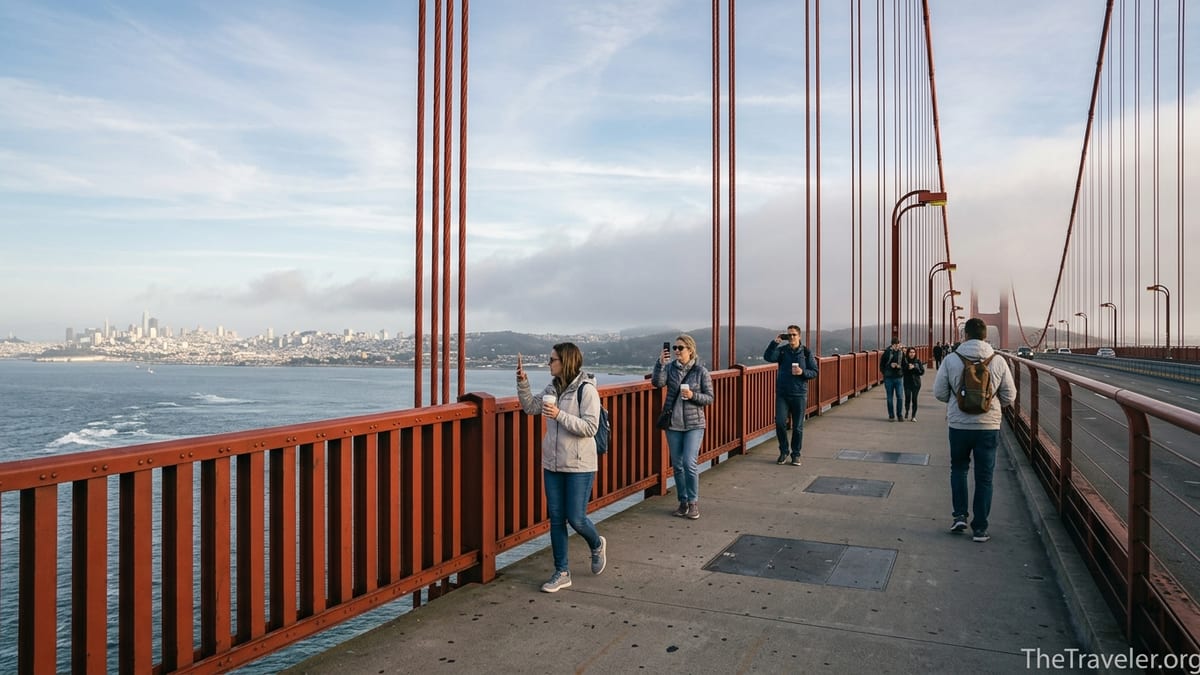
Another common mistake is treating the city’s weather as uniform. San Francisco’s microclimates can change dramatically from one neighborhood to the next. On a July afternoon, it can be sunny and almost warm around the Ferry Building and the Embarcadero while the Outer Richmond and the Sunset District sit under a blanket of fog and mist. Someone who leaves Union Square without a jacket for a sunset stroll across the Golden Gate Bridge is likely to find themselves shivering halfway across, wind whipping off the Pacific and visibility dropping as fog pushes through the Golden Gate.
Smart travelers plan their clothing the way locals do: layers that can be added or removed as the weather shifts block by block. A typical day outfit might be jeans, a breathable T-shirt, a light sweater and a windproof shell, with a beanie or scarf in a daypack. This approach pays off when you start in the sheltered warmth of Mission Dolores Park at midday, then head to Lands End to watch the waves crash below the trail. The difference in temperature and wind between those two spots on the same afternoon can surprise even seasoned visitors.
Timing also matters. People often book a “summer escape” expecting July or August to be the warmest and clearest months for views of Alcatraz or the skyline from Twin Peaks. In reality, early fall, especially September and early October, usually brings the most reliably warm, clear days. Visitors who can be flexible with dates sometimes find that moving a trip from mid-July to late September dramatically changes their experience, from fogged-in bridge photos to golden light and mild evenings along the waterfront.
Underestimating Hills, Distances and Urban Layout
On a flat map, San Francisco looks compact. Many visitors glance at their phones and decide to “just walk everywhere,” imagining a leisurely stroll from Fisherman’s Wharf to Coit Tower to Chinatown and back to Union Square. What those maps do not show is how steep the city’s hills really are. Streets like Filbert or Hyde can feel more like staircases than sidewalks, and a 15-minute walk on a map can turn into a sweaty, calf-burning climb. Travelers often arrive at a cable car turnaround exhausted, only then realizing why locals build their days around the topography.
Misjudging the layout also leads people to chain together attractions that are technically close yet separated by time-consuming elevation changes. A traveler might schedule breakfast at a café in North Beach, plan to “quickly pop up” to Coit Tower on Telegraph Hill, then head straight to the Painted Ladies at Alamo Square before a lunch reservation in Hayes Valley. In practice, that sequence means climbing hundreds of stairs to Coit Tower, then a long transit ride or an expensive rideshare across town, all before noon. The day becomes a blur of commuting instead of enjoying neighborhoods.
Another frequent mistake is ignoring how tiring the hills can be over several days. It is one thing to climb Lombard Street once for a photo; it is another to spend three straight days tackling Russian Hill, Nob Hill and Pacific Heights on foot while jet-lagged. Visitors sometimes book hotels at the top of steep inclines, such as parts of Nob Hill, without considering that every evening walk back from dinner will finish with a demanding uphill push. That can feel particularly punishing for families with strollers or older travelers managing mobility issues.
Planning with the hills in mind changes the experience. Grouping attractions by neighborhood and altitude is more efficient than zigzagging across town. For example, you might spend one morning focused on the Embarcadero and Ferry Building area, using flat waterfront paths, and another on Russian Hill and cable car rides rather than trying to do both in a single stretch. Even something as simple as taking the California Street cable car up from the Financial District instead of walking the full incline to Grace Cathedral can preserve energy for the rest of the day.
Getting Confused by Transit, Fares and Passes
San Francisco’s transit network is rich but layered, and many visitors lose both time and money by not understanding how the pieces fit together. Travelers commonly arrive at San Francisco International Airport and buy a one-off Bay Area Rapid Transit ticket into the city, then later purchase separate paper passes or pay cash on Muni buses, not realizing that a single Clipper card or contactless payment method could have covered almost all of their local travel. With the rollout of newer Clipper technology and contactless options, transit has become more flexible, but that also adds to the confusion for first-time users who are comparing machines and fare charts while jet-lagged.
Another frequent mistake involves the iconic cable cars. Visitors line up at the Powell and Market turnaround, sometimes waiting 45 minutes or more in peak season, and pay the standard single-ride fare each time they hop on. The cable car fare is significantly higher than a regular Muni bus or streetcar ride, and a family of four taking two or three rides in a day can easily spend the equivalent of a full-day visitor pass without realizing it. People who buy individual rides on the spot often learn later that a Muni day pass or a multi-day transit passport, loaded in an app or onto a Clipper card, would have given them unlimited rides on buses, light rail and cable cars for a lower total cost.
The fragmented nature of the Bay Area’s transit systems also trips people up. A classic example is a traveler staying near Union Square who wants to visit the Mission District. They might open a navigation app and see both Muni Metro and BART options, then hesitate over which to choose because the payment instructions look different. In reality, both systems accept Clipper and are fairly straightforward once you understand that Muni has flat fares while BART uses distance-based pricing. Those who ride BART for a very short hop within the city sometimes end up paying more than necessary when a Muni light rail trip or bus would have been just as fast and cheaper.
Small practical details matter too. On Muni, a paid fare typically gives you a transfer window rather than a single boarding, allowing another bus or streetcar ride within a set timeframe. Travelers who are unaware of this will pay twice when they change from, say, the F Market & Wharves historic streetcar to a bus up to Coit Tower. Similarly, not realizing that you can often board cable cars at less crowded stops along the route, such as near Washington Street on the Powell-Hyde line, leads people to waste precious sightseeing time at the busiest terminals instead of exploring while they wait.
Overreliance on Cars and Mismanaging Parking
Driving in San Francisco looks convenient on a map, and car rental counters at the airport are busy every day with visitors who assume a vehicle will make the city easier to navigate. Once they arrive, many discover that the opposite is true. Between steep hills, narrow streets, frequent one-way segments and a web of parking regulations, having a car in dense neighborhoods can be more stress than it is worth. It is not unusual to see visitors circling Russian Hill or North Beach for 30 minutes searching for a legal space, only to give up and pay a premium at a garage.
Parking mistakes can become expensive quickly. In high-demand areas like Fisherman’s Wharf, the Marina and Union Square, garages can charge substantial daily maximums, especially near major hotels or event venues. Those who park on the street without reading signs carefully risk tickets for overstaying time limits, blocking street cleaning hours or misreading colored curb markings that indicate special rules. A traveler might think they have found a perfect spot for a full afternoon near Crissy Field, only to return and find a ticket because the zone switched to no parking during scheduled cleaning hours.
Car break-ins have been a notorious problem across San Francisco for years, particularly in heavily touristed areas such as the neighborhoods near Fisherman’s Wharf and along Lombard Street. While recent data show that reported car break-ins have fallen significantly compared with earlier in the decade, the issue has not vanished. Visitors who leave luggage, backpacks or shopping bags visible in a parked car can still become targets. A typical scenario involves a rental car parked for just a short viewpoint stop near Twin Peaks or on a scenic overlook above the Marina. Thieves watch for tourists who park, take photos and walk away, and can break a car window and grab items in less than a minute.
For many visitors staying within the city proper, the better strategy is to rely on a combination of transit, walking and occasional rideshare trips, especially for nighttime returns to hilly neighborhoods. If a car is truly necessary, such as for a day trip to Muir Woods or Napa Valley, some travelers choose to rent for only that day rather than for their entire stay. That allows them to avoid overnight parking charges and reduces exposure to break-in risk while still providing flexibility for regional excursions across the Golden Gate Bridge or down the coast.
Sticking Only to the Tourist Core and Missing Local Neighborhoods
San Francisco’s most famous sights are clustered in a relatively small slice of the city, and many short visits never leave this area. Travelers often spend two or three full days rotating through Fisherman’s Wharf, Pier 39, Lombard Street, Union Square and perhaps a quick stop at the Ferry Building. While these places have their charms, they do not reflect the full personality of the city. Overcrowded restaurants with tourist-focused menus, long lines at chain coffee shops and aggressive souvenir sales can leave people feeling like they have visited a postcard version of San Francisco rather than the real thing.
The consequence of staying only in this “tourist box” is that visitors miss neighborhoods where locals actually linger. Take the Mission District, for example, where murals on Clarion Alley and Balmy Alley tell the story of decades of community activism and cultural change. A traveler who never ventures beyond the cable car routes might not experience a late afternoon in Dolores Park, watching locals gather with picnic blankets while the skyline glows to the north. Similarly, those who only see North Beach from the angle of crowded Italian restaurants near Columbus and Broadway may never wander a few blocks up to quiet literary landmarks or neighborhood bakeries that predate social media.
Another overlooked area is the Richmond and Sunset districts along the city’s western edge. Many visitors assume these neighborhoods are too far or too residential to be interesting, yet they offer direct access to the Pacific Ocean, Lands End and Golden Gate Park’s quieter corners. An afternoon walking the coastal trails from Lands End to the Sutro Baths ruins gives a completely different impression of San Francisco than a day spent navigating souvenir stalls at Pier 39. Travelers often remark afterward that these less commercial spaces were the highlight of their trip, but they require a conscious decision to go beyond the most marketed addresses.
Balancing iconic sights with authentic neighborhoods can be as simple as reassigning one day of a three-day itinerary. Instead of returning to Fisherman’s Wharf for another round of clam chowder in a bread bowl, you might explore the Inner Sunset’s cluster of independent cafés and bookstores before walking into Golden Gate Park. Or swap an afternoon of shopping at chain stores around Union Square for a few hours on Clement Street tasting regional Chinese cuisine and browsing Asian markets. These choices do not eliminate the classic experiences people dream about, such as seeing the cable cars or visiting Alcatraz, but they round out the trip into something more reflective of the city’s real life.
Misjudging Safety, Street Conditions and Expectations
San Francisco’s public image has swung between extremes in recent years, from dystopian headlines about crime and visible homelessness to glowing praise for its tech-fueled prosperity and cultural offerings. Many travelers arrive with strong preconceptions, either expecting a dangerous urban landscape or assuming that every block is as polished as a postcard. Both views miss the nuance of what it is actually like to move through the city as a visitor. Crime patterns and street conditions vary by neighborhood and even by block, and understanding that context leads to better decisions about where to stay, when to walk and how to carry belongings.
One common mistake is treating sensational stories as a minute-by-minute forecast. A visitor who reads only about past spikes in property crime may feel anxious about walking from their hotel in Union Square to dinner in North Beach at 7 p.m., even though that route follows busy, well-lit streets used by workers and tourists every day. At the same time, someone who dismisses every concern as media exaggeration might stroll alone at midnight through industrial stretches of SoMa with their phone in hand and backpack loosely zipped, unaware that opportunistic theft is more likely in quieter areas at off-hours.
It is also easy to underestimate the impact of visible homelessness and drug use on first impressions. Certain downtown blocks, particularly parts of the Tenderloin and sections near major transit hubs, can feel confronting for visitors unused to seeing people in crisis on the street. While violent encounters with tourists remain relatively uncommon, the emotional impact of walking through these areas unprepared can be significant. Families sometimes book budget hotels on the edges of these neighborhoods without realizing that their daily route to the cable car or the conference center will pass through blocks that feel very different from the polished images in travel brochures.
Adopting basic big-city habits goes a long way. Keeping valuables out of sight, using a crossbody bag or money belt in crowded transit settings, and being alert at ATMs or when using your phone on the sidewalk all reduce risk. Many visitors choose hotels in central yet generally comfortable neighborhoods such as Union Square’s better-reviewed properties, parts of the Marina District or the Embarcadero area. From there, they use transit or rideshares to reach more challenging blocks when necessary, such as a quick rideshare into the heart of the Tenderloin for a specific restaurant, rather than walking long distances late at night through unfamiliar streets.
Misplanning Iconic Experiences and Losing Time to Logistics
Some of San Francisco’s most popular experiences require advance planning, yet many visitors treat them as casual day-of options. Alcatraz Island is a prime example. Travelers frequently assume they can decide on a Friday morning to take an afternoon ferry for the famous prison tour, only to discover that prime departure times have been sold out for days, especially in peak seasons like summer and holiday weekends. They may find only late-evening slots left, which can work well for some schedules but derail plans for sunset at Baker Beach or a dinner reservation in North Beach.
Similarly, not accounting for queues and startup time around classic sights can eat into a well-intentioned itinerary. Boarding a cable car at the Powell Street turnaround is not a five-minute task when the line snakes around the block; it can become a major time commitment in the middle of the day. The same goes for popular viewpoints such as Twin Peaks, where limited parking can mean circling in a car, or waiting for a rideshare to reach you on crowded weekends. When travelers try to stack multiple high-demand sights in a single morning or afternoon without buffer time, they often end up skipping one entirely or racing through without enjoying it.
Food planning can also be a hidden pitfall. Many of the city’s most talked-about restaurants, from high-end tasting menus to casual but beloved neighborhood spots, accept reservations weeks in advance and fill quickly for weekend dinners. Visitors who assume they can walk into any well-known restaurant on a Saturday night in North Beach or the Mission may face long waits or be turned away. On the other hand, focusing so much on hyped venues that you ignore excellent mid-range local places can leave you spending more on food than necessary while missing the city’s everyday culinary culture.
Learning to structure days around a few anchor experiences helps. For instance, if you secure an early Alcatraz departure, you can plan to walk the Embarcadero afterwards, stopping at the Ferry Building for a late breakfast or early lunch. If your heart is set on a sunset view of the Golden Gate Bridge, you might keep the late afternoon relatively open so you can adjust if fog rolls in. Rather than treating every attraction as a fixed box to tick, visitors who stay flexible around weather, crowding and transportation delays tend to leave with better memories and fewer stories about the one that got away.
The Takeaway
San Francisco’s quirks are part of its appeal. The same fog that chills a July afternoon also creates ethereal sunsets over the Golden Gate; the hills that challenge walkers open to sweeping views of the bay; the dense patchwork of neighborhoods offers more variety than most cities twice its size. Travelers run into trouble not because the city is unmanageable, but because they arrive with assumptions that do not fit this particular place. Treating San Francisco as a flat, uniformly sunny, car-friendly destination leads to sore legs, surprise expenses and missed opportunities.
With a bit of realistic planning, those common missteps become easy to avoid. Pack layers instead of beachwear, respect the hills when mapping your days, take time to understand the basics of Clipper, Muni and BART, and think twice before committing to a full-week rental car. Build at least one day around local neighborhoods beyond the tourist core, stay aware of your surroundings without giving in to fear, and book major experiences ahead of time when you can. Approached this way, San Francisco reveals itself not as a collection of overhyped sights, but as a complex, rewarding city that invites lingering conversations in neighborhood cafés, long walks along windswept bluffs and unexpected discoveries on its many hills.
FAQ
Q1. Is San Francisco safe for tourists right now?
San Francisco sees fewer violent incidents than its reputation suggests, especially in busy visitor areas, but property crime and occasional street disorder still exist. Staying in central, well-reviewed neighborhoods, avoiding poorly lit side streets late at night and using common big-city precautions with valuables will make most trips feel comfortable.
Q2. Do I really need to pack a jacket in summer?
Yes, you should. Even in July and August, evening temperatures often drop into the low to mid-50s Fahrenheit, and wind off the bay can make it feel even cooler. A light insulated or fleece layer and a windproof outer shell are far more useful than extra pairs of shorts.
Q3. Is it worth renting a car in San Francisco?
For most city-focused itineraries, a car is more hassle than help because of parking costs, steep hills and ongoing concerns about car break-ins. Many visitors rent a vehicle only for day trips to destinations like Muir Woods, Napa Valley or the Pacific coast, relying on transit and rideshares while they are in San Francisco itself.
Q4. What is the simplest way to use public transit as a visitor?
The easiest approach is to use a Clipper card or compatible contactless payment method for buses, light rail, some ferries and Bay Area Rapid Transit. This lets you tap in across most services without juggling separate tickets, and you can combine transit with walking and occasional rideshare rides to cover the city efficiently.
Q5. How can I avoid the long lines for cable cars?
Lines are longest at the terminal turnarounds such as Powell and Market, especially midday and on weekends. To save time, ride early in the morning or in the evening, consider boarding at stops along the route rather than at the ends, and look into day passes that make multiple rides better value.
Q6. Which neighborhoods should I add so I do not just see tourist traps?
In addition to Fisherman’s Wharf and Union Square, consider spending time in the Mission District for murals and parks, the Inner or Outer Richmond and Sunset for coastal access and local food, and North Beach for its café culture and history. These areas show more of how San Franciscans actually live.
Q7. How far in advance should I book Alcatraz?
During busy periods such as summer, school holidays and long weekends, it is wise to book Alcatraz tickets at least several days to a couple of weeks ahead, especially if you want specific departure times. Last-minute spots sometimes exist, but you may have to accept early morning or late evening sailings.
Q8. Is it realistic to walk everywhere in San Francisco?
San Francisco is compact, but the hills make some routes unexpectedly demanding. Walking works well if you combine it with transit and plan your days to minimize repeated climbs. Many visitors find that a mix of walking in flatter areas, such as along the Embarcadero or in Golden Gate Park, and transit between hillier neighborhoods keeps the trip enjoyable.
Q9. What should I do to reduce the risk of car break-ins?
If you must park a car, never leave bags, electronics or shopping visible inside, even for a quick stop at a viewpoint. Storing luggage out of sight before you arrive in the city, choosing secure garages when possible and avoiding leaving a packed car unattended in popular lookout areas will greatly reduce your chances of a break-in.
Q10. When is the best time of year to visit for good weather and fewer crowds?
Early fall, especially September and early October, often brings the clearest skies and mild, pleasant temperatures, with somewhat fewer summer vacation crowds. Spring can also be lovely, with green hills and wildflowers in nearby parks, though weather can be more changeable. If your dates are fixed in midsummer, planning for fog and cooler evenings will help you enjoy the city regardless of conditions.