


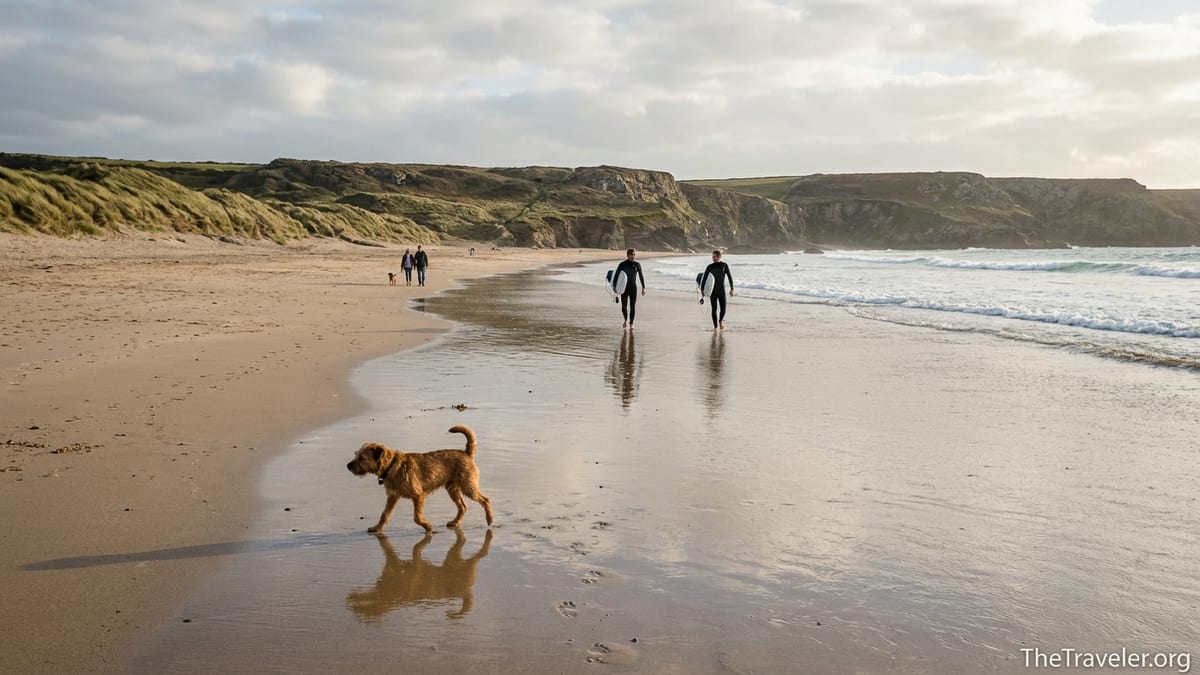
The UK’s coastline is a gift to anyone travelling with a dog, a surfboard, or simply a love of long, empty horizons. Yet between seasonal dog bans, powerful Atlantic swells and unpredictable weather, finding a beach that works for both four-legged companions and human adventure can take a little research. This guide brings together some of the best real-world options across England, Wales and Scotland where dogs are genuinely welcome, surf is accessible for a range of abilities, and there is enough sand or coastal path to walk for hours.
How to Choose the Right UK Beach for Dogs and Surf
Before diving into specific beaches, it helps to understand how UK coastal rules and conditions shape a dog-friendly surf trip. Most local councils use Public Space Protection Orders to set out when and where dogs are allowed. On many popular resort beaches in England, seasonal bans apply roughly from 1 May to 30 September, particularly in front of main promenades where lifeguards, deckchairs and crowds concentrate. In contrast, many wilder bays, especially those managed by the National Trust or outside town centres, remain dog friendly all year or only restrict a short, clearly signposted zone.
The Atlantic-facing coasts of Cornwall, Devon and Wales tend to offer the most reliable surf, with consistent swells and established surf schools. Places such as Watergate Bay in Cornwall or Sandymouth near Bude have board hire, lessons and lifeguards in season, plus large car parks and cafes that make days with a dog more practical. On the east coast, surfing is more hit-and-miss but long, flat beaches such as those in Northumberland or parts of Yorkshire are ideal for off-season wanders with a dog, especially when summer crowds thin out.
Before you travel, it is worth checking your specific destination’s council website for current rules. Cornwall Council, for example, updates its dog restriction notices each spring, reminding owners that some beaches bring in bans from late May, with fines for ignoring them. Similar seasonal rules apply in many districts from North Tyneside to East Lindsey in Lincolnshire. In practice, though, you will still find plenty of nearby coves and stretches of sand where dogs are allowed all day, even in August, usually a short drive or coastal walk from the main resort.
Finally, consider your dog’s temperament. Some beaches on this list, such as Rhossili Bay or Bamburgh, are huge and relatively wild, with big surf and strong currents. They are ideal for confident dogs that stick close and enjoy long distances on-lead or off-lead where safe. Others, such as calmer Scottish bays or sheltered estuaries, are better for older dogs or those unused to waves. Good recall, a collapsible water bowl and dog towel in the car, plus an awareness of tides and cliff edges, will make any of these beaches safer and more enjoyable.
Watergate Bay, Cornwall: Atlantic Swell and Year-Round Dog Access
On Cornwall’s north coast, just north of Newquay, Watergate Bay is one of the rare big-name surfing beaches that welcomes dogs all year round. Local businesses and the beachside hotel actively market themselves as dog friendly, and the beach’s own FAQ confirms that dogs are allowed on the sand in every season, which is unusual for such a popular spot. The bay itself offers around two miles of golden sand at low tide, backed by cliffs and a scattering of beach cafes and surf schools, so there is ample room to walk without feeling crowded, especially at dawn and in the shoulder months.
For surfers, Watergate is a reliable west-facing beach break that picks up swell from most directions, making it a staple of the Cornish surf scene. Several operators run lessons and hire from beach-level huts, with typical beginner group lessons priced in the region of 40 to 60 pounds per person for two hours, including wetsuit and board. In peak season, lifeguards from Easter to late October usually patrol marked swimming and surf zones, which helps when you are juggling a board, leash and an excitable dog. Many visiting dog owners choose to surf in shifts, with one person on the sand for dog duty while the other is in the water.
Watergate also works well for travellers who like to stay right on the beach. The main hotel and nearby self-catering apartments offer dog-friendly rooms, often including small touches such as dog beds and water bowls. Expect a pet supplement per night, and check in advance if there is a limit on the number or size of dogs per room. The beachfront cafes are generally relaxed about dogs on leads, especially on their outdoor terraces where you can sit with a post-surf coffee while your dog dozes under the table, ears still crusted with salt and sand.
In terms of walking, one of Watergate’s strengths is how easily it links into the South West Coast Path. From the car park you can follow the cliff-top trail north towards Mawgan Porth and south towards Porth and Newquay, with constant views of the Atlantic on your left and open farmland or heathland on your right. These paths can be muddy and exposed in winter, with sections close to unfenced cliff edges, so most owners choose to keep dogs on a lead or long line. Out of school holidays, however, you can often walk for an hour without seeing more than a handful of people, hearing only the sound of surf rolling in below.
Rhossili Bay and the Gower, Wales: Wild Dunes and Epic Walks
The Gower Peninsula in South Wales is one of the UK’s best coastal areas for combining dog walking and serious scenery, and Rhossili Bay is its star. This vast arc of sand, roughly three miles long, has been repeatedly described by walkers and travel writers as one of Britain’s most beautiful beaches. Importantly for dog owners, sources such as local dog-friendly guides confirm that Rhossili Bay is dog friendly all year round, unlike many urban beaches closer to Swansea that bring in bans during the summer months. That year-round access means you can visit in August with your dog, then return in January for a bracing, almost empty walk in the wind.
Rhossili’s drama comes from its setting. The beach curves beneath green downs and rocky headlands, with Worm’s Head stretching out as a tidal island at one end. A popular circular walk begins at the National Trust car park near the village, heads out along the cliff-top path towards Worm’s Head with sweeping views of the surf below, then drops down onto the beach itself for the long return along the sand. Hiking platforms such as AllTrails describe this loop as roughly 11 to 12 kilometres with moderate climbs, and note that dogs are welcome but often best kept on lead along the cliff sections, where sheep graze and drops are steep.
For surfing, Rhossili is less commercialised than Newquay or Croyde but still picks up consistent Atlantic swell, particularly in autumn and winter. Many local surfers simply park at the top, shoulder their boards and take the long path and steps down to the water, which adds a workout to each session. There are no big surf complexes directly on the sand, so you will need to arrive equipped with your own board or arrange lessons and hire through providers operating elsewhere on Gower, who sometimes meet clients in the car park. Conditions can be powerful with strong rips, so it is not the ideal spot for absolute beginners, but experienced surfers enjoy the relatively uncrowded peaks, especially at mid-tide.
One of the pleasures of bringing a dog to Rhossili is the choice of walks beyond the beach. The inland commons and downs have clear tracks in the cropped grass, and the tidal causeway out to Worm’s Head offers an adventurous on-lead scramble across rocks when tides allow. There are also more sheltered alternatives nearby, such as Oxwich Bay, another Gower beach frequently praised by local dog owners for easy parking by the sand and relaxed dog rules. Between these bays you can piece together a multi-day dog-friendly trip, staying in pub rooms, campsites or cottages that specifically advertise secure gardens and accept pets, then using each beach as a base for several circular walks.
Sandymouth and the North Cornwall Coast: Quiet Swells and Rugged Trails
Further north up the Cornish coast from Bude, Sandymouth is a wilder alternative to resort beaches, offering muscular surf and big open views with a more tranquil feel. Managed by the National Trust, this stretch of coast is characterised by steep cliffs, wave-cut platforms and long pebbly-sand beaches at low tide. The beach itself has a car park on the cliff top, a seasonal cafe and toilets, but little in the way of built-up development, which keeps it attractive to travellers who prefer a quieter, more natural setting when walking dogs.
For surfers, Sandymouth is a well-known beach break, with the wider Bude area having a long history of surfing. The beach can be powerful and works over various tides, attracting intermediate and advanced surfers as well as locals training before heading to more famous Cornish reefs. In season there is typically RNLI lifeguard cover and at least one licensed surf school offering tuition and board hire. Lessons at similar Cornish beaches usually fall in the 35 to 60 pound range for group sessions, depending on duration and level. Parking is pay-and-display, and because of the steep access track down to the sand, many visitors pack light, bringing only essentials plus a towel and collapsible bowl for the dog.
Dog owners are drawn to Sandymouth and its neighbours because they link into an almost continuous corridor of sand at low tide. From Sandymouth you can walk south towards Crooklets and Summerleaze, looping back along the South West Coast Path for a more challenging return with cliff views, or simply reverse your tracks along the beach if the tide allows. Dogs enjoy the variety of terrain: firm wet sand, rivulets to splash through, and bouldery sections where they have to pick a careful route. It is common to meet a mix of local walkers in sturdy boots and visiting families in wetsuits, all sharing the same sweep of shoreline.
Because Sandymouth is less commercial than Newquay or St Ives, practicalities are a bit more self-reliant. Facilities in the small cafe are simple, and in winter it may be closed altogether, so bringing a thermos and picnic is a sensible option outside peak months. The nearest supermarkets and full-service pubs are in Bude, roughly a ten-minute drive away. Many self-catering cottages in the surrounding lanes explicitly welcome dogs, often with outside taps for rinsing off sand and hooks for hanging wetsuits. For a long-distance challenge, experienced walkers sometimes base themselves in Bude and take on back-to-back days along the coast path, using Sandymouth as one of several there-and-back sections with their dogs on lead near the cliff edges.
Bamburgh and Northumberland: Castle Views and Endless Space
If you are travelling in the north of England with a dog, Northumberland’s beaches are among the best options for empty-feeling space and long, uncomplicated walks. Bamburgh is particularly striking, with its medieval castle perched above a wide ribbon of pale sand. While specific dog rules can vary along this stretch, much of the coastline here sees far fewer seasonal dog bans than busier resort towns in southern England, and in practice many sections are used by local dog walkers year-round. It is still important to respect signed nature reserves and any seasonal restrictions around nesting birds, especially near dunes and rocky outcrops.
Surfers will not find the daily consistency of Cornwall, but the North Sea does produce good swells, particularly in autumn and winter. On the best days, you might see small clusters of surfers in thick wetsuits and gloves paddling out off Bamburgh or nearby Beadnell, taking advantage of offshore winds and long-period swells. There are a handful of surf schools and hire centres along this stretch that operate seasonally, offering taster sessions and equipment for visitors who want to try cold-water surfing in a dramatically different landscape to the southwest. Water temperatures are significantly lower, so a well-fitted 5 mm wetsuit with hood and boots is standard outside high summer.
For walkers, the appeal of Bamburgh and the surrounding Area of Outstanding Natural Beauty lies in the sense of distance. From the main car park you can wander north towards Budle Bay, with its mudflats and birdlife, or south towards Seahouses on firm sand or dune paths. Tidal ranges are big here, so checking the tide table is useful if you want maximum beach width for games of fetch or off-lead running where safe and permitted. In stormy weather, the wind can sandblast at ground level, so many owners choose to walk slightly higher in the dunes, where marram grass pins the sand and offers a bit more shelter for both humans and dogs.
Accommodation in Northumberland leans heavily towards cottages, inns and small hotels, many of which recognise that a large portion of their visitors now arrive with dogs. It is common to find pubs with flagstone floors, water bowls by the bar and jars of free dog biscuits. Room rates are generally lower than in Cornwall’s most fashionable villages, especially outside school holidays, and petrol, parking and day-to-day costs can feel slightly more forgiving, which matters on longer trips. Combined with the quieter roads and open scenery, Bamburgh and its neighbours are ideal for dogs that prefer calm expanses of sand to jostling boardwalk crowds.
Scottish Beaches: Big Skies, Empty Bays and Cold-Water Adventures
Scotland’s extensive coastline offers some of the UK’s most spectacular wild beaches, many of which are naturally dog friendly simply because they see relatively few visitors and have no need for strict seasonal bans. In remote regions such as the north-west Highlands, Sutherland and parts of the Hebrides, you can regularly park by a small layby and walk onto a bay where your dog may be the only set of pawprints for hours. Pastel-coloured machair, rocky headlands and turquoise shallows give these spots an almost otherworldly feel on sunny days, although the water temperature rarely climbs high enough to be comfortable without a thick wetsuit.
Surfing in Scotland is a more niche pursuit, but enthusiasts value the clean swells and empty line-ups when conditions align. Places such as Thurso East in Caithness are world-famous among experienced surfers for their heavy reef breaks, while gentler, beachier options exist along the Moray Firth and on some Hebridean islands. For the average travelling dog owner, the main joy here is less about daily surf sessions and more about the combination of short exploratory paddles or bodyboarding sessions with hours of free-roaming walks in dramatic scenery. If you do plan to surf, it is essential to research local hazards carefully, including rip currents, rocky entries and powerful winter storms.
Dog walking culture in rural Scotland is shaped by access rights and livestock. While there is generous freedom to roam, particularly compared to parts of England, owners are expected to keep dogs under close control near sheep, ground-nesting birds and crofts. Many of the best beaches curve beneath grazed fields or open moorland, so a long line or reliable recall is important. Simple preparations such as tick checks after each walk, a towel for the car and spare layers for humans can make a big difference, since showers and strong winds can blow through even on summer days.
Practicalities in these remote areas are also different to Cornwall or Gower. Cafes and toilets may be many miles apart, mobile reception can be patchy, and petrol stations thin out as you head north or island-hop. Accommodation options range from basic campsites to design-led small hotels, but dog-friendly rooms may be limited, so booking ahead matters. Prices vary widely: a simple campsite pitch might cost under 30 pounds per night in high season, while boutique hotels in popular spots can run well over 200 pounds per room with a supplement for dogs. If you are willing to travel further and plan carefully, however, the reward is an almost unmatched sense of space for long, meditative walks with your dog at your side.
Practical Tips for a Dog-Friendly Surf and Walking Holiday
Once you have chosen your beach, a little planning turns a pleasant day out into a genuinely smooth dog-friendly trip. One of the first considerations is timing. If your dog is nervous around crowds or other animals, visiting popular surf beaches such as Watergate Bay or Croyde early in the morning or late in the afternoon avoids the busiest window between about 11 am and 3 pm on sunny summer days. In shoulder seasons such as late April, early June or September, air and sea temperatures are still workable for surfing, yet many families have left, freeing up parking and giving your dog more space.
Transport is another factor. Many UK coastal villages have limited parking that fills quickly on calm summer weekends. Car parks near the sand often charge by the hour or offer a day rate, which can be better value if you are planning both a long walk and a surf session. It is sensible to carry coins or make sure your phone payment app works offline, as mobile data can be patchy on some promenades and cliff tops. For travellers using public transport, certain beaches such as those around Newquay or the Gower have seasonal bus routes that allow dogs at the driver’s discretion, usually as long as they are on a short lead and kept off the seats.
On the safety side, combining surfing and dogs means thinking through who is supervising when. Leaving a dog unattended on a busy beach while you paddle out is risky and often frowned upon by locals, particularly if the dog wanders into other people’s picnics or approaches children. Most surfing dog owners work in pairs or groups and take turns in the water. If you are travelling solo, consider focusing on short, close-in surf sessions in smaller conditions, or bodyboarding and swimming where you can keep more regular eye contact with the shore. A bright harness or buoyant vest on your dog makes them easier to spot among other beach users.
Basic kit makes a big difference, especially on cooler coasts. A microfibre towel or two, a sealed tub of treats, spare leads, a collapsible water bowl and a small first-aid kit cover most situations. Many UK beaches do not have drinking water taps directly on the sand, so carrying a few litres in the car is wise. For longer coastal path walks, a lightweight running belt with a lead attachment can help if your dog tends to pull, leaving your hands free for trekking poles or a camera. In the UK climate, waterproofs and a warm change of clothes for humans are almost as critical as the dog’s gear, particularly on exposed paths like those above Rhossili or Sandymouth.
The Takeaway
Across the UK, the ideal combination of dog-friendly sand, surfable waves and space for long walks exists if you know where to look. Cornish staples such as Watergate Bay and Sandymouth prove that it is possible to have year-round dog access on serious surf beaches, complete with lifeguards, lessons and cafes. Rhossili Bay on the Gower offers a more elemental version of the same appeal, pairing wild Atlantic swells with a three-mile stretch of sand and cliff-top paths that can fill an entire weekend. Further afield, the wide-open spaces of Northumberland and the remote beauty of Scottish bays show that you do not need warm water or crowds to enjoy unforgettable days on the coast with a dog.
Yet there is no single best beach for every traveller. Some dogs thrive on busy promenades with children, ice creams and other pets to greet. Others are happiest padding quietly along an almost empty strand as seabirds wheel overhead. Likewise, novice surfers might be better off at a commercialised bay with a friendly surf school and hot showers, while hardened cold-water enthusiasts will happily trade amenities for solitude in Scotland or Northumberland. The key is to match your dog’s temperament and your own ambitions to the right stretch of coast, checking local rules and tide times before you set off.
What unites these destinations is a sense of shared enjoyment. On a good day at places like Watergate or Rhossili, you will see dogs bounding after balls at the tideline, surfers shaking out wetsuits in the car park, and walkers leaning into the wind on the paths above. With a little planning and respect for local wildlife, livestock and other beach users, it is perfectly possible to be both a responsible dog owner and an enthusiastic surfer or long-distance walker. The UK’s varied coastline is there to be explored, one sandy pawprint and salty footprint at a time.
FAQ
Q1. Are dogs allowed on UK beaches all year round?
Many UK beaches welcome dogs year round, especially wilder bays and National Trust stretches, but popular resort beaches often have seasonal bans from roughly May to late September. Always check local council notices before you travel.
Q2. Which UK surf beach is best if I want dogs allowed all year?
Watergate Bay in north Cornwall is a strong option, combining a long, consistent surf beach with confirmed year-round dog access, surf schools, cafes and easy parking, which makes spending full days there with a dog much simpler.
Q3. Is Rhossili Bay in Wales dog friendly?
Yes, Rhossili Bay on the Gower Peninsula is widely reported as dog friendly throughout the year. It offers around three miles of sand plus cliff-top walks, but dogs should be kept under control near grazing livestock and steep drops.
Q4. Can I leave my dog on the beach while I go surfing?
It is not advisable to leave a dog unattended on the beach. Conditions can change quickly, and dogs may stray or disturb other visitors. If you plan to surf, go with someone who can stay ashore, or keep sessions short and close in when you can maintain regular visual contact.
Q5. Do UK surf schools allow dogs in their premises?
Policies vary. Many surf schools are relaxed about dogs waiting outside on a lead while you hire equipment, but few allow them inside changing areas. It is best to call ahead and ask, and to avoid tying a dog where it might obstruct doorways or busy walkways.
Q6. What should I pack for a dog-friendly beach and surf day?
Useful basics include a lead and harness, collapsible water bowl, plenty of fresh water, poo bags, a towel for the dog, a warm change of clothes for yourself, high-SPF sunscreen and any medication your dog needs. In cooler months, a dog coat can help after they come out of the sea.
Q7. Are there fines if my dog is on a restricted beach?
Yes. Many councils can issue fixed-penalty fines if dogs are taken onto signed dog-free zones in restricted months, or if owners fail to clean up after their pets. Fine levels vary by area, so responsible owners check signage at beach entrances each visit.
Q8. Are UK coastal paths safe for dogs?
Most coastal paths are safe if you manage basic risks. Keep dogs on a lead near cliffs, livestock and roads, carry water, and be prepared for sudden weather changes. Some paths are narrow or eroded, so nervous or reactive dogs may prefer wider, lower-level beach routes at low tide.
Q9. Can my dog drink seawater while we walk?
Dogs should not drink seawater. It can quickly cause vomiting, diarrhoea and dehydration. Offer fresh water regularly, especially after energetic games of fetch, and take breaks in shaded spots where possible.
Q10. What is the best time of year for a dog-friendly surf holiday in the UK?
Late spring and early autumn are often ideal. In May, June and September, water is warming or still relatively mild, many beaches are less crowded than in peak summer, and some seasonal dog restrictions are lighter or end, giving you more flexibility for long walks and surf sessions with your dog.