


When most travelers picture the Mediterranean, they imagine white sand coves in Greece, pine fringed bays in Sardinia or turquoise shallows along the Costa Brava. Few expect to find similar scenes on the rugged shores of the United Kingdom. Yet scattered around England, Wales and Scotland are beaches where the water glows aquamarine on sunny days, the sand is pale and fine, and the headlands could easily double for the Mediterranean in a film shoot. The catch is the water temperature and the occasional Atlantic squall. For travelers who do not mind swapping balmy seas for a cooler dip, these UK beaches offer a surprising taste of the Med without leaving the country.
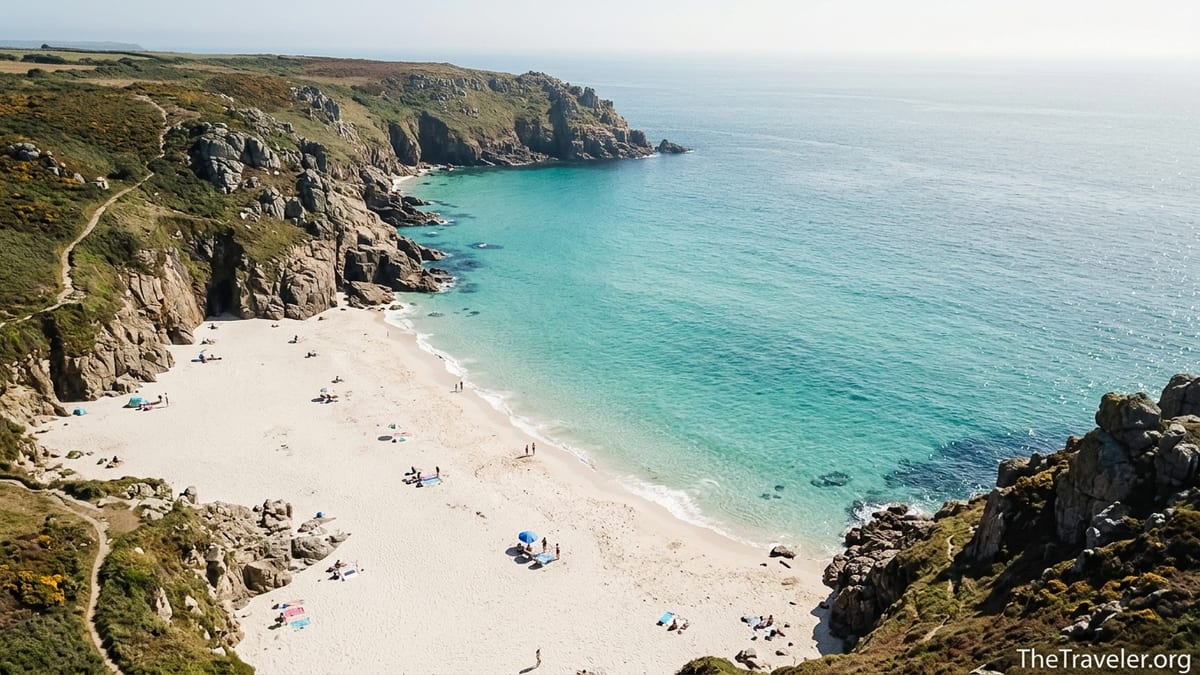
Porthcurno, Cornwall: A Turquoise Amphitheatre Below Clifftop Drama
Porthcurno sits at the far western tip of Cornwall, a small valley that opens dramatically onto a south facing bay framed by high granite cliffs. On a sunny summer day, the combination of fine white sand and clear turquoise water can look uncannily Mediterranean. Local tourism boards and beach guides frequently describe the bay as one of the most beautiful in the UK, and it often features in shortlists of beaches that resemble far warmer destinations. The natural shelter provided by the surrounding headlands creates a calmer microclimate than much of the exposed Atlantic coast, which helps to keep the sea relatively clear and the beach protected from strong winds on many days in late spring and summer.
What makes Porthcurno feel like the Med in practice is the way visitors actually use the space. Families spread out on the soft sand with colourful windbreaks instead of beach clubs, but the atmosphere is similar to a small cove in southern Europe, with children paddling in the shallow stream that runs along one side, couples sunbathing close to the waterline and small groups picnicking against the cliff. In peak season there is a seasonal lifeguard service, basic facilities near the car park and an ice cream kiosk, which together give the beach an easygoing holiday feel without heavy development. On calm days, the water is clear enough that snorkelers can spot fish among the rocks near the edges of the bay.
Above the beach, the open air Minack Theatre is carved directly into the coastal cliffs, adding a dramatic cultural backdrop that would not look out of place on a Greek island. Many travelers choose to combine a day on the sand with an evening performance, climbing the steep path from beach level to the theatre terraces as the light softens over the Atlantic. Accommodation nearby is mostly small guesthouses, cottages and campsites scattered around St Levan and Porthcurno rather than large hotels. In high summer, nightly rates for simple B&Bs typically start in the low to mid double figures per person, with cottages and apartments costing more per night but working out good value for families or groups.
If you want Porthcurno at its most Mediterranean, timing matters. Aim for late May to early July or early September, when the sun is high but the school holiday crowds are lighter. Arrive early to secure one of the limited parking spaces close to the beach and be prepared for a short but steep walk down through sand and steps. The water may look like Greece but it usually sits in the mid teens Celsius in summer, so wetsuits are common for longer swims. Pack layers even on hot days, because sea mist and sea breezes can roll in quickly on this Atlantic corner of Britain.
Kynance Cove, Lizard Peninsula: Emerald Headlands and Hidden Pools
Further east along Cornwall’s south coast, Kynance Cove on the Lizard Peninsula is another beach that frequently surprises first time visitors with its colour palette. The cove is famous for its pale sand, vividly turquoise shallows and unusual dark green serpentine rock formations that rise out of the water. At low tide a series of sand bars and rock pools are revealed, creating a maze of mini beaches and channels that feel almost like a lagoon system. On a bright day, the contrast between white sand, emerald cliffs and jade water resembles a wild corner of Sardinia or Corsica more than typical images of the British seaside.
The atmosphere at Kynance is more rugged and less family oriented than Porthcurno. Access from the National Trust car park involves a clifftop path and a relatively steep descent, which means pushchairs and beach trolleys are tricky. Most visitors arrive with backpacks and sturdy footwear, then switch to sandals or go barefoot on the sand. The small cafe tucked into the cove serves simple food such as pasties, cakes and hot drinks, and in good weather travelers sit at outdoor tables or on rocks with a view across the beach. There are no rows of loungers or parasols, but towels and picnic blankets dot the sand in much the same way as a more remote Mediterranean cove that has avoided heavy commercialisation.
The key Mediterranean like experience at Kynance comes at low tide. As the sea retreats, shallow turquoise pools form among the rocks, warming slightly in the sun and creating inviting paddling spots. Families with older children explore caves and scramble over small stacks, while photographers seek vantage points halfway up the cliffs to capture the famous view of the cove’s islands and sand from above. In peak summer, the car park can fill by late morning on clear days, so arriving before mid morning or later in the afternoon is wise. Parking charges are in line with other National Trust coastal sites and free for members who display a current pass.
Travelers basing themselves on the Lizard Peninsula often combine Kynance with nearby coves such as Poldhu or Church Cove over a long weekend. Self catering cottages and small inns in villages like Lizard and Mullion are the most common options. Expect slightly higher prices in July and August, when coastal properties command a premium due to strong domestic demand. Even in shoulder season, advance booking is recommended for sea view rooms. If you plan to swim, a short wetsuit or rash vest is useful not only for warmth but also for protection against barnacles and rocks, since there are fewer sandy entry points than at some other Cornish beaches.
Pedn Vounder and Porthcurno Coast: A Sandbar Straight Out of the Aegean
Just around the headland from Porthcurno lies Pedn Vounder, a tidal beach that has become an internet favourite thanks to photos of its bright sandbar stretching into clear turquoise water. At very low tide, a shallow shelf of sand emerges that allows paddlers to wade out from the main beach into thigh deep water that glows almost electric blue on sunny days. The wide, flat expanse can look strikingly similar to more famous sandbars in the Mediterranean, although the Atlantic swell and cooler temperatures are a reminder that this is still Cornwall.
Reaching Pedn Vounder is part of the adventure and helps to preserve its remote character. Access is either via a steep, occasionally scrambling path from the clifftop coast path or, in suitable conditions and tides, by walking around from Porthcurno along the shoreline. The scramble is not recommended for anyone with limited mobility or a fear of heights, and many visitors choose simply to admire the view from above if the conditions do not feel right. There are no facilities on the beach itself, no official lifeguard presence and no shade apart from the cliff base, so visitors need to bring everything they require for the day and pack out all rubbish.
Pedn Vounder is also known as an unofficial clothing optional beach, which gives it a relaxed, bohemian character on warm days that some travelers associate with certain Mediterranean coves. Visitors who prefer to keep swimsuits on are equally welcome, but it is worth being aware of this reputation if you are visiting with children or would be uncomfortable with nude bathers. Tide awareness is critical, because the sandbar that looks so idyllic at low water can quickly disappear as the sea rises, cutting off sections of the beach from the exit route. Many local guides recommend checking tide tables in advance and aiming to arrive as the tide is falling, then leaving before it turns.
Combining a day that includes both Porthcurno and Pedn Vounder offers two very different but equally memorable experiences. You can start with a coffee or lunch at the facilities near Porthcurno’s car park, then walk part of the South West Coast Path to viewpoints above Pedn Vounder for photographs that capture the sandbar at its most dramatic. In good weather, this stretch of coast feels almost out of place in the UK, especially when gorse and heather are in bloom on the cliff tops. The walk back as evening light hits the cliffs can be one of the most beautiful Mediterranean style moments in Cornwall, even if you end the day wrapped in a fleece against the Atlantic breeze.
Luskentyre, Isle of Harris: Hebridean Blues that Echo the Aegean
While Cornwall often steals the spotlight for Mediterranean looking beaches, the Outer Hebrides in Scotland offer a very different twist on the theme. Luskentyre on the Isle of Harris is frequently compared to Caribbean or Mediterranean beaches in travel features, thanks to its expansive white shell sand and startlingly blue water. On a clear day, the shallow Sound of Taransay can turn shades of turquoise more often associated with Greek islands, especially at mid tide when the light reflects off sandbars and gentle surf. The dunes behind the beach add texture and height, and the distant hills of North Harris create a mountainous backdrop that makes the scene feel almost like a hybrid of Scottish highlands and a southern European bay.
The big difference here is climate. Even in midsummer, air temperatures on Harris are usually cooler than in southern England, and the water rarely reaches what most swimmers would call warm. That said, on windless days in June or July the combination of bright sun, white sand and clear sea can feel surprisingly gentle, especially if you are dressed for the conditions. Many visitors bring insulated picnic blankets, windproof jackets and perhaps a dryrobe style changing coat to stay comfortable on the shore. Short dips, wild swims in wetsuits and long beach walks are more common than all day sunbathing, but the visual impression is pure postcard Mediterranean.
Luskentyre’s remoteness adds to its appeal. Getting there usually involves a flight or long drive to the Isle of Skye or Ullapool, a ferry crossing to the Outer Hebrides and then a scenic road journey across Harris. Accommodation nearby ranges from simple B&Bs and small hotels to self catering cottages that book out far in advance for peak summer. Prices reflect the extra travel involved, with nightly rates often higher than comparable mainland stays, but the payoff is the sense of space. Even in high season, it is still possible to find quiet stretches of sand or walk for an hour with only the sound of waves and seabirds for company.
Travelers who enjoy photography will find Luskentyre particularly rewarding. Early morning and late evening light bring out subtle greens and blues in the water, and low clouds can create dramatic, moody scenes that shift quickly as weather systems move through. Compared with smaller coves in Cornwall, the scale here is bigger and more open, which can feel closer to long Mediterranean Atlantic beaches in Portugal or western France, albeit with far fewer people. For a full day out, many visitors combine Luskentyre with a drive around the coastal loop roads of Harris, stopping at even smaller beaches and viewpoints along the way.
Barafundle Bay, Pembrokeshire: A Hidden Welsh Cale Resembling Croatia
Across the Bristol Channel in Wales, Barafundle Bay in Pembrokeshire is regularly cited as one of the UK’s most beautiful beaches and often compared to hidden coves in Croatia or the Greek islands. Reached only on foot via a clifftop path from the nearest car park, the small, horseshoe shaped bay is backed by dunes and low cliffs rather than roadside development. On calm days the water is a gentle blue green, and the sand is fine and pale, so that first glimpse from the headland often takes visitors by surprise. The lack of buildings in the immediate view and the sense of enclosure created by the bay’s shape add to the Mediterranean impression.
Facilities at Barafundle are limited by design. There are no cafes or shops directly on the beach, and no changing cabins or showers, so visitors carry in everything they need from Stackpole Quay, where there is a small car park and a cafe. The walk to the bay involves a short but sometimes muddy or uneven section of the Pembrokeshire Coast Path, with a few stone steps near the end. This helps to keep numbers lower than at easily accessible beaches and maintains a quieter, more contemplative atmosphere reminiscent of smaller coves in Dalmatia or the Ionian islands.
In high season, families arrive with rucksacks and cool bags rather than wheeled coolers, and there is often space between groups on the sand even at the height of the day. The water is tempting but cool; many beachgoers settle for paddling, short swims or stand up paddleboarding rather than long sessions in the sea. Rock formations at either end of the bay create informal snorkel spots in settled conditions, though there is no lifeguard presence, so confidence and experience in the water are important. Dogs are usually allowed outside key summer months, which makes the bay a popular shoulder season walking destination as well.
Pairing Barafundle with nearby attractions such as the Bosherston Lily Ponds or other beaches like Freshwater East can create a varied Pembrokeshire itinerary that mixes Mediterranean looking scenery with distinctly Welsh cultural touches. Accommodation in the wider area ranges from farm based B&Bs to coastal holiday parks and boutique inns in towns such as Tenby and Saundersfoot. Prices vary widely through the year, with peak school holiday weeks attracting strong domestic demand. As in most UK coastal hotspots, booking ahead is advisable if you want specific dates or sea view rooms.
The Isles of Scilly: Subtropical Gardens and Shallow Blue Lagoons
Off the Cornish mainland lie the Isles of Scilly, a small archipelago that many British travelers describe as the closest thing to the Mediterranean without leaving the country. The islands benefit from a comparatively mild maritime climate influenced by the Gulf Stream, which supports subtropical plants and palm trees in sheltered spots. Beaches on islands such as St Martin’s, Tresco and Bryher often feature gently shelving white sand and shallow, clear water that takes on a pale turquoise hue under strong sunlight. At first glance, photographs from these shores can be mistaken for images of the Balearics or smaller Greek islands.
What sets Scilly apart is the combination of beach scenery and island life. Cars are heavily restricted and many people move around by foot, bicycle or small boats. Day trips between islands are common, with travelers taking local ferries to reach different bays over the course of a week. On St Martin’s, for example, low tide reveals sweeping sand flats and long intertidal zones where waders and seabirds feed, giving walks a sense of space and tranquility that recalls lesser known Mediterranean islands in the shoulder season. Tresco’s Abbey Garden, with its palms and exotic plants, adds a further southern European flavour to the experience.
Accommodation on the Isles of Scilly ranges from self catering cottages and small hotels to glamping sites and campgrounds that open seasonally. Because capacity is limited and demand is strong in summer, prices can be relatively high compared with some mainland coastal areas, particularly for sea view properties. Travel to the islands usually involves a ferry crossing from Penzance or a small plane from regional airports in the southwest of England. Sea conditions can affect schedules, so building some flexibility into itineraries is sensible, especially for shoulder season trips in May or September.
Despite the Mediterranean look, visitors should still treat Scilly as a North Atlantic destination in terms of preparation. Sea temperatures are similar to or slightly cooler than those off mainland Cornwall, and weather can change quickly. Many travelers pack lightweight layers, waterproofs and sturdy sandals for beach and coastal path walks. That blend of bright, shallow lagoons and practical outdoor clothing is part of the islands’ charm. It feels like a low key, nature focused version of more developed Mediterranean holiday spots, with less nightlife but plenty of quiet bars, cafes and village pubs for relaxed evenings.
How to Plan a Mediterranean Style Beach Break in the UK
Chasing Mediterranean style beaches in the UK requires a slightly different mindset from planning a classic sun holiday in Spain or Greece. Weather windows matter more, and flexibility often leads to better experiences. Many travelers find it useful to plan a broader coastal trip, for example a week in west Cornwall or Pembrokeshire, and then choose beach days according to the forecast rather than committing to a strict schedule. Cloudy days can be perfect for cliff walks, local museums and village exploring, leaving the brightest days free for beaches like Porthcurno, Kynance or Barafundle.
Accommodation budgets should reflect both destination popularity and seasonality. In Cornwall’s most sought after coastal villages, simple guesthouse rooms can command high season rates, particularly in July and August when domestic demand peaks. Booking several months in advance typically yields a wider choice of properties, especially if you want parking included, sea views or self catering set ups for families. In the Outer Hebrides and the Isles of Scilly, where capacity is naturally limited by island size, advance planning is even more important, and shoulder season stays in late May, June or early September often balance lower prices with decent weather chances.
Practical packing can make the difference between a trip that feels chilled and one that feels like a battle with the elements. Even when the sand and water look Mediterranean, the air temperature and wind can be notably cooler. Lightweight down or synthetic jackets, packable waterproof shells, quick drying towels and beach shoes for rocky sections all earn their place in a UK beach bag. For swimmers or paddleboarders, a wetsuit or neoprene top extends the amount of time you can enjoy the water comfortably. Many local shops in Cornish and Welsh resorts rent or sell entry level wetsuits and water sports gear, so you do not necessarily need to invest heavily before you travel.
Transport logistics are another point of difference from a typical Mediterranean beach holiday. While some of these destinations are reachable by public transport, such as Porthcurno via bus connections from Penzance or Barafundle via seasonal services around Pembrokeshire, a car offers more flexibility, particularly if you want to chase clear weather across a wider area. Parking at popular beaches can be limited and subject to charges, especially at National Trust sites and small village car parks, so arrive early on peak days and carry enough change or a payment card for meters where required. In remote regions like the Outer Hebrides, fuel stations and shops can be more widely spaced than on the mainland, so topping up supplies regularly is wise.
The Takeaway
For travelers who love the look of the Mediterranean but are drawn to the character and culture of the UK, beaches such as Porthcurno, Kynance Cove, Pedn Vounder, Barafundle Bay, Luskentyre and the shores of the Isles of Scilly provide a compelling middle ground. Their white or pale sands, turquoise shallows and dramatic headlands deliver the visual drama of far southern latitudes, while the cooler climate keeps crowds and infrastructure at a more modest scale. Instead of rows of loungers and late night beach clubs, you will find cliff paths, small cafes, village pubs and remote cottages.
These destinations reward travelers who are willing to adapt. Pack for a range of temperatures, watch the weather and tides, and think of the sea as a refreshing dip rather than a bath. Treat the Mediterranean look as an aesthetic bonus rather than a guarantee of hot, still days, and you will be primed to appreciate what makes these places special. On the right afternoon, as sunlight hits turquoise water under a clear sky, it really can be hard to believe you are still in the UK. The sound of distant gulls, the cry of a passing oystercatcher or the clang of a church bell from a nearby village will be the clues that give it away.
FAQ
Q1. Which UK beach looks the most like the Mediterranean? Many travelers point to Porthcurno and nearby Pedn Vounder in west Cornwall because of their fine white sand, steep cliffs and bright turquoise shallows on sunny days.
Q2. When is the best time of year to visit these Mediterranean style UK beaches? Late May to early July and early September usually offer a good balance of longer days, milder temperatures and fewer school holiday crowds, though weather can vary year to year.
Q3. Is the sea warm enough to swim in at these UK beaches? The water generally feels cool, with summer temperatures most often in the mid teens Celsius, so many people opt for short dips or use wetsuits for longer swims.
Q4. Do I need a car to reach beaches like Kynance Cove and Barafundle Bay? Public transport can get you relatively close in some cases, but a car gives far greater flexibility and makes it easier to reach more remote coves and respond to changing weather.
Q5. Are these beaches suitable for young children? Porthcurno and some Isles of Scilly beaches are popular with families thanks to easier access and gentler shallows, while more challenging spots like Pedn Vounder or Kynance Cove require extra care and may not suit very young children.
Q6. How far in advance should I book accommodation near these beaches? For peak summer dates in Cornwall, Pembrokeshire, the Isles of Scilly and the Outer Hebrides, booking several months ahead is sensible, with island stays often requiring even longer lead times.
Q7. What should I pack for a UK beach holiday that aims for a Mediterranean feel? Combine typical beach items with warm layers, a waterproof jacket, sturdy footwear for coastal paths and, if you plan to swim often, a wetsuit or neoprene top.
Q8. Are there lifeguards on these beaches? Some, such as Porthcurno and selected Cornish bays, have seasonal lifeguard cover in summer, while remote beaches like Pedn Vounder and many Hebridean coves do not, so always check local information before swimming.
Q9. Can I visit several of these beaches in one trip? A week in west Cornwall makes it easy to combine Porthcurno, Pedn Vounder, Kynance Cove and other nearby bays, while Luskentyre, Barafundle and the Isles of Scilly generally work best as the focus of separate trips.
Q10. Are dogs allowed on these Mediterranean style UK beaches? Dog policies vary; some beaches have seasonal restrictions in summer while others are more relaxed, so it is important to check current local rules before you travel with a pet.