


When the sun finally breaks through London’s clouds, a day by the sea is one of the quickest ways to feel like you have escaped the city altogether. The good news is that you do not need to travel all the way to Cornwall for proper sand, classic piers or wild coastal walks. Within about one to two and a half hours of the capital you can reach some of England’s most characterful seaside towns, dune-backed bays and chalk-cliff coves. This guide focuses on real, tried and tested UK beaches near London that work for day trips or easy weekend escapes, with practical detail on how to get there, what to expect, and how to avoid the common pitfalls that can ruin a hot-weather beach day.
How to Choose the Right Beach Escape From London
Not all beaches near London offer the same experience. Some are classic promenades with arcades and fish and chips, others are sweeping natural bays with sand dunes and very few facilities. Before you jump on a train from Victoria or St Pancras, decide what kind of day you want. If you are looking for the shortest possible journey with a traditional pier and plenty of places to eat, Southend-on-Sea or Brighton work well. If you want wide sandy space and a more natural setting, Camber Sands, West Wittering or Botany Bay are stronger choices, even if they take a little longer to reach.
Think practically about travel. On hot weekends some coastal roads crawl with traffic and beach car parks can fill by mid-morning. For example, drivers heading to Camber Sands from London often find that the main car parks near the dunes close once they are full, leaving latecomers to circle residential streets. Meanwhile, popular rail routes such as London Victoria to Brighton can be crowded after 9 a.m. on peak summer Saturdays. Whenever possible, aim for earlier trains and pre-book off-peak returns, or travel on a weekday for a calmer experience and cheaper tickets.
You should also consider the tides and terrain. Much of the Thames Estuary and north Kent coast has gently shelving beaches where the sea retreats far at low tide, leaving huge flats of sand or mud. That can be perfect for sandcastle building but less ideal if you want to swim. By contrast, some south coast beaches like Brighton are shingle, which means firm underfoot but can be uncomfortable to sit on without a mat or lounger. Checking tide times and a photo or satellite view of the shoreline before you go will help you match expectations with reality.
Finally, think about budget. A spontaneous day trip for two from London can easily add up once you combine rail fares, ice creams, deckchair hire and dinner. Return off-peak train tickets from central London to nearby seaside towns typically run from around £15 to £30 per adult depending on destination and how far in advance you book, while parking charges at popular south coast beaches such as West Wittering often reach more than £10 per day in high season. Packing a picnic and reusable water bottles, plus booking advance fares, keeps the overall cost of your escape under better control.
Brighton: Classic Seaside Energy in Under an Hour
For many Londoners, Brighton is the default beach escape because it is so straightforward to reach. Direct trains from London Victoria, London Bridge and sometimes St Pancras typically take just under one hour to reach Brighton station, and even with engineering works and occasional rail replacement services it is one of the most reliably accessible seaside towns from the capital. From the station it is about a 15-minute walk down Queen’s Road to the seafront, so there is no need for local buses or taxis if you are happy to walk downhill.
Brighton Beach itself is a wide sweep of shingle that stretches west towards Hove. The pebbles mean the water is usually quite clear compared with estuary beaches, although sturdy sandals or water shoes make getting in and out of the sea much more comfortable. Instead of soft sand, the appeal here is atmosphere. You get the Brighton Palace Pier with its rides and arcade games, a long promenade lined with cafes and bars, and the famous seafront arches filled with independent galleries and ice cream kiosks. On summer evenings you will often see groups of friends grilling portable barbecues or listening to music while the sun sets over the English Channel.
Prices in Brighton are what you would expect in a popular resort town. A typical off-peak same-day return train ticket from London bought in advance can fall in the £20 to £35 range per adult depending on the operator and time, while a seafront portion of fish and chips often comes in around £10 to £14. Staying overnight is not strictly necessary for a beach fix, but if you do decide on a weekend break you will find options from simple guesthouses near the station to design-led hotels on the seafront, many of which charge higher rates on sunny summer weekends and during events such as Pride or the Brighton Festival.
If you are seeking a quieter experience, walk west towards Hove Lawns. The beach becomes less crowded the further you go from the pier, and the grassy lawns and beach huts create a more relaxed feel. Families often set up near the children’s paddling pool by the seafront, while swimmers sometimes prefer the stretch near the Brighton i360 tower where the water is monitored and lifeguarded in season. It is worth remembering that even in August, sea temperatures usually sit in the mid-teens Celsius, so a light wetsuit or at least a warm change of clothes can help you enjoy a longer dip.
Camber Sands: Dune-backed Sand and Big-Sky Views
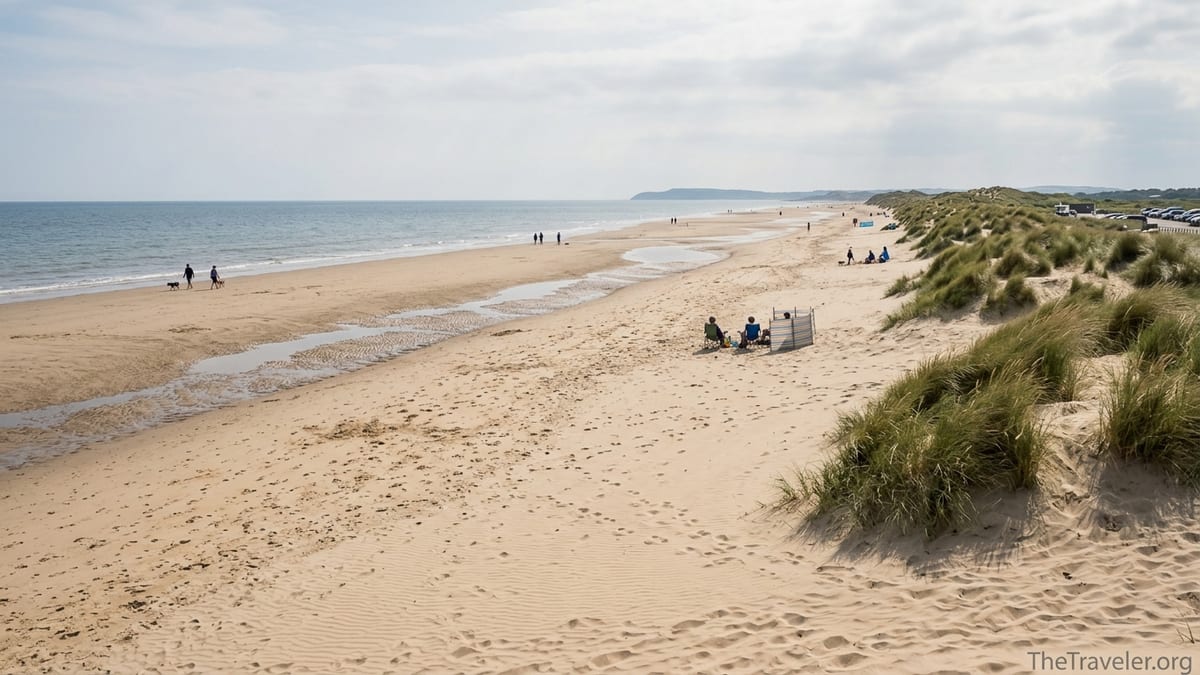
For a genuine sandy beach with a wild, expansive feel, Camber Sands in East Sussex is repeatedly recommended as one of the best options reachable from London in a day. The beach runs for several miles along Rye Bay, backed by a high line of marram grass dunes that feel almost continental in bright weather. At low tide the sand seems to stretch endlessly, creating shallow warm pools that are perfect for paddling children and informal beach games like rounders or beach cricket.
Getting to Camber Sands without a car takes a little planning, but it is very doable. The standard route is to take a train from London St Pancras or London Bridge to Rye, which often takes around one hour and 10 to one hour and 30 minutes on the faster services. From Rye station you can catch a local bus, commonly the number 102 or 100, which usually takes about 15 to 20 minutes to reach Camber. The combined journey from central London typically ends up around two to two and a half hours door to door each way. If you are driving, allow about two hours from south London in light traffic, but expect longer on peak summer weekends.
Facilities at Camber are more limited than in a developed resort like Brighton. Near the main car parks you will find a handful of cafes, a pub, takeaway kiosks, public toilets and seasonal lifeguard stations. Daily parking charges in the main seafront car parks generally sit in the single-digit pounds in low season and higher in the peak summer period, and it is common for them to fill before midday on very hot days. Many regulars aim to arrive by 10 a.m. or instead choose a midweek visit in June or early July to dodge the busiest crowds. The village also has self-catering holiday parks and rentals, which can work well if you want a longer break using Camber as a base for exploring Rye and the surrounding countryside.
The environment here is beautiful but deserves respect. The large tidal range means that the sea can move in quickly across the flat sands, and in recent years there have been serious incidents involving swimmers caught in currents. Pay close attention to local safety signage, avoid inflatables in offshore winds, and follow the lifeguards’ advice about where and when to swim. On breezy days the beach becomes a magnet for kitesurfers, who take advantage of the wide shallow waters. Even if you do not take lessons, it is impressive to watch the colorful kites skimming the horizon while you sit in the shelter of the dunes.
West Wittering: Sheltered Sands and Family-Friendly Facilities
On the West Sussex coast, West Wittering offers one of the most attractive sandy beaches within range of London, with a slightly more managed, family-focused feel than Camber. The main beach looks out across Chichester Harbour and the Solent, with soft sand that gently shelves into the sea and a backdrop of saltmarsh and dunes. At the far end lies East Head, a dune-topped spit owned by the National Trust, where wide sands and big skies give a sense of space even on busy days.
Most visitors from London either drive or take a train to Chichester and connect by bus. Trains from London Victoria to Chichester typically take around one and a half hours on direct services. From the station you can board a local bus towards West Wittering village, with journey times generally in the 20 to 30 minute range, then walk the final stretch to the beach. By car, the trip from south-west London can take about two hours in light traffic, but the single main approach road to the beach can back up considerably on hot weekends, so early starts are strongly advised.
West Wittering Beach is privately managed, and access by car is controlled through a large pay-and-display car park set just behind the dunes. For several years the estate has used an advance booking system at peak times, with day parking prices in high season typically sitting in the low- to mid-teens of pounds per car. Although paying to park may not sound appealing, regular visitors note that this system helps prevent the severe overcrowding seen at some free-access beaches, and it keeps traffic from overwhelming nearby residential streets. Facilities include well-maintained toilets, outdoor showers, a cafe, seasonal lifeguards and beach hut rentals, which makes it particularly popular with families who want a more convenient setup.
The water at West Wittering is usually calm and shallow near the shore, ideal for younger children and less confident swimmers, although strong currents can develop further out in Chichester Harbour. Local kite and windsurfing schools operate from designated zones, making this a good place to try water sports in a relatively sheltered environment. Away from the main central stretch, walkers can follow the shoreline paths around East Head, watching for wading birds and enjoying views across to the Isle of Wight on clear days. If you are spending a full day, many people bring windbreaks, folding chairs and cool boxes, effectively turning their space on the sand into a temporary seaside living room.
Botany Bay and the Kent Coast: Chalk Cliffs and Hidden Coves
Head east from London toward Kent and you reach a string of beaches around the Isle of Thanet, many reachable in around one and a half to two hours by train and bus combined. Among them, Botany Bay stands out for its striking scenery. Backed by high chalk cliffs and dotted with white sea stacks, it looks almost Mediterranean on a bright summer day. The beach itself is sandy at low tide, with rock pools around the base of the cliffs that are popular with families looking for crabs and small fish.
To reach Botany Bay without a car, most visitors travel by train from London St Pancras or Victoria to Broadstairs or Margate, with journey times often between one hour and 30 minutes and two hours depending on the service. From Broadstairs there are local buses that stop near the clifftop above the bay, followed by a short walk down access paths or steps to the sand. If you drive, allow around two hours from London in normal traffic, though keep in mind that local parking near Botany Bay itself is limited and can fill quickly on busy weekends. Many people instead park along Palm Bay Avenue or at other nearby beaches and then walk along the clifftop paths.
Facilities at Botany Bay are relatively low-key compared with Brighton or Margate’s main sands. There is generally seasonal lifeguard cover, public toilets and at least one cafe or kiosk, but this is very much a natural-feeling cove rather than a fully built-up resort. The cliffs provide shelter from some winds, although they can also cast shade later and trap heat on very hot days, so bringing plenty of water is important. Visitors should stay well back from the base of the cliffs, which can be prone to occasional chalk falls, and avoid getting cut off by the tide if they walk around to the smaller adjoining coves.
One of the advantages of using Botany Bay as your base is the ability to combine a quieter beach with the livelier attractions of Margate, Broadstairs or Ramsgate nearby. Many Londoners take an early train, enjoy the morning in Margate exploring attractions such as the Old Town and Turner Contemporary gallery, then use local buses or cliff-top walks to reach Botany Bay for a more relaxed afternoon by the sea. Trains back to London typically run into the late evening, so it is realistic to have dinner in Broadstairs or Margate before heading back, turning the trip into a full seaside day without the need to book accommodation.
Southend, Whitstable and Other Easy Estuary Escapes
Not every beach day needs rolling dunes or dramatic cliffs. For a fast, simple escape that swaps London traffic for sea air with minimum effort, the Thames Estuary and north Kent coasts offer several convenient options. Southend-on-Sea, in Essex, is often cited as the closest proper seaside town to London. Direct trains from London Fenchurch Street usually take around one hour, and off-peak return fares are frequently in the mid-teens of pounds. Once you arrive, a short walk brings you to a long stretch of beach hugging the estuary, complete with a traditional esplanade, arcades and the famous pier that extends more than a mile out into the water.
The beaches at Southend are a mix of sand and shingle that broaden at low tide. Because this is estuary water, the sea can look brown rather than blue, but it is generally considered suitable for paddling and swimming in season. Families appreciate the number of attractions packed into a small area, from playgrounds and adventure parks to classic seafront fish-and-chip shops. Parking along the seafront is widely available but can be relatively expensive for a full day, and the town can feel very busy on school holiday weekends. If you want a slightly quieter experience while keeping the same short train ride, consider stations like Chalkwell further along the line, where the beach tends to be more relaxed and residential.
On the Kent side of the estuary and beyond, towns such as Whitstable and Herne Bay make appealing softer escapes. Fast trains from London St Pancras to Whitstable often take around one hour and 20 minutes, and the walk from the station to the harbour and pebbly beach is roughly 15 minutes. Whitstable is famed for its oysters and colourful beach huts, and it feels more like a food and coastal walking destination than a classic sunbathing resort. Herne Bay, just along the coast, offers a broader promenade, shingle beach and small pier, with trains from London generally a touch longer than to Whitstable but still feasible for a spontaneous day trip.
If you head slightly further southeast, towns like Folkestone offer sandy sections such as Sunny Sands close to the harbour, as well as promenades and clifftop walks. These spots are generally still reachable in under two hours by train from London, depending on connections. While the beaches may not be as famous as Brighton or Camber, they often feel more local and less overwhelmed, especially outside peak school holidays. For Londoners who want quick access to the sea breeze and a plate of proper seaside fish without spending half the day travelling, these estuary and Kent coast towns tick a lot of boxes.
Planning Your Beach Day: Practical Tips and Seasonal Advice
Because so many of the best beaches near London are now well known on social media and in city travel guides, timing is everything. On the warmest weekends of June, July and August, trains to coastal hot spots like Brighton, Margate and Rye can be extremely busy from mid-morning, and traffic towards beaches such as Camber Sands or West Wittering often queues from late morning onwards. If you have flexibility, consider going on a weekday, aiming for late May, June or early September when the sea has warmed a little but the peak crowds have thinned.
Weather on the British coast can change quickly. A forecast of 22 degrees Celsius and sunshine in London can translate to a cooler, windier shoreline, particularly on exposed beaches facing the Channel. Packing layers, including a light windproof jacket or hoodie, is sensible even in midsummer. The sea temperature along the south and southeast coasts typically sits in the mid-teens Celsius in high summer, which is refreshing but can feel cold after more than a few minutes. Many regular swimmers and paddleboarders wear short wetsuits or neoprene tops, which significantly extend how long you can comfortably stay in the water.
Costs add up surprisingly fast during a beach day if you rely entirely on seafront cafes and kiosks. To keep things manageable, many Londoners treat the day like a small expedition. They pack sandwiches, snacks and a large bottle of water per person, then budget for just one or two treats such as ice cream or a sit-down meal in the evening. A typical cappuccino at a seafront cafe in towns like Brighton, Whitstable or Margate is usually in the £3 to £4 range, while artisanal ice cream can be around £3 to £5 per scoop. Bringing a small cool bag and reusable coffee cups keeps you flexible and reduces both cost and plastic waste.
Safety and comfort are worth planning for too. Always check local council or environment agency updates regarding water quality if you plan to swim, particularly after heavy rain, when runoff can affect bathing conditions. On hot days, strong sun combined with wind can produce significant sunburn before you realise it, so high-factor sunscreen, hats and sunglasses are essential. Families with young children often find a small pop-up beach tent useful both for shade and for naptime, especially on largely unshaded beaches like Camber Sands. Basic extras such as a microfiber towel, portable phone charger and a rubbish bag to take litter home can make the difference between a stressed and a smooth day by the sea.
The Takeaway
London might feel a world away from the coast when you are squeezed into a rush-hour Tube, but in reality some of England’s most enjoyable seaside spots lie only an hour or two from the city. Brighton delivers nonstop energy, a classic pier and reliable train links. Camber Sands and West Wittering offer big-sky sandy beaches with dunes, perfect if you are ready to trade a longer journey for softer sand and more space. Botany Bay and nearby Kent coves showcase photogenic chalk cliffs and quieter corners, while Southend, Whitstable and other estuary towns give you quick, convenient access to fresh sea air with minimal planning.
The key is to match your expectations and priorities with the right destination. If you are taking children, a managed beach with toilets, lifeguards and easy food options might make far more sense than a remote bay. If you are escaping for solitude, aim for a midweek visit to a longer sandy stretch where you can walk away from the crowds. Whichever direction you choose, an early start, a bit of research into transport and tides, and a realistic approach to British weather will help transform a simple day trip into the kind of beach escape that feels like a full reset.
FAQ
Q1. What is the closest beach to London for a day trip?
Southend-on-Sea in Essex is widely considered the closest classic seaside beach to London, with direct trains from Fenchurch Street taking roughly one hour.
Q2. Which sandy beach near London feels most like a traditional holiday resort?
Camber Sands near Rye is often recommended for its extensive golden sand and dunes, giving more of a holiday-resort feel than many shingle beaches closer to London.
Q3. Can I visit Brighton Beach as a day trip without a car?
Yes. Brighton is one of the easiest car-free seaside trips from London, with frequent direct trains from several London stations and a short walk from Brighton station to the seafront.
Q4. Is it realistic to do Camber Sands as a day trip by public transport?
It is realistic but takes planning. Most visitors take a train from London to Rye, then connect to Camber Sands by local bus, making the one-way journey roughly two to two and a half hours.
Q5. Which beaches near London are best for families with young children?
West Wittering, Camber Sands and some of the Kent bays such as Broadstairs’ main beach are popular with families thanks to soft sand, gentle slopes into the sea and good facilities.
Q6. Are there quieter alternatives to Brighton that are still easy from London?
Whitstable, Herne Bay, some stretches of the Southend line such as Chalkwell, and smaller Kent resorts like Folkestone can feel calmer while remaining reachable in under two hours by train.
Q7. When is the best time of year to visit beaches near London?
Late May to early September is the usual beach season, with June and early September often offering a good balance of milder crowds, longer days and relatively warmer sea temperatures.
Q8. Do I need to book parking in advance at West Wittering or similar beaches?
At West Wittering it is common for the main car park to use an advance booking system in peak season, and reserving a space ahead of time is strongly recommended on hot weekends.
Q9. How cold is the sea near London in summer?
In summer, sea temperatures along the south and southeast coasts typically sit in the mid-teens Celsius, which is swimmable but can feel bracing without a wetsuit or warm layers afterwards.
Q10. What should I pack for a beach day trip from London?
Essential items include swimwear, towels, sunscreen, hats, layers for cooler winds, water and snacks, plus extras such as a picnic blanket, power bank and a bag to take your rubbish home.