


More news on this day
Air travelers across the United States faced another day of disruption as more than 500 flights were canceled and hundreds more delayed, with major hubs in California, New York, Atlanta, Philadelphia, Detroit, Tampa and Pittsburgh reporting significant operational challenges that affected both large network airlines and their regional partners.
Get the latest news straight to your inbox!
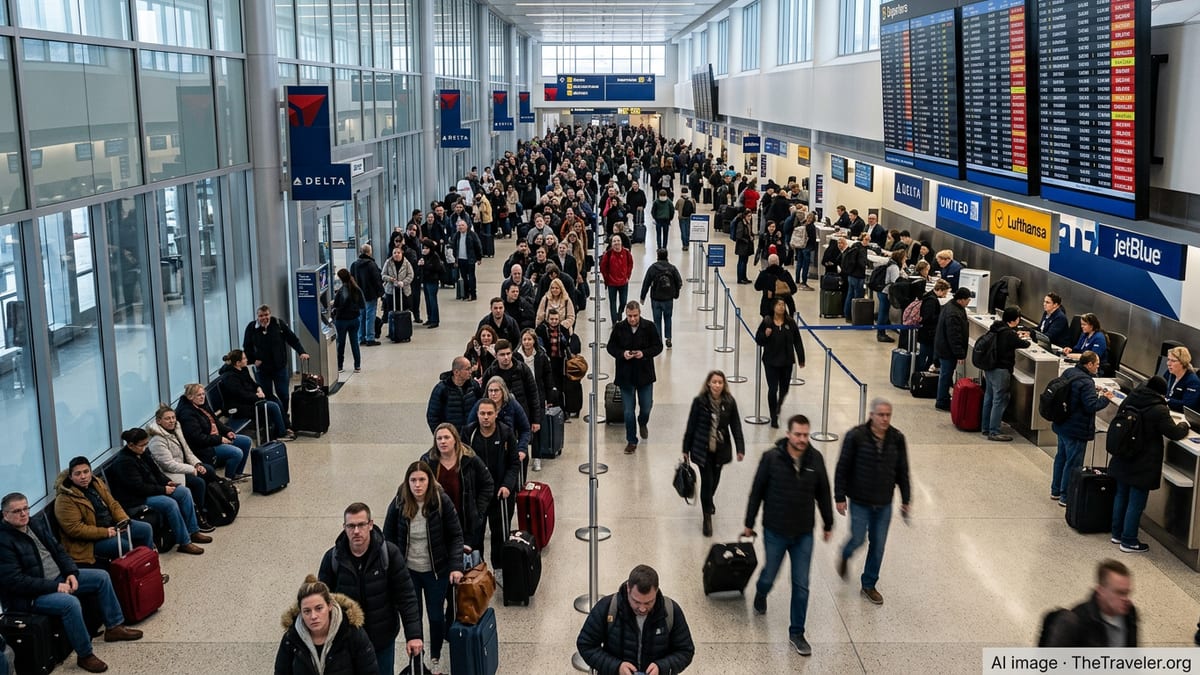
National Disruptions Hit More Than 500 Flights
Publicly available tracking data for May 20 shows that more than 500 flights within, into or out of the United States were canceled, with total disruptions climbing as the day progressed. Aggregated statistics from flight-tracking platforms indicate that the number of canceled flights passed the 500 mark by midafternoon, alongside several thousand delays that left passengers facing long lines and crowded terminals.
While cancellation figures fluctuate throughout the day, today’s totals place the event among the more severe single-day disruptions of the year. Industry observers note that days with several hundred cancellations typically reflect a combination of localized weather problems, airspace constraints and airline-specific operational issues rather than a single nationwide failure.
Flight status dashboards show that cancellations were spread across the country but concentrated at key coastal and midcontinent hubs. As large airports struggled to work through backlogs, secondary airports and smaller cities felt the impact through missed connections and repositioning challenges for aircraft and crews.
The disruption followed a familiar pattern in which morning cancellations and extended delays create knock-on effects that cascade into the afternoon and evening schedules, affecting flights that were not directly exposed to the original cause.
Major Hubs in California, New York and the Southeast Strain Under Delays
In California, the state’s largest airports reported elevated levels of delays and cancellations compared with a typical weekday. Data from tracking and delay-monitoring services showed traffic into and out of major West Coast hubs facing a combination of weather-related spacing programs and congestion, leading to extended departure queues and arrival holds.
On the East Coast, airports serving the New York metropolitan area experienced another difficult day. Public FAA airspace-status tools indicated ongoing traffic management initiatives in the region, while commercial trackers showed a higher-than-normal share of canceled and delayed departures. Because New York links a large share of the country’s long-haul domestic and international traffic, disruptions there tend to propagate quickly across multiple airline networks.
Atlanta and Tampa, two of the busiest nodes for Southern and Southeast travel, also saw heightened levels of disruption. Atlanta’s role as a primary connecting hub means that cancellations there often ripple through smaller markets, while Tampa’s heavy mix of leisure traffic creates particular strain when peak-hour flights are removed from the schedule. Passengers connecting through these hubs reported tight connections, gate changes and, in some cases, missed onward flights.
Further north, Philadelphia, Detroit and Pittsburgh each recorded clusters of cancellations and delays. These airports are critical connectors between coastal corridors and the Midwest, so any operational slowdown can quickly affect itineraries spanning multiple time zones.
Regional Partners Among the Hardest Hit Carriers
Industry data and historical performance records show that regional operators such as Republic Airways, Endeavor Air and PSA Airlines frequently shoulder a disproportionate share of cancellations when large airline systems come under stress. These carriers operate many of the shorter feeder routes under the brands of major airlines, linking smaller cities to hubs where mainline jets take over.
Today’s disruption followed that familiar pattern. Flight-status boards at hub airports indicated that a significant portion of canceled departures involved aircraft operated by regional affiliates on behalf of larger brands. Historical on-time performance statistics compiled for recent years show that Republic, Endeavor and PSA typically report higher cancellation percentages than their mainline partners, reflecting their sensitivity to crew availability, shorter turn times and tighter scheduling.
Because regional flights are often the first to be trimmed when airlines need to stabilize complex networks, communities at the end of those routes can experience outsized impacts. Travelers booked on regional services to or from smaller markets faced limited rebooking options once the initial wave of cancellations exhausted available seats on later flights.
Mainline carriers were not immune. Publicly available operational summaries and traveler reports indicate that United Airlines and American Airlines both canceled a notable number of flights, in some cases after multiple rolling delays. When issues develop at a few key hubs, these larger operators can see disruption spread quickly as aircraft and crews fail to arrive where they are needed for subsequent departures.
Weather, Congestion and Operational Constraints Combine
Analysis of national airspace maps and delay programs published through federal aviation systems suggests that today’s cancellations were not driven by a single, dramatic system failure but by a mix of factors. Localized weather cells, low ceilings and visibility constraints around several major hubs triggered spacing requirements and ground delay programs that reduced the number of aircraft that could safely arrive or depart each hour.
At the same time, busy late-spring schedules have left airlines operating with limited slack in aircraft and crew availability. Previous months have illustrated how a relatively modest weather event or airspace constraint can trigger widespread cancellations once carriers reach the limits of crew duty-time regulations or run out of spare aircraft positioned at key airports.
According to publicly accessible operational analyses, congestion at a few pressure points in the system can also interact with maintenance-related issues, causing further cancellations as aircraft wait for parts or inspections. When multiple factors converge on the same day, airlines sometimes opt to cancel flights early in order to reset schedules, even while other flights continue to operate.
The result for passengers is a patchwork of experiences. Some flights depart close to on time from unaffected regions, while others in problem areas see repeated schedule changes reflected on departure boards before ultimately being canceled.
What Travelers Can Expect for the Remainder of the Day
Travel-planning tools and historical patterns suggest that additional cancellations and delays are likely into the evening hours, particularly on routes that depend on aircraft arriving from already affected airports. Once aircraft and crews fall significantly behind their planned rotations, it can be difficult for airlines to recover full schedules before the end of the operating day.
Passengers traveling later today are likely to encounter residual disruption even if local weather appears calm. Published guidance from travel experts recommends monitoring flight status frequently, using airline apps and terminal displays, and budgeting additional time for connections at major hubs where gate changes and reassignments are common during irregular operations.
Looking ahead, on-time performance databases show that airlines have gradually improved completion rates in recent years, but they also highlight the continuing vulnerability of complex networks to multi-factor stress events. Travelers connecting through busy hubs such as those in California, New York, Atlanta, Philadelphia, Detroit, Tampa and Pittsburgh remain exposed to cascading effects when multiple constraints appear on the same day.
For now, flight-tracking dashboards and public airspace tools indicate that operations remain strained but functional, with airlines focusing on preserving the most critical trunk routes and gradually rebuilding their schedules as weather, congestion and resource limitations allow.