


The Leaning Tower of Pisa is one of Europe’s most photographed landmarks, yet many visitors leave frustrated, rushed, or unexpectedly out of pocket. Between strict access rules, limited time slots, and Pisa’s notoriously confusing driving restrictions, it is easy to make avoidable mistakes that can sour what should be a simple, memorable stop. Here is a guide to the biggest missteps travelers make when visiting the Leaning Tower and the surrounding Piazza dei Miracoli, and how to get it right instead.
Get the latest updates straight to your inbox!
Ignoring How the Ticket System Really Works
One of the most common mistakes is assuming you can simply show up, buy a ticket on the spot, and walk straight up the Leaning Tower. Visitor numbers are capped and entry is managed in timed 30-minute slots, with only a small group allowed inside at any given time. In high season, particularly from late May through September and on weekends, the most desirable mid-morning and late-afternoon slots can sell out hours in advance. Travelers who arrive at midday with a tight rail connection often discover that the next available climb window is not until late afternoon, long after their departure.
Another frequent error is misunderstanding that tower tickets are separate from tickets to the other monuments in the Piazza dei Miracoli. The tower, cathedral, baptistery, Camposanto cemetery, and museums are each managed within the same complex, but different ticket combinations exist. Many people buy a field-wide pass thinking it automatically includes climbing the tower, then only realize at the entrance turnstiles that they still need a specific tower ticket and time slot. At busy times, the tower portion might be sold out even though access to the rest of the square is still available.
There is also confusion about timing and punctuality. Your tower ticket is valid only for the specific start time printed on it, and security closes the turnstile promptly. If your slot is at 14:15 and you arrive at 14:17 after queuing at the baggage check, there is a real chance staff will not let you in, especially on crowded days. Unlike some attractions that quietly wave latecomers through the next slot, the Leaning Tower is usually strict to keep crowding on the narrow staircase under control.
The smartest way to avoid these pitfalls is to treat tower tickets as you would a specific train reservation: book in advance when traveling in peak season, double-check that “Tower climb” is clearly listed on your confirmation, build in at least 30 minutes between your baggage drop and your entry time, and plan to be standing at the base of the tower ten to fifteen minutes before your slot begins.
Underestimating Security Rules, Dress Codes, and Physical Demands
Another big surprise for many visitors is the strict security protocol for entering the tower itself. Bags of any size, including handbags, small backpacks, and camera bags, are not allowed on the climb. Travelers often arrive directly from the train station with all their luggage, only to discover that everything must be left in a cloakroom near the ticket office. The lockers are free but limited, and at peak times there can be a short queue to deposit or collect your belongings. If you have a tight onward schedule, that extra ten minutes can matter.
Clothing can also cause problems, particularly for those who want to step inside the cathedral or baptistery as well as photograph the tower. While the open piazza has no dress code, the cathedral and other religious buildings expect modest attire, meaning shoulders and knees covered for both men and women. This catches out many summer visitors who arrive in short shorts and strappy tops after a beach day on the Tuscan coast. Staff do sometimes turn people away from the cathedral door or ask them to cover up with a scarf or shawl, which can be stressful if your time in Pisa is limited.
Many travelers also underestimate the physical effort of climbing the spiral staircase. The tower has nearly 300 narrow, worn stone steps, and the pronounced tilt means you feel slightly off balance, with the angle changing as you move around the circumference. It is not a long climb for reasonably fit travelers, but it can be challenging for anyone with knee problems, vertigo, or poor balance. Children below a certain age are not allowed to climb for safety reasons, and pregnant visitors or those with heart issues are advised to think carefully before booking tickets.
To avoid disappointment, travel light when you approach the tower, leaving larger bags at your hotel or in left-luggage at Pisa Centrale if necessary. Dress in a way that would feel respectful in a European church even in summer, perhaps carrying a thin scarf or light linen shirt you can throw on for the cathedral. And before buying climb tickets for your whole party, be realistic about who will actually enjoy the ascent; sometimes it is better to let one adult climb while another stays in the square with a stroller or older family members.
Getting Caught Out by Pisa’s ZTL and Parking Traps
One of the most expensive mistakes visitors make in Pisa does not happen in the square at all, but on the roads leading into it. Like many Italian cities, Pisa has a ZTL, or Zona a Traffico Limitato, which restricts access to much of the historic center, including streets near the Piazza dei Miracoli. Cameras automatically record number plates, and unauthorized vehicles that pass into the zone are issued fines that can arrive by post weeks or months later. Travelers who drive rental cars straight up to the tower for a “quick photo stop” are often shocked to receive multiple fines long after their vacation is over.
The problem is compounded by signage that is unfamiliar to foreigners: a white circular sign with a red border often indicates the start of the restricted area, accompanied by boards listing hours, exceptions, and vehicle types in Italian. Many drivers, focused on their navigation app, miss these details entirely. In practice, tourists who inadvertently enter the ZTL can receive a fine for each camera they pass, so a brief detour or wrong turn near the tower can translate into several violations and a few hundred euros in charges once the rental company adds its administrative fees.
Parking is another source of frustration. Some travelers try to park in free-looking white-lined spots close to the center, not realizing that many of these are reserved for residents and that non-resident cars risk being ticketed or towed. Others follow unverified online advice and attempt to park on side streets, only to find no spaces available or unclear signage about payment hours. Meanwhile, there are official paid car parks and larger lots within a 10 to 15 minute walk of the piazza that, while not always the cheapest, are straightforward and designed for visitors.
If you are arriving by car, the safest approach is to park outside the ZTL in a dedicated paid lot or multi-story garage and walk or take a local bus into the historic center. Factor into your budget that all-day parking can easily run to a moderate fee in a city like Pisa, but it is still far cheaper than multiple traffic fines. When booking accommodation, ask directly whether the property lies inside the ZTL and, if so, whether they can register your car for temporary access. Above all, do not drive toward the tower on instinct; follow ZTL-aware directions and keep an eye on roadside signs as carefully as on your navigation screen.
Spending Only an Hour and Missing the Rest of Piazza dei Miracoli
Many travelers treat Pisa as a hurried stop between Florence and the Cinque Terre, planning to “pop in” for an hour between trains. They head straight from Pisa Centrale to the Leaning Tower, take a handful of perspective photos in the lawn, and then rush back, feeling that they have “done Pisa.” In reality, this approach often leaves them hot, stressed, and underwhelmed, particularly if the light is too harsh for good photos or the queue for the tower eats up most of their time.
The Piazza dei Miracoli, formally known as Piazza del Duomo, is much more than the tower alone. The complex includes the Romanesque cathedral, the circular baptistery with its extraordinary acoustics, the monumental cemetery with its fresco fragments, and associated museums. Taken together, it is one of Italy’s finest medieval architectural ensembles. Visitors who only allow a short window often find they have time to either queue for the tower or step inside one or two of the other buildings, but not both. They leave with a memory dominated by crowds and logistics rather than by the serenity and artistry of the square itself.
There is also the matter of light and atmosphere. In the middle of a summer day, the green lawns around the tower can be crowded with school groups and tour parties, the sun is high and unforgiving for photography, and the marble facades glare. Early morning and late afternoon, by contrast, bring softer light, longer shadows, and a calmer mood. Travelers who schedule Pisa as only a midday stop miss the chance to see the piazza at its most beautiful, and often end up with flat, overexposed photos as a result.
To really appreciate the area, plan at least two to three hours on site, more if you want to climb the tower and linger in the museum spaces. Consider arriving on an early train from Florence or Lucca to enjoy the square before the biggest tour buses arrive, or staying into the evening so you can see the tower glow in the warm, slanting light. Building in this extra time turns Pisa from a hectic checkbox into a genuinely memorable part of your Italy itinerary.
Believing Pisa Is “Just the Tower” and Skipping the City
Another mistake is treating Pisa solely as the location of a single monument and ignoring the city beyond the walls of the Piazza dei Miracoli. Many visitors walk the direct route between the train station and the tower, perhaps stop for a quick slice of pizza on a touristy strip, and depart with the impression that Pisa is crowded and one-dimensional. In doing so, they miss the more authentic streets, riverfront, and student energy that make the city an enjoyable place in its own right.
Just a short walk from the square, the Arno riverfront offers a different perspective, with pastel facades, historic palazzi, and everyday life unfolding along the Lungarni. The medieval lanes between the tower and the river still have small bakeries, gelato shops favored by locals, and aperitivo bars filled with university students rather than only tour groups. Travelers who give themselves an afternoon or evening in the city discover that Pisa can feel more relaxed and lived-in than some of Tuscany’s more overtly touristic towns.
Staying overnight is also underrated. A night in Pisa can be more affordable than in Florence or the Cinque Terre on busy dates, and it allows you to see the tower illuminated after dark, when day-trip crowds have thinned. With a local base, it becomes easier to wander into less trafficked corners, visit neighborhood markets, or sit in a quiet square with a coffee, letting the city feel less like an attraction and more like a place.
If your schedule allows, think of Pisa as a compact, walkable Tuscan city with a world-famous landmark at its heart, rather than as a single photo stop. Even an extra half-day spent exploring beyond the piazza can change your impression completely, and often costs little more than the price of a hotel room and a few extra bus or train tickets.
Picking the Wrong Time and Weather for Your Visit
Timing your visit poorly can make the difference between a pleasant experience and a draining one. In midsummer, the combination of strong sun reflecting off pale stone, minimal shade in the square, and thick crowds can be intense by late morning. Travelers who arrive around noon, especially with children or older relatives, are often surprised how quickly everyone becomes tired and irritable. The stone steps inside the tower itself can also feel warm and crowded when climbed at the hottest part of the day.
Weather plays a role beyond just comfort. On rainy days, the exterior steps and the marble surfaces around the tower can be slippery, and some visitors feel less secure attempting the climb. Windy days may mean more challenging conditions at the top, especially for those who are nervous about heights. Very poor weather can occasionally lead to temporary access restrictions for safety reasons, which can be particularly disappointing if you have a tight itinerary and no flexibility to return.
Season can also affect opening hours and crowd levels. While the tower is open year round with slightly shorter days in winter and extended hours in summer, certain dates such as Christmas and New Year’s Day bring closures or reduced access, and special religious events in the cathedral can affect visiting hours for the wider complex. Visitors who assume uniform schedules across the year sometimes discover that a key building they wanted to see is closed on their particular date, which is especially frustrating for those making a dedicated journey from elsewhere in Italy.
The best strategy is to pair basic seasonal research with some flexibility. Aim for early-morning or late-afternoon tower slots in summer to avoid the very worst of the heat and crowds. If visiting in cooler months, remember that late afternoon will bring quickly falling temperatures and earlier dusk. And when building a longer itinerary, if possible allow space for a backup time or day in case bad weather or unforeseen closures disrupt your initial plan.
Forgetting Practicalities: Food, Toilets, and Photo Expectations
Even practical details can catch travelers off guard. Food options immediately around the Piazza dei Miracoli often cater squarely to tourists, with menus heavy on quick slices, simple pasta, and higher prices than you might find a short walk away. Visitors who arrive hungry, especially after a train ride or car journey, sometimes end up settling for a forgettable meal just for convenience. They later discover that more characterful and better-value trattorias and cafes sit only ten or fifteen minutes away on foot in less trafficked streets.
Toilets and small conveniences are another issue. While there are paid public restrooms in and near the square, queues can form at busy times, and travelers with young children or limited mobility can find the waits stressful. Many people forget to use facilities at the train station or their last cafe before heading straight into the tower complex, and then find themselves juggling ticket times, photo stops, and bathroom needs. Bringing a small amount of cash for restrooms and snacks, even if you mostly rely on cards, can also be helpful, as some facilities still prefer coins for entry.
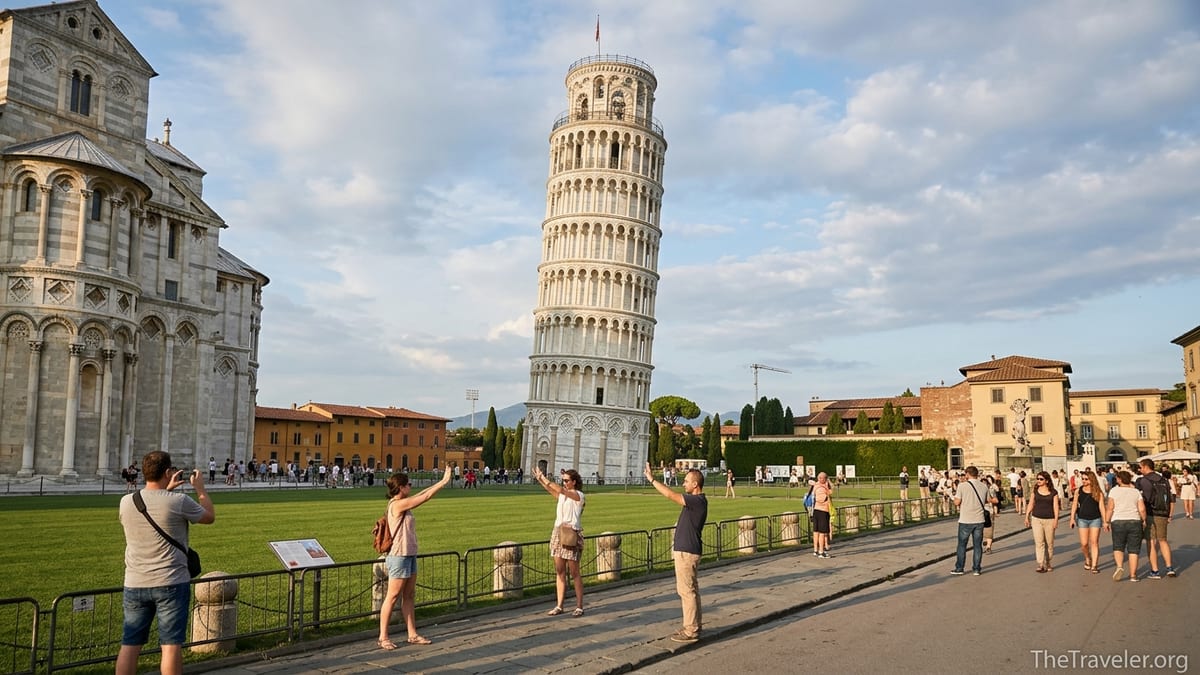
On the photography side, expectations can be out of step with reality. The classic “holding up the tower” shot has become a crowded sport in itself, with dozens of people lining the same stretch of lawn, each trying to frame their own version. At peak times, it can be challenging to find a clear angle that does not include strangers posing in the background. Some visitors become so focused on recreating specific images they have seen online that they spend most of their visit choreographing photos rather than actually taking in the architecture and atmosphere.
Planning for these simple realities improves the experience. Have a light snack and use a restroom before entering the piazza, and consider walking a few streets away from the main entrance for a more relaxed coffee or lunch before or after your visit. For photos, accept that capturing a perfectly empty scene is unlikely in high season; instead, explore different vantage points around the square, and allow yourself time simply to stand back and appreciate the improbable lean and the geometric patterns of the marble without a camera in your hand.
The Takeaway
Visiting the Leaning Tower of Pisa should feel like one of the highlights of a trip to Italy, not a logistical battle or an expensive detour. Most of the biggest frustrations that travelers report, from missed tower climbs to unexpected ZTL fines and rushed, underwhelming encounters with the square, stem from the same root cause: underestimating how structured and urban a visit to Pisa really is.
By treating tower tickets as timed reservations, respecting security and dress rules, planning for at least a couple of unhurried hours in the Piazza dei Miracoli, parking cautiously outside the restricted center, and remembering that Pisa is a living city beyond its most famous monument, you can turn a brief stop into a genuinely rewarding experience. A little advance thought about timing, comfort, and simple practicalities pays back many times over when you are standing at the top of the tower, looking across the red roofs of Pisa and out toward the Tuscan hills, glad that you did more than just rush in for a single photograph.
FAQ
Q1. Do I really need to book Leaning Tower of Pisa tickets in advance?
Booking ahead is strongly recommended in high season and on weekends, especially if you want a specific time for the climb or have a tight onward schedule.
Q2. How early should I arrive before my tower climb time slot?
Plan to be at the base of the tower at least 15 to 20 minutes before your scheduled entry to allow for baggage drop, security checks, and any short queues.
Q3. Can I bring a backpack or handbag up the Leaning Tower?
No, bags of any size are normally not allowed on the tower climb. You must leave them in the nearby cloakroom or lockers before entering.
Q4. Is there a dress code for visiting the Leaning Tower and cathedral?
There is no dress code for the open square, but shoulders and knees should be covered in the cathedral and other religious buildings, so plan modest clothing or a cover-up.
Q5. How long does the Leaning Tower climb take?
The timed visit is usually around 30 minutes. Allow extra time before and after for checking bags, taking photos in the square, and moving between monuments.
Q6. Is it safe and suitable for children to climb the tower?
The climb involves many narrow stone steps and a noticeable tilt. There is a minimum age for children, and it may not be suitable for those who are very young, nervous of heights, or unsteady on their feet.
Q7. What is the best time of day to visit to avoid crowds and heat?
Early morning and late afternoon generally offer fewer crowds and softer light. Midday in summer can be very hot and busy, both in the square and inside the tower.
Q8. Can I drive close to the Leaning Tower, or will I get a ZTL fine?
Much of central Pisa is in a restricted traffic zone monitored by cameras. It is safer to park outside the center in a paid car park and walk or take a bus to the piazza.
Q9. How much time should I plan for the whole Piazza dei Miracoli, not just the tower?
Allow at least two to three hours if you want to climb the tower and also visit the cathedral, baptistery, cemetery, and museums without feeling rushed.
Q10. Is Pisa worth more than a quick stop just to see the tower?
Yes. The riverside, historic streets, and student atmosphere make Pisa an enjoyable small city. Even an extra half-day exploring beyond the piazza can be rewarding.