


Few landmarks are as instantly recognizable as the Leaning Tower of Pisa. For many travelers, it is a must-see on an Italy itinerary, often squeezed into a half-day trip from Florence or a quick stop between trains. To make the most of your first visit, it helps to know how tickets work, whether the climb is worth it, how much time to allow, and what else you can see in the surrounding Piazza dei Miracoli. This guide brings together the latest practical information so you can plan a stress-free, memorable visit in 2026.
Get the latest updates straight to your inbox!
Understanding the Leaning Tower and Piazza dei Miracoli
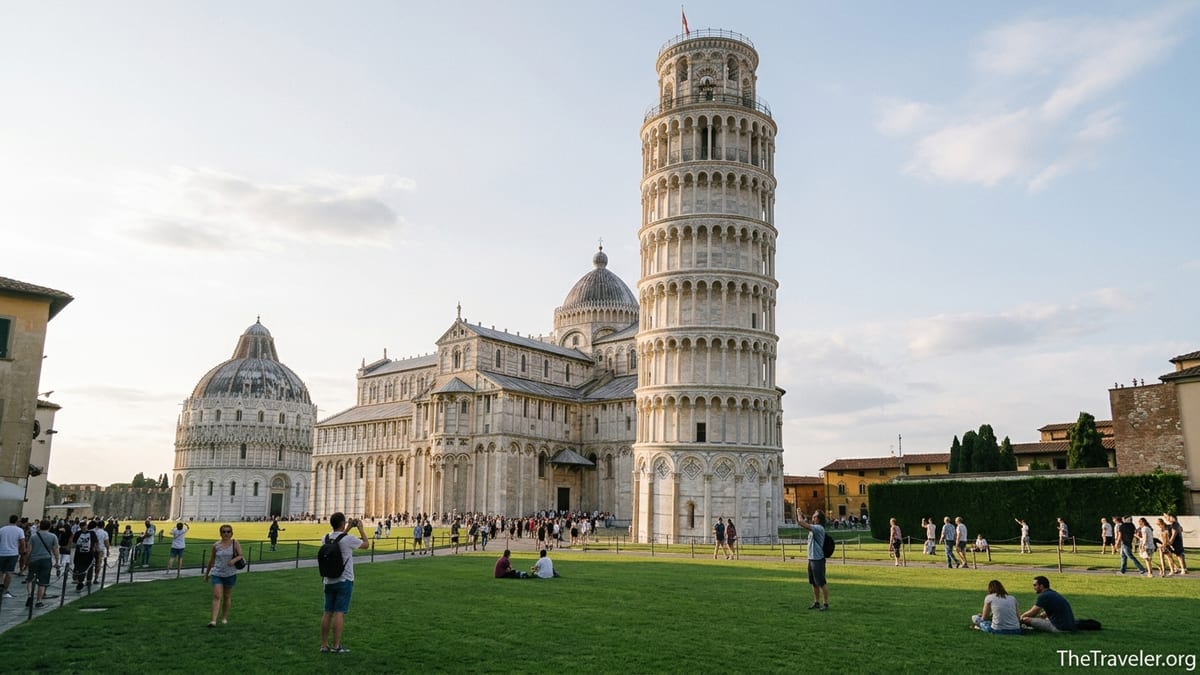
The Leaning Tower of Pisa is the freestanding bell tower of Pisa Cathedral, set in the walled Piazza del Duomo, better known as Piazza dei Miracoli or Square of Miracles. The tower is about 56 meters tall, roughly the height of a six-story building, and leans at more than 4 degrees due to the soft, unstable ground beneath it. Engineers have spent decades stabilizing the structure, so visitors can climb it today, but the tilt is still clearly visible from every angle and is the main reason most people come.
The tower is only one of several monuments on the square. Next to it stands the striped-marble cathedral, with its ornate Romanesque facade and bronze doors, while the round Baptistery, with its layered roof and echoing interior, dominates the other side. Along the edge of the lawn is the Camposanto Monumentale, a monumental cemetery with cloisters, frescoes, and marble tombs. Many first-time visitors are surprised to find that the most atmospheric part of the visit is not just taking a leaning photo, but wandering between these buildings on the bright green grass and white stone paths.
Understanding the layout helps you plan your time. The tower sits on one corner of the square, with its entrance on the side facing the cathedral. Ticket offices and security are just outside the main walled entrance, and you must pass through them before reaching the tower. Piazza dei Miracoli is compact enough that you can see everything in a few hours, but there is enough detail that spending half a day taking in the cathedral interior, climbing the tower, and exploring the museum and cemetery can feel very relaxed.
The atmosphere varies by season and time of day. In high summer, tour buses unload lines of visitors starting mid-morning and the square quickly fills with groups posing for photos. In shoulder seasons like April, May, September, and October, the square feels busy but not overwhelming, and the light over the white stone buildings is particularly beautiful in the late afternoon.
Opening Hours, Best Time to Visit, and How Long to Stay
The Leaning Tower operates year-round with seasonal variations, but a good rule of thumb in 2026 is that it opens around 9:00 in the morning and closes between 6:00 and 10:00 in the evening depending on the month. In winter, last entry is typically around 5:30 or 6:00 in the evening, while in peak summer, hours can extend to about 10:00 at night with the last climbs starting around 9:30. Always confirm exact times shortly before your trip, as special events or maintenance can change the schedule, especially around major holidays.
The tower and cathedral complex are busiest from roughly 10:30 in the morning to 3:30 in the afternoon. This is when most day-trip groups from Florence, cruise excursions from Livorno and La Spezia, and regional tours converge. If you want a quieter experience and shorter lines at security, aim to arrive for a climb before 10:00 or after about 5:00 in the afternoon. Evening slots in summer can be particularly pleasant, as the stone is less hot, the light is softer for photography, and many tour groups have already left.
For a first-time visit that includes climbing the tower, walking around the square, and visiting at least one additional monument such as the cathedral interior or Baptistery, plan on a minimum of two to three hours in Pisa. Travelers who arrive by train from Florence often allow four to five hours in total for the entire excursion, including a leisurely walk from Pisa Centrale station to the square, time for photos, a quick coffee or gelato near the walls, and the return journey. If you are interested in photographing the tower from different angles and visiting the Camposanto and museum, a half day in Pisa does not feel excessive.
Weather also affects your visit. In July and August, the white stone and open lawn reflect the sun, and the climb can feel quite warm. Morning visits are more comfortable in the heat, while winter can bring chilly winds across the open square. On rainy days the stone steps inside the tower can be slightly damp and more slippery, so comfortable shoes with good grip are even more important.
Tickets, Prices, and How to Book in 2026
All tickets to climb the Leaning Tower are timed entry in 2026. This means your ticket will specify a 30-minute window during which you may enter the base of the tower and begin your climb. Because capacity is limited, especially in summer, popular times often sell out. It is wise to book at least several days ahead in July and August, and a week or more ahead if you must visit on a specific day, such as during a cruise stop.
As of 2026, standard adult tickets to climb the tower generally cost in the region of 20 to 25 euros per person, with slight variation depending on whether other monuments are bundled in. Children under 8 years old are not allowed to climb the tower for safety reasons, and those between 8 and 18 must usually be accompanied by an adult, so families should plan accordingly. Many visitors combine tower access with a pass for the cathedral, Baptistery, Camposanto, and museums; these bundled options cost more than a simple tower ascent but often represent better value if you have time to explore more than just the exterior.
You can purchase tickets on the official site or at on-site ticket offices near the square, but walk-up availability can be very limited in peak season or on weekends. For example, in August it is common for midday tower climbs to be fully booked by late morning, leaving only late-evening or very early slots for same-day purchase. Third-party resellers and tour operators also offer tickets and guided experiences, often branded as skip-the-line, but since all tower tickets are timed entry, the main advantages of these options are the added commentary and logistics rather than bypassing security.
When comparing options, consider whether an escorted experience is worth the extra cost for you. A basic timed-entry tower ticket will get you into the tower at your chosen time, but you will explore on your own. A small-group tour might bundle round-trip transport from Florence, a guide who walks you through the history of Pisa’s maritime republic, and guaranteed tower entry. For a typical traveler staying in Florence, a package costing around 70 to 100 euros per person that includes train or coach transport, a guide, and tower tickets can be worthwhile if you prefer a turn-key solution and do not want to navigate Trenitalia or Pisa’s streets on your own.
Climbing the Tower: What to Expect and Safety Tips
The climb to the top of the Leaning Tower involves more than 250 narrow, worn marble steps in a tight spiral staircase. There is no elevator. The interior is surprisingly cool even on hot days, but the combination of the tilt, the polished steps, and the enclosed space can feel challenging for some visitors. If you have serious mobility issues, heart conditions, severe vertigo, or claustrophobia, you may wish to admire the tower from the ground instead.
Visitors are typically admitted in small groups according to their time slot, and staff manage a steady one-way flow up and down. Before entering, you will pass through airport-style security where large bags and backpacks must be stored; you cannot carry bulky items up the tower. A small handbag or camera is usually permitted. At the base, you may notice the incline immediately as you stand on the slightly sloping floor and begin climbing. On one side of the staircase you will feel as if you are leaning into the inner wall, and on the opposite side you may feel yourself pulled toward the outer edge.
The sense of tilt becomes more pronounced near the top. Some visitors describe a sensation similar to being on a gentle ship in motion as you step out onto the upper gallery. The views, however, are a highlight: red-tiled roofs of Pisa, the cathedral’s detailed roofline, and the green lawn of Piazza dei Miracoli below, dotted with people posing for photos. Most people spend about 10 to 15 minutes at the top taking photos and walking carefully around the perimeter before beginning the descent.
Wear shoes with good traction. Smooth leather soles or slick sandals can make the climb more tiring and increase the risk of slipping on the worn steps. If you are visiting in winter, be prepared for cold wind at the top; a light jacket or scarf can make the experience more comfortable. Parents should be aware that even older children can find the tilt unsettling, so allow extra time and encourage them to hold the handrail throughout the climb.
Getting to Pisa and Reaching the Tower
Most first-time visitors reach Pisa by train, often from Florence. The direct regional trains between Firenze Santa Maria Novella and Pisa Centrale typically take about an hour, with frequent departures throughout the day and low fares. For example, standard regional tickets for this route are usually in the range of 9 to 15 euros each way per adult, depending on the specific train and whether you buy through Trenitalia or another booking platform. Seats on these regional trains are not usually reserved, so you can hop on any service that matches your ticket conditions and validate your ticket before boarding if required by the fare type.
From Pisa Centrale station, the walk to Piazza dei Miracoli takes around 20 to 25 minutes at a moderate pace. Many travelers choose a simple route that heads toward the Arno River, crosses one of the central bridges, and then continues through the historic center toward the city walls. It is a pleasant walk past cafes, bakeries, and small shops, and you will get a feel for Pisa beyond the tower. If you prefer not to walk, local buses and taxis are available outside the station and can drop you near the square’s main gate. A short taxi ride usually costs less than what you would pay for an airport transfer in a larger city.
If you are arriving by air, Pisa International Airport is only a few minutes from the city center by shuttle or taxi, which makes the tower an easy stop on arrival or before departure. Cruise passengers docking in Livorno often book shore excursions that combine transport with guided visits. Independent travelers can take a train from Livorno Centrale to Pisa Centrale in about 20 to 25 minutes, then continue on foot to the square. Travelers already staying in Tuscany sometimes visit Pisa on a loop that includes Lucca, spending the morning climbing Pisa’s tower and the afternoon walking Lucca’s Renaissance walls.
Driving into Pisa’s historic center is not recommended for most visitors. The area around Piazza dei Miracoli includes restricted traffic zones, and parking close to the square can be limited or expensive. If you do drive, look for clearly marked public parking outside the walls and be prepared for a short walk. For a first visit, especially in 2026 when regional rail services are frequent and relatively reliable, public transport is usually the simplest option.
What Else to See and Do Around the Tower
While the Leaning Tower is the headline attraction, the rest of Piazza dei Miracoli rewards unhurried exploration. Entrance to the cathedral interior is usually included with some monument passes or available at a modest additional fee, often just a few euros. Inside, you can admire the pulpit, marble columns, and gilded ceiling. The cathedral’s blend of Romanesque arches and delicate detailing is impressive even if you have already seen churches in Florence or Siena.
The Baptistery, located opposite the cathedral, is known for its acoustics. At certain times, attendants demonstrate how sound carries beneath the domed roof, and visitors sometimes experience the haunting echo of simple notes held in the air. Climbing to the upper gallery inside the Baptistery offers a different perspective over the cathedral’s roof and the square, and many photographers enjoy capturing the tower from this angle.
The Camposanto Monumentale, a cloistered cemetery along one side of the square, offers a quieter, more contemplative space away from the crowds around the tower. Fresco fragments and sculptures line the walls, and the long covered walkways provide shade on hot days. Nearby museums hold original sculptures and artworks from the square that have been moved indoors for protection, including pieces once mounted on the exterior of the cathedral and tower.
Just outside the walls, rows of souvenir stalls sell postcards, fridge magnets, miniature towers, and leather goods. While quality varies, some visitors enjoy picking up a small tower replica or a simple Pisa-themed tote bag as a memento. There are also cafes and gelato shops on the streets leading back toward the river. Prices here are generally higher than in less touristy corners of the city, so if you are watching your budget, consider grabbing a coffee or sandwich closer to the train station instead of directly next to the square.
Practical Tips, Dress Code, and Accessibility
There is no strict formal dress code for walking around Piazza dei Miracoli or climbing the tower, but the cathedral is an active place of worship and modest attire is expected inside. Shoulders and knees should be covered, similar to the guidelines at other Italian churches. In peak summer, lightweight clothing that still covers your shoulders, such as a linen shirt or shawl, can help you stay comfortable while respecting local norms. Comfortable walking shoes are essential, especially if you plan to climb the tower or explore the city on foot.
Security measures around the tower and monuments are similar to those at other major European sites. You will pass through a screening area where large bags, umbrellas, and sharp objects are not allowed. Lockers or a staffed cloakroom are typically available near the entrance for items you cannot take inside. Arrive at least 15 to 20 minutes before your timed tower entry to allow for these procedures; if you arrive exactly at your time slot with a large backpack, you risk missing your slot while arranging storage.
Accessibility is limited for the tower itself because of the historic spiral staircase and the significant tilt. Visitors with reduced mobility can usually access parts of Piazza dei Miracoli, the cathedral, and some museum areas with ramps or assistance, but the actual climb to the top of the bell tower is not suitable for wheelchairs or visitors who cannot manage many stairs. If someone in your group cannot climb, consider splitting activities so that those who prefer to stay on the ground spend more time in the cathedral, museum, or nearby cafes while others climb.
For families, strollers are not allowed inside the tower. Many parents choose lightweight travel strollers that can easily be folded and left in designated areas while they visit the interior monuments. If you are traveling with very young children, it might be more comfortable for one adult to climb the tower while the other remains in the square, rather than attempting the ascent with a nervous or tired child who may find the tilt strange or frightening.
The Takeaway
For a first-time visitor, the Leaning Tower of Pisa is both exactly what you expect and more than a simple photo stop. The famous tilt is striking in person, but the surrounding Piazza dei Miracoli, with its cathedral, Baptistery, and cloister, turns a brief visit into a richer experience. With a bit of planning, you can avoid the busiest times, secure a timed-entry ticket that fits your schedule, and decide whether a guided tour or independent visit suits your style.
Most travelers will find that two to three hours around the tower is enough to climb, take in the views, and explore at least one or two additional monuments, with extra time needed if you are traveling from Florence or another Tuscan base. Choosing comfortable footwear, respecting modest dress expectations for the cathedral, and arriving early for security will make the day smoother. Whether you come for a dedicated half-day visit or fit Pisa into a broader Tuscany itinerary, a well-planned stop at the Leaning Tower is likely to be one of the most memorable images you take home from Italy.
FAQ
Q1. Do I need to book Leaning Tower of Pisa tickets in advance?
Booking in advance is strongly recommended, especially from April to October and on weekends. Timed-entry slots often sell out for late morning and early afternoon, and same-day tickets may only be available for inconvenient times. Buying ahead lets you choose a time that fits your train schedule and reduces the risk of disappointment.
Q2. How much time should I plan for a first visit to the tower and square?
If you are already in Pisa, allow at least two to three hours to pass security, climb the tower, and visit at least the cathedral or Baptistery. Travelers coming from Florence or another city should plan a half day in total, adding time for the train journey, the 20 to 25 minute walk from Pisa Centrale to the square, and a buffer for delays.
Q3. Is the Leaning Tower climb suitable for children?
Children under 8 years old are not allowed to climb the tower for safety reasons. Older children are permitted but must usually be accompanied by an adult. The tilt and narrow staircase can feel unsettling, so it is best suited for children who are comfortable with heights, enclosed spaces, and a sustained climb.
Q4. What is the best time of day to visit the Leaning Tower?
Early morning and late afternoon are generally the most pleasant times. Between about 10:30 in the morning and 3:30 in the afternoon, the square is busiest with tour groups and day-trippers. In summer, evening climbs can be especially enjoyable, with cooler temperatures and softer light for photography.
Q5. Can I visit the cathedral and Baptistery without climbing the tower?
Yes, you can buy tickets that cover the cathedral, Baptistery, Camposanto, and museums without including the tower climb. This is a good option if someone in your group cannot manage the stairs, is nervous about heights, or if timed tower slots are sold out but you still want to experience the Square of Miracles.
Q6. How do I get from Florence to the Leaning Tower of Pisa?
The simplest way is to take a regional train from Firenze Santa Maria Novella to Pisa Centrale, a journey of roughly one hour on direct trains. From Pisa Centrale, you can walk about 20 to 25 minutes through the historic center to Piazza dei Miracoli or take a short taxi or local bus ride to the square’s main gate.
Q7. Are there any dress code rules I should know?
There is no strict dress code for the square itself or for climbing the tower, but the cathedral is a functioning church and expects modest attire, with shoulders and knees covered. Lightweight, breathable clothing that respects these guidelines will keep you comfortable, particularly in summer.
Q8. Is the Leaning Tower accessible for visitors with reduced mobility?
Unfortunately, the tower climb is not accessible to visitors who cannot manage a long, steep, spiral staircase, and it is not suitable for wheelchairs. However, much of Piazza dei Miracoli, the cathedral entrance area, and some museum spaces are accessible or partially accessible, so visitors with reduced mobility can still enjoy significant parts of the site from ground level.
Q9. What should I wear on my feet for the tower climb?
Wear comfortable, closed-toe shoes with good grip. The marble steps inside the tower are worn and can be slightly slippery, especially in damp weather. Avoid high heels, smooth leather soles, or flimsy sandals, as they make the ascent and descent more tiring and less secure.
Q10. Is visiting Pisa worth it if I only have half a day?
Yes, a half day is enough time to see the Leaning Tower, explore Piazza dei Miracoli, and enjoy a coffee or gelato nearby. Many travelers based in Florence or another Tuscan city make Pisa a half-day excursion, combining the tower with a short wander through the historic center or extending the day with a stop in nearby Lucca for a walk along its city walls.