


More news on this day
Greece is heading into the 2025 summer season as one of the world’s hottest destinations, with a surge in Blue Flag awards and record airline capacity from Germany, the United Kingdom, Italy, France, Spain and the United States driving unprecedented demand and fast selling flights.
Get the latest news straight to your inbox!
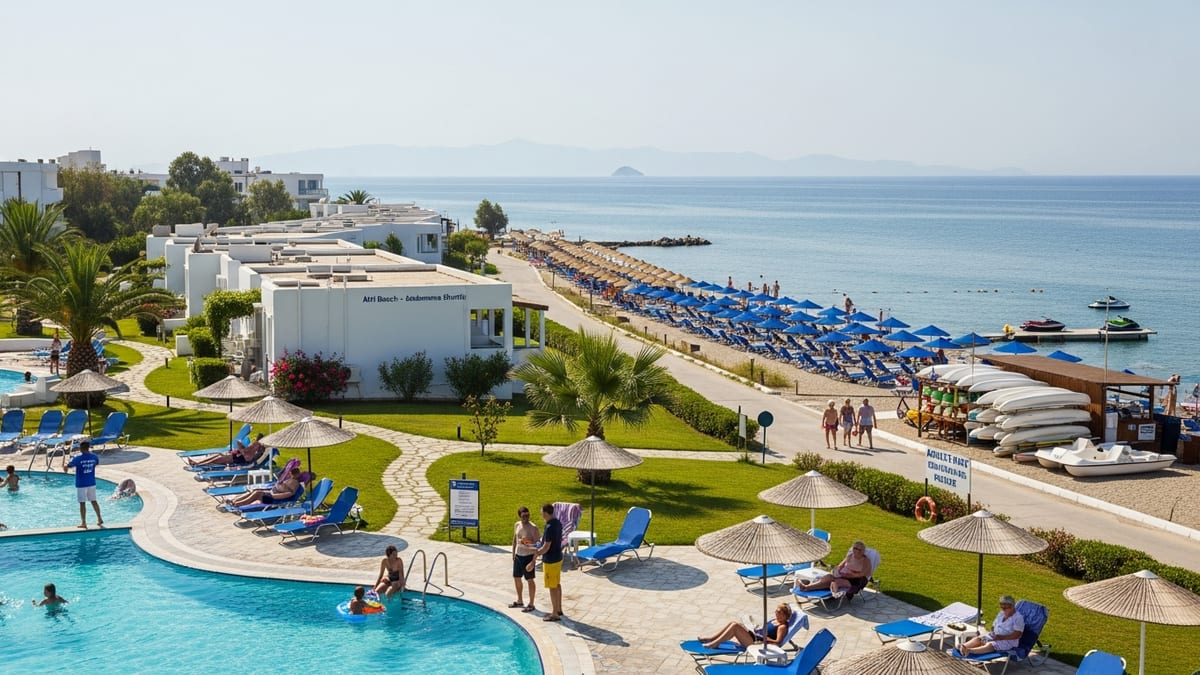
Greece Secures 623 Blue Flag Beaches as Coastal Appeal Intensifies
Publicly available data from the international Blue Flag program for 2025 shows that Greece has been awarded 657 Blue Flag distinctions, covering 623 beaches, 17 marinas and 17 sustainable tourism boats. The country now accounts for roughly 15 percent of all Blue Flag beaches worldwide and ranks second globally in number of certified coasts, behind only Spain. For travelers, the Blue Flag label signals clean waters, robust environmental management and strong safety standards, turning Greek shorelines into a shorthand for dependable beach quality.
Blue Flag is administered by the Foundation for Environmental Education and is considered one of the most recognizable eco-certifications in global tourism. To qualify, beaches must meet strict criteria on water quality, environmental education, beach services and coastal protection. Greek destinations such as Halkidiki, Crete, Rhodes and the Cyclades have emerged as standouts, with local municipalities competing to secure new flags each year to bolster their international profile.
The extension of Blue Flag status across so many coastlines is intensifying Greece’s reputation as a safe and environmentally conscious sea-and-sun destination at a time when travelers are increasingly attentive to water quality and sustainability. Industry analysts note that the branding effect of hundreds of Blue Flags concentrated in a relatively compact country is magnified in source markets such as Germany, the UK, Italy, France, Spain and the US, where tour operators routinely highlight the certification in brochures and online listings.
With more beaches entering the program annually, travel platforms and booking sites are also using Blue Flag as a filter and marketing hook. This visibility helps steer demand not only to headline islands like Santorini and Mykonos but also to emerging coastal areas on the mainland, supporting Greece’s strategy to spread tourism beyond traditional hotspots and lengthen the season into spring and autumn.
Record Airline Capacity From Europe and the US
According to airline schedule data and published coverage from Greek and international media, Greece entered the 2025 summer season with around 28.2 million international airline seats, an increase of roughly 4.6 percent compared with 2024. Aegean Airlines alone is operating a network of about 250 routes, including 195 international connections, supported by a fleet of more than 80 aircraft. The carrier has been adding new Airbus A321neo jets and expanding charter operations that link Greek islands directly with major European cities.
Lufthansa, British Airways, easyJet and Ryanair are all feeding this capacity boom. Schedule filings and company updates show dense summer programs from German, British, Italian, French and Spanish airports into Athens and key islands such as Crete, Rhodes, Corfu, Kos and Zakynthos. Low cost carriers are layering additional frequencies on top of legacy airline services, which increases seat supply but also encourages early bookings as travelers chase the cheapest fare buckets.
On the long haul side, transatlantic services between the United States and Greece have become a core driver of demand. Major US and European carriers now operate multiple nonstop routes from cities such as New York, Boston, Chicago and Atlanta into Athens during the peak months, with additional seasonal links to island gateways in some cases. Tourism analysts note that American visitors are increasingly combining Athens city breaks with short domestic hops to the islands, amplifying the impact of each transatlantic seat on total passenger numbers.
Despite headline news about selective schedule cuts by some European airlines in response to fuel prices and operational pressures, the underlying trend for Greece remains upward. Industry reports show that overall passenger traffic across Greek airports rose by more than 5 percent in the first half of 2025, while the number of flights increased by nearly 4 percent, underscoring how central the country has become to European leisure networks.
Full Flights, Higher Fares and Earlier Bookings
Travel trade publications describe an environment of what some commentators call airfare fever for Greece, as demand from core source markets outpaces even the expanded seat supply. Dynamic pricing on both legacy and low cost carriers has pushed peak season fares sharply higher on popular routes from Germany, the UK, Italy, France and Spain to Athens and the islands. Travelers searching for September shoulder season dates are increasingly encountering high prices and limited availability, signaling how far demand has stretched beyond the traditional July and August peak.
Reports from online booking platforms and tour operators indicate that package holidays to Greek islands are selling out significantly earlier than in pre pandemic years. All inclusive resorts on Blue Flag beaches in Crete, Rhodes and the Dodecanese are reporting strong advance occupancy, with some family friendly properties showing limited availability weeks ahead of the main school holidays. This front loading of bookings narrows the window for last minute deals that many European travelers once relied on.
The combination of pent up travel enthusiasm, strong labor markets in northern Europe and a perception of Greece as relatively good value compared with some Western Mediterranean rivals is reinforcing this pattern. Even as airfares climb, many consumers appear willing to pay a premium for direct flights and flexible schedules, especially from Germany and the UK, which together account for millions of arrivals each year.
At the same time, travel advisors are pointing to a more pronounced split between ultra low cost, no frills itineraries on carriers such as Ryanair and easyJet, and higher end options on full service airlines and boutique island hotels. The common denominator is high load factors: across price points, planes into Greece are flying close to full during much of the summer period, reducing the likelihood of late price drops.
Why Demand From Germany, the UK, Italy, France, Spain and the US Is Surging
Several intersecting trends help explain why travelers from Germany, the UK, Italy, France, Spain and the United States are flocking to Greece in such large numbers. One factor is the country’s diversified product mix: beyond its sandy Blue Flag beaches, Greece offers cultural tourism in Athens and Thessaloniki, wine and gastronomy routes in the Peloponnese and northern regions, and growing interest in hiking, sailing and wellness retreats on lesser known islands.
Climate has also become a decisive advantage. Southern Greece and the islands tend to enjoy long, dry summers and increasingly warm shoulder seasons in May, June, September and October. This allows airlines and hoteliers to extend operations and gives travelers from cooler northern climates more opportunities to travel outside crowded school holiday windows. Longer seasonality spreads demand, but as more visitors take advantage of it, shoulder months are beginning to resemble traditional peak weeks in terms of bookings.
Exchange rates and relative price levels are playing a role as well. While Greece is not considered a budget destination in high season, many European visitors still perceive it as offering better value for money than some Western Mediterranean competitors, particularly for dining out and mid range accommodation. American travelers, buoyed by strong outbound demand and a growing interest in Mediterranean itineraries, are often combining Greece with other European stops, further inflating arrival numbers.
Marketing by national and regional tourism bodies is amplifying these structural advantages. Campaigns highlight authentic village life, local cuisine and sustainable tourism practices alongside iconic island images. Combined with the visibility created by hundreds of Blue Flag awards, this messaging reinforces the idea that Greece delivers both postcard beaches and credible environmental credentials, a combination that resonates strongly in mature markets like Germany, France and the UK.
How Travelers Can Navigate a Supercharged Market
With flights to Greece filling quickly, experts advise that travelers planning trips from Germany, the UK, Italy, France, Spain or the US for late 2025 and the 2026 season may need to adapt their booking strategies. Publicly available fare data and anecdotal reports from travel communities suggest that securing flights three to six months ahead now offers a better balance between price and choice than the last minute approach that once dominated Mediterranean travel.
Flexibility on dates and airports is increasingly important. Flying midweek rather than on Fridays or Sundays, considering secondary departure airports and being open to alternative Greek gateways such as Thessaloniki, Chania or Kalamata can help travelers avoid the most congested routes. Once in Greece, the country’s dense network of domestic flights and ferries allows for creative island hopping even when international legs are tightly booked.
Travelers seeking lower crowd levels and more competitive pricing are also looking to under the radar Blue Flag beaches and emerging mainland regions. Areas of western Greece, parts of the Peloponnese and smaller islands in the Dodecanese and North Aegean often combine high environmental standards with comparatively modest visitor numbers, at least for now. As word spreads, these destinations may see the same demand spikes already experienced by more famous islands.
For now, all indicators point to Greece remaining one of the most in demand destinations for European and US travelers, supported by the twin pillars of extensive Blue Flag recognition and an airline sector that continues to prioritize the country in its summer schedules. With seats selling out faster each year, the message for would be visitors is clear: plan early, stay flexible and expect Greece’s beaches and airports to stay busy well beyond the traditional peak months.