


More news on this day
South Korea’s regional airports are rapidly expanding their international reach, with new and upcoming direct routes from Busan and Cheongju opening fresh links to destinations across Asia and Central Asia.
Get the latest news straight to your inbox!
Busan Emerges as a New International Gateway
Busan’s Gimhae International Airport is at the center of South Korea’s latest wave of route growth, as carriers add point-to-point links that bypass Seoul and target rising leisure demand. New and recently announced routes from the southern port city now connect travelers directly to Taichung in central Taiwan, Miyakojima in Japan’s Okinawa Prefecture, and Almaty, Kazakhstan’s largest city.
Low-cost carrier Jin Air has introduced services from Busan to Taichung and Miyakojima, with schedules designed around short, mid-haul leisure trips. Reports indicate that the Busan to Taichung route operates multiple times a week, giving Korean and Taiwanese travelers more flexibility for city breaks and festival-focused itineraries in central Taiwan. Similar frequencies on the Busan to Miyakojima route are positioned to capture growing interest in island getaways among younger Korean travelers.
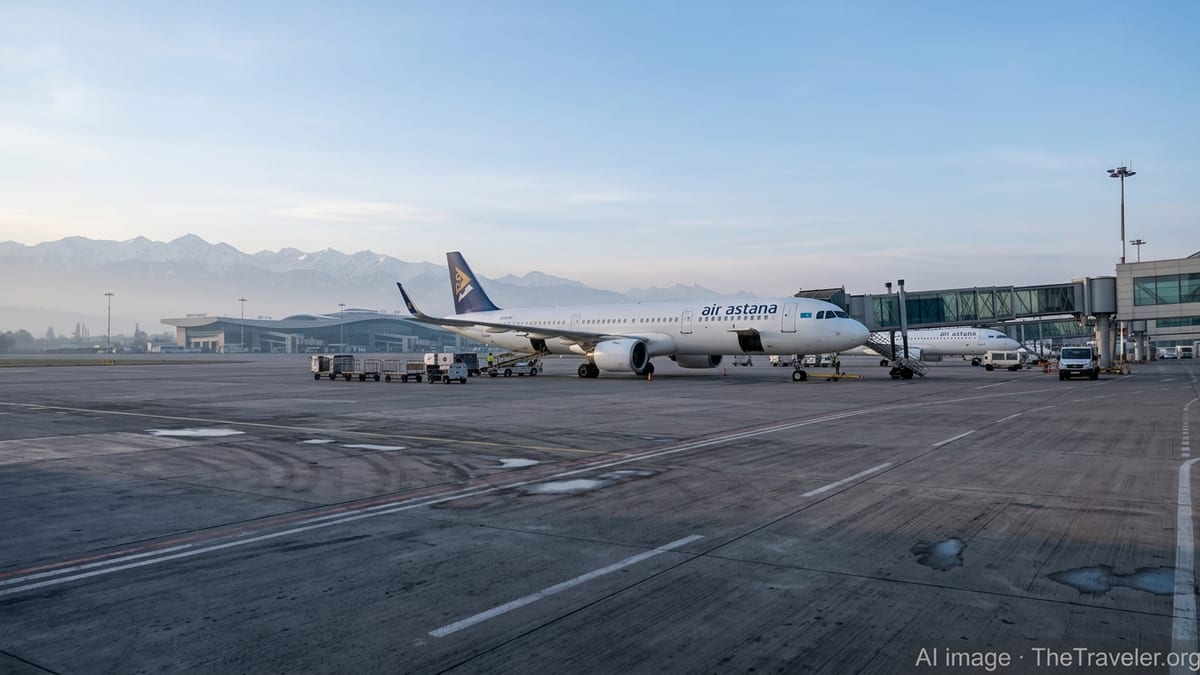
On the long-haul leisure front, Eastar Jet has launched the first direct connection between Busan and Almaty, providing a new link between South Korea’s second city and Central Asia. Publicly available timetable data shows that the route is operated twice weekly, reflecting both outbound tourism interest and Almaty’s growing role as a regional hub. Aviation observers note that the service offers South Korean travelers a fresh entry point to Central Asia’s trekking, ski, and cultural tourism circuits.
The addition of these routes reinforces Busan’s status as a secondary international gateway for South Korea, reducing the need for detours through Seoul’s major hubs and shortening overall journey times for travelers from the country’s southeastern region.
Cheongju’s International Network Quietly Widens
While Busan draws much of the attention, Cheongju International Airport in North Chungcheong Province is also steadily broadening its international route map. Once heavily focused on domestic and China-bound traffic, Cheongju now supports a mix of flights to Japan, Taiwan, Southeast Asia, and select cities in China, according to updated airport and schedule summaries.
Recent seasons have seen new or expanded services from Cheongju to destinations such as Shanghai Pudong, Taoyuan near Taipei, and holiday hotspots in Vietnam and Thailand. Several South Korean low-cost carriers, including Aero K, T’way Air, and Jeju Air, have taken a leading role at the airport, using single-aisle aircraft to connect central Korea directly to regional tourism markets.
Industry data shows that Cheongju’s longest sectors today reach deep into Southeast Asia, illustrating how mid-size Korean cities are supporting direct operations to tropical resorts that were once reachable only via Seoul or Busan. These patterns align with broader regional trends, in which secondary airports in East Asia are increasingly hosting direct international services tailored to outbound leisure travelers.
The ongoing diversification of Cheongju’s network is also significant for inbound tourism. Improved access from cities such as Shanghai and major airports in Japan and Taiwan creates more options for visitors who wish to explore Korea beyond the Seoul metropolitan area, including historic cities, mountain regions, and temple sites located within easy reach of Cheongju.
New Links to Island and Beach Destinations
The latest routes from Busan and Cheongju underscore how Korean carriers are prioritizing sun, sand, and resort-focused destinations. Direct flights from Busan to Miyakojima highlight the growing appeal of smaller Japanese islands that offer clear waters, diving, and a slower pace than Okinawa’s main island. Published schedules indicate that these services are concentrated around peak leisure seasons, targeting demand for short-haul beach escapes.
Similarly, carriers operating from South Korea’s regional airports have increasingly looked toward Phu Quoc in Vietnam and coastal cities in Southeast Asia. While exact start dates and frequencies vary by airline and season, South Korean travelers now enjoy a wider choice of nonstop options to island resorts and seaside towns, reducing transfer times and making long-weekend trips more practical.
These island connections complement established holiday flows to Jeju, Da Nang, Nha Trang, and Thai beach destinations, suggesting that Korean travelers are seeking more variety in their warm-weather travel choices. For local tourism boards in places such as Phu Quoc and Miyakojima, direct access from Busan and other regional Korean cities represents an opportunity to reach new visitor segments that may previously have favored domestic beaches.
The trend also reflects growing competition among airlines to secure first-mover advantages on niche leisure routes. When a carrier launches the first direct link from a Korean regional city to a relatively under-served island, it can position itself as the default choice for package tours and independent travelers alike.
Expanding Connections to Major Asian Hubs
Beyond island destinations, South Korea’s regional airports are building stronger ties to major Asian cities such as Kuala Lumpur and Shanghai. While Seoul Incheon remains the country’s principal long-haul hub, regional services allow travelers from outside the capital area to access important business and tourism centers more efficiently.
Carriers serving Busan have grown their networks into Southeast Asia, and Kuala Lumpur figures among the key hubs reachable from the city within a single mid-haul flight. For Korean travelers, these links open connections not only to Malaysia’s capital and its cultural attractions, but also to onward journeys across Southeast Asia via Kuala Lumpur’s extensive low-cost and full-service networks.
Cheongju, meanwhile, continues to strengthen its links to China’s major coastal cities. Published route maps and schedule information highlight regular flights from Cheongju to Shanghai Pudong and other Chinese gateways, reflecting sustained demand for travel between central Korea and eastern China for trade, education, and tourism. These routes give smaller Korean cities more direct exposure to China’s vast outbound tourism market.
As more regional airports gain connections to Asian hubs, travelers benefit from greater redundancy and choice. Delays or disruptions at one major airport are less likely to derail travel plans when alternative departure points and routings are available within the same country.
Implications for Travelers and Tourism Strategies
The expansion of direct international flights from Busan and Cheongju carries broader implications for South Korea’s tourism strategy and regional development. Publicly available statements and industry reports point to coordinated efforts by airports, airlines, and local governments to balance traffic away from the congested Seoul metropolitan area and stimulate economic activity in other regions.
For outbound Korean travelers, the changes mean shorter ground journeys to the airport, more nonstop options, and the ability to design trips that begin and end in different cities. Residents of the southeast and central regions, for instance, can now consider starting a holiday in Busan and returning via Cheongju, or pairing regional flights with domestic rail travel.
Inbound visitors stand to gain as well. Direct services from cities such as Taichung, Shanghai, and eventually Kuala Lumpur to Busan or Cheongju make it easier to access lesser-known Korean destinations without backtracking through Seoul. This can help distribute tourism spending more widely, support local hospitality sectors, and highlight regional festivals, food scenes, and outdoor attractions.
As airlines monitor load factors and seasonal demand on the new routes, adjustments to capacity and frequency are expected. However, the recent wave of announcements and launches indicates a clear trajectory: South Korea’s regional airports are transitioning from primarily domestic and short-haul facilities into important international gateways that connect the country more deeply with neighboring markets in East and Southeast Asia, as well as emerging destinations like Almaty in Central Asia.