


More news on this day
Fresh May data from the world’s two largest planemakers shows Boeing still trailing Airbus in both aircraft deliveries and new orders, despite a pickup in activity at the U.S. manufacturer.
Get the latest news straight to your inbox!
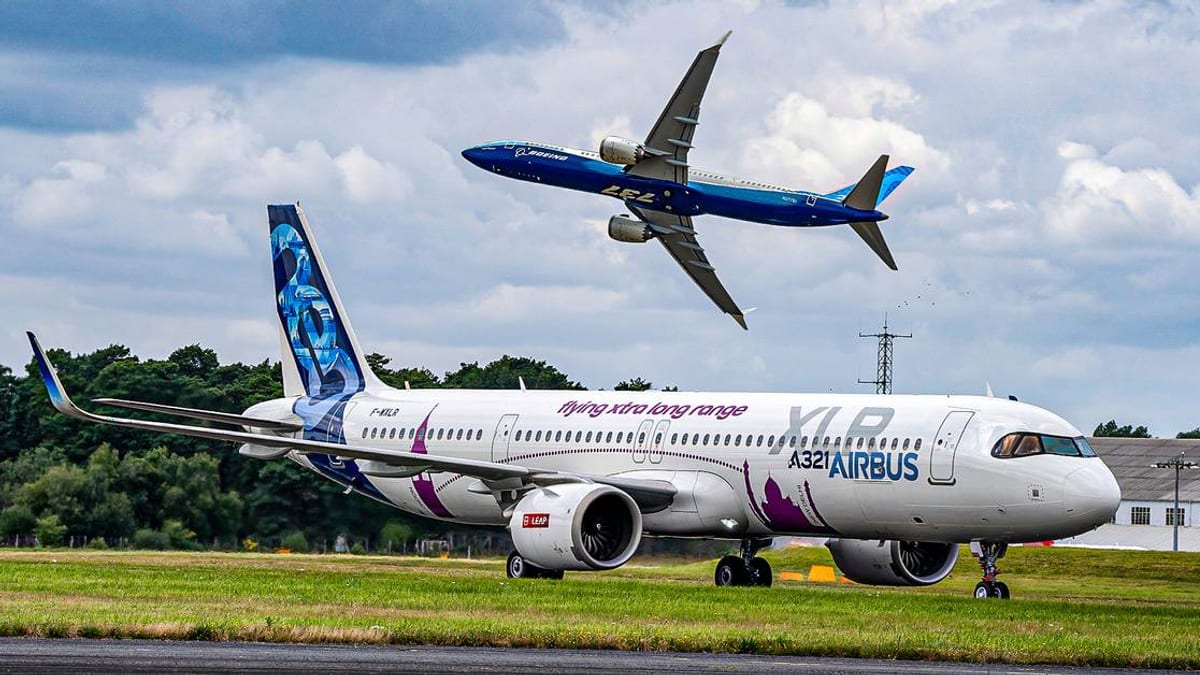
Airbus Extends Lead With Strong May Totals
Publicly available figures indicate that Airbus delivered 81 commercial aircraft in May 2026, a sharp increase on the same month a year earlier and its highest monthly total so far this year. Reports note that the handovers went to more than 40 airline and leasing customers worldwide and were dominated by single-aisle models.
Industry coverage of Airbus’ monthly bulletin shows that the European group also recorded a powerful surge in demand, with 379 gross orders and more than 350 net orders once cancellations are taken into account. The tally reflects a string of high-profile deals announced this spring, particularly for the A320neo family and the A220.
The May performance boosted Airbus’ running totals for 2026. Data compiled from the company’s order and delivery tables suggests that cumulative deliveries reached roughly 260 aircraft by the end of May, while net orders climbed above 750. Analysts describe those numbers as broadly consistent with Airbus’ full-year target of about 870 deliveries, although they point out that the manufacturer still needs to sustain a faster pace in the second half of the year.
For Airbus, the latest numbers underline its continued position as the industry’s volume leader in getting jets to customers, even as supply chain bottlenecks and engine availability continue to constrain output on key narrowbody programs.
Boeing Deliveries Improve but Still Lag Rival
Boeing’s May 2026 update shows a visible improvement on its own recent performance, but still leaves the U.S. group behind its European competitor. According to compiled market data and specialist news coverage, Boeing handed over 60 jets in May, up by roughly a third compared with the same month in 2025.
The deliveries were led by the 737 MAX family, supplemented by a smaller number of 787 and 777 widebodies. Aviation industry reports indicate that major recipients included U.S. low-cost carriers and leasing companies, reflecting airlines’ efforts to refresh fleets and add capacity ahead of the busy northern summer travel season.
Even with the month-on-month improvement, Boeing’s year-to-date delivery total remains short of Airbus’ tally. Sector commentators note that Boeing entered 2026 with a lower production tempo after a series of safety and quality setbacks, leaving the company working to stabilize its manufacturing system before attempting any major ramp-up in output.
The gap in monthly handovers has direct financial implications, since aircraft deliveries are a primary trigger for cash payments and revenue recognition in commercial aerospace. While Boeing’s May numbers are viewed as a step in the right direction, they also highlight how much ground remains to be made up to match Airbus’ current delivery cadence.
Order Momentum Favors Airbus in May
The contrast between the two manufacturers is even more pronounced on the order side for May. Compiled figures from Boeing’s orders and deliveries summary indicate that the company booked slightly more than 20 net orders in the month, including a cluster of single-aisle aircraft and a mix of widebodies. Some reports reference around two dozen new commitments once cancellations and conversions are netted out.
By comparison, Airbus’ 379 gross orders in May translated into well over 350 net new bookings, according to trade press tallies of the company’s order sheet. The bulk of those commitments are for fuel efficient narrowbody jets that airlines are using to replace older aircraft and to open new medium haul routes.
The divergence in May order activity contrasts with the broader story in recent years. Full year 2025 data indicated that Boeing narrowly surpassed Airbus in net orders, reclaiming the annual order lead for the first time since 2018. The May 2026 figures suggest that, at least for now, Airbus has regained monthly momentum, helped by large multi-hundred jet campaigns concluded with Asian and low cost carriers.
Market analysts observe that the wide gap in May orders does not automatically determine who will win the yearly race, as major multi-aircraft deals can land in any given month. However, it reinforces the perception that Airbus currently has the more predictable sales pipeline, particularly in the high demand single aisle segment where available delivery slots are scarce.
Backlog and Production Goals Shape Competitive Outlook
Beneath the monthly headlines, both manufacturers are working through record backlogs that are likely to keep factories busy well into the next decade. Publicly available data on Airbus suggests an order book approaching 9,000 commercial jets, with particularly deep queues for the A320neo family and recently bolstered commitments for the A220 and A350.
Boeing’s reported backlog, while smaller, still exceeds 6,000 aircraft and has been supported by a rebound in widebody demand and sustained interest in the 737 MAX. The challenge for the U.S. company is less about attracting incremental interest and more about demonstrating consistent output and on-time delivery after a period of regulatory and operational scrutiny.
Airbus has publicly targeted 870 deliveries in 2026, implying an average of more than 70 aircraft per month for the full year and even higher rates in the final quarters. Coverage of the company’s guidance stresses that meeting this goal will require continued improvement in supply chain reliability and engine availability, particularly for high demand stretched variants such as the A321neo.
Boeing has not placed a specific public number on its 2026 delivery ambitions to the same degree, but investor presentations and industry commentary suggest that management is focused on steady, sustainable increases in monthly output rather than a rapid surge. The May data, while still behind Airbus, will be scrutinized as an early indicator of whether that strategy is gaining traction.
What the May Gap Means for Airlines and Travelers
For airlines, Airbus’ clear lead in May deliveries and orders has practical implications. With the European manufacturer able to sustain higher output, carriers with Airbus-heavy order books may see slightly shorter waits for new aircraft, especially on the most popular narrowbody models that underpin short and medium haul networks.
By contrast, airlines relying heavily on Boeing deliveries remain exposed to the pace at which the U.S. group can work through its production recovery. Any delays can ripple through fleet renewal and route planning, potentially limiting capacity growth or postponing the retirement of older, less efficient jets.
From a traveler’s perspective, the month’s numbers are less about one brand of aircraft versus another and more about overall capacity entering the system. Strong deliveries from both manufacturers support airlines’ efforts to add seats ahead of the peak summer season, which can help moderate fare increases on busier routes.
However, the continued dominance of Airbus in both May deliveries and new orders reinforces a broader shift in the balance of power inside the commercial jet duopoly. Unless Boeing can convert its production improvements into several consecutive months of higher handovers and stronger order intake, Airbus appears set to retain its operational lead through much of 2026.