


More news on this day
A wave of bomb threats targeting European flights has triggered emergency landings, fighter jet escorts and airport disruptions this week, coinciding with heightened security guidance from the United States and other governments for travelers heading to France and the wider region.
Get the latest news straight to your inbox!
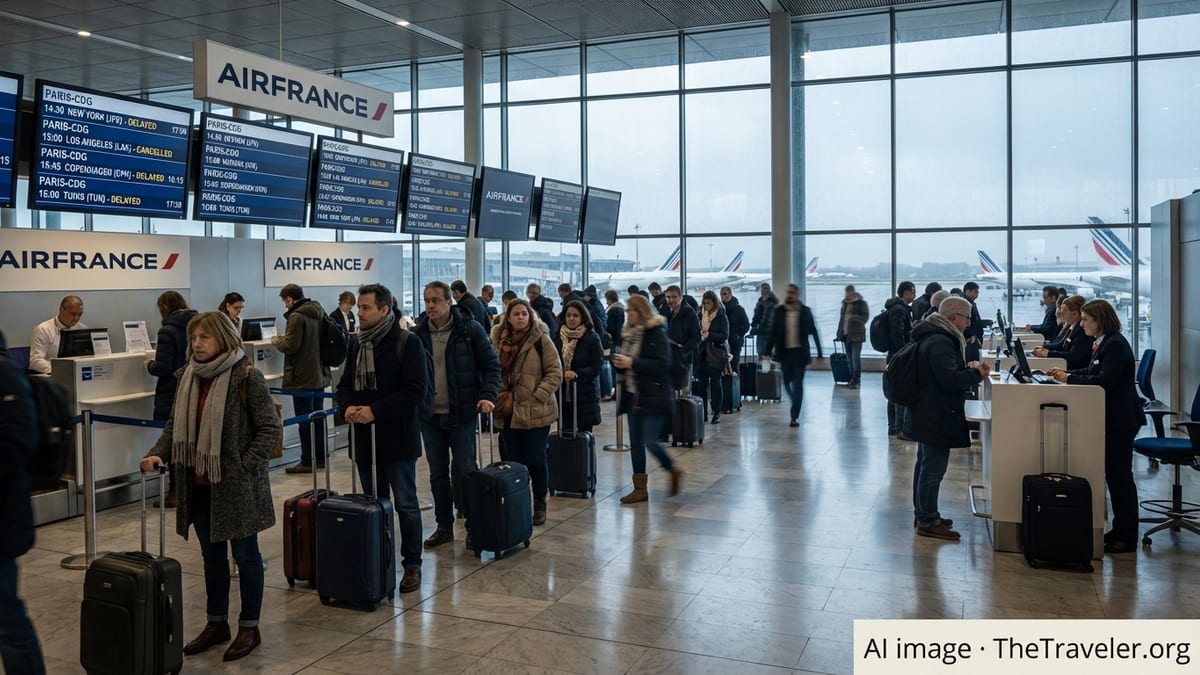
Third Day of Disruptions Across European Skies
Published coverage from European and international outlets indicates that at least 14 to 15 commercial flights across the continent were subjected to bomb threats on Thursday, November 5, 2026, marking the third consecutive day of aviation disruptions. The incidents follow a series of similar alerts earlier in the week that already affected more than a dozen flights and forced diversions across multiple countries.
Reports describe aircraft operated by carriers including Aer Lingus, Finnair, Wizz Air, Ryanair, LOT and Scandinavian Airlines receiving threats while en route between major European hubs. In most cases, planes either continued under heightened security procedures or diverted to alternative airports where passengers and luggage were screened. No explosives have been reported found on any of the affected flights so far.
Analyses carried by several outlets describe the pattern as a rapidly escalating campaign of hoax threats rather than isolated incidents. Aviation risk specialists cited in that coverage suggest that the scale and coordination of the alerts point to a deliberate attempt to disrupt European air travel, even in the absence of a confirmed physical attack.
European aviation officials have activated information sharing channels and security coordination mechanisms designed to deal with cross-border threats. These frameworks, developed after previous terrorism scares, are being used to exchange details on threat messages, routes affected and the security responses taken by national authorities.
Key Diversions and Fighter Jet Escorts
One of the most high-profile incidents on November 5 involved Aer Lingus flight EI402 from Dublin to Rome, which diverted to the Evreux-Fauville military air base in Normandy after a bomb threat. Tracking data widely reproduced in media coverage shows the Airbus A320 breaking off its route over France and heading toward the secure airfield, where passengers disembarked for security checks.
In Italy, a Finnair flight traveling from Helsinki to Rome Fiumicino continued to its destination under escort from Italian Air Force fighter jets. Reports indicate that the aircraft landed safely in Rome, where it was subject to additional screening. Similar military escorts were reported for flights entering Bulgarian airspace, with fighter jets accompanying aircraft to Sofia amid emailed threats.
Elsewhere in Europe, a LOT flight was reported to have diverted to Brussels’ Zaventem Airport after a bomb alert, while Wizz Air services on routes including Milan to Warsaw and Milan to Bucharest were also targeted. In several cases, planes landed at their planned or alternative destinations without incident, but passengers experienced extended delays while cabins and baggage were searched.
Security experts quoted across European press warn that even when threats are quickly assessed as low credibility, flight crews, airports and air forces are obliged to respond conservatively. This is leading to a growing number of precautionary diversions and ground delays that ripple across already busy European schedules.
Hybrid Threats and Speculation Over Motives
Investigators have not publicly identified who is behind the threat campaign, and published reports note that no group has credibly claimed responsibility. Some warnings were reportedly sent via anonymous emails, including messages in Italian received by the operator of Rome’s main airport, which prompted diversions and additional security procedures.
Commentary in European media links the incidents to broader concerns about so-called hybrid attacks, where malicious actors seek to apply psychological and economic pressure without necessarily carrying out physical violence. Analysts point to earlier waves of hoax bomb threats against rail networks, shopping centers and airports in several EU states as part of this emerging pattern.
In this context, some security specialists suggest that targeting civil aviation with repeated hoaxes can generate disproportionate disruption to travel, business and tourism. Even when threats are assessed as non-credible, the costs associated with scrambling fighter jets, closing runways, deploying explosive ordnance teams and rebooking passengers can be substantial.
While several commentaries discuss the possibility of hostile state or state-linked actors testing European responses, public information available as of November 5 indicates that investigators have not presented evidence tying the alerts to a specific country or organization. Officials referenced in open reporting describe the situation as under active investigation, with emphasis on digital forensics to trace the origin of the emails and messages.
Travelers to France Face Heightened Security Climate
The bomb threat wave is unfolding against a backdrop of elevated security awareness in France, a central hub for transatlantic and intra-European travel. Updated travel advice from a number of governments in recent weeks has highlighted an increased risk environment, with particular attention to crowded public spaces, major transport nodes and events.
Publicly available advisories urge visitors to exercise a high degree of caution in France due to the threat of terrorism and related security incidents. Guidance typically encourages travelers to remain alert around transport hubs such as Paris Charles de Gaulle and Orly airports, comply with security checks, and be prepared for sudden disruptions linked to security operations or demonstrations.
Recent notices aimed at US citizens and other foreign nationals have also stressed the possibility of increased risks to US interests and symbolic locations across Europe during periods of geopolitical tension. Although these advisories are not directly tied to the current hoax bomb threats, the overlapping timelines add to an overall climate of vigilance for travelers passing through French territory or connecting via Paris.
For airlines serving France, the current environment has meant tighter coordination with airport police and national security agencies, more visible screening procedures, and occasional evacuations or temporary closures of terminal areas when unattended luggage or phoned-in threats trigger security responses. Travelers can expect bag checks at the entrances of some stations and museums, and intermittent deployments of armed patrols in key tourist districts.
Practical Advice for Passengers Planning European Trips
For travelers with imminent itineraries involving France or other affected European states, the latest disruptions underscore the importance of building flexibility into travel plans. Aviation risk briefings and official advisories recommend arriving early for departures, staying closely informed through airline apps, and allowing generous connection times in case of unexpected security delays or re-routing.
Passengers are encouraged in public guidance to keep contact details updated with their airlines so carriers can send real-time notifications about gate changes, security checks or diversions. Many European and transatlantic airlines now push alerts through dedicated mobile applications and text messages when security incidents affect specific flights or airports.
Travelers are also advised to review the fine print of their tickets and travel insurance policies for coverage related to security disruptions, including missed connections caused by diversions or extended screening. Some policies treat such events differently from weather-related delays, making it important to understand what documentation may be required to support claims.
Despite the alarming headlines, aviation safety specialists cited in recent coverage emphasize that commercial air travel in Europe remains tightly regulated, with well-established protocols guiding how crews and ground teams handle bomb threats. For most passengers, the practical impact is more likely to be delays, re-routings and heightened visible security rather than a change in the fundamental risk of flying. However, with investigations ongoing and further threats possible, travelers to and within Europe should continue to monitor official guidance up to and throughout their journeys.