


More news on this day
A nationwide strike over pay, the cost of living and public services is disrupting travel across France on Thursday, November 5, 2026, with regional trains, suburban rail links and some airports reporting cancellations and delays as large protest marches sweep through major cities.
Get the latest news straight to your inbox!
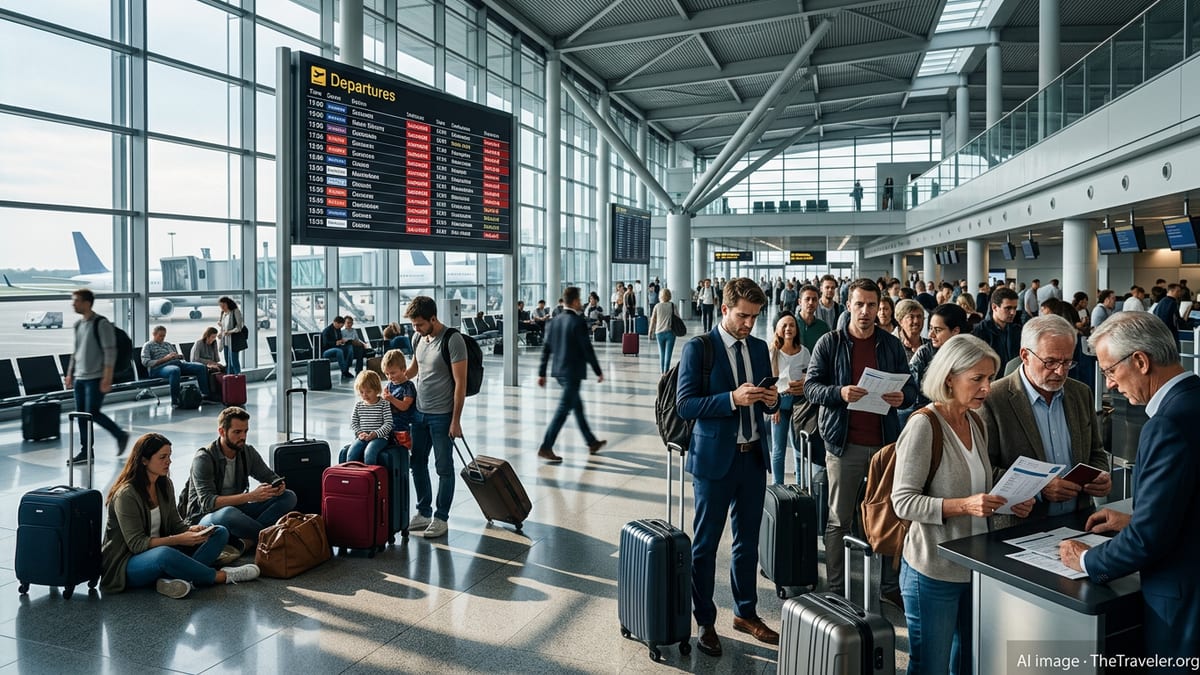
Rail network hit hardest by strike action
Publicly available information from France’s national rail operator indicates that the nationwide industrial action is having its greatest impact on regional and commuter services, even as most high-speed trains continue to run. Around 90 percent of TGV high-speed services are operating on Thursday, but regional TER and Intercités routes are facing significantly reduced timetables, with some lines seeing multiple cancellations throughout the day.
The four representative rail unions at SNCF have jointly called for a walkout from Wednesday, November 4 at 19:00 until Friday, November 6 at 08:00, resulting in disruption that spans more than a single day’s timetable. Real-time updates published by SNCF Connect show gaps in service on many regional routes, particularly in eastern and southwestern France, as well as service adjustments on overnight Intercités trains.
In the Paris region, commuter RER and Transilien lines are reporting partial cancellations and modified timetables linked to the rail strike. However, the city’s core Metro, tram and bus networks are generally operating close to normal levels, providing alternative options within central Paris even as longer-distance rail links remain constrained.
Travel information platforms tracking industrial action in France describe the November 5 walkout as a cross-sector strike with “major” impact on public transport nationwide. The same sources note that unions have signalled the possibility of further rail disruptions on November 6 and during upcoming protest actions if negotiations over wages and budget measures remain stalled.
Flights largely maintained, targeted disruption at airports
Air travel has been less affected than early warnings suggested. Reports from aviation-focused outlets indicate that French air traffic control is operating close to normal levels on November 5, after some of the principal unions representing controllers and airline crew chose not to participate in the strike call. As a result, most scheduled flights to and from France are operating, although passengers are still being advised to check their flight status before departure.
Authorities responsible for air navigation in France had prepared for potential disruption, and airlines adjusted some timetables in advance, particularly on domestic and short-haul European routes. According to travel industry coverage, a limited number of services have been consolidated or rescheduled, with some early morning and evening flights experiencing minor delays as air traffic flow is managed around protest-related restrictions in certain urban areas.
Airport ground operations have experienced more localized effects, especially where baggage handlers or security staff joined the strike. Publicly available information from French regional airports points to slightly longer waiting times at security checkpoints and baggage reclaim in some locations, but overall passenger throughput remains relatively stable compared with previous major strike days in France.
Travel advisories recommend allowing additional time at departure airports in France on November 5, particularly for domestic or intra-European flights, and suggest that travellers monitor airline apps for gate changes or rolling delays that may arise as the day progresses.
Roads, urban transport and protest hotspots
Reports compiled by national and regional media in France indicate that the protests associated with the strike are drawing large crowds into city centres, with marches concentrated in Paris, Lyon, Marseille, Toulouse, Bordeaux and several mid-sized cities. Demonstration routes are prompting rolling road closures and diversions, especially around central squares and major boulevards that commonly host rallies.
Driving conditions are reported to be most challenging near protest gathering points such as Place de la République, Place de la Nation and Bastille in Paris, where traffic restrictions are being introduced for several hours around march times. Some unions and protest groups have also called for temporary blockades or “filtering” operations at roundabouts, industrial zones and fuel depots, which can create unexpected congestion on ring roads and access routes to cities.
For urban transport, updated guidance from Paris tourism and transport information sites explains that Metro, tram and most bus lines are operating on close to normal schedules, although individual lines may be briefly disrupted by crowd movements near key stations. By contrast, RER commuter lines and some Transilien suburban services are more heavily affected because they fall under the SNCF strike notice.
Travellers staying in or near central protest areas are being advised by publicly available city guides to allow extra time for transfers, consider walking short distances within the inner city, and avoid attempting to drive through demonstration routes during announced march hours. Outside of protest windows, many city streets are functioning relatively normally, although lingering congestion is expected into the evening.
Reasons behind the strike and what it means for visitors
Union confederations including CFDT, CGT, FO, UNSA and FSU have framed the November 5 action as a nationwide mobilisation over wages, purchasing power and funding for public services such as education, health care and transport. Media coverage notes that the strike also follows weeks of youth-led protests and previous demonstrations over the cost of living, creating a broader context of social unrest that extends beyond a single sector.
Published reports from French and international news outlets describe hundreds of thousands of people taking part in marches and rallies nationwide, with participation from teachers, hospital staff, postal workers, rail employees and public-sector office workers. The scale of the mobilisation has renewed pressure on the government to respond to union demands on pay and working conditions amid persistent inflation.
For international visitors already in France, the immediate impact is most visible in disrupted regional rail schedules, sporadic difficulties reaching airports by train, and temporary closures or congestion around city-centre protest routes. Museums, attractions and restaurants in major tourist areas are generally open, although some may adjust hours if staff are participating in the strike or if they are located directly on demonstration paths.
Travel specialists focusing on France advise against cancelling trips solely because of the November 5 strike, but recommend building flexibility into itineraries and being prepared for same-day changes. Visitors with fixed connections, such as onward flights or nonrefundable tours, are encouraged to allow generous transfer times and to explore alternative routes within cities if their usual train or bus is unavailable.
Practical advice for travellers caught in the disruption
Travel information portals and official transport sites stress the importance of checking real-time updates on the day of travel, particularly for anyone relying on regional trains, RER services or domestic flights within France. SNCF’s journey planners and airline mobile applications are providing live status information, while many French cities publish current transport conditions through municipal or regional platforms.
Passengers whose trains are cancelled due to the strike are typically offered free exchanges onto later services, subject to availability, or refunds in line with the fare conditions of their ticket. Publicly available guidance from SNCF explains that travellers should not travel to the station without first verifying that their train is running, especially on TER and Intercités routes where the level of cancellations is higher.
Within cities, travellers can often fall back on Metro services, trams, buses, licensed taxis and ride-hailing services, which are not directly covered by the main strike notices. However, demand for these alternatives tends to rise sharply on major strike days, particularly during rush hours and around protest times, so waiting times and prices can increase compared with normal days.
For those planning trips to France in the coming days, publicly accessible strike calendars and news coverage indicate that further protests and localised walkouts are possible, although the precise level of disruption after November 5 is not yet clear. Travellers are advised to monitor developments in the week leading up to their journey, keep bookings flexible where possible, and ensure that any time-sensitive plans in France allow room for unexpected delays.