


More news on this day
The U.S. Embassy in Paris has issued a new security alert for Americans in France as nationwide protests and a multi sector strike disrupt transport, trigger localized curfews and raise safety concerns in major cities including Paris, Lyon and Marseille.
Get the latest news straight to your inbox!
New Security Alert Highlights Intensifying Unrest
According to publicly available information from the U.S. Embassy and recent media coverage, a security alert issued in late October and updated ahead of a nationwide strike on November 5 warns U.S. citizens about ongoing protests, demonstrations and rallies across France. The alert notes that some recent events have turned violent, with clashes between demonstrators and police, property damage and the use of tear gas in certain locations.
The embassy message follows an updated U.S. Department of State travel advisory for France dated October 21, 2026, which keeps the country at Level 2, Exercise Increased Caution, but adds explicit language that violence and rioting have recently occurred and may continue. The advisory points to the risk posed by both civil unrest and terrorism, especially in crowded public spaces and transportation hubs.
Reports indicate that while many gatherings remain peaceful and follow pre announced routes, French authorities have imposed partial curfews in some areas after night time disturbances. These local measures, which can be adopted with little notice, have affected certain neighborhoods in Paris and a handful of other cities where tension has flared around protest marches.
The embassy’s alert urges Americans to avoid demonstration areas, monitor local news and transport updates, and be prepared for rapid changes in conditions, including sudden closures of streets, metro stations and public venues.
Student Led Movement Broadens Into Nationwide Protests
Published coverage from European and North American outlets describes how the current wave of unrest began with student mobilizations in late September over education funding, staffing and campus conditions. High school and university students organized walkouts and rallies that quickly drew support from labor unions and groups focused on the rising cost of living.
Over the following weeks, marches spread well beyond Paris to regional centers such as Marseille, Lyon, Toulouse, Nantes and Strasbourg. Recent demonstrations have linked education grievances to broader concerns about inflation, housing costs and government reform plans, creating large, multi issue crowds in city centers.
Reporting from international news agencies indicates that turnout at some recent nationwide days of action has reached several hundred thousand people across France, with particularly dense marches in central Paris. While most participants have protested peacefully, images from late October and early November show confrontations as police used crowd control tactics near the end of certain marches, especially after nightfall.
Local observers quoted in English language travel advisories describe this protest cycle as among the most intense in recent years, even by the standards of a country where demonstrations and strikes are a regular feature of public life.
Disruptions Hit Trains, Metro and Major Tourist Sites
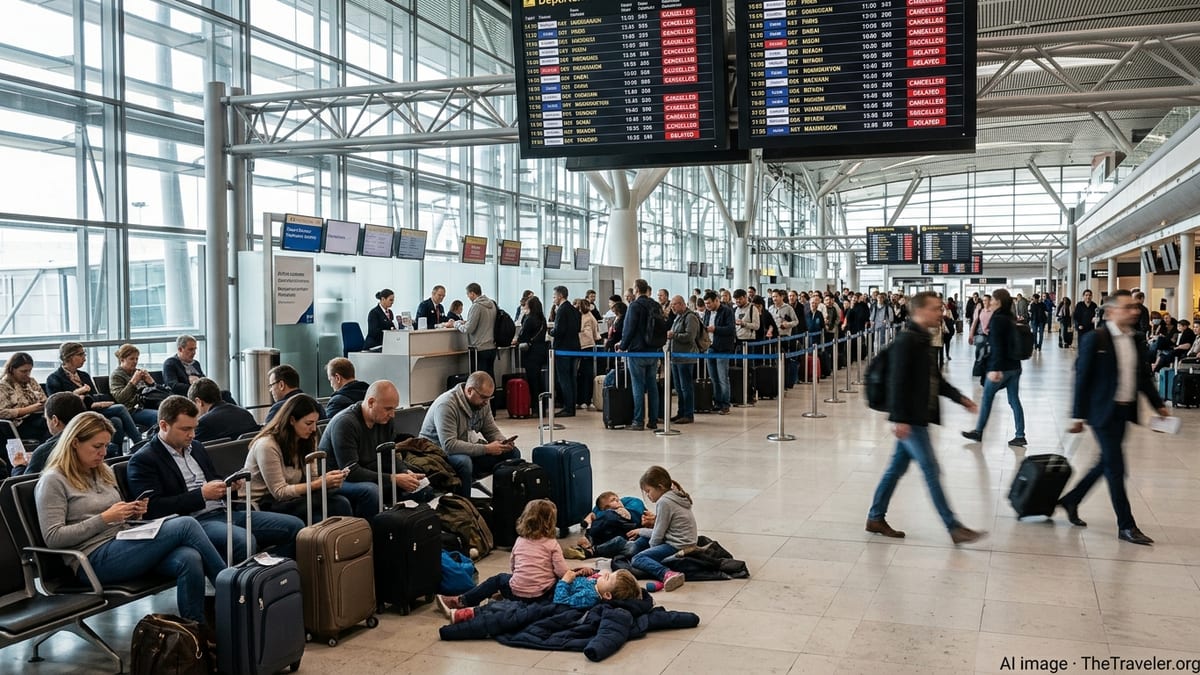
The latest embassy alert, echoed by travel industry bulletins, warns specifically about the impact of the November 5 multi sector strike on France’s rail and urban transport networks. Information released by the embassy and by travel risk services highlights planned disruptions affecting national rail operator SNCF, regional trains and Paris commuter lines, along with potential reductions in service on the Paris Metro and tram system.
Travel advisories from multiple governments, including Canada and Australia, note that demonstrations and strikes can cause road blockages, the closure of key bridges and squares, and delays around major train stations such as Gare du Nord, Gare de Lyon and Gare d’Austerlitz. Security perimeters and barricades have been reported around some stations during peak protest periods, with passengers required to pass through controlled access points.
Media reports from October describe episodes in which access to emblematic sites, including the Louvre Museum, was disrupted when protesters blocked entrances or when staff walked out as part of strike actions. Other popular areas, such as the Champs Élysées and neighborhoods around the Seine, have seen heightened police presence and sporadic closures of nearby Metro stations as authorities redirected crowds.
Travel specialists tracking the situation stress that aviation has so far been less affected than rail and urban transport, although weather and occasional work stoppages have produced delays at Paris Charles de Gaulle and Orly airports. They recommend that travelers build additional time into any journey involving transfers through central Paris or train connections to other French or European cities.
Key Hotspots in Paris and Across France
Based on recent alerts from foreign ministries and on the pattern of protests seen over the past month, several locations have emerged as frequent gathering points. In Paris, common sites for marches and rallies include Place de la République, Place de la Bastille, Place de la Nation and Place d’Italie, as well as routes along major boulevards on the Left Bank and in the 11th arrondissement.
Public information from travel risk trackers indicates that these squares and their surrounding streets have periodically seen dense crowds, pyrotechnics, and confrontations after dark when small groups remained after official marches ended. Police have responded with crowd control tactics, including tear gas in certain instances, which can affect bystanders and travelers passing through nearby streets or metro stations.
Outside the capital, large gatherings have been reported in Marseille around the Old Port and central avenues, in Lyon near the Presqu’île and riverside quays, in Toulouse around the city center, and in Nantes and Strasbourg near historic cores and main tram lines. Local authorities in some of these cities have introduced short term curfews in specific neighborhoods following previous nights of unrest.
Travel advisories emphasize that protest routes can change at short notice, even when organizers have filed permits, and that spillover gatherings may occur outside planned areas. For visitors, this means that disruption may appear in unexpected places, including secondary squares, side streets and commercial districts slightly removed from the original march route.
Guidance for Americans Traveling or Living in France
The U.S. travel advisory for France, along with similar guidance from other countries, offers several practical recommendations for those in France during the current protest wave. Travelers are encouraged to enroll in the Smart Traveler Enrollment Program so they can receive security updates from the embassy and be easier to contact in an emergency.
The advisory suggests that Americans stay alert in tourist locations, transportation hubs, shopping streets and around government buildings, particularly on days when large gatherings are announced. It recommends avoiding demonstrations and large crowds, planning routes that steer clear of known protest hotspots, and identifying alternative ways to return to accommodation if metro or train services are reduced.
Publicly available information from safety agencies also urges travelers to carry identification, keep mobile phones charged, and maintain awareness of curfew announcements in the specific city or district they are visiting. In areas where clashes have been reported, visitors are advised to move away quickly from any sign of crowd tension, masked groups or heavy police deployments, and to seek shelter indoors if tear gas or other crowd control measures are used nearby.
While most visits to France continue without incident, the heightened level of civil unrest has clearly increased the potential for disruption and localized risk. The embassy’s latest alert and the broader travel advisory updates underscore that careful planning, flexible itineraries and close monitoring of local conditions are now essential parts of any American traveler’s preparation for a trip to France.