


More news on this day
Lengthy passport control queues in Copenhagen have left a British couple hundreds of pounds out of pocket after they missed their easyJet flight home, raising fresh questions over who pays when border delays derail travel plans.
Get the latest news straight to your inbox!
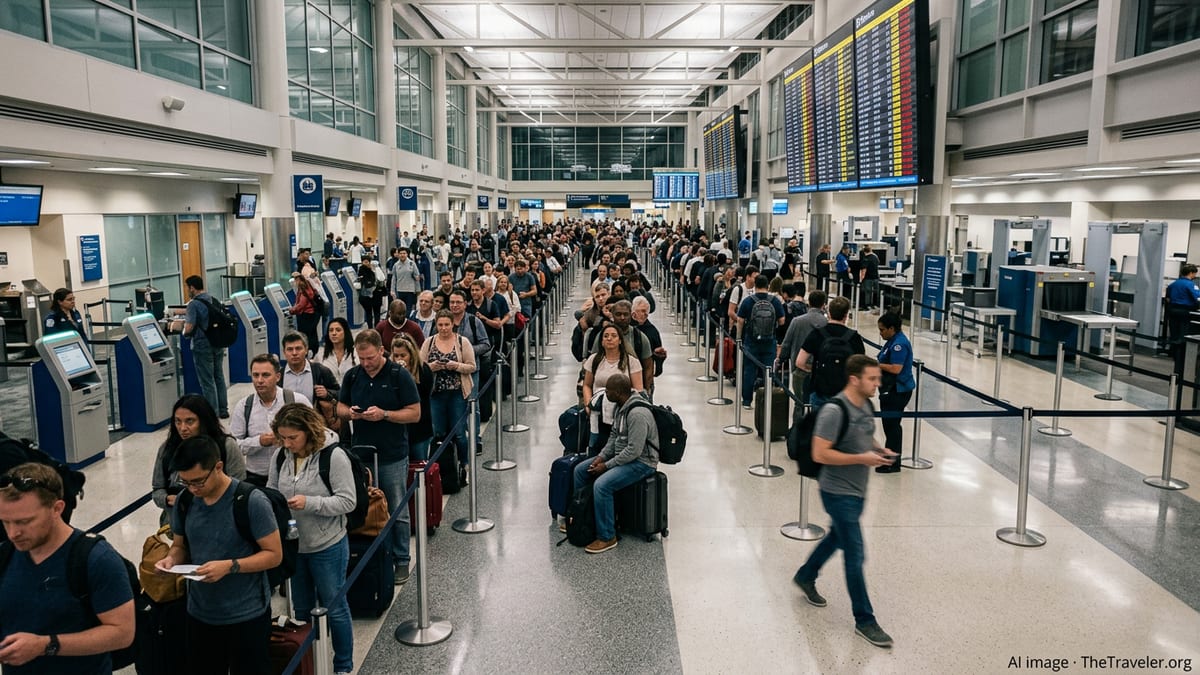
A missed flight after long queues at Copenhagen airport
According to recent coverage from UK news outlets, Tim and Lorna Shelley were among around 17 passengers who missed an easyJet flight from Copenhagen to London Gatwick after being held up at passport control on 8 March. The couple reported that they had arrived at the airport in good time and went to border control as soon as their gate was called, but found just two officers processing a growing line of departing passengers.
Reports indicate that disruption to an IT system used at border control significantly slowed checks, leading to longer processing times and leaving some travellers stranded on the wrong side of the border when their boarding deadline passed. By the time the Shelleys reached the gate, boarding had closed and they were refused entry to the aircraft along with other delayed passengers.
With no alternative offered for free, the couple say they had to pay £380 to rebook flights home. They argue that they did everything reasonably expected of passengers and that the missed departure was caused entirely by factors outside their control.
The incident has struck a nerve with many travellers who have faced similar experiences in busy European hubs, particularly during peak travel seasons when immigration queues can quickly spiral and connections become tight.
Who is responsible when border delays make you miss a flight?
The dispute at the heart of the case is a familiar one: when a missed flight is triggered by border delays inside an airport, who should shoulder the financial burden. In this instance, the airport, airline, police and travel insurer have all been drawn into the question of responsibility.
Publicly available information shows that Copenhagen Airport expressed regret over long waiting times but said passport control is not operated by the airport itself, pointing instead to the Danish police as responsible for border checks. Police, in turn, acknowledged that an IT issue extended processing times but stated that passport control was carried out as effectively as possible in the circumstances and that no error on their part gave rise to compensation liability.
easyJet has described the disruption linked to new border processing requirements and IT issues as unacceptable, but stressed that delays at state-operated border posts fall outside its control. The carrier refunded only the air passenger duty for the missed flight, a gesture that falls far short of the £380 the couple say they had to spend to get home.
The family’s travel insurer also declined to cover the costs, reportedly saying that the circumstances did not fall under the policy’s missed departure provisions. That left the travellers caught between different organisations, each pointing elsewhere for responsibility and none offering a full refund.
What passenger rights cover missed flights due to passport control?
The case has renewed interest in how European and UK regulations treat missed flights caused by airport bottlenecks, particularly at passport control. Consumer advocates note that the core air passenger rights rules, such as EU Regulation 261/2004 and its UK equivalent, are designed primarily around delays, cancellations and denied boarding for reasons within the airline’s control.
Under these frameworks, passengers may be entitled to compensation or rerouting if an airline overbooks a flight or cancels at short notice for reasons attributable to the carrier. However, long queues at security or border control often fall outside that scope. Airlines typically argue that they cannot control staffing levels or IT reliability at state-run checkpoints and therefore are not obliged to rebook or refund when passengers arrive late at the gate as a result.
Legal commentators say there is a grey area where passengers can show they checked in on time and proceeded promptly toward the gate, but were still delayed by airport processes beyond their control. Some point to general principles of contract and consumer law, suggesting that where an airline sells a ticket from a particular airport, there could at least be an expectation that reasonable steps will be taken to accommodate passengers caught up in airport-wide disruption.
In practice, though, travellers often find that responsibility is fragmented between airport operators, border agencies, airlines and insurers, leaving many cases to be resolved, if at all, through complaints procedures, arbitration schemes or persistent requests for goodwill payments rather than clear legal entitlements.
Insurance and arbitration: limited safety nets for travellers
The Shelleys’ experience also highlights the limits of travel insurance when it comes to missed departures. Comparison sites and financial guidance services indicate that many standard policies do include cover for missed flights, but usually with strict conditions on what counts as an eligible cause.
Commonly accepted reasons can include severe delays on public transport, serious accidents on the route to the airport or mechanical breakdowns, provided the traveller left a reasonable amount of time to complete their journey. However, delays once inside the airport, such as protracted check in, security screening or immigration queues, are frequently excluded or only covered if specifically named in the policy wording.
Industry guidance suggests that travellers should carefully check the “missed departure” section of their policies to see if airport queueing and border issues are covered, and to keep records such as photos of queues, time-stamped boarding passes and any written acknowledgements of disruption if they intend to make a claim.
In this case, reports say that after the insurer refused to pay, easyJet directed the couple to trade body ABTA and then to an independent arbitration scheme. Such schemes can offer a route to challenge decisions, but they may be limited in scope, can take months to resolve and do not always result in a full refund of out-of-pocket expenses.
Growing concerns over new EU border systems
The Copenhagen incident comes amid wider concern about the impact of new border systems on travellers between the UK and European Union countries. Since the introduction of the EU’s Entry/Exit System earlier this year, passengers have reported longer waits at passport control in some locations, particularly when biometric checks are required for the first time.
The new regime requires many non-EU travellers, including Britons, to provide fingerprints and facial images on their initial entry, followed by biometric verification on subsequent journeys. Travel industry groups and airlines have warned that, without sufficient staffing and contingency planning, these checks could create bottlenecks during peak travel periods.
Consumer advocates argue that while stricter border controls are intended to improve security and manage migration, governments and airports need to ensure that adequate resources and resilient IT systems are in place so that ordinary passengers are not left stranded and paying hundreds of pounds to fix problems they did not cause.
For now, guidance from travel associations generally urges passengers to build in extra time to clear passport control, alert airport staff if they are at risk of missing a flight, and seek written confirmation of any systemic issues or IT failures. But as the Shelleys’ £380 bill shows, even those precautions may not guarantee protection when borders grind to a halt and responsibility for the fallout remains contested.