


More news on this day
India’s busiest airports are set for a fresh round of scrutiny after Union Home Minister Amit Shah ordered independent third party studies aimed at cutting passenger delays at every major touchpoint in the travel journey.
Get the latest news straight to your inbox!
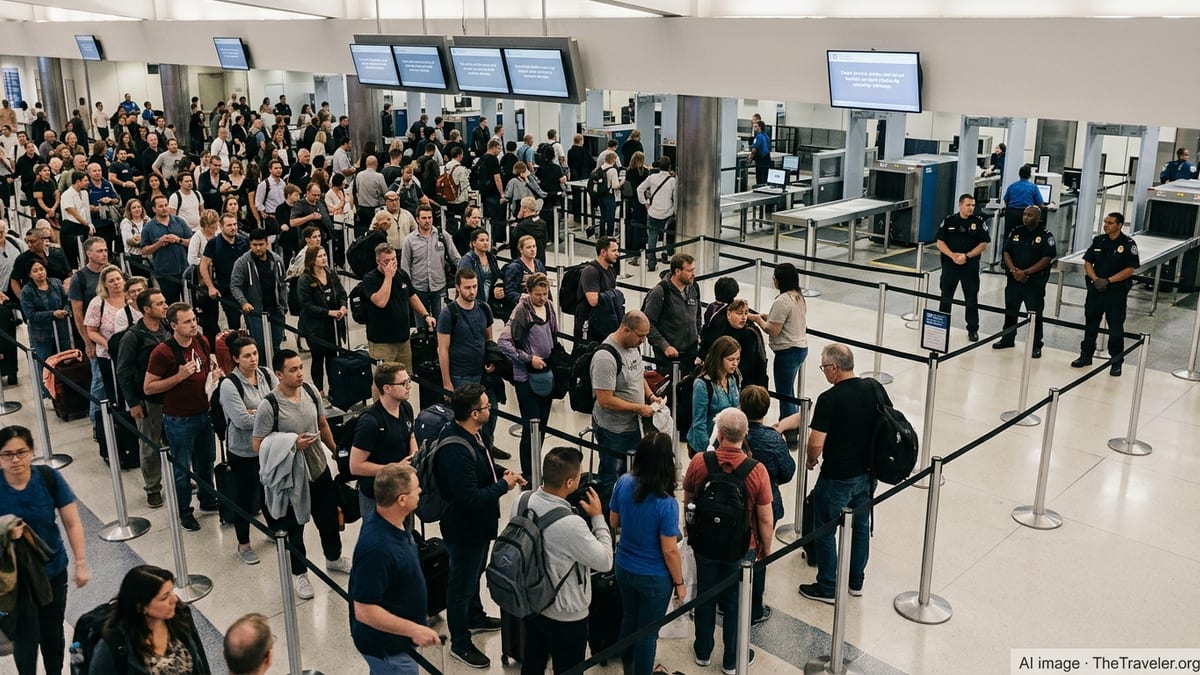
Focused Audit Drive To Tackle Airport Bottlenecks
According to recent government statements and published coverage, Amit Shah has instructed the Ministry of Civil Aviation and the Central Industrial Security Force to independently commission third party audits during peak travel seasons. The studies are expected to examine delays across check in, security screening, immigration counters and boarding gates at key airports.
The directive follows recurring reports of long queues and congestion at major Indian hubs, particularly during holidays and festival periods when passenger numbers climb sharply. Publicly available information shows that the audits are intended to identify specific choke points at each airport, quantify typical wait times and propose targeted measures for faster throughput.
The order positions independent assessments as a central tool for improving the passenger experience, supplementing internal monitoring by airport operators, airlines and security agencies. By mandating that different entities commission separate studies, the government appears to be seeking multiple data sets and perspectives on where and why delays occur.
Industry observers note that this approach mirrors broader infrastructure policy trends in India, where outside audits and benchmarking are increasingly used to evaluate performance, guide investment and reinforce accountability on large public facing assets.
Technology Upgrades To Speed Security And Immigration
Alongside the audit mandate, the latest review meeting chaired by Amit Shah outlined a series of technology driven upgrades designed to accelerate passenger movement. Public information indicates that a phased nationwide rollout of Automated or Automatic X ray Tray Return Systems is planned at security checkpoints, with the aim of reducing manual handling and cutting the time each passenger spends at the baggage screening belt.
The proposed security enhancements build on earlier pushes to introduce smart queuing, improved surveillance and more efficient deployment of screening staff. Officials in previous public briefings have highlighted that modern tray return systems can handle a higher volume of bags per lane, reduce the space needed for stacking trays and help passengers clear security more quickly while maintaining screening standards.
On the immigration side, recent coverage points to parallel efforts to expand counters, deploy additional staff where needed and integrate more automated systems for identity verification. These measures are intended to complement trusted traveller style programmes already introduced at select airports, which use biometric kiosks and risk based profiling to clear pre registered passengers more swiftly.
Taken together, the technology investments and the newly ordered audits signal an attempt to treat security, immigration and passenger convenience as linked elements of one system rather than independent processes that travellers must navigate separately.
Norms For Aerobridges And Infrastructure Planning
Another key element of Shah’s directives is the call for formal norms governing the number of aerobridges at airports, calibrated to passenger volumes and aircraft movements. Recent reports indicate that the Ministry of Civil Aviation has been asked to develop standards so that busy terminals are equipped with enough contact stands to handle peak hour arrivals and departures.
Aerobridges allow passengers to board and disembark directly from the terminal, reducing the reliance on buses and remote stands. When contact gates are in short supply, aircraft often wait for a free position or passengers spend extra time boarding via coaches, which can ripple through the day’s schedule. Setting clear norms is therefore seen as a way to align infrastructure with growth in traffic and to cut minutes from each turn around.
The focus on aerobridges comes as India continues to upgrade existing airports and build new greenfield facilities in major cities and regional centers. Aviation market analysis in recent months has underlined how rapidly rising domestic travel can strain terminal layouts, parking bays and baggage systems if expansion does not keep pace with demand.
By linking infrastructure planning with measured passenger delays, the government appears to be encouraging airport operators to move beyond headline capacity numbers and instead consider how layouts, boarding arrangements and apron design affect the actual time travellers spend in queues and on the tarmac.
What The Audits Are Expected To Examine
While detailed terms of reference have not been made public, third party audits of airport delays typically map the entire passenger journey, from kerbside entry to aircraft door closure. In practice, specialists are likely to measure queue lengths and processing times at check in counters, security lanes, immigration desks, boarding gates and baggage reclaim belts at different times of day.
External reviewers often use time and motion studies, passenger surveys and live observations to identify bottlenecks that may not appear in routine operational reports. These can include layout issues such as poorly positioned queues, narrow corridors, insufficient signage or limited space at key intersections, as well as staffing patterns that do not fully reflect the daily peaks and troughs of demand.
In the Indian context, analysts expect the audits to pay particular attention to how passenger growth, the mix of domestic and international flights, and the distribution of low cost and full service carriers affect congestion. The studies may also look at the impact of increased security requirements and evolving immigration rules on overall processing times.
The results are likely to feed into tailored action plans for individual airports, with recommendations ranging from quick fixes such as reconfigured queues and added counters to medium term investments in new lanes, expanded halls or redesigned piers.
Implications For Travellers And The Aviation Sector
For passengers, the most immediate expectation from the new audits and associated upgrades is shorter waits at check in, security and immigration, especially during early morning and late evening waves when multiple flights are scheduled in close succession. If implemented effectively, the measures could also reduce the stress associated with tight connections and long lines at departure and arrival halls.
Airlines may benefit from more predictable processing times, which can help improve on time performance and reduce missed connections. Smoother passenger flow through terminals can also support more efficient aircraft turnarounds, a critical factor for carriers operating high frequency domestic networks.
For airport operators and investors, the directive underscores the growing emphasis on service quality metrics such as queue times and passenger satisfaction, in addition to financial performance and traffic growth. Regular third party evaluations could become a reference point in concession agreements, regulatory reviews and future capacity expansion proposals.
More broadly, the latest push indicates that India’s aviation policy framework is moving toward a model where large airports are expected to match their rapid physical expansion with consistently high service standards. As peak travel seasons approach, travellers will be watching to see how quickly the ordered audits translate into visible improvements in the time it takes to get from terminal entrance to aircraft seat.