


The Bosphorus after dark is Istanbul at its most theatrical. Minarets glow on distant hills, suspension bridges pulse with color above the water, and ferries criss-cross between Europe and Asia well past midnight. Whether you book a dinner cruise, linger over meze in Ortaköy, or ride a late public ferry with commuters, the strait takes on a very different mood once the sun goes down. This guide explains how to experience the Bosphorus at night in a practical, realistic way: which cruises are worth the money, where to eat with real water views, how the illuminated bridges work, how to stay safe, and how the experience compares with a daytime visit.
Get the latest updates straight to your inbox!
Understanding the Bosphorus After Dark
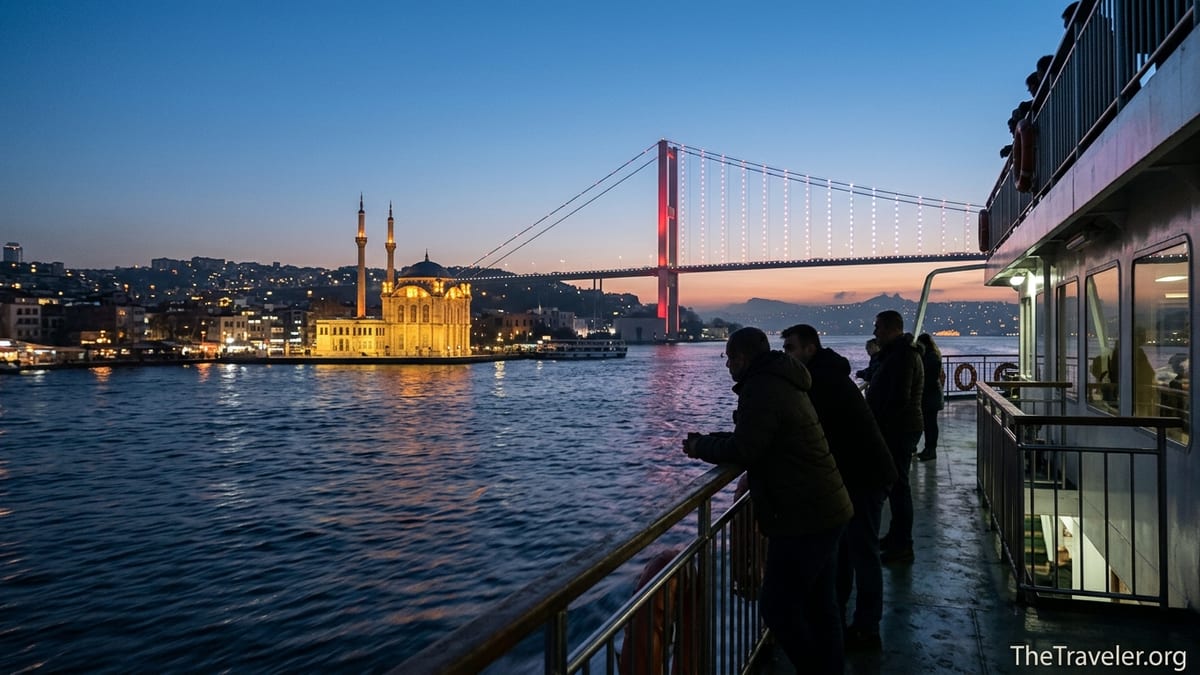
The Bosphorus is not just a postcard skyline. It is a working waterway with tankers heading for the Black Sea, fishermen casting lines from railings, and ferries that still feel like part of daily life rather than a tourist show. At night this everyday scene is layered with light. The 15 July Martyrs Bridge, Fatih Sultan Mehmet Bridge and Yavuz Sultan Selim Bridge are fitted with LED systems that cycle through colors and patterns, so the span you saw in pale gray daylight becomes a ribbon of red or blue after sunset. On many national holidays, including Republic Day in late October and the July 15 commemorations, the bridges can glow in Turkish flag red and white.
For visitors, the main nighttime action runs between Eminönü and Karaköy near the historic peninsula, Kabataş and Beşiktaş beneath the Dolmabahçe Palace shoreline, up through Ortaköy and Arnavutköy toward the first and second bridges, and on the Asian side from Üsküdar and Kuzguncuk up to Beylerbeyi. This is the stretch where you will find most of the cruise departures, waterfront restaurants and classic Bosphorus views. The upper Bosphorus, around Kanlıca, Anadolu Hisarı and Rumeli Hisarı, is quieter and more residential at night but stunning if your boat route reaches that far.
Timing matters. In summer, sunset in Istanbul can be close to 20:30, which means the full bridge light show only appears around 21:00 or later. In winter, darkness falls before the evening rush hour, and you might find yourself on a public ferry at 18:00 with the decks full of commuters under already lit bridges. When you plan a cruise or dinner reservation, check sunset time for your dates and add at least 30 minutes if you specifically want photographs of the bridges at their brightest.
Night Cruises: Public Ferries vs Private Dinner Boats
Most travelers discover the Bosphorus at night via one of three options: a public ferry, a short commercial sightseeing cruise, or a full dinner cruise with live shows. The most budget-friendly choice is the city-run Şehir Hatları ferries. These are the classic white boats locals use every day, and selected routes now run with extended hours on Fridays and Saturdays, linking Kadıköy, Karaköy, Beşiktaş and Üsküdar through the night on a special night timetable in winter and peak periods. A one-way ticket is usually priced in line with standard Istanbul transit fares, so even with recent inflation it tends to be just a few dollars equivalent, payable with your Istanbulkart.
Public ferries do not follow a pure sightseeing loop. Instead, you ride along with commuters and students, stepping off at whichever pier catches your eye. For instance, you might board at Beşiktaş around 21:30, cross to Üsküdar with views of the illuminated Dolmabahçe Palace and the first bridge in the distance, then continue to Kadıköy for a late drink in Moda. You will have indoor and outdoor seating, basic snacks and tea at the cafeteria, and the freedom to wander the decks for photographs. What you will not get is commentary, reserved tables or staged entertainment.
Short evening sightseeing cruises depart from spots like Kabataş, Eminönü and Ortaköy, often advertised as “sunset plus night lights” trips lasting 1.5 to 2 hours. These typically cost the rough equivalent of 15 to 35 US dollars per person depending on length and inclusions. A common pattern is departure just before sunset, a run up to at least the first bridge and sometimes the Fatih Sultan Mehmet Bridge, then a return after full dark so passengers see both golden-hour and nighttime views. Boats in this category might be modest double-deck craft with plastic chairs, or slightly smarter vessels with indoor lounges, but food is usually limited to snacks and simple drinks.
Full dinner cruises are the most expensive and most heavily marketed option. Operators such as Bosphorus Night or similar companies advertise 3-hour evening cruises that start around 20:30, include a fixed-menu dinner, unlimited or limited local drinks, and a program of whirling dervish shows, folk dances and belly dancing, plus a DJ segment. In practice, prices often fall in the 40 to 80 US dollars per person range depending on alcohol and seating tier. These cruises do deliver long stretches under the bridges and close passes by landmarks like the Ortaköy Mosque and Beylerbeyi Palace, but the experience is more about a packaged “Turkish night” than quiet contemplation. If you prefer to actually hear the water and city, a public ferry or low-key evening cruise may suit you better.
Illuminated Bridges and the Best Viewpoints
The three Bosphorus suspension bridges are central characters in any night experience. Closest to the historic center is the 15 July Martyrs Bridge, often simply called the Bosphorus Bridge by locals. Its LED illumination has been upgraded several times and now allows dynamic, color-changing patterns across the cables and the pylons. The second bridge, Fatih Sultan Mehmet, sits further north in a slightly more residential zone but is perfectly aligned with certain waterfront neighborhoods. The third, Yavuz Sultan Selim, is far to the north near the Black Sea entrance and is usually seen only on long Bosphorus tours or from the air.
Many visitors first meet the illuminated bridges from the water. A standard evening loop from Kabataş or Karaköy will take you under the 15 July Martyrs Bridge, with Ortaköy’s mosque glowing on one side and Beylerbeyi Palace lit on the other. If your cruise extends further, you may glide under Fatih Sultan Mehmet Bridge with the lights of Kandilli and Rumeli Hisarı on the hills. Ask when you board how far the boat will go that night, as some shorter trips turn around just after the first bridge to save fuel and time.
From land, several neighborhoods offer superb bridge views without needing a boat ticket. Ortaköy is the most obvious, a small square cradled between the water and the first bridge where kiosks sell kumpir baked potatoes and waffle stands compete with hookah terraces. Here you can photograph the mosque framed by the illuminated bridge from the small pier in front. Arnavutköy and Kuruçeşme further north have narrower streets but quieter waterfront promenades, with old wooden houses and modern bars sharing the same strip. On the Asian side, Beylerbeyi’s small harbor and the park in front of Kuzguncuk provide postcard angles back toward the European hills and the first bridge lights.
For an elevated vantage point, Çamlıca Hill on the Asian side gives a wide panorama of all three bridges on clear nights, especially in winter when the air is less hazy. Reaching it after dark usually means taking a taxi or ride-hail from Üsküdar or Altunizade metro, and you should be prepared for wind and cooler temperatures. Another practical elevated viewpoint is the Galata Bridge or the area around Galata Tower, where you see the Bosphorus mouth with ferries cutting luminous paths between the shores and the first bridge a faintly glowing arc in the background.
Waterfront Restaurants, Cafes and Nightlife Along the Strait
If you prefer to watch the light show from a table rather than a boat deck, you have a long waterfront to choose from, with very different atmospheres and price points. In Ortaköy, places facing the square and mosque now lean heavily toward tourists, but you can still find mid-range restaurants serving meze, grilled fish and kebabs at prices that, while higher than inland neighborhoods, remain reasonable by big-city waterfront standards. A typical grilled sea bream with a few shared meze plates and non-alcoholic drinks for two might land around the equivalent of 40 to 60 US dollars total, depending on the exact venue and current exchange rate. Many restaurants have small terraces or upper floors angled toward the bridge, so it is worth arriving earlier and politely asking for a table with at least a partial view.
Further north in Arnavutköy and Bebek, the scene turns more upscale. Here, sleek seafood restaurants and cocktail bars sit almost on top of the water, and weekend evenings can be crowded with well-dressed Istanbulites. Prices rise accordingly; a full fish dinner with wine in a popular Bebek spot can cost significantly more than a similar meal inland. On the plus side, the bridge views are less obstructed, and late opening hours mean you can linger until well after midnight. Reservations are advisable on Fridays and Saturdays.
On the Asian side, Üsküdar offers a more local and often quieter alternative. Along the promenade toward Salacak you find teahouses and simple cafes where you can sit on low stools, sip Turkish tea and watch ferries move between Beşiktaş, Eminönü and Kadıköy with the old city skyline behind. Further south, Moda in Kadıköy is not directly on the Bosphorus but faces the Sea of Marmara; however, many travelers pair a Bosphorus crossing with dinner in Kadıköy’s lively market streets, where meyhane taverns serve shared meze spreads and live music until late.
Waterfront nightlife extends beyond restaurants. In summer, temporary bars and open-air venues sometimes appear in Kuruçeşme and on piers near Karaköy, with DJs playing until the early hours and boats acting as floating clubs. Dress codes vary from casual to smart-casual, but in many Bosphorus-facing venues men in shorts and flip-flops may feel underdressed at night. For a comfortable evening, opt for neat jeans or light trousers and a shirt, with a light jacket for the breeze even on warm days.
Late Ferries, Taxis and Staying Safe
Istanbul’s waterfront stays busy late, but understanding transport options after dark will save you from stress at the end of the night. City ferries generally operate on normal schedules until around midnight on key cross-Bosphorus routes such as Beşiktaş–Üsküdar and Kadıköy–Karaköy, with extra late-night services on certain days and seasons. These extended “night ferries” are especially common on Friday and Saturday nights, when the municipality runs additional crossings between Kadıköy, Karaköy, Beşiktaş and Üsküdar to keep both sides connected. Timetables change seasonally, so once you have a rough plan it is worth checking the official ferry schedule for your specific dates instead of relying on printed brochures.
If you miss the last ferry, your alternatives include the Marmaray rail tunnel, metro lines that still run until late evening, night buses, and taxis. The Marmaray, which links Yenikapı and Sirkeci on the European side with Üsküdar and Ayrılık Çeşmesi on the Asian side, usually runs until around midnight. After that, taxis are the default fallback for many visitors leaving waterfront areas like Ortaköy, Arnavutköy or Beylerbeyi, where rail options are limited. Official yellow taxis are metered, and you should insist that the driver uses the meter rather than accepting a flat fare quote that sounds vague or high.
Taxi issues in Istanbul are widely discussed by both locals and visitors. Common problems include drivers refusing short rides, attempting to overcharge tourists with detours, or claiming the meter is broken. To minimize hassle, hail taxis from official stands near ferry piers and major squares rather than random street corners, or use reputable ride-hailing apps authorized in Turkey, which show approximate fares in advance. Always note the license plate and, if something feels off, be prepared to step out politely before the car moves. Most drivers are honest, but a little caution goes a long way, especially after midnight when you may be tired and unfamiliar with the city layout.
Overall, the Bosphorus area is relatively safe at night in terms of violent crime, particularly in busy districts like Karaköy, Beşiktaş, Ortaköy and Üsküdar where families and couples stroll late into the evening. Normal big-city awareness still applies: keep valuables out of sight, avoid dark side streets if walking alone, and be cautious around heavily touristed piers where aggressive touts may push overpriced cruises or restaurants. If you are returning to accommodation in Sultanahmet or Taksim after a late cruise, confirm in advance with your hotel which transport route they recommend at your arrival time.
Photography Tips: Capturing the Bosphorus at Night
Night photography around the Bosphorus is rewarding but technically tricky. The combination of moving boats, low light and strong contrast from bridge LEDs and mosque floodlights will quickly expose the limits of smartphone cameras. If you are serious about photos, bring a camera with good low-light performance and a fast lens. A compact mirrorless camera with a 24–70 mm equivalent lens at f/2.8, or a small prime lens at f/1.8 or faster, will help you keep ISO under control while freezing motion from boat vibrations.
On boats, image stabilization is your best ally. Avoid long exposures that turn the water to silky blur, because the boat is almost always moving. Instead, work with shutter speeds around 1/80 to 1/200 second, raising ISO as needed. Many modern phones offer a “night mode” that stacks multiple frames; this can work surprisingly well when you brace the phone against a railing, but you will still see some smear in moving lights. Consciously choose your angles: position yourself at the front or back of the boat to capture the bridge receding or approaching, and wait for moments when the vessel slows near Ortaköy or Beylerbeyi to reduce motion blur.
From land, a small travel tripod becomes useful, especially in Ortaköy square, along the Arnavutköy waterfront, or on the Üsküdar promenade. Here you can take longer exposures of 1 to 4 seconds at low ISO, smoothing passing car lights and turning the bridge LEDs into clean, continuous lines. Many seafront railings and stone walls also double as improvised supports if you do not want to carry a tripod. Be mindful of spray, especially on windy evenings, and wipe your lens regularly to avoid soft patches from droplets.
Compositionally, resist the temptation to center the bridge in every frame. Use foreground elements like fishermen on Galata Bridge, people eating kumpir in Ortaköy, or moored boats in Arnavutköy to create depth. Shooting from slightly behind a cafe window or under a streetlamp can give your images a sense of intimacy instead of endless postcard-wide views. Finally, have realistic expectations: Istanbul’s night air can be humid, headlights and LED billboards are bright, and not every photo will be gallery-ready. Focus on capturing a few thoughtful frames rather than dozens of nearly identical bridge shots.
Is the Bosphorus Better by Day or at Night?
Travelers often feel pressure to choose between a Bosphorus boat trip by day or a night cruise. In reality, the two experiences serve different purposes and, if your schedule allows, complement each other. By day, particularly on long city ferry routes that run up toward Sarıyer, you see details that vanish after dark: Ottoman waterfront yalıs in pastel colors, crenellated castle walls at Rumeli Hisarı, fishermen casting from small jetties, and the texture of hillsides layered with houses and apartment blocks. Daylight also makes photography easier and reveals the true turquoise color of the water on clear days.
At night, you lose much of that architectural fineness but gain atmosphere. The mosques of the historic peninsula become glowing silhouettes, the bridges transform into animated necklaces of light, and reflection trails of ferries scribble across the water. For many, this nighttime scene becomes their enduring mental picture of Istanbul. If forced to choose only one, families with children and those prone to seasickness might prefer a daytime cruise for calmer conditions and easier logistics, while couples or photographers might lean toward an evening or night trip for romance and drama.
A practical compromise is to time a single cruise that starts around sunset and continues into early night. Many operators design exactly such trips, leaving near golden hour and staying out for about two hours. You begin with the city in soft light, watch the sun drop behind the old city skyline, and then see the bridges light up on the return leg. This same principle applies from land: you might walk from Karaköy to Ortaköy in the late afternoon, have dinner as dusk turns to night, then ride a ferry home under full illumination.
Ultimately, the “better” time depends on what you value more: seeing the physical city or feeling its mood. If you arrive in Istanbul for only two or three days, consider paying slightly more attention to the weather forecast than the clock. A clear winter afternoon with crisp visibility may deliver a more memorable Bosphorus experience than a hazy summer evening where bridge lights are muted by humidity. When the conditions line up, both day and night on the strait are hard to forget.
The Takeaway
The Bosphorus at night is one of Istanbul’s defining experiences, but it does not have to be packaged or expensive. A simple city ferry ride between Beşiktaş and Üsküdar can be as evocative as a choreographed dinner cruise, and a cup of tea on the Üsküdar promenade may linger longer in your memory than any nightclub rooftop. With a bit of planning around sunset times, ferry schedules and restaurant choices, you can weave the strait naturally into your evening rather than treating it as a separate attraction.
Think about how you like to travel. If you enjoy structure, book a well-reviewed dinner cruise and combine it with a waterfront stroll before or after. If you prefer spontaneity, hop on a public ferry, get off where the lights and smells entice you, and see where the night leads. Keep an eye on transport options back to your hotel, carry a light jacket even in summer, and give yourself time simply to stand at a railing, listen to the engines, and watch the bridges slide past overhead. In a city that never truly sleeps, the Bosphorus remains its quiet, constant heartbeat, best appreciated with patience and open eyes.
FAQ
Q1. Are Bosphorus night cruises worth the price compared with day cruises?
For many travelers they are, but it depends on your priorities. Night cruises emphasize atmosphere, lights and a festive mood, while day cruises highlight architecture and scenery. If your budget only allows one, choose daytime if you want to see more detail and nighttime if you value romance and city lights.
Q2. Can I experience the Bosphorus at night using only public ferries?
Yes. City ferries run across the Bosphorus into the late evening, especially on main routes like Beşiktaş–Üsküdar and Kadıköy–Karaköy, and there are extended night services on some weekends or seasons. Riding these ferries with an Istanbulkart gives you authentic night views at a fraction of tourist boat prices.
Q3. Which neighborhood is best for dinner with a Bosphorus bridge view?
Ortaköy is the most popular for its combination of mosque, bridge and lively square, though it is touristy. For slightly calmer or more upscale settings, Arnavutköy and Bebek on the European side or Beylerbeyi on the Asian side offer excellent bridge views from many waterfront restaurants.
Q4. Is it safe to walk along the Bosphorus at night?
In busy areas such as Karaköy, Beşiktaş, Ortaköy, Üsküdar and Kadıköy, walking along the waterfront in the evening is generally considered safe, with families and couples out late. Use normal big-city caution, avoid poorly lit backstreets, and keep valuables secure, especially around crowded piers.
Q5. What should I watch out for with taxis after a night cruise?
Make sure the driver turns on the meter, avoid accepting vague flat fares, and preferably take a taxi from an official stand near the pier or use a recognized ride-hailing app. If a driver refuses a short ride or makes you uncomfortable, it is acceptable to step away and find another cab.
Q6. Do I need to book a Bosphorus dinner cruise in advance?
In peak seasons and around holidays, it is wise to book at least a few days ahead, especially for Friday and Saturday nights. In quieter periods, same-day bookings from reputable agencies or directly with operators are often possible, but be cautious about on-the-spot offers from persistent street touts.
Q7. What kind of clothing is appropriate for Bosphorus evenings?
Nights on the water can feel cooler than inland, even in summer, so bring a light jacket or shawl. Many waterfront restaurants and cruise boats are casual but appreciate neat attire; closed shoes and long trousers or a dress or smart-casual outfit will be comfortable and suitable almost everywhere.
Q8. Can I get good night photos of the Bosphorus with only a smartphone?
Yes, but with some limits. Use night mode, brace the phone on a railing, and avoid extreme zoom. You will capture attractive bridge and skyline shots from stable spots on land, while moving boats are more challenging and may produce some blur, which is normal with phone cameras.
Q9. Are there late ferries between Europe and Asia every night of the week?
Main routes usually run until around midnight, but true late-night or all-night services are more common on Fridays and Saturdays and can change seasonally. Always check the current timetable for your specific route shortly before you travel instead of relying on older information.
Q10. If I have time for only one Bosphorus experience, should I choose sunset, night or daytime?
If you can only pick one, a cruise that starts around sunset and continues into early night is a strong compromise, giving you both daylight details and illuminated bridges. If that is not possible, families and first-time visitors often benefit most from a clear daytime trip, while couples or photography enthusiasts may prefer a dedicated night experience.