


More news on this day
An American Airlines flight from Miami to Richmond was forced to divert to Washington Dulles International Airport on June 28, 2026, as a fresh wave of operational disruptions rippled across the already strained East Coast air travel network.
Get the latest news straight to your inbox!
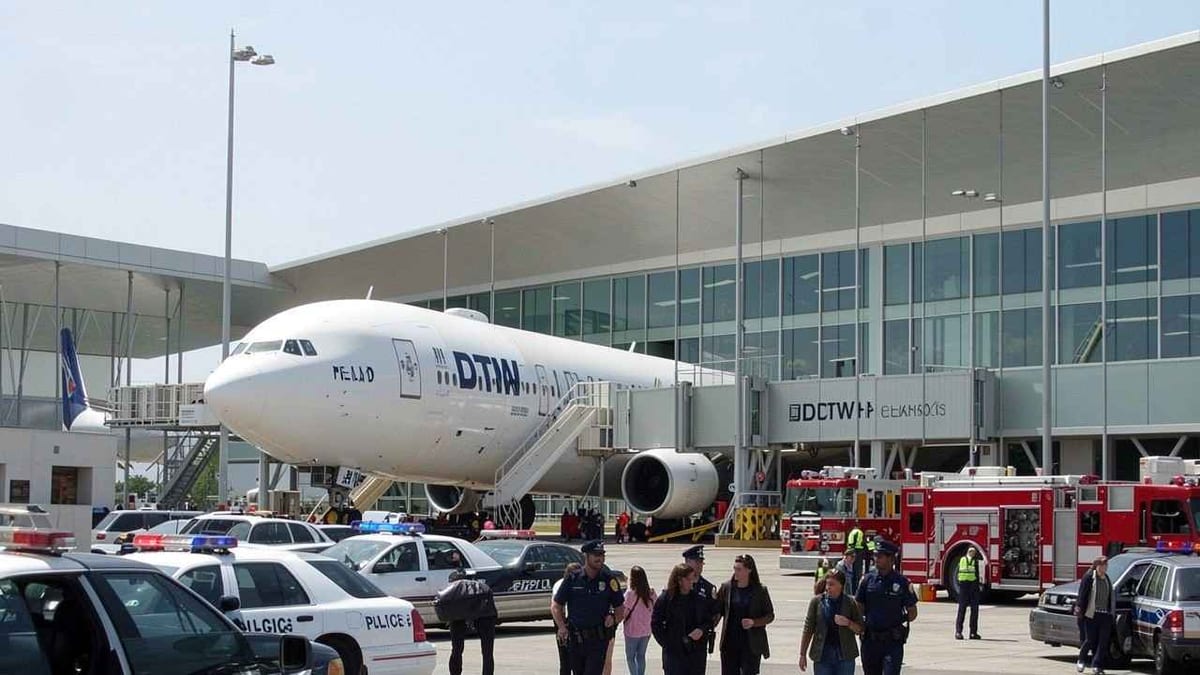
Mid-Flight Reroute Turns Routine Hop Into Unplanned Detour
American Airlines Flight AAL2939, operated by an Airbus A319, departed Miami International Airport on June 28 with Richmond International Airport as its scheduled destination. Publicly available flight tracking and industry reports indicate that the aircraft left Miami on time from a mainline concourse gate before encountering constraints during the descent phase into central Virginia.
As conditions around Richmond tightened, the crew abandoned the approach and accepted a diversion to Washington Dulles International Airport in northern Virginia. Data compiled by aviation outlets show the aircraft landing at Dulles later that evening and parking at a midfield concourse gate, several hours after its originally planned arrival into Richmond.
No technical incident or onboard emergency has been reported in association with the diversion. Current information instead points to destination-related operational issues, a pattern increasingly familiar to travelers navigating the busy Mid-Atlantic air corridor at the height of summer schedules.
The diversion converted what is typically a straightforward domestic segment into a longer, multi-stage journey, leaving passengers unexpectedly in the Washington metropolitan area rather than central Virginia late on a busy Sunday evening.
Operational Constraints Add To East Coast Summer Strain
The AAL2939 diversion unfolded against a backdrop of mounting strain on East Coast operations, where a combination of congested airspace, pop-up weather, and tight airport capacity regularly pushes the system to its limits. Industry tracking over recent weeks shows multiple diversions into Washington-area airports as carriers reroute traffic around local constraints.
Specialist aviation coverage of the AAL2939 event describes the decision as part of standard traffic management tactics. When a destination airport faces runway, flow-control, or staffing limits, arriving flights are often sent to larger hubs with more runway capacity and ramp space. Dulles, with its long runways and extensive apron, is frequently used in this role for diversions affecting smaller East Coast fields.
The timing of the incident, in the heart of the late June peak when schedules are dense and summer thunderstorms are common, amplified the disruption. Travel forums and operational summaries for the same weekend describe rolling delays and rerouted flights across the broader Mid-Atlantic, suggesting that the Miami to Richmond diversion was one visible example of a wider pattern of stress in the system.
While each individual diversion is managed as a standalone operational call, the broader picture underscores how quickly local bottlenecks can cascade into network-wide impacts, especially in tightly packed airspace stretching from Florida to the Northeast.
Knock-On Effects For Passengers And Ground Logistics
For customers booked to Richmond, arriving at Dulles created an immediate last-mile challenge. Reports from aviation news outlets and travel industry briefings indicate that the aircraft completed its journey at Dulles, with passengers deplaning there rather than continuing on the same aircraft to Virginia.
In such situations, airlines typically pivot to a mix of rebooking and ground transport, depending on time of day, available connections, and crew duty limits. Publicly available guidance from American Airlines on irregular operations emphasizes re-accommodation onto later flights when space permits, or the use of ground transport options when a nearby alternate airport is used during a diversion.
With Dulles located roughly two hours by road from Richmond, the diversion likely translated into late-night bus or car travel for some passengers and overnight stays or next-day rebookings for others. Social media accounts and traveler discussions from the same weekend point to crowded terminals, long service queues, and a scramble for hotel rooms across the region as multiple flights were affected by the broader disruption.
Even when handled according to standard procedures, such diversions often leave travelers bearing additional time, cost, and stress, highlighting the gap between operational necessity and passenger experience during irregular operations.
Dulles’ Role As A Safety Valve For Regional Airspace
Washington Dulles has long served as a strategic pressure-release point for the Mid-Atlantic aviation system. Official airport communications in recent months have highlighted record passenger volumes and new long-haul routes, underscoring the facility’s status as a major international gateway capable of handling large surges of traffic.
Its long runways, ample ramp space, and separation from dense urban areas make Dulles a preferred alternate for carriers when smaller or more constrained airports in the region encounter weather, congestion, or other disruptions. Aviation community discussions frequently note that aircraft originally bound for Richmond, Reagan National, or Baltimore can be rerouted into Dulles when conditions deteriorate or when managing flow into the more space-limited fields closer to city centers.
The arrival of AAL2939 therefore fits into a familiar pattern for the region: a mid-size aircraft, facing a tightening operational picture at a smaller airport, is redirected to a bigger, better-equipped field where it can land, refuel if needed, and discharge passengers without compounding congestion at the original destination.
This role is likely to become even more important as carriers push dense summer schedules and as storms, staffing constraints, and infrastructure work converge to create frequent pinch points across the East Coast network.
Broader Questions Over Resilience In Peak Travel Season
The diversion of AAL2939 has quickly been picked up by aviation-focused publications as another case study in how fragile the East Coast travel grid can be during peak demand. While the flight itself landed safely and followed established procedures, the consequences for passengers and downstream operations illustrate the delicate balance airlines and airports must maintain.
Recent schedule data and industry commentary suggest that carriers have been operating at high load factors into the summer of 2026, leaving limited slack in the system when flights are delayed or diverted. When an aircraft like the A319 used on AAL2939 is forced off its planned routing, the ripple effects can run through crew rotations, subsequent departures, and connecting itineraries for hours or even days.
For travelers, the event underscores the importance of real-time monitoring of flight status and flexible contingency planning, especially on routes funneled through congested corridors or into capacity-constrained regional airports. For operators and regulators, it adds urgency to ongoing debates over staffing, infrastructure investment, and airspace modernization along the Eastern Seaboard.
As the busy July 4 holiday period approaches, the AAL2939 diversion serves as a timely reminder that even routine domestic flights can quickly be reshaped by the complex and interdependent forces driving today’s air travel environment.