


More news on this day
Air travelers across Brazil faced widespread disruption as at least 53 flights were canceled and more than 230 delayed at major hubs including Brasília, Rio de Janeiro, São Paulo and Salvador, affecting operations for LATAM, Azul, GOL, KLM and several other carriers.
Get the latest news straight to your inbox!
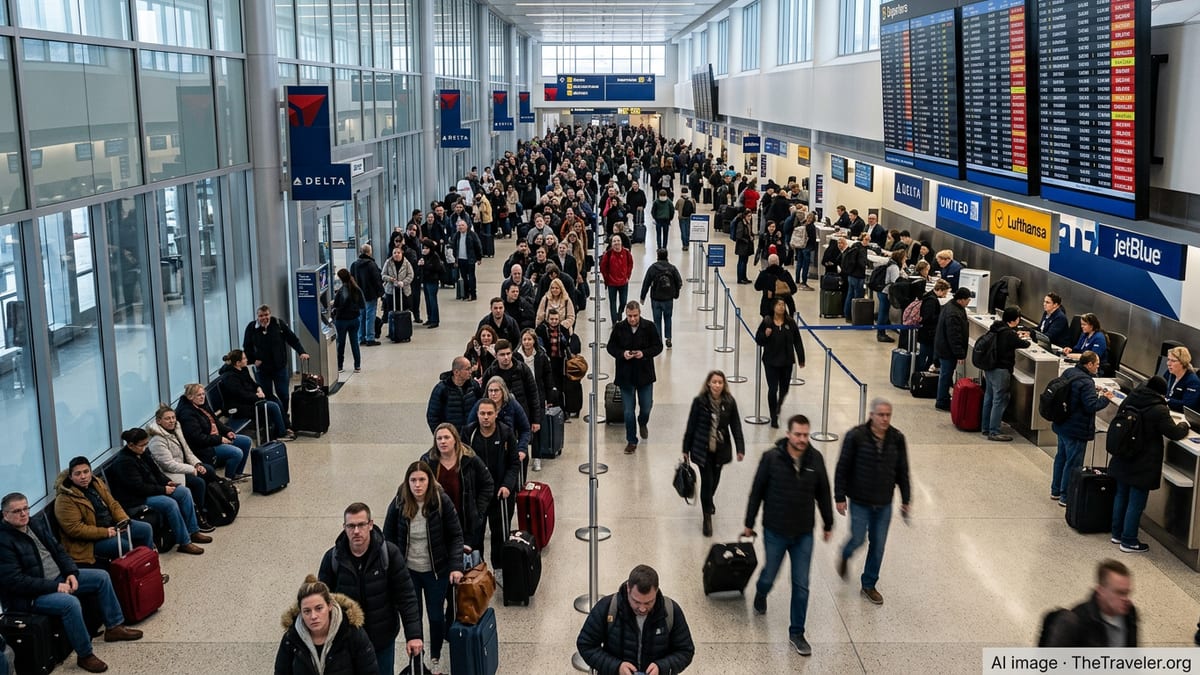
Nationwide Disruption Across Brazil’s Busiest Airports
Publicly available flight-tracking data and Brazilian media reports indicate that the latest wave of disruption has concentrated on the country’s busiest terminals, with cancellations and delays registered at airports serving Brasília, Rio de Janeiro, São Paulo and Salvador. The impact has been most visible at São Paulo’s Congonhas and Guarulhos airports, Rio de Janeiro’s Galeão and Santos Dumont, Brasília International and Salvador’s Deputado Luís Eduardo Magalhães.
The tally of at least 53 cancellations and 239 delays reflects same-day operational data for domestic and international flights, covering services operated by Brazil’s three largest airlines alongside several foreign carriers. The uneven spread of problems across the network meant that some routes experienced repeated schedule changes, while others operated close to normal, creating a patchwork of conditions for travelers.
According to Brazilian news coverage and airport dashboards, São Paulo once again emerged as the main pressure point, with significant knock-on effects on connections to and from Brasília and Rio de Janeiro. This followed earlier episodes in 2026 in which technical and operational issues in São Paulo triggered queues, rebookings and extended waiting times throughout the country’s air-transport system.
In Salvador, a key gateway for Brazil’s northeast, a mix of late arrivals from other hubs and day-of-operation adjustments contributed to a wave of delays on flights both to São Paulo and Rio de Janeiro. Similar patterns were visible in Brasília, where disruption on routes linking the capital with both São Paulo and the northeast amplified the national-scale effect.
LATAM, Azul, GOL and International Airlines Affected
The cancellations and delays cut across a wide range of airlines, with domestic carriers LATAM, Azul and GOL among the most heavily affected due to their extensive networks within Brazil. Their operations connect major hubs such as São Paulo, Rio de Janeiro, Brasília and Salvador, so disruptions at one airport quickly reverberate throughout their schedules.
Flight-status platforms for Brazil show that numerous LATAM services on trunk routes, including Salvador to São Paulo and Salvador to Rio de Janeiro, operated with extended delays or schedule changes. GOL and Azul, which also rely heavily on these same corridors, reported altered timings and cancellations on flights linking the southeast, central-west and northeast regions.
International airlines were not spared. Long-haul operators such as KLM, which serve São Paulo and other Brazilian gateways, faced secondary impacts when arriving aircraft encountered congestion on the ground or delays in departure slots. Even when intercontinental flights operated close to schedule, passengers connecting onward within Brazil frequently found that domestic segments had been rescheduled, canceled or significantly delayed.
The breadth of carriers involved added complexity for travelers holding interline or codeshare tickets. Passengers booked on one airline but operating under the flight number of another sometimes discovered that communication about changes varied depending on which company’s channels they checked, requiring careful monitoring of both airline and airport information.
Operational Strain and Weather Among Key Drivers
While a single, clear-cut cause has not been identified for all of the cancellations and delays, publicly available information points to a combination of factors. Earlier in 2026, Brazilian media highlighted episodes of technical issues affecting systems that coordinate traffic at São Paulo airports, resulting in temporary suspensions and cascading delays. Those underlying vulnerabilities, when combined with localized weather constraints and tight scheduling, have periodically pushed the network beyond its limits.
On peak travel days, Brazil’s main airports operate near their declared capacity, leaving limited room to absorb disruptions. When one or more hubs experience a slowdown, airlines often respond by holding aircraft on the ground, adjusting rotations and, in some cases, canceling low-priority services to preserve operational integrity on core routes.
Weather factors can play a decisive role, particularly in coastal cities such as Rio de Janeiro and Salvador, where low visibility, strong winds or heavy rain may temporarily close runways or restrict movements. Even short-lived constraints can translate into hours of knock-on disruption once aircraft and crews fall out of position.
Industry observers note that Brazil’s domestic aviation market has rebounded significantly from pandemic-era lows, but infrastructure enhancements and staffing levels have not always kept pace with renewed demand. As a result, episodes of concentrated disruption, such as the one affecting 53 canceled and 239 delayed flights, expose the fragility of the system during busy periods.
Passengers Face Long Queues, Rebookings and Missed Connections
The immediate impact for travelers has been felt in crowded terminals, long check-in and customer-service queues and repeated schedule updates on departure boards. Reports from Brazilian outlets describe passengers at São Paulo and Rio de Janeiro airports seeking last-minute rebookings or refunds after finding that their flights had been canceled with limited advance notice.
For those already in transit, the combination of delayed inbound flights and tight connection windows created a wave of missed onward segments, particularly for itineraries involving a change of airport or terminal within the same city. Travelers attempting to connect from long-haul services into domestic flights at São Paulo and Rio de Janeiro were among the most exposed.
Standard rebooking options varied by airline and fare type, but in many cases travelers were placed on the next available flight, sometimes several hours later or even the following day on heavily used routes. Where same-day alternatives were not available, some passengers sought accommodation or alternative transport, further complicating their travel plans.
Consumer-rights advocates in Brazil have previously urged passengers caught in similar disruption to retain documentation, monitor airline communications and be aware of their rights under national aviation regulations. Such guidance has resurfaced in public discussions as travelers affected by the current disruptions share their experiences and seek redress.
Outlook for Brazil’s Air Network in the Coming Days
Looking ahead, airline and airport data suggest that schedules remain under pressure, but the situation may gradually stabilize as aircraft and crews return to their planned rotations. Historically, Brazilian carriers have responded to comparable episodes by adding extra sections, upgauging aircraft on selected routes or extending operating hours at certain airports when permitted, in order to process backlogs of passengers.
Travel analysts note that further localized disruption cannot be ruled out, especially during periods of adverse weather or high demand such as weekends, holidays and major events. With São Paulo, Rio de Janeiro, Brasília and Salvador all acting as crucial transfer points, any renewed problems at one hub are likely to be felt quickly across the national network.
For now, publicly accessible flight-status tools and airport boards show a more fragile-than-usual operating environment, with schedule changes occurring closer to departure time than many travelers may be accustomed to. Those planning to fly within or from Brazil in the coming days are being advised in public commentary to allow extra time at the airport, check-in early and monitor their flight status repeatedly on the day of travel.
How swiftly the country’s air system clears the latest backlog of 53 canceled and 239 delayed flights will serve as a test of the resilience measures introduced by airlines, airport operators and regulators since previous episodes of mass disruption earlier in the year.