


More news on this day
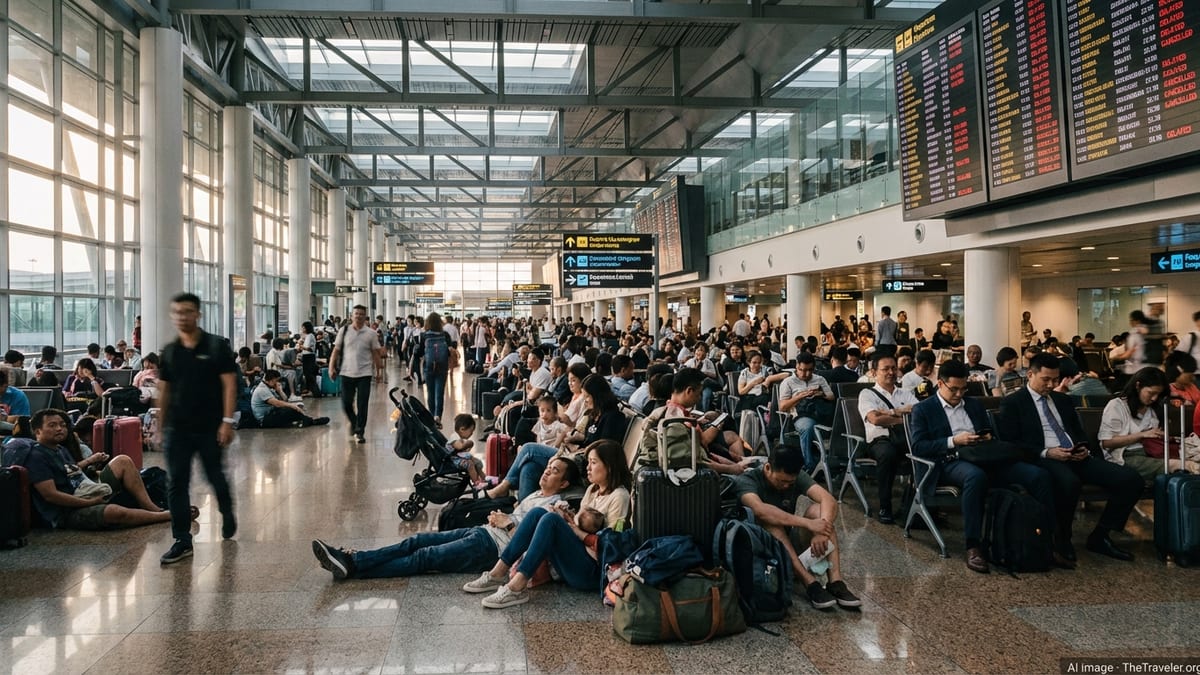
Passengers traveling through Honolulu’s Daniel K. Inouye International Airport on July 1 faced extensive disruption as at least 32 departures were delayed, affecting long-haul routes to Tokyo, Osaka, Seoul, Sydney and other key Asia-Pacific and mainland destinations.
Get the latest news straight to your inbox!
Wide-Ranging Delays Across Major Carriers
Publicly available departure boards for Honolulu on July 1 showed a wave of schedule changes rippling across the morning and afternoon banks of flights, with Hawaiian Airlines, Southwest Airlines and United Airlines among the hardest hit. Additional services operated by other domestic and international carriers also recorded late departures, collectively pushing the delay count into the dozens.
Operational data compiled from multiple flight-tracking platforms indicates that affected flights ranged from short inter-island hops to long-haul international sectors. While some departures left only slightly behind schedule, others recorded more significant delays, contributing to a cumulative disruption that left queues at check-in counters and gate areas growing throughout the day.
Airport status information for Honolulu described general delays without pinpointing a single destination or cause, suggesting a combination of factors rather than one isolated incident. Passengers awaiting updated departure times were advised by airlines and public information channels to monitor real-time flight trackers and airport displays for the latest status changes.
The disruptions were notable given that Honolulu serves as a critical hub between the continental United States and the Asia-Pacific region. Any slowdown in departures from the airport can quickly cascade, affecting onward connections and itineraries across multiple time zones.
Transpacific Links to Tokyo, Osaka and Seoul Affected
Honolulu’s role as a gateway to Japan and South Korea meant that delays had an outsized impact on travelers heading to major Asian cities. Reports from flight-status services showed shifting departure and arrival estimates on several transpacific routes, including services to Tokyo and Osaka operated by Hawaiian and partner carriers.
One Honolulu to Osaka flight recorded a late-evening arrival compared with its scheduled time, illustrating how even a modest delay at departure can translate into a longer-than-expected travel day on eight-hour-plus services. Adjusted schedules for other Japan-bound flights highlighted similar operational pressure across the transpacific corridor.
Connections to Seoul were also affected, according to route-level monitoring that flagged altered timings for some Korea-bound services. Because many passengers traveling from North America to Japan and South Korea rely on Honolulu as a midway hub, delays at departure created additional uncertainty for those with onward domestic or regional connections planned on arrival.
Travel industry analysts note that sustained irregular operations on these high-demand routes can compound quickly, especially during peak travel periods. Even when delays are measured in minutes rather than hours, aircraft rotations, crew duty windows and gate availability at busy Asian hubs can all be thrown off balance.
Disruptions Extend to Sydney and Other Long-Haul Routes
The impact of the Honolulu delays was not limited to Northeast Asia. Long-haul services toward Australia were also caught up in the disruption, with Honolulu to Sydney flights operated or marketed by carriers such as Hawaiian and Qantas showing adjusted timings in airline and airport data.
Schedules for Honolulu to Sydney, a key overnight link for leisure and connecting traffic, indicated revised departure slots and updated arrival estimates. These long-haul flights are particularly sensitive to operational changes, as shifts in departure times can affect curfew constraints and onward morning bank connections in Sydney.
Additional disruptions were recorded on routes from Honolulu to major mainland hubs such as Los Angeles and San Francisco, where United and Southwest maintain significant networks. Publicly available route trackers showed departure-time changes for multiple services, illustrating how pressure on Honolulu operations can reverberate across the broader transpacific and domestic network.
Because many Sydney-bound and other international passengers route through West Coast hubs before continuing across the Pacific, delays on Honolulu to mainland segments risked misaligned connections and longer total journey times for travelers heading both westbound and eastbound.
Potential Causes and Operational Context
While there was no single publicly identified trigger for the 32-flight disruption, aviation data and recent operational patterns suggest several likely contributing factors. Industry reporting throughout the year has highlighted tight aircraft and crew availability across multiple carriers, which can heighten the impact of even minor schedule shocks.
Honolulu’s geographic position and role as a transpacific crossroads add additional complexity. Long-haul operations to Asia and Australia require carefully managed crew duty limits, aircraft turnaround times and maintenance windows. Any upstream irregularities on inbound flights can cascade into outbound delays, especially when airlines are operating close to full capacity during peak travel seasons.
Weather along key routes, air traffic flow management measures and congestion at connecting hubs also play a role. Even when local conditions at Honolulu appear normal, constraints elsewhere in the system can lead to revised departure slots or holding patterns, prompting airlines to adjust schedules and push back estimated times of departure.
Airlines serving Honolulu have been contending with persistent operational challenges across their networks in recent months, according to published coverage on carrier performance and delay statistics. Against that backdrop, a single day of elevated delays at one major hub can be viewed as part of a broader pattern of strain across the global aviation system.
Advice for Travelers Passing Through Honolulu
The latest disruption underscores the importance for travelers using Honolulu as a transit or origin point to prepare for potential irregular operations. Travel experts generally recommend building extra time into itineraries, especially for connections from inter-island or domestic flights onto long-haul services bound for Asia or Australia.
Passengers are encouraged to monitor their flights closely on airline apps, departure boards and third-party tracking sites, particularly in the 24 hours leading up to travel. Same-day schedule adjustments are common when airports experience a cluster of delayed departures, and real-time updates can help travelers respond quickly to gate changes or revised boarding times.
Those with onward international connections from cities such as Tokyo, Osaka, Seoul or Sydney may wish to choose longer layovers to provide a buffer against delays. This approach can reduce the risk of missed onward flights and the need for complex rebooking arrangements in busy hubs.
The July 1 wave of disruptions at Honolulu highlights how quickly operational challenges can ripple across multiple airlines and continents. For passengers, staying informed and allowing extra flexibility in their plans remains the most effective way to navigate an increasingly stretched global air travel network.