


More news on this day
More than 100 passengers on a Brisbane to Bundaberg Tilt Train spent much of the night trapped in dark, overheated carriages after fallen power lines halted the service on Queensland’s North Coast line, highlighting the vulnerability of regional rail links during extreme weather.
Get the latest news straight to your inbox!
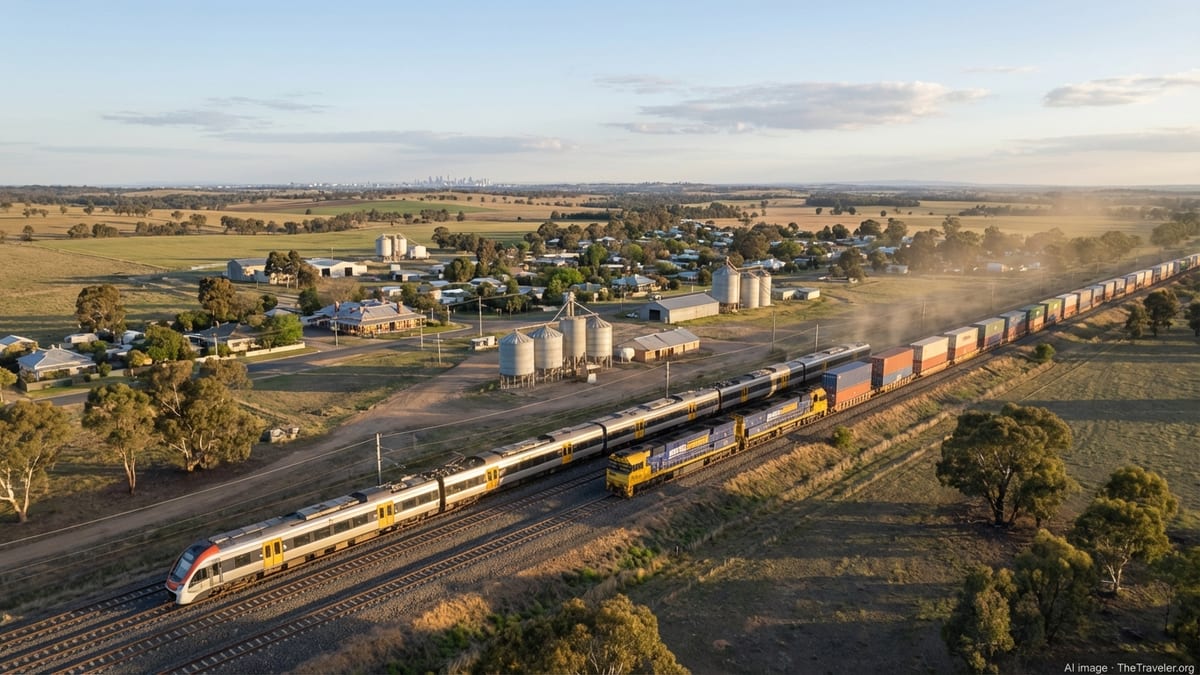
Overnight breakdown on North Coast line
According to multiple news reports, the northbound Bundaberg Tilt Train left Brisbane on Wednesday evening 11 November 2026 and came to an abrupt stop around midnight near Gundiah, a rural locality between Gympie and Maryborough. The stoppage followed severe storms across South East Queensland that brought down overhead power infrastructure along the busy North Coast rail corridor.
Publicly available information indicates that approximately 100 to 110 people were on board the electric Tilt Train, which operates daytime services between Brisbane and destinations including Bundaberg and Rockhampton. The train reportedly lost power after a section of overhead line was damaged, leaving the consist immobilised on the track while rail crews worked to make the site safe.
Initial reports describe passengers remaining on board for between six and eight hours while the damaged infrastructure was isolated and inspected. During that time, lighting, air conditioning and toilet systems were significantly affected, leaving many travellers in hot, dark carriages in the humid early hours of Thursday morning.
Once the area was declared safe, passengers were escorted off the train and transferred to road coaches for the onward journey, extending the overall disruption well into Thursday.
Limited ventilation, food and toilets reported
Coverage from Australian broadcasters and online outlets describes uncomfortable conditions inside the stranded train. With power to the carriages interrupted, air conditioning units reportedly shut down for extended periods, while emergency lighting operated only intermittently. Several passengers reported that internal temperatures rose quickly in the closed carriages.
Reports also indicate that food and drinking water supplies were limited during the overnight stoppage. Some accounts describe passengers, including families and older travellers, rationing snacks and water they had brought on board while waiting for assistance and updates from staff.
Toilet facilities were another concern. With onboard systems dependent on the train’s electrical supply, publicly available reports suggest toilets were soon out of service, leaving passengers reluctant to use them as the hours passed. Social media posts and traveller accounts shared with local media outlets have described overflowing or unusable toilets as one of the most distressing aspects of the incident.
Despite the conditions, there were no serious injuries reported in open sources, and passengers were eventually able to disembark with assistance from rail staff and emergency personnel once power lines above the train were secured.
Storm-damaged power lines and network disruption
The Bundaberg Tilt Train incident coincided with a destructive storm system that swept through parts of South East and central Queensland on 11 and 12 November. Published coverage from national and regional media links the train stoppage to fallen or damaged high-voltage power lines near Gundiah, which serve the electrified North Coast rail line used by long-distance passenger and freight services.
Queensland Rail information released in recent days confirms that repair crews have been working on more than 500 metres of overhead line equipment in the affected section. The infrastructure damage caused delays and cancellations to multiple services, including the Spirit of Queensland and other Bundaberg and Rockhampton Tilt Train departures, with road coaches substituted where possible until the line could safely reopen.
The North Coast line is a critical passenger and freight artery, connecting Brisbane with the Fraser Coast, Bundaberg, Rockhampton and further north to Cairns. The need to isolate live wires and inspect structures after the storm left parts of this corridor out of action for many hours, compounding the impact for both travellers on the stranded train and those booked on subsequent services.
Media summaries of the incident indicate that the complexity of restoring high-voltage infrastructure, together with access and safety constraints at night in rural terrain, contributed to the length of the disruption.
Queensland Rail response and passenger care questions
Queensland Rail has acknowledged the incident in public statements, describing it as the result of severe weather damage to overhead power lines rather than a mechanical fault with the Tilt Train itself. The operator has reported that crews were dispatched to isolate the damaged infrastructure, inspect the site and begin repairs, while separate arrangements were made to transport passengers onward by bus.
Reports indicate that the operator has apologised to affected customers and noted that safety protocols prevented passengers from being allowed to leave the train until there was no risk from live electrical equipment overhead. Rail staff on board are reported to have provided information and managed customer needs with the limited resources available while they awaited clearance to disembark passengers.
The incident has nevertheless prompted questions about passenger care and contingency planning on long-distance regional services. Commentary in local media and online forums has focused on the length of time passengers remained on the immobilised train, the lack of air conditioning and the state of toilets, and whether additional emergency supplies or alternative evacuation options could be deployed more quickly in remote locations.
Consumer advocates and transport commentators are highlighting the episode as a reminder of the challenges of maintaining customer comfort when critical onboard systems, including climate control and sanitation, are disrupted for many hours on electrified rolling stock.
Implications for travellers on Queensland’s coastal corridor
The Bundaberg Tilt Train ordeal comes at a time when Queensland Rail is working to stabilise and expand services across its network following months of timetable changes and industrial action earlier in 2026. Government and operator statements in recent weeks have pointed to a return to full timetables on key commuter routes from mid November, even as upgrade works and new signalling projects continue elsewhere on the network.
For domestic and international visitors planning journeys along Queensland’s coast, the incident underscores the importance of checking service status close to departure. Queensland Rail’s travel platforms provide real time service updates and indicate when trains are replaced or supplemented by road coaches due to weather, maintenance or infrastructure damage on the North Coast line.
The Tilt Train remains a flagship option for daytime rail travel between Brisbane and regional centres such as Bundaberg and Rockhampton, linking travellers with destinations on the Fraser Coast, in the Southern Great Barrier Reef region and beyond. However, the recent disruption illustrates how severe weather can quickly affect even long established services, particularly on sections of line that traverse forested or rural areas with overhead electrification.
Travel industry observers expect that rail operators will review procedures following the incident, including the provision of backup lighting, ventilation, drinking water and sanitation measures for extended stoppages. For now, publicly available information suggests that repairs on the affected section of the North Coast line are progressing, with operators aiming to minimise further disruption to upcoming Tilt Train and long distance services as the busy summer holiday period approaches.