


More news on this day
Severe storms across south east Queensland have sparked major rail disruption on the North Coast line, with more than 100 passengers trapped for about six hours overnight on a Bundaberg bound Tilt Train north of Brisbane after fallen powerlines cut power to the service.
Get the latest news straight to your inbox!
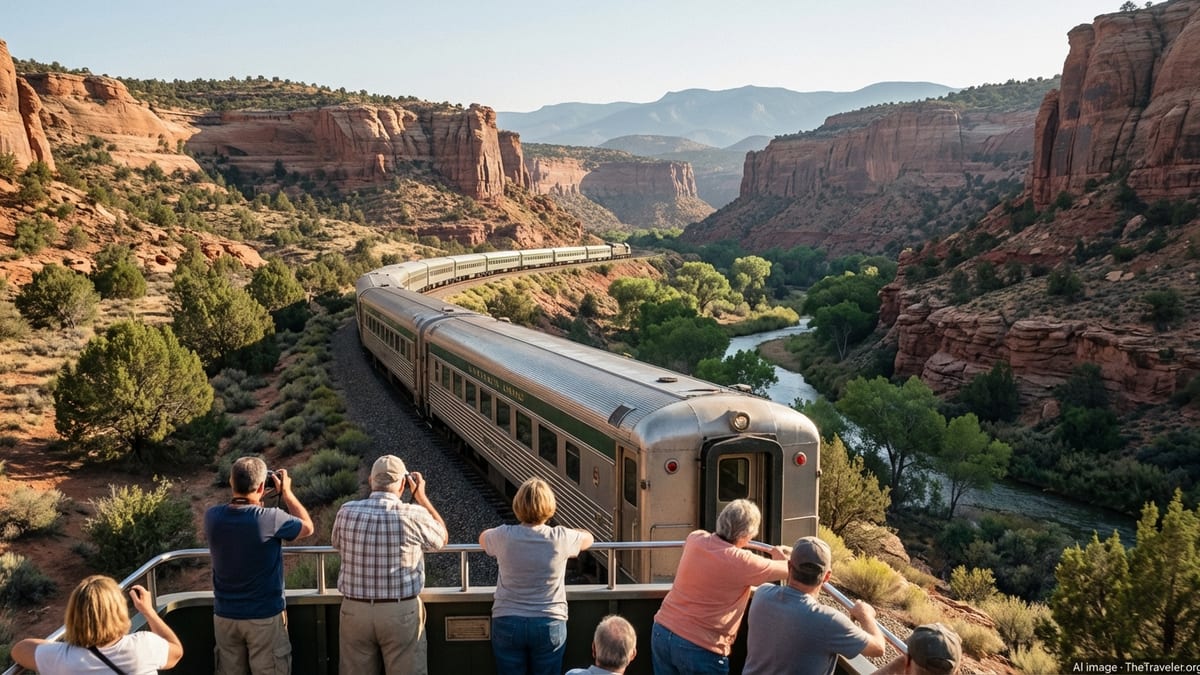
Six hour ordeal on powerless Tilt Train
The incident unfolded just after midnight on Thursday 12 November 2026, when a northbound Bundaberg Tilt Train came to an abrupt halt near Gundiah, around three hours by rail from Brisbane. According to published coverage, lightning and strong winds brought down overhead powerlines, forcing the high speed service to stop in darkness on a remote section of track.
Publicly available reports indicate that more than 100 passengers were left on board for about six hours while Queensland Rail and energy crews worked to make the damaged lines safe and assess the overhead equipment. With the train’s power cut, travellers described a hot and uncomfortable night as air conditioning and most onboard systems shut down.
Accounts cited in local media describe emergency lighting inside carriages, rising temperatures and limited access to information about how long the delay would last. One passenger’s journey from the Gold Coast to Hervey Bay ultimately stretched to about 19 hours once rail replacement buses were added to the disrupted itinerary.
Coverage from several outlets notes that passengers were offered water during the wait but had no access to hot food, with some toilets reported as close to, or at, capacity by the time evacuation began at first light.
Storm damage cripples key rail corridor
The stalled Tilt Train was one part of a wider transport disruption triggered by a line of intense thunderstorms that swept through south east Queensland on Wednesday night. Reports from regional news outlets state that the same weather system left tens of thousands of homes without electricity and caused scattered damage across the Fraser Coast and Gympie regions.
On the rail network, publicly available information from Queensland Rail and media summaries indicates that more than 500 metres of overhead line equipment was damaged near Gundiah. The scale of the impact required specialist crews to work through the night to de energise the fallen lines, inspect the corridor and begin repairs before passengers could be safely escorted from the train.
The affected section sits on the busy North Coast line, which links Brisbane with major regional centres including Bundaberg, Rockhampton and Cairns. The corridor carries long distance passenger services such as the Tilt Train and Spirit of Queensland, as well as freight trains supplying communities and industry along the coast.
In addition to the stranded Bundaberg service, at least one Spirit of Queensland train with around 120 passengers was delayed or turned back, while another service from Rockhampton was reported as stopped at Maryborough West as the incident unfolded. Replacement buses were sourced to ferry travellers around the damaged section while repair work continued.
Questions over passenger care and communication
The length of time passengers spent confined to the stationary train, and the conditions reported on board, have prompted renewed scrutiny of disruption management on Queensland’s long distance services. Travellers quoted in published coverage have raised concerns about the lack of air conditioning, limited food and information, and toilets nearing capacity during the overnight delay.
Commentary in local and national outlets notes that, although severe weather and powerline damage are outside a rail operator’s control, the incident highlights how quickly comfort and accessibility can deteriorate when a modern train loses power for an extended period. Travellers have questioned whether contingency supplies and clearer communication protocols should be in place for remote sections of line where road access and evacuation are more complex.
Publicly available statements from Queensland Rail emphasise that crews remained on site throughout the night, working to make the area safe and repair the network, and that the organisation recognises the frustration caused to customers. The operator has indicated through media reports that affected passengers will be refunded and that alternative transport was arranged as soon as conditions allowed an evacuation.
Consumer advocates and regular rail users commenting in public forums have linked the Gundiah incident to broader concerns about resilience on the state’s rail corridors, particularly as Queensland prepares to host major international events later in the decade and demand for regional travel continues to grow.
Flow on effects for regional travel plans
The disruption has had immediate consequences for passengers travelling along the North Coast line at the height of Queensland’s storm season. According to current Queensland Rail Travel timetables cited in news reports, the Tilt Train typically departs Brisbane’s Roma Street station for Bundaberg in the late afternoon, connecting with regional coach services to destinations such as Hervey Bay and the Wide Bay coast.
With services halted near Gundiah, some passengers faced missed onward connections, late night arrivals and rearranged accommodation. Reports from regional broadcasters indicate that buses were used to shuttle travellers between key hubs, including Maryborough West and Bundaberg, while certain services scheduled for Thursday were cancelled so crews could focus on restoring the line.
The incident has also underlined how dependent many regional communities are on a small number of long distance trains each day. When a single service is disrupted, options for alternative travel can be limited, particularly overnight. Local residents quoted in coverage have noted that the damaged powerlines temporarily cut off usual commuting patterns and raised concerns about access to emergency services if the line and nearby roads were blocked simultaneously.
Travel advisories issued via public channels encourage customers planning journeys on the North Coast line to check for updates close to departure, make use of operator hotlines for real time information on delays, and allow additional time for connections while storm related repair work continues.
Safety rules and expectations under the spotlight
While there were no reported injuries in the Gundiah incident, rail safety obligations in Queensland require operators to treat any significant network disruption as a matter for formal review. The Rail Safety National Law applied in the state sets out duties for rail transport operators to manage risks to passengers and staff, including in the event of infrastructure failure or extreme weather.
Observers of the sector note that severe storm events are becoming more frequent along coastal Queensland, placing added pressure on ageing electrical and signalling infrastructure. Recent public documents from Queensland authorities highlight investment in resilience measures such as improved inspection regimes, upgraded overhead wiring and refined emergency response procedures for regional lines.
The Gundiah stoppage is expected to feed into those discussions, particularly around backup power options, stockpiles of emergency supplies on long distance services, and clearer thresholds for when passengers should be kept on board versus escorted to buses or safe assembly points nearby.
For travellers, the incident serves as a reminder that rail journeys through remote or semi rural areas can be vulnerable to sudden weather related disruptions, even on well used intercity routes. Public information from transport agencies encourages passengers to monitor forecasts during storm season, carry essential medication and small snacks, and keep contact details for accommodation and onward transport flexible when travelling long distances by train in Queensland.