


More news on this day
Michigan travelers found themselves suddenly stranded on Friday, November 13, after a rare nationwide ground stop ordered by the Federal Aviation Administration halted departures across the United States, freezing flights at Detroit Metropolitan Wayne County Airport and regional hubs just as the weekend travel rush was beginning.
Get the latest news straight to your inbox!
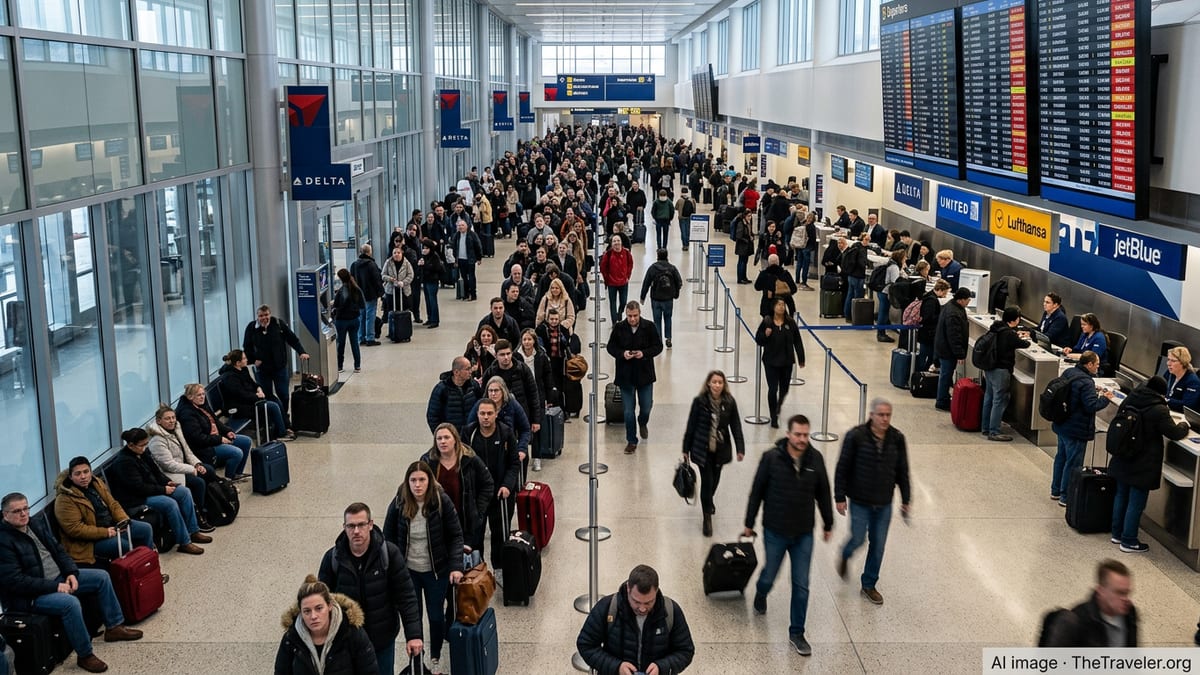
A rare nationwide halt ripples into Michigan
Publicly available aviation tracking data and news reports indicate that the FAA issued a nationwide ground stop on Friday afternoon, November 13, citing “extraordinary circumstances” and safety concerns linked to communications problems at regional air traffic control centers. It is the first time in years that departures across the entire United States have been paused simultaneously, affecting hundreds of airports and disrupting thousands of itineraries.
In Michigan, the impact has centered on Detroit Metropolitan Wayne County Airport, the state’s main international gateway, as well as Gerald R. Ford International Airport in Grand Rapids and several smaller commercial airports. Airline status boards for Friday evening began to show clusters of delays and same day cancellations as carriers held aircraft at gates, redirected inbound flights, or kept planes parked at origin airports while the nationwide order remained in effect.
Historical FAA status data for Detroit shows no comparable airport wide ground stop affecting all carriers this year, underscoring how unusual the current disruption is for Michigan based travelers. Earlier interruptions tied to weather or local technical issues have typically been short lived or confined to specific routes, whereas the present halt is system wide and triggered far beyond Michigan’s borders.
Because the ground stop order applies to departures, aircraft already in the air have continued toward their destinations, arriving into Michigan airports even as outbound passengers remain stuck. That imbalance has quickly filled gate areas and baggage halls while leaving long lines at ticket counters, customer service desks, and concessions as travelers wait for clarity on revised schedules.
“What other choice do I have?” Limited options for stranded passengers
For many Michigan travelers, the question on Friday evening has been simple and exasperated: “What other choice do I have?” With departures paused nationwide, common backup strategies such as grabbing a later same day flight, connecting through a different hub, or buying a one way ticket on a rival airline provide little relief when every carrier is receiving the same instructions from air traffic control.
According to publicly available airline conditions of carriage and consumer guidance from the U.S. Department of Transportation, travelers whose flights are delayed or cancelled because of air traffic control problems are generally not entitled to hotel vouchers or cash compensation under federal rules. Airlines may offer meal or hotel assistance as a matter of policy or goodwill, but such help is discretionary, varies by carrier, and can be difficult to secure once queues build at major hubs such as Detroit.
Same day alternatives by rail or long distance bus are also constrained for many Michigan routes. There is no high speed rail link between Detroit and Chicago, one of the region’s busiest corridors, and intercity train frequencies are limited compared with air schedules. For travelers holding nonrefundable hotel reservations, event tickets, or cruise departures reachable only by air, the cost of disruption can mount quickly even when the airline itself does not charge change fees.
Some passengers departing from smaller Michigan airports face an additional dilemma: driving long distances in hopes of catching a flight from another hub that may still be grounded. With publicly accessible FAA feeds and flight tracking services reflecting a nationwide halt rather than a localized outage, reports advise that switching airports is unlikely to produce a near term solution while the order remains in place.
Detroit and regional airports brace for a long evening
Detroit Metropolitan, one of the country’s largest connecting hubs, is built to process tens of thousands of passengers per day through its McNamara and North terminals. On Friday, that scale has become a liability as the effects of the national ground stop cascade through tightly scheduled banks of departures and arrivals, especially for hub and spoke carriers that route much of their connecting traffic through the airport.
Operational data for recent months shows that Detroit has performed comparatively well on on time arrivals and departures, with no FAA recorded ground delays in the two weeks leading up to November 13. Against that backdrop, Friday’s system wide disruption stands out, catching many travelers who had checked weather forecasts and normal delay indicators off guard when communication problems in distant air traffic facilities translated into local gridlock.
Regional airports in Grand Rapids, Flint, Kalamazoo, Lansing, and Traverse City have reported clusters of late departures and cancellations as well, largely tied to flights feeding larger hubs that themselves are at a standstill. Because these smaller facilities rely heavily on a limited number of daily departures on regional jets, the loss of even one or two evening flights can wipe out all remaining same day options for stranded passengers.
Airport operators in Michigan have urged travelers via publicly available statements and social media updates to verify flight status before leaving home, arrive early if their carrier still expects to operate later in the evening, and be prepared for extended wait times at security checkpoints and customer service counters once flying resumes. Parking facilities and curbside areas have also begun to see congestion as some travelers opt to leave and return the following morning, while others stay in terminals in case their flights are rescheduled overnight.
Behind the outage: questions over aging systems and new tools
The nationwide halt on November 13 follows a series of recent incidents that have highlighted vulnerabilities in U.S. air traffic control infrastructure, including regional communication failures and ground stops linked to damaged fiber optic cables and aging data systems. Public reporting over recent weeks has also focused attention on the FAA’s broader modernization plans, including efforts to retire legacy technology and consolidate critical functions such as flight alerts and routing decisions.
Background information from industry and technology publications describes a complex transition period in which new software driven systems are layered onto long standing networks that still rely on older hardware in some facilities. Earlier advisory memos from the FAA have warned airports that single points of failure in communications lines can lead to cascading delays if critical data is unable to flow between control centers and towers.
Friday’s communications outage has immediately raised questions among travelers and aviation observers about how such a widespread interruption could occur despite those modernization efforts. While investigations into the precise cause are ongoing, publicly available statements from federal agencies have so far emphasized that there is no indication of a deliberate attack and that the ground stop was imposed as a precaution while technicians work to restore reliable communication.
For Michigan travelers, the technical debate may feel academic in the short term, but it underscores a broader reality facing the national aviation system. As airlines rely on tighter schedules and higher aircraft utilization to meet demand, any breakdown in the networks that connect controllers, pilots, and dispatchers can ripple quickly through hubs like Detroit, turning a distant system failure into hours of waiting at a local gate.
What travelers can realistically do next
With flights paused by air traffic authorities rather than by individual airlines, there is a limit to how much stranded Michigan passengers can control in the first hours after a nationwide ground stop. Consumer advocates and travel industry analyses consistently recommend a few steps that can improve the odds of a smoother recovery once departures resume, even if they cannot shorten the outage itself.
First, travelers are encouraged to monitor both their airline’s mobile app and independent flight tracking tools, since gate agents in crowded terminals may not be able to assist everyone quickly. Some carriers allow customers to self service same day changes within their apps when a flight is significantly delayed or cancelled, avoiding long lines at airport counters. Where possible, enabling push notifications can provide earlier notice of rebookings or overnight cancellations.
Second, travelers with critical time sensitive plans such as international connections or major events may wish to document their expenses and disruptions. While federal rules do not require airlines to cover hotels or meals for delays linked to air traffic control, published policies at some carriers offer vouchers or partial reimbursement in irregular operations, and detailed receipts can help support later claims.
Finally, reports from previous large scale disruptions show that recovery often stretches beyond the moment a ground stop is officially lifted. Aircraft and crews can be out of position well into the following day, leading to rolling delays as airlines rebuild schedules. For Michigan travelers deciding whether to push ahead to the airport late Friday night or wait until Saturday, that pattern suggests weighing the likelihood of short connections and tight turnarounds against the possibility that a slightly later, less crowded departure could prove more reliable once the system stabilizes.