


More news on this day
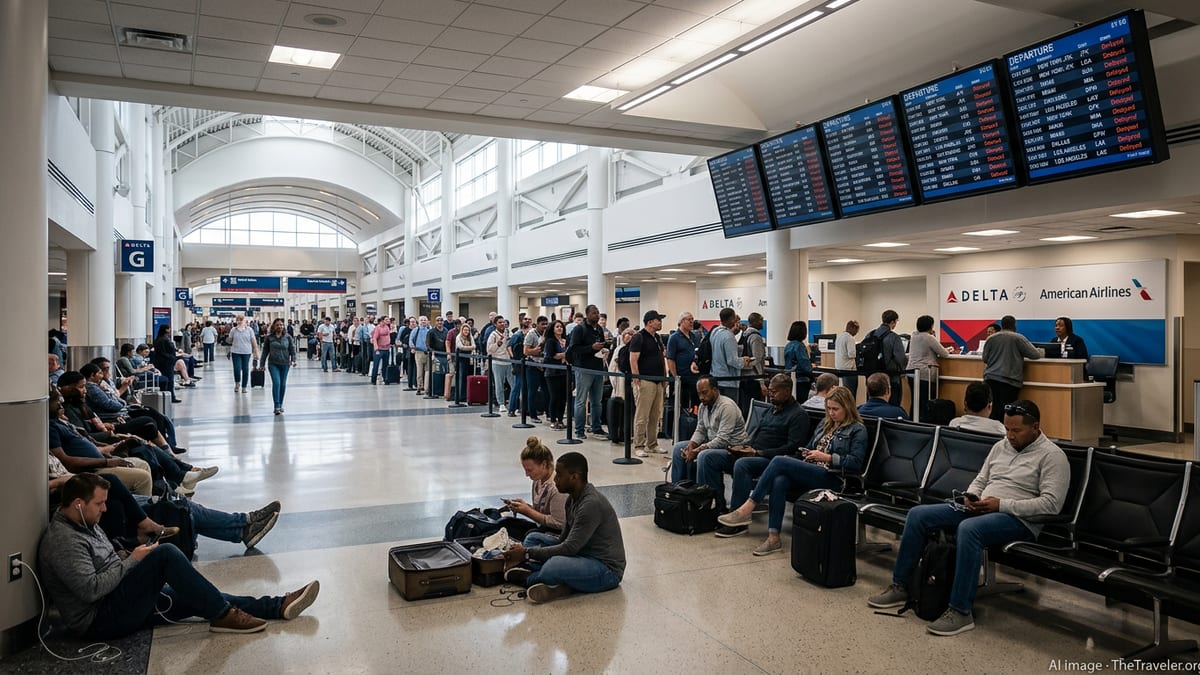
A rare nationwide ground stop ordered across the United States on Friday has left scores of passengers stranded at Atlanta’s Hartsfield-Jackson International Airport, with departures frozen for hours and connections collapsing across the country’s busiest hub.
Get the latest news straight to your inbox!
Nationwide Halt Follows FAA Communications Failure
Publicly available Federal Aviation Administration information shows that a nationwide ground stop was issued on the afternoon of November 13, 2026, after a major communications outage affected multiple air route traffic control centers. The order temporarily halted most departures at airports across the United States, marking only the second nationwide stop since 2001 and the first since a January 2023 systems failure.
According to published coverage, the disruption began shortly before the late afternoon peak, when the FAA reported problems with telecommunications links used to manage aircraft as they move between regions of U.S. airspace. Flights already in the air were generally allowed to continue toward their destinations, but aircraft on the ground faced holds at gates and on taxiways as controllers worked with limited tools and capacity.
Reports from major outlets describe widespread knock-on delays extending into the evening as airlines paused boarding, reassigned aircraft and attempted to rebuild schedules. Even as some routes began operating again on a limited basis, the backlog of grounded planes and displaced crews meant that many travelers were advised to expect cancellations and extended waits.
The scale of the interruption placed it among the most significant air travel disruptions in recent U.S. history. Public explanations released so far point to a technical breakdown rather than a security incident, but detailed findings on the exact cause and sequence of failures had not yet been published by late Friday.
Atlanta’s Role as a Hub Amplifies the Disruption
Hartsfield-Jackson Atlanta International Airport is one of the world’s busiest passenger hubs and the primary connecting gateway for Delta Air Lines and several domestic partners. Passenger traffic data published by the airport shows tens of millions of annual travelers and a dense network of routes throughout the United States and abroad. This role sharply magnified the impact of the nationwide ground stop for anyone changing planes in Atlanta.
Real-time status dashboards that track federal traffic management initiatives showed no local weather ground stop specific to Atlanta at the time the nationwide order took effect. Instead, operations at the airport were constrained by the systemwide halt, affecting flights both into and out of the region and rippling across airlines that rely on Atlanta as a central node in their networks.
Passengers connecting through the city have reported on social platforms that the hold left them stuck on board arriving aircraft, waiting at crowded gate areas or lining concourses near customer service desks in search of rebooking options. Travelers heading onward to Florida, Latin America and Europe via Atlanta cited missed evening departures and uncertainty about when replacement flights might be available.
Past disruptions provide a sense of what the current situation could mean for the hub. During a major airline-specific IT outage in 2024, thousands of travelers were forced to spend the night at Hartsfield-Jackson as cancelled flights and crew shortages cascaded through the schedule. While the present ground stop stems from an FAA communications failure rather than an airline system crash, publicly available records of that earlier event underline how quickly conditions can deteriorate when operations seize at a major hub.
Stranded Passengers Face Tight Capacity and Limited Options
For passengers caught in Atlanta on Friday, the nationwide reach of the ground stop sharply limited alternatives. With departures paused across the United States, travelers could not easily switch to flights connecting through other large hubs such as Dallas, Chicago or New York, since those airports were subject to the same restrictions and accumulating delays.
Public posts from travelers in Atlanta describe long lines at airline counters as customers attempted to secure hotel vouchers, meal assistance and new itineraries. Some reported being rebooked on departures scheduled for Saturday or later, reflecting the difficulty airlines face in finding both available seats and properly positioned crews after an extended operational pause.
Because the order came late in the day, many of the most convenient onward options for stranded passengers, such as same-evening regional flights, were already close to their scheduled departure times. Once those services were disrupted, available capacity for the following morning quickly became the main relief valve. For those with long-haul connections, including flights to South America and Europe, missing a single departure often meant a wait of at least 24 hours for the next regularly scheduled service.
Published guidance from travel analysts suggests that in such scenarios, passengers may see more success by checking availability through airline mobile apps and websites while standing in line, then asking agents to confirm changes that can already be seen in the carrier’s system. However, when a ground stop is nationwide, even well-prepared travelers can find that there are simply not enough open seats to accommodate everyone quickly.
Sports, Business and Leisure Trips All Affected
Coverage of the nationwide ground stop highlights its unusually broad impact on sports teams, business travelers and leisure passengers alike. Reports indicate that professional basketball and hockey teams, along with college squads and support staff, were among those stranded in cities around the country as they attempted to reach games scheduled for the weekend. Some of those itineraries relied on connections through Atlanta, deepening congestion within the airport’s terminals.
Corporate travel planners also faced immediate complications. With many conferences and client meetings scheduled to begin over the weekend and early the following week, disrupted Friday flights into Atlanta created a chain reaction of missed appointments and last-minute virtual arrangements. Meeting organizers and exhibitors traveling through the hub posted accounts of delayed setups and uncertain arrival times for key staff and equipment.
For leisure travelers, the timing of the ground stop was especially difficult. Many passengers had booked Friday evening connections in Atlanta to reach cruises from Florida ports, family gatherings, weddings or international vacations beginning on Saturday. Travel forums on the day of the outage included accounts of passengers who arrived in Atlanta expecting short layovers, only to discover that their onward flights had been delayed indefinitely or removed from the departure boards.
While travel insurance can sometimes offset the financial impact of missed departures and prepaid reservations, policy terms vary widely. Consumer advocates note that coverage for air traffic control failures and national-level disruptions is not uniform, leaving some passengers reliant on airline goodwill policies or out-of-pocket spending for hotels and replacement arrangements.
What Travelers Can Do Next
By Friday evening, publicly accessible flight tracking sites showed some departures beginning to move again on select routes, but with substantial delays. Even as the immediate ground stop is lifted, experience from previous large-scale interruptions suggests that residual disruption at hubs like Atlanta can linger well into the next day, as airlines reposition aircraft, reassemble crews and clear backlogs of passengers.
Travel experts recommend that anyone scheduled to connect through Atlanta in the next 24 to 48 hours monitor their airline’s app or website closely, enable flight alerts and verify boarding times before heading to the airport. Same-day schedule changes and aircraft swaps are likely as carriers try to optimize limited capacity, and gate information may shift rapidly as operations ramp back up.
For travelers already stranded in Atlanta, publicly available guidance from airlines indicates that those whose flights are significantly delayed or cancelled may be eligible for rebooking at no additional fare and, in some cases, meal or accommodation assistance, depending on the carrier’s policies and the nature of the disruption. Because the underlying cause lies with air traffic control rather than an individual airline, some carriers may treat the event as outside their control, potentially limiting compensation but still prioritizing reaccommodation on the next available flights.
As more details emerge about the communications failure that triggered the nationwide order, attention is likely to focus on the resilience of the systems that underpin U.S. air travel and on how quickly normal service can be restored at critical hubs. For the thousands of passengers caught in Atlanta and across the country on Friday, the immediate concern remains far more basic: finding a seat on a plane that is once again cleared for departure.