

More news on this day
Operations at Detroit Metropolitan Wayne County Airport experienced another turbulent day as flight-tracking data showed 108 delays and 4 cancellations, disrupting passengers on Delta Air Lines, Endeavor Air, Alaska Airlines, SkyWest and additional carriers and tangling connections across the United States, Canada, Germany, the Netherlands and Puerto Rico.
Get the latest news straight to your inbox!
Fresh Operational Strain at a Major Delta Hub
Detroit Metropolitan Wayne County Airport, the busiest airport in Michigan and a key hub for Delta Air Lines, has again emerged as a pressure point in the national air network. Publicly available flight data on Friday indicated more than one hundred delayed departures and arrivals alongside a smaller cluster of cancellations, underscoring how quickly conditions at a single hub can ripple outward through connecting banks of flights.
The latest disruption involved 108 delayed flights and 4 cancellations tied to services operated by Delta and its regional partners Endeavor Air and SkyWest, as well as Alaska Airlines and other carriers serving Detroit. While those figures represent only a portion of total flights scheduled through the airport, they were significant enough to affect onward connections spanning multiple time zones and continents.
Detroit’s role as a connecting point for the Upper Midwest, the U.S. East Coast, transatlantic services and selected Caribbean routes means even modest clusters of delayed flights can cascade into missed connections and overnight rebookings. The day’s pattern of disruptions followed a series of recent episodes in which Detroit has featured prominently in national tallies of late and canceled flights.
Flight-status boards at Detroit often reveal how closely the fortunes of mainline Delta operations are linked to those of regional affiliates. When regional flights bunch up in delay or cancellation columns, the impact can extend far beyond Michigan, affecting smaller U.S. cities that rely heavily on connections through Detroit to reach the broader domestic and international network.
Wide Geographic Footprint: From U.S. Heartland to Europe
The latest wave of delays and cancellations extended well beyond southeast Michigan, affecting itineraries that used Detroit as either an origin, destination or connecting hub. Public flight-tracking information showed disruptions touching routes that link Detroit with major and mid-sized U.S. cities, as well as international destinations in Canada, Germany, the Netherlands and Puerto Rico.
Delta and its partners operate a dense schedule of flights from Detroit to American hubs and regional markets, including Midwestern business centers, East Coast cities and leisure destinations in the South. Delays on these core routes tend to compound quickly as aircraft cycle through multiple legs in a single day, so a late departure from Detroit can easily translate into rolling delays further down the line.
Internationally, Detroit hosts transatlantic services to European gateways such as Amsterdam and Frankfurt, alongside cross-border connections into Canadian cities. Disruptions on feeder flights into Detroit pose particular challenges for passengers booked on long-haul departures, as boarding times for overseas services often coincide with tightly packed afternoon and evening connection banks.
For Puerto Rico and other leisure destinations, the knock-on effect is frequently felt by travelers on tightly scheduled vacations. Even when only a handful of flights are officially canceled, multi-hour delays can lead to missed check-in windows for cruise departures or resort transfers, amplifying the sense of disruption well beyond the initial schedule changes.
Regional Partners and Network Complexity
Endeavor Air and SkyWest, both operating regional jets under contracts with major carriers, played a central role in the day’s disruptions. These airlines are responsible for a substantial portion of Delta-branded departures from Detroit, particularly to smaller and mid-sized markets that rely on frequent regional jet service rather than larger mainline aircraft.
Network data and previous operational reports show that Endeavor and SkyWest are tightly integrated into Delta’s scheduling at Detroit, operating flights on behalf of the mainline carrier with coordinated flight numbers and shared gate areas. When irregular operations arise, the complexity of aligning aircraft, crews and maintenance windows across multiple companies can slow recovery and contribute to rolling delays.
Alaska Airlines, which maintains a more limited but strategically important presence at Detroit, also appeared among the carriers experiencing schedule disruptions. While its footprint at the airport is smaller than Delta’s, even a short string of delayed or canceled flights can create complications for passengers depending on closely timed connections at Alaska’s own hubs in other parts of the country.
The operational challenges faced by these carriers are magnified by broader industry pressures, including tight crew availability, aircraft utilization strategies and ongoing efforts to balance reliability with high demand. Publicly available performance statistics for regional airlines in recent years illustrate how small disruptions early in the day can cascade into larger reliability issues by evening if recovery windows are constrained.
Passengers Face Missed Connections and Reworked Itineraries
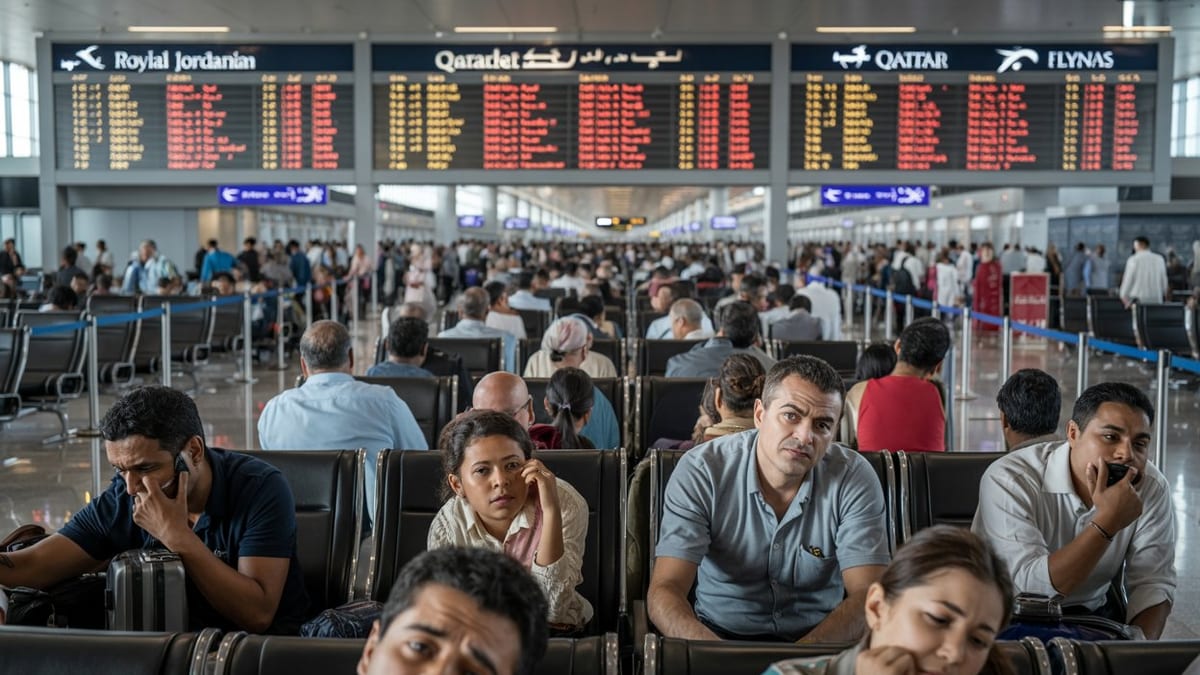
For travelers moving through Detroit, the latest surge of delays and cancellations translated into crowded gate areas, extended waits in customer-service lines and frequent updates to boarding times. Published coverage of earlier disruption events at Detroit has described passengers navigating rebooked itineraries, overnight hotel stays and scrambled plans for meetings, family events and vacations in other cities.
Given Detroit’s role as a major connection point, missed onward flights were a central concern. Passengers bound for destinations in Canada, Germany, the Netherlands and Puerto Rico faced particular uncertainty if their initial flights into Detroit arrived late, leaving insufficient time to clear gate changes and boarding deadlines for international departures.
Travel planning experts often note that when widespread delays develop at a large hub, same-day recovery options can narrow quickly as later flights fill up with rebooked travelers. That dynamic appeared to be in play once again at Detroit, where a combination of fuller planes and limited remaining seat inventory reduced flexibility for those trying to salvage same-day arrivals.
Some travelers may also have encountered complications with checked luggage, particularly when rebooked onto different routings or when overnight stays became necessary. Under such conditions, it is common for bags to travel on separate flights from their owners or to be temporarily held at intermediate airports until new connections can be arranged.
Broader Reliability Questions for a Key Midwest Gateway
The latest cluster of 108 delays and 4 cancellations adds to a growing record of irregular operations at Detroit in recent months. Earlier incidents linked to severe weather and operational ground stops have highlighted how quickly the airport’s role as a major connecting hub can transform localized disruptions into widespread schedule instability.
According to publicly accessible performance data and recent reporting focused on Detroit, Delta and its partners have faced sustained scrutiny over reliability metrics, with travelers noting a perception of more frequent and longer delays than in previous years. While airlines can point to industry-wide challenges such as staffing constraints and tighter aircraft schedules, the experience of passengers passing through Detroit suggests that resilience at key hubs remains under strain.
Alaska Airlines, SkyWest and Endeavor are part of a wider group of carriers grappling with similar issues across the United States and beyond. Many of the routes affected by the latest Detroit disruptions connect into larger national and international networks, meaning reliability problems at one hub can quickly surface in airports thousands of miles away.
For Detroit itself, the episode reinforces the airport’s dual role as both an economic engine for the region and a critical node in international travel patterns. As airlines continue to refine schedules and resource allocation ahead of the peak summer season, the performance of Detroit’s complex web of mainline and regional operations will remain a bellwether for travelers moving between North America and Europe, as well as to island destinations such as Puerto Rico.