


More news on this day
As airfares stabilize but hotel and dining costs continue to climb in Western Europe, new data and destination campaigns indicate that Türkiye and Poland are emerging as the budget-conscious heart of the European city break, drawing visitors with dense heritage quarters, busy festival calendars and comparatively low on-the-ground prices.
Get the latest news straight to your inbox!
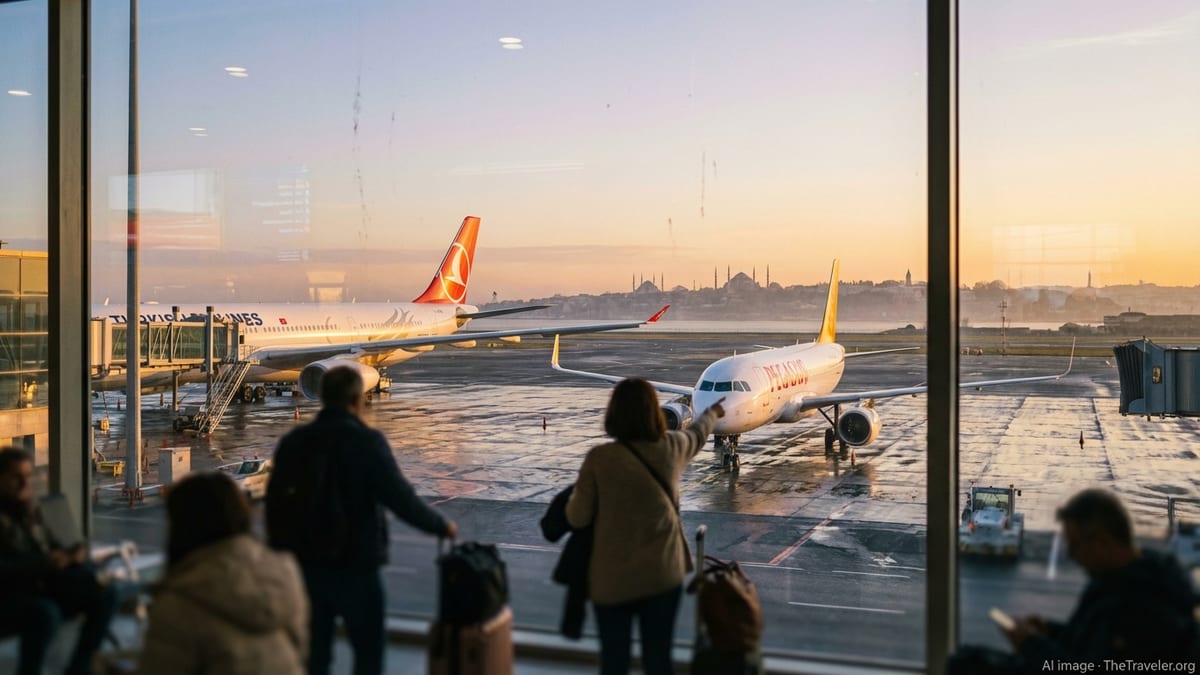
Value Drives a New Eastward Tilt in European City Breaks
Travel industry reports for 2024 and 2025 show that Türkiye and Poland are consolidating their position among Europe’s busiest tourism markets, even as they remain priced below many Western rivals. Turkish tourism authorities report more than 60 million international arrivals in 2024 and a further rise in 2025, with spending per visitor increasing but still competitive by regional standards. In Poland, regional and city tourism bodies describe steady growth in urban arrivals, led by Krakow, Gdansk and Wroclaw.
Price level indices from European statistical agencies place Poland among the least expensive countries in the European Union for household consumption, well below the bloc average. For travelers, that gap translates into lower hotel tariffs, public transport costs and restaurant bills in major Polish cities than in many capital hubs to the west. Parallel analysis of purchasing power in 2025 also highlights that holiday budgets tend to stretch further in Poland than in most eurozone destinations.
Türkiye sits outside the EU price basket, but currency depreciation and a broad supply of mid-range accommodation have kept per-day costs attractive for visitors paying in euros, dollars or pounds. Official tourism data for 2024 and 2025 indicates that most foreign arrivals still come primarily for travel, entertainment and cultural activities, suggesting that urban heritage and experiences, not just resort stays, are key to the sector’s expansion.
Heritage Cities Compete on Culture as Well as Cost
In Türkiye, Istanbul, Izmir and Antalya remain the engines of city-break demand. Istanbul combines Byzantine, Ottoman and modern-era landmarks in compact historic districts, supported by one of the region’s largest international air hubs. Published tourism investment material notes that Istanbul ranks among the top global cities by international arrivals, while Antalya also appears near the top of worldwide city rankings, underscoring the pull of both coastal and cultural travel.
Izmir and Antalya are increasingly promoted as short-break options in their own right rather than solely as gateways to resort belts. Airline marketing and destination campaigns frame them as affordable bases for combining museums, ancient sites and contemporary food scenes with seaside promenades. A dense network of low-cost and regional flights via Istanbul has also made it easier for travelers to tag on two-city itineraries that link major Turkish hubs within a single long weekend.
Poland’s tourism organization positions Krakow, Wroclaw, Warsaw and the Baltic port of Gdansk as leading city-break choices, emphasizing medieval cores, restored market squares and walkable neighborhoods. Recent promotional material describes Krakow as an award-winning city-break destination, with visitor surveys and online competitions ranking it highly for autumn and winter breaks. Gdansk, Wroclaw and the broader Tri-City area are marketed as compact, heritage-rich alternatives that pair historic docklands, Gothic churches and riverside promenades with modern cultural venues.
Festivals and Events Anchor Shoulder-Season Travel
Both countries are leaning on festivals and major events to smooth demand beyond peak summer. In Türkiye, cultural programming ranges from music and film festivals in Istanbul to regional food and folk events in Anatolian cities. Policy analyses note that provincial culture and tourism offices across all 81 Turkish provinces are tasked with conserving heritage while promoting local festivals and fairs, a structure that gives even secondary cities a framework to attract weekend visitors.
In Poland, city tourism strategies for 2024 and 2025 underline the role of large-scale events in sustaining arrivals. Wroclaw’s tourism organization reports a record 6.6 million visitors in 2024 and credits repeated cultural programming for keeping occupancy high. Krakow continues to host film, classical music and Christmas markets that extend the travel season well into late autumn and early winter, while Gdansk’s designation as a UNESCO City of Literature in 2025 is expected to channel more literary and creative festivals into the city’s calendar.
These event-led approaches align with airlines’ push for more year-round capacity on regional routes into both Türkiye and Poland. Low-cost and hybrid carriers advertise weekend-friendly schedules into cities such as Istanbul, Antalya, Krakow, Gdansk and Wroclaw, using festival listings and seasonal markets in their marketing to justify shoulder-season fares and encourage repeat short breaks.
Inflation, Exchange Rates and the New Definition of “Budget”
Strong tourism growth in Türkiye has unfolded against a backdrop of elevated domestic inflation. Analytical notes from the country’s central bank acknowledge the challenge but suggest that, so far, the impact on inbound tourism has been limited. For international travelers, the combination of local price rises and a weaker lira has meant that overall trip budgets often remain lower than in many eurozone capitals, even as individual services in central Istanbul, such as historic attractions and waterfront dining, have moved upmarket.
In Poland, inflation that surged earlier in the decade has eased, and updated purchasing power comparisons from European institutions show that price levels in 2024 and 2025 stay significantly below the EU average. Tourism bodies present this as a key competitive advantage, particularly for euro-area and UK visitors who benefit from favorable zloty exchange rates. In practical terms, destination guidance stresses that travelers can still find central accommodation, local dining and intercity rail tickets at prices that appeal to long-weekend and multi-city planners.
Industry commentators note, however, that the concept of a budget city break has shifted. Travelers are less focused on the absolute lowest price and more on value, weighing heritage access, safety, public transport quality and festival offerings alongside headline costs. In this context, Istanbul’s grand mosques, Krakow’s Old Town, Gdansk’s waterfront and Wroclaw’s riverside islands are marketed not only as affordable but as experiences that deliver a high return on time and money invested.
Blended Itineraries Link Türkiye and Poland in One Trip
Published travel coverage indicates that more visitors are pairing Türkiye and Poland within the same European itinerary, enabled by expanding air links via Istanbul and major EU hubs. Typical patterns include beginning in a Polish city such as Krakow or Gdansk for several days of walking tours, museums and cafe culture before flying south to Istanbul, Izmir or Antalya for warmer weather and late-night dining.
Tourism promotion agencies in both countries highlight these blended routes in their messaging, positioning Poland as a cost-effective, heritage-focused starting point and Türkiye as the climatic and cultural contrast. Multi-stop suggestions often encourage visitors to experience Polish Christmas markets or spring festivals before continuing to coastal Turkish cities for early beach seasons, using overlapping low fares and competitive accommodation rates to keep overall budgets in check.
With Western European capitals facing persistent pressure on hotel prices and visitor caps in some historic cores, Türkiye and Poland are using a mix of heritage conservation, festival-driven programming and favorable cost structures to redefine what a European city break looks like. For many travelers planning trips into 2026 and beyond, that redefinition increasingly points east, toward Bosphorus skylines, Baltic shipyards and riverfront squares where budgets still stretch further than expected.