


More news on this day
Rising travel costs and sluggish wage growth are converging ahead of the 2026–27 winter season, raising concerns that household budget pressures could cool demand for ski holidays, city breaks and long‑haul getaways after several years of post‑pandemic momentum.
Get the latest news straight to your inbox!
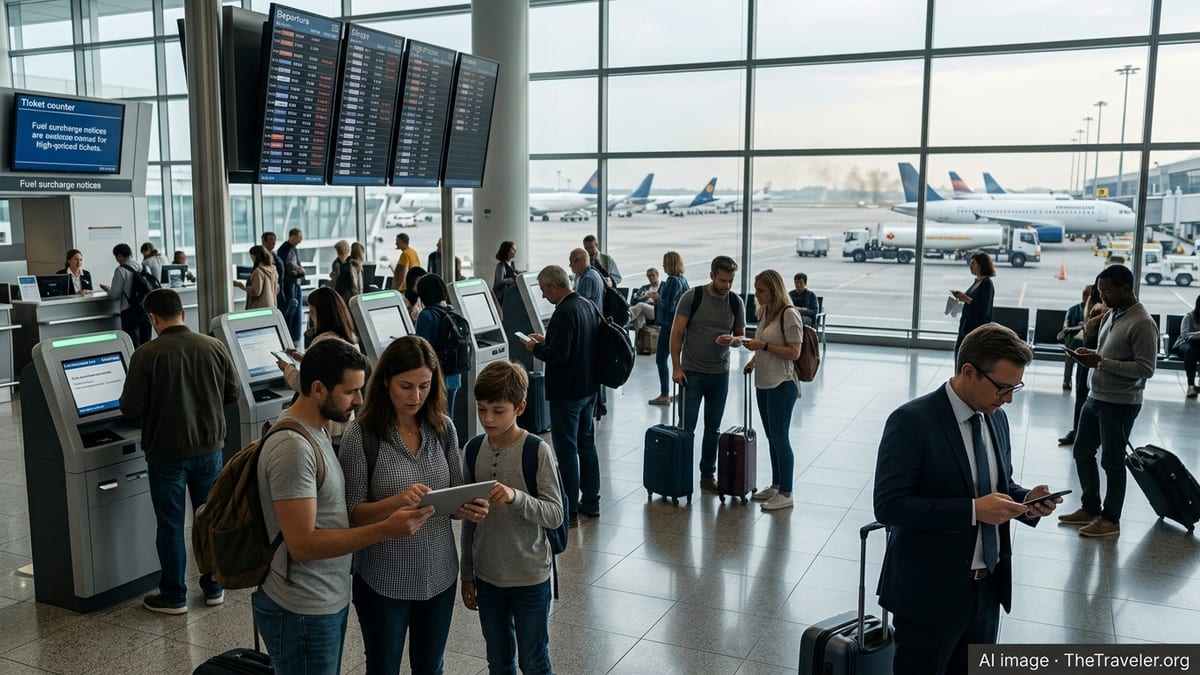
Costs Climb Faster Than Traveler Paychecks
Publicly available data shows that travel prices are still rising faster than many other household expenses heading into late 2026. The U.S. Travel Association’s Travel Price Index for August rose more than twice as fast as the broader Consumer Price Index compared with a year earlier, underscoring how transportation and lodging are taking a growing share of discretionary income.
In air travel, multiple forecasts suggest that higher fares are likely to persist into 2026. Industry reports drawing on International Air Transport Association data indicate that fuel is expected to account for more than 30 percent of airline operating costs this year, up from around a quarter in 2025, a shift that has already prompted carriers to trim capacity on some routes and to rely more on fare and fee increases to protect margins.
Separate outlooks from corporate travel analysts project that the global average air ticket price will notch further gains in 2026 after several years of increases, even if the pace of growth moderates. At the same time, hotel performance data compiled for the U.S. market shows that room revenue is being driven more by higher nightly rates than by rising occupancy, especially in urban and airport locations.
With wages and savings rising more slowly than core travel costs, analysts describe a widening gap between what many consumers would like to spend on winter trips and what their budgets will comfortably allow.
Demand Holds Up, but Travelers Trade Down
Despite the financial strain, surveys conducted in 2025 and 2026 point to a traveler base that is reluctant to give up vacations altogether. Deloitte’s 2026 travel industry outlook found that more than half of Americans intended to travel over the 2025–26 holiday period, but many reported cutting back by shortening trips, choosing cheaper accommodation and staying closer to home.
Summer research from firms including Deloitte and Morning Consult suggests that this “frugal but determined” mindset is carrying into future seasons. Travelers surveyed in mid‑2026 reported planning to spend more in nominal terms on gas, hotels and dining compared with the previous year, while also describing travel as less affordable. Many indicated they would adjust by traveling in the off‑season, mixing budget and premium elements within one itinerary, or trimming the number of trips they take over a year.
Card‑spending analysis published by Bank of America’s Institute in 2026 reinforces the picture of uneven resilience. Total spending on airlines and cruises grew faster than many retail categories in the first half of the year, but growth was concentrated among middle‑ and higher‑income households, while lower‑income spending on lodging and some other travel categories lagged behind.
Taken together, these indicators point to a 2026 winter market in which demand is present but more fragile. Travelers appear ready to book if they perceive value, yet quicker than in previous years to downgrade or cancel when prices jump or household finances tighten.
Winter Travel Hotspots Face a More Price‑Sensitive Visitor
The budget squeeze may be felt most acutely in classic winter destinations such as ski resorts and long‑haul city breaks. Hotel performance data gathered by the U.S. Travel Association shows that, as of late summer 2026, revenue per available room at U.S. resorts had begun to decline year on year even as airport and urban properties recorded modest gains, suggesting that some leisure travelers are already balking at peak‑season rates in traditional holiday areas.
Research shared by accommodation and travel brands ahead of the upcoming ski season indicates that international comparisons are influencing behavior. Analysis of 2025–26 booking patterns cited by one major online travel platform found that, once accommodation, lift passes and on‑the‑ground transport were factored in, week‑long ski trips to parts of Europe often undercut comparable U.S. resort stays by a sizable margin, even after accounting for higher transatlantic airfares. That kind of data has encouraged some price‑sensitive North American travelers to swap domestic mountains for European slopes.
City breaks and cultural trips are also being reshaped by tighter budgets. Reports from travel agencies and booking platforms describe customers trading five‑star hotels for well‑located midscale properties, seeking bundled rail and hotel offers in Europe, and prioritizing destinations where local prices for food and activities remain comparatively low. For some, that has meant shifting from headline capitals to secondary cities in search of lower nightly rates.
At the same time, there are signs that younger, higher‑earning travelers may insulate parts of the winter market from a deeper pullback. Industry outlooks highlight continued strength in premium cabins, luxury lodgings and once‑in‑a‑lifetime trips, even as more mainstream products face heavier discounting pressure.
Industry Response: More Deals, More Fine Print
Travel companies are adjusting their strategies in anticipation of a more cautious winter buyer. The latest U.S. Travel forecast points to only modest real growth in overall travel spending through 2026, encouraging operators to compete harder for each discretionary trip with targeted promotions, loyalty offers and dynamic pricing.
Several air travel and lodging forecasts released in 2026 note that suppliers are leaning on technology and data tools to segment customers more precisely and to vary prices by channel, booking window and flexibility. For budget‑conscious winter travelers, that could mean a wider spread between bare‑bones advance purchase fares and fully flexible options, as well as more aggressive upselling of extras such as seat selection, baggage and room upgrades.
Corporate travel research from Deloitte this year shows that many business travel budgets are expanding again, even as some firms remain selective about trip approvals. That trend may help support weekday demand in major hubs through the winter, but it could also limit the availability of the lowest leisure fares and rates on key routes and dates where corporate travelers are willing to pay more for flexibility and schedule.
Discount brands and online booking platforms, meanwhile, are highlighting tools that allow users to track price drops, compare nearby dates and combine different modes of transport to lower costs. However, consumer advocates caution that travelers may need to scrutinize restrictions and total costs more closely, as the push to advertise low headline prices can sometimes mask higher overall outlays after fees.
What Budget‑Strapped Travelers Can Expect This Winter
For households planning 2026–27 winter trips, publicly available forecasts and recent price trends suggest a mixed landscape. Most analysts expect airfares and hotel rates to remain elevated compared with pre‑pandemic winters, although the pace of year‑over‑year increases appears to be slowing. Slower economic growth and softer booking trends in some markets could translate into more last‑minute deals than in the past few peak seasons, particularly outside major holidays.
At the same time, experts warn that capacity constraints on certain routes and in popular alpine and sun‑seekers’ destinations may keep prices firm around Christmas, New Year’s and school breaks. Early‑season booking data for carriers and resorts indicates that availability in premium segments is holding up, while value‑oriented options and family‑sized accommodations are tightening fastest on peak dates.
Consumer surveys and spending data point to several likely adaptations. More travelers are expected to favor shoulder‑season departures in November or March, bundle flights and hotels through a single provider to lock in fixed pricing, or opt for closer‑to‑home alternatives that reduce both travel time and cost. Others are using accumulated loyalty points to offset airfare or lodging, effectively stretching budgets in an environment of higher sticker prices.
As the winter season approaches, the central question for the industry is how far households can stretch to preserve cherished cold‑weather getaways. With financial pessimism creeping into higher income brackets and lower‑income travelers already scaling back, the coming months will test whether the desire for winter escape can continue to outpace the realities of household balance sheets.