


More news on this day
Amid a new wave of nationwide demonstrations and strike calls in France, the U.S. Embassy in Paris has issued updated security alerts for American citizens, warning of potential violence, localized curfews and serious disruption to transport and tourist activity in major cities.
Get the latest news straight to your inbox!
Embassy Alerts Follow Weeks of Mass Demonstrations
Publicly available information shows that the U.S. Embassy in Paris has issued several recent security alerts tied to protest activity, most recently in the second half of October 2026. A notice highlighted partial overnight curfews in certain areas following large youth led rallies and episodes of unrest in and around Paris, Lyon, Marseille and other urban centers.
The alerts came as France entered a sixth week of recurring demonstrations that began with high school protests over staffing and conditions and evolved into broader marches over living costs and social policy. According to international media coverage, hundreds of thousands of people have taken to the streets nationwide on successive weekends, with the largest rallies drawing more than half a million participants across France.
Coverage from global news agencies indicates that many events have remained largely peaceful, often resembling festive marches by day before giving way to clashes at night on the margins. Police deployments around gathering points such as Paris’s Place de la République have been reinforced, with security cordons, identity checks and restrictions on access after dark.
In response, the Department of State updated its countrywide Travel Advisory for France on October 21, 2026, keeping the overall level at “Exercise increased caution” but adding specific language about recent violence, rioting and the possibility of further unrest. The advisory notes that protests and strikes can erupt with little notice and may turn confrontational.
Heightened Security and Curfews in Popular Urban Areas
Recent advisories from multiple governments describe an increased likelihood of demonstrations and large political gatherings in France’s main cities, sometimes announced only a short time in advance. Canadian, Irish, Australian and British travel advice all highlight the risk of sudden road closures, disruption to public transport and the use of riot control measures when marches escalate.
On several occasions since mid October, authorities have restricted access at night to popular central Paris districts including Place de la République and the Les Halles area, according to international media reports. Travelers reported that these zones, normally busy with nightlife and shopping, were subject to temporary closures or curfews between late evening and early morning hours.
Publicly available guidance notes that France’s Vigipirate security framework remains in force, with a three level alert system that can trigger reinforced patrols by police and military units around transport hubs, tourist attractions and places of worship. Foreign travel advisories published in late October point to an “attack emergency” national threat level that has been in place since 2025, contributing to the heavy security presence now visible around demonstration sites.
While the unrest has not specifically targeted foreign visitors, governments emphasize that crowded protest areas can change quickly from calm to tense. Travelers are urged to avoid large gatherings, follow local media and city authorities for updates on demonstration routes, and be prepared to reroute journeys around major squares and boulevards where marches are scheduled.
Impact on Transport, Tourism Sites and Daily Itineraries
The latest protest calendar circulating in local and regional media highlights coordinated nationwide action days, including rallies scheduled for October 31 and November 5. These large scale events often coincide with sector wide strikes that can significantly reduce train, metro and bus services, affecting both domestic and international travel plans.
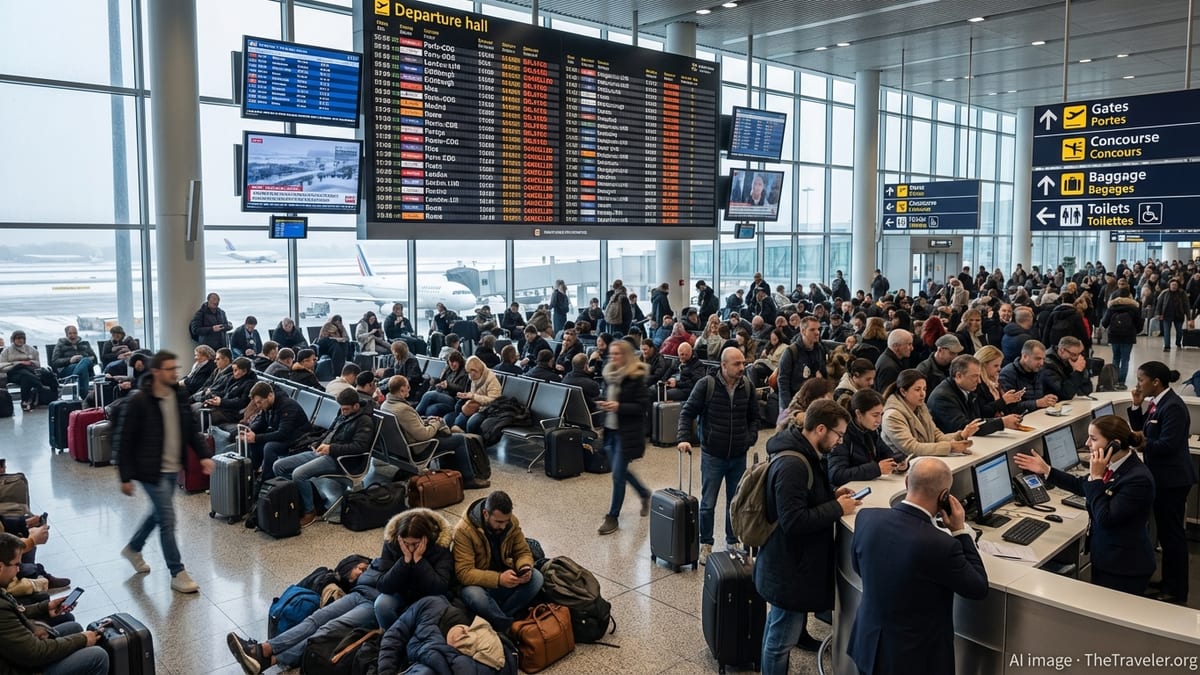
Advisories compiled by foreign ministries and university travel offices warn that transportation disruptions may extend beyond the main protest hours. Travelers could encounter reduced frequencies on suburban rail lines, temporary closures of metro stations in central Paris, and delays or cancellations on intercity routes serving cities such as Lyon, Marseille, Bordeaux and Lille.
Travel forums and recent traveler accounts referenced in public discussions describe short term closures around high profile cultural sites when marches pass nearby. On some of the heaviest protest days in October, visitors reported limited access to certain museum entrances and the temporary closure of nearby streets for crowd control. However, most major attractions, including museums and monuments, have continued to operate outside the peak demonstration windows.
Given the fluid situation, official guidance recommends that visitors build flexibility into daily itineraries, allow extra time to reach train stations and airports, and maintain backup plans if a particular neighborhood becomes difficult to access. Travelers are also encouraged to monitor airline and rail operator announcements, especially on widely publicized national strike days.
Official Guidance for American Travelers in France
According to the U.S. Travel Advisory for France, updated on October 21, 2026, American travelers are advised to exercise increased caution because of the risk of terrorism and civil unrest. The advisory underscores that terrorist groups may consider attacks against public places, including transport facilities, tourist locations and commercial areas, and that unrest linked to protests can further complicate emergency responses.
The Department of State and the U.S. Embassy in Paris encourage U.S. citizens traveling or residing in France to stay alert in crowded locations, keep a low profile around political events and review personal security plans. Public guidance recommends registering an itinerary and contact details with the Smart Traveler Enrollment Program so that alerts and safety messages can be delivered quickly by email or text during a major incident.
Security messages issued from Paris in October specifically referenced local curfew measures, advising Americans to respect all instructions from local authorities and to avoid areas where large youth gatherings and confrontations with police had already occurred. The alerts also emphasized the potential for further spontaneous protests in the days following major national marches.
For travelers planning trips in late 2026, the overall message from publicly available government advisories is that France remains open to visitors, but conditions are more unpredictable in some urban areas. U.S. citizens are urged to stay informed, track protest schedules that may affect their routes, and remain prepared to adjust plans on short notice if the situation on the ground changes.