


More news on this day
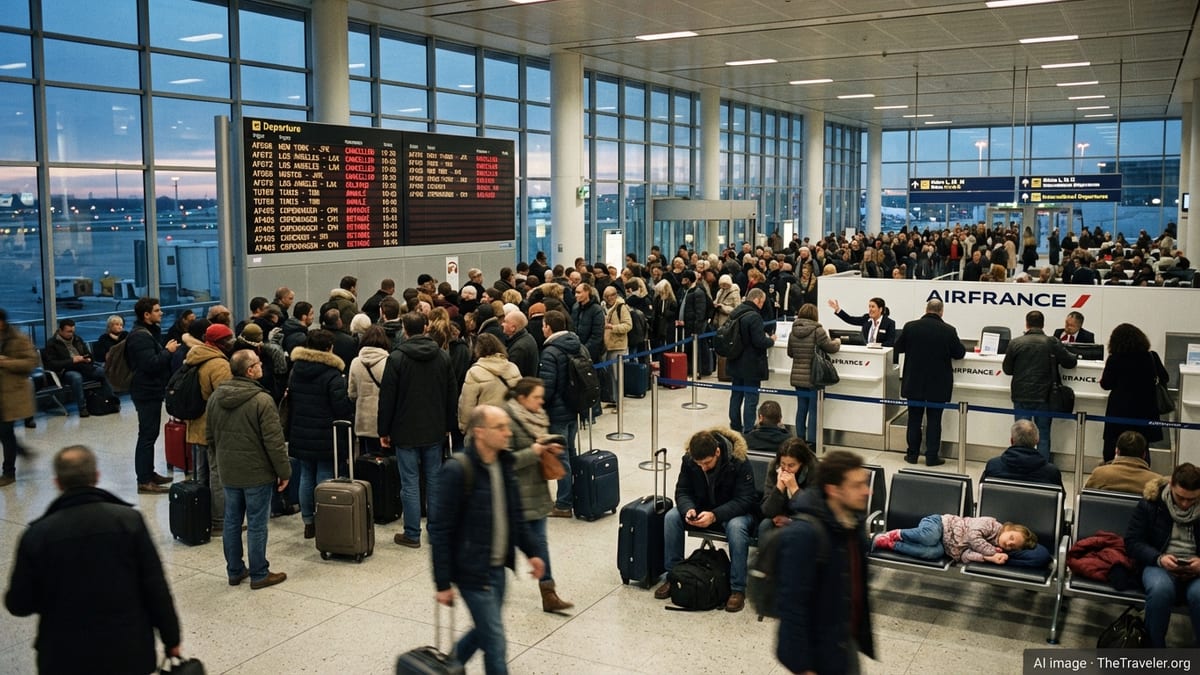
France is bracing for what reports describe as the biggest day of protests yet in a rolling autumn wave of unrest, as a nationwide strike on Thursday, November 5, 2026, disrupts rail links, urban transport and public services and leaves travelers facing cancellations, delays and sudden route changes across the country.
Get the latest news straight to your inbox!
Nationwide strike converges with mounting social unrest
The latest day of action brings together unions, students and the Yellow Vest movement in a coordinated push over wages, living costs and public spending plans. Published coverage indicates that labor federations called the November 5 strike to build on weeks of student-led marches and weekend rallies that have drawn hundreds of thousands of people onto the streets across France.
According to recent reporting, protest groups have been staging weekly nationwide demonstrations since mid-October, with crowds estimated at more than half a million at their peak. Authorities and observers describe an “aggregation of anger” over strained public services, education reforms and the government’s 2027 budget plans, which protesters argue will deepen inequalities.
Interior ministry figures cited in international coverage suggest that around 220 to 250 separate rallies were planned for Thursday, spanning major cities and regional centers. Maps and protest calendars circulated by unions and activist networks list marches in Paris, Lyon, Marseille, Toulouse, Bordeaux, Nantes, Lille and dozens of smaller towns, underscoring the truly national scale of the mobilisation.
The November 5 action comes just days after Halloween-weekend demonstrations that saw largely peaceful daytime marches but also evening clashes in several cities. Publicly available information shows that security services have warned of a high risk of further disturbances as night falls, and have deployed additional officers in urban centers where rallies are expected to be largest.
Trains and metros curtailed as rail unions join the walkout
Travel disruption is centered on the rail network after all four representative unions at SNCF, the national rail operator, joined the call for a strike. Notices from CGT-Cheminots, UNSA-Ferroviaire, SUD-Rail and CFDT-Cheminots confirm participation, with each union highlighting concerns over wages, staffing levels and the long-term future of public rail services.
Advance information compiled by specialist travel and strike-tracking services indicates that TGV high-speed services and TER regional trains are operating on a reduced timetable, with some routes cancelled outright. SNCF has been publishing “transport plans” detailing which trains will run, but these are subject to last-minute changes if staff participation proves higher than expected.
In the Paris region, RER commuter lines and Transilien suburban trains face significant disruption. Forecasts released earlier in the week suggested that on RER B, which links central Paris with Charles de Gaulle airport, as little as half of the usual service would run on the northern section of the line, with about two-thirds operating south of Gare du Nord. Other commuter lines are also reporting curtailed frequencies, resulting in crowded trains at peak times and longer waits on platforms.
Urban networks beyond the capital are also affected. Regional outlets and local operators in cities such as Lyon, Marseille and Toulouse have warned of reduced timetables or cancelled services on tram and bus lines, with priority in some cases given to rush-hour operations. Travelers arriving by long-distance train are being advised to check real-time information before relying on local connections.
Air travel and airports feel indirect pressure
Although no nationwide strike by airline staff or air traffic controllers was scheduled for November 5, the broader transport stoppage is rippling through air travel. Flight-focused advisories note that rail disruption to and from major hubs such as Paris Charles de Gaulle and Orly can cause missed departures and lengthy journeys between city centers and terminals.
Recent guidance for passengers emphasizes that European Union air passenger rules cover disruptions caused by airlines or airport operations, but not difficulties reaching the airport when external transport providers strike. Travelers who miss a flight because a train or bus did not run are generally not entitled to compensation from the airline, underscoring the need for extra journey time on strike days.
Foreign embassies have begun updating their travel advisories to reflect the situation. A notice from the Thai embassy in Paris, for example, urges citizens to prepare for significant delays and possible cancellations on suburban rail lines, particularly RER and regional services, and to monitor live transit apps. Similar messaging from other diplomatic missions encourages travelers to avoid protest hotspots and allow several hours of margin when transiting to airports.
Inside terminals, airport authorities are preparing for surges in car, taxi and rideshare use as passengers divert from disrupted trains. Earlier strike days this autumn have already seen long waits at taxi ranks and heavier traffic on approach roads, especially around Charles de Gaulle, where the dedicated rail link forms a key part of the normal access system.
Road closures and city centers transformed for marches
Within French cities, the main impact for visitors is on surface transport and access to central districts where marches are concentrated. Publicly accessible city briefings indicate that large sections of central Paris, including areas around République, Bastille, Nation and Place d’Italie, are reserved for demonstrations, with rolling road closures as processions move through.
Travel advisories and local media warn that bus routes crossing these neighborhoods may be diverted or suspended during the day of action. Even where services run, heavy congestion and on-the-spot rerouting can make journey times unpredictable. Taxi and rideshare drivers typically continue operating, but may be unable to enter cordoned-off streets or cross certain bridges at key times.
Similar patterns are reported in other major cities. In Lyon, restrictions affect central avenues and squares where protest routes have been moved away from the very heart of the city after previous clashes. In Marseille, access to the Vieux-Port and nearby arteries can be limited as marches assemble or disperse. For travelers with hotel reservations in historic cores, reaching properties by car may require detours or short walks from drop-off points outside the most affected zones.
Security services have also expanded the use of crowd-control measures such as temporary barriers and, in some areas, aerial surveillance around schools and government buildings. Rights organizations and legal observers note growing concern about the scale of bans on certain routes and gatherings, particularly in cities that experienced more serious unrest during October’s protests.
Practical advice for travelers in France today
For visitors already in France, the primary recommendation from official and expert sources is to build flexibility into any itinerary for November 5. Travelers are urged to check rail and metro apps several times on the day, rather than relying solely on printed schedules, and to verify the status of long-distance trains a few hours before departure.
Those heading to airports from central Paris are widely advised to allow significantly more time than usual, especially if relying on RER or Transilien services. Where feasible, hotel staff can assist with booking taxis in advance or suggesting alternative routes that use a combination of metro, tram and walking to bypass the most affected sections of the network.
Visitors planning intercity journeys may wish to consider adjusting departure times to avoid the busiest protest windows, which cluster around late morning and mid-afternoon. If a planned rail service is cancelled, public information suggests that SNCF generally offers rebooking on later trains at no extra charge during strike periods, subject to seat availability.
Travelers who prefer to avoid demonstrations altogether can steer clear of known gathering points in major cities and instead focus on districts away from administrative centers and major squares. While the atmosphere in many areas remains calm and day-to-day life continues, the combination of large crowds, visible police deployments and sporadic clashes in certain locations makes situational awareness essential on what is shaping up to be one of the most disruptive protest days of the season.