


More news on this day
Operations at Jakarta’s Soekarno-Hatta International Airport have been heavily disrupted after ash from Indonesia’s Anak Krakatau volcano prompted widespread flight cancellations and temporary airspace closures over the capital region.
Get the latest news straight to your inbox!
Airspace Closures and Widespread Flight Disruptions
Publicly available information shows that airspace around Jakarta’s Soekarno-Hatta International Airport was temporarily closed on Sunday, September 6, following a significant eruption at Anak Krakatau in the Sunda Strait. Notices to airmen indicated a suspension of operations during the afternoon and evening as volcanic ash drifted across key approach paths.
Indonesia’s state-owned airport operator InJourney Airports recorded hundreds of affected movements at Soekarno-Hatta, including cancellations and delays, as airlines adjusted schedules or rerouted aircraft away from the ash cloud. English-language coverage from the national news agency Antara reported that more than 700 scheduled services at the airport experienced disruption after the eruption, with a substantial share canceled outright as visibility and airspace conditions deteriorated.
Domestic and regional flights were particularly affected because Soekarno-Hatta is Indonesia’s primary aviation hub, linking the capital with cities across Java, Sumatra and beyond. Travel industry monitoring platforms and flight-tracking data indicated sharp drops in realized departures and arrivals on Sunday compared with normal weekend traffic levels at the airport.
Additional coverage from international media described scenes of crowded terminals and long waiting times as airlines worked through rebooking backlogs. With Soekarno-Hatta handling the majority of Indonesia’s international connections, the impact quickly spread to long-haul routes and onward itineraries that rely on Jakarta as a regional gateway.
Airlines Cancel Services and Extend Disruptions
Major carriers serving Jakarta moved quickly to adjust operations once volcanic ash was detected in the vicinity of flight corridors. AirAsia announced through its newsroom that all flights to and from Jakarta were canceled or rescheduled in response to the temporary closure of Soekarno-Hatta, citing the ash risk along approach and departure paths and the need to protect passengers and crew.
Indonesian low-cost group Lion Air published multiple updates explaining that numerous services to and from both Soekarno-Hatta and Jakarta’s secondary Halim Perdanakusuma Airport were canceled. An English-language statement dated Monday, September 7, indicated that several Lion Group flights would remain canceled up to 6 p.m. local time as schedules were progressively rebuilt and aircraft repositioned.
Other regional and full-service airlines also adjusted schedules as the situation unfolded, either canceling flights outright or implementing rolling delays while waiting for clearance to operate safely around the ash cloud. Timetables on airline websites and booking platforms showed limited availability on many Jakarta routes for at least 24 hours after the initial closure, reflecting both residual operational constraints and the effort to accommodate stranded passengers.
Reports from local media highlighted that some international services opted to divert to alternative Indonesian airports or regional hubs when en route to Jakarta, while others held at origin until airspace restrictions became clearer. This created knock-on effects across networks, with aircraft and crew displaced from their planned rotations.
Traveler Experience at Indonesia’s Busiest Hub
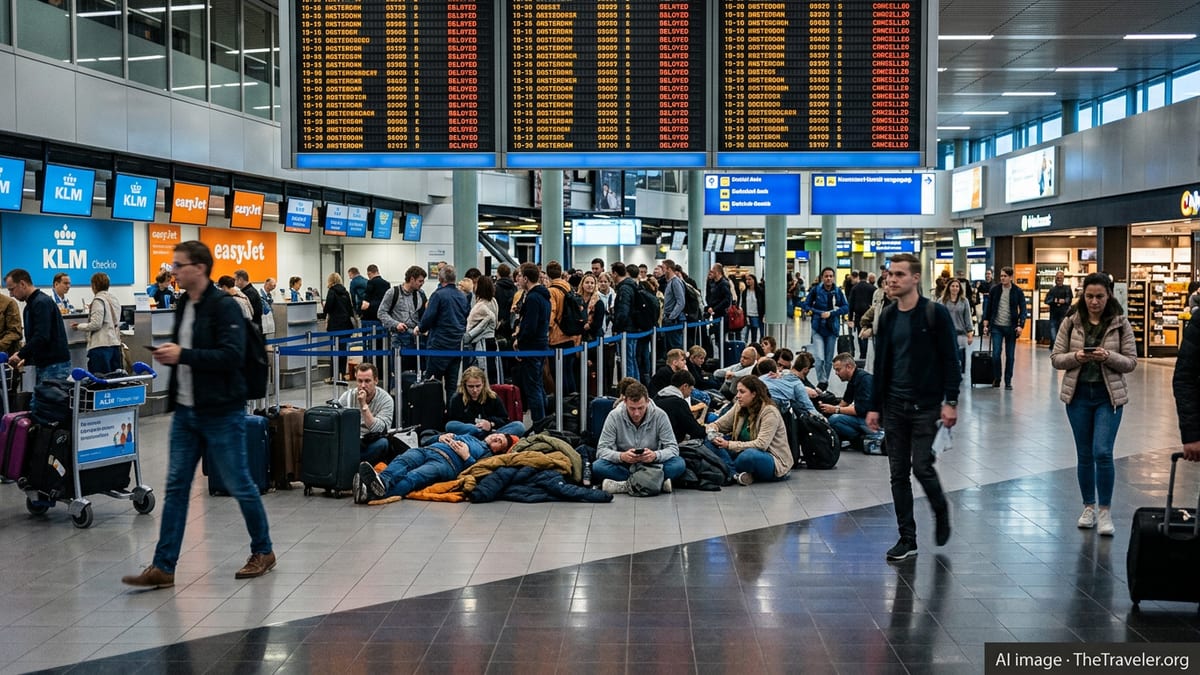
The rapid onset of airspace restrictions left many travelers facing unexpected overnight stays and extended waits in terminals. Images shared by news outlets and social media users showed departure boards at Soekarno-Hatta dominated by canceled or delayed status messages, along with long lines at check-in counters and airline service desks.
Local coverage from Jakarta-based outlets described passengers queueing for hotel vouchers, alternative flight options and ticket refunds as airlines worked through growing backlogs. With the disruption coinciding with a weekend travel period, a mix of domestic leisure travelers, business passengers and international transit customers were caught up in the cancellation wave.
Airlines used websites, mobile apps and messaging to communicate rebooking options and updated departure times, though intermittent connectivity and the sheer volume of affected customers led to reports of difficulty reaching call centers and online support channels. Some travelers opted to switch to rail or road transport for shorter intercity journeys on Java and Sumatra once it became clear that flights would not resume quickly.
At Halim Perdanakusuma Airport in eastern Jakarta, which handles a smaller share of scheduled commercial traffic, similar scenes of disruption were reported. The facility, like Soekarno-Hatta, is located within areas covered by volcanic ash advisories and was included in the list of airports subject to temporary closure periods.
Government Response and Safety Priorities
Public statements from Indonesia’s Ministry of Transportation outlined an emphasis on aviation safety in decisions about closing and reopening airports affected by Anak Krakatau’s ash plume. Ministry updates referenced multiple airports in western Indonesia subject to extended closure hours on Monday, September 7, including Soekarno-Hatta, Halim Perdanakusuma and several facilities in Sumatra and Banten.
According to ministry publications, operational status has been determined based on data from volcanic monitoring agencies, meteorological reports and assessments of ash concentration at flight levels. Notices issued for Soekarno-Hatta specified defined windows of closure followed by periods of gradual resumption, enabling air traffic managers and airlines to test conditions before restoring more intensive schedules.
Indonesia sits along the Pacific “Ring of Fire,” and aviation protocols in the country incorporate lessons from previous eruptions that affected flight operations, including earlier activity at Anak Krakatau itself. The current response reflects established procedures that prioritize avoiding engine damage and visibility loss in ash-contaminated airspace, even when the resulting cancellations significantly disrupt travel demand.
National media reports also pointed to broader coordination between transport and disaster-management agencies monitoring the volcano. While the eruption has been dramatic, coverage to date has focused primarily on its impact on air travel and localized ash fall rather than on large-scale evacuations, with the most immediate disruption concentrated in the transportation sector.
Ongoing Monitoring and What Travelers Can Expect Next
As of Monday, September 7, authorities and airport operators continued to monitor Anak Krakatau’s activity and the movement of its ash cloud, with the potential for further adjustments to flight schedules if conditions change. Airline statements emphasized that any decision to resume or increase services at Jakarta’s airports would depend on updated assessments from aviation and meteorological agencies.
Travelers with near-term itineraries involving Soekarno-Hatta or Halim Perdanakusuma are being advised, through publicly available airline guidance, to check flight status frequently and to allow extra time at the airport once operations restart. Flexible travel policies introduced in response to the eruption typically include options to rebook without change fees, request credit vouchers or, in some cases, pursue refunds on canceled flights.
For the broader travel industry, the disruption serves as a reminder of Jakarta’s vulnerability to natural hazards originating far from the capital’s urban core. Anak Krakatau sits in the Sunda Strait between Java and Sumatra, yet its ash has been tracked across multiple provinces, reflecting the wide geographic footprint that a single volcanic event can have on aviation and tourism flows.
Tour operators and hotels in Jakarta and surrounding regions are watching demand trends closely as the situation evolves. Early indications from booking platforms and local tourism stakeholders suggest that many travelers are postponing nonessential trips to or through Jakarta until flight operations stabilize, even as airlines and airports work to restore normal schedules in the days ahead.
Antara News: Anak Krakatau eruption cancels 209 Soekarno-Hatta flights
AirAsia newsroom: Flights impacted by Anak Krakatau eruption
Lion Group: Flight cancellations due to Anak Krakatau
Al Jazeera: Anak Krakatau eruption shutters Indonesian airports