


As international roaming fees stay stubbornly high, more travelers are turning to eSIMs to stay online abroad. Airhub is one of the many players in this crowded market, but mixed user experiences and patchy reliability have pushed a lot of frequent flyers to look elsewhere. If you are planning a trip in 2026 and want solid connectivity without nasty surprises, it is worth understanding the strongest Airhub alternatives and when they make more sense for your itinerary.
Get the latest updates straight to your inbox!
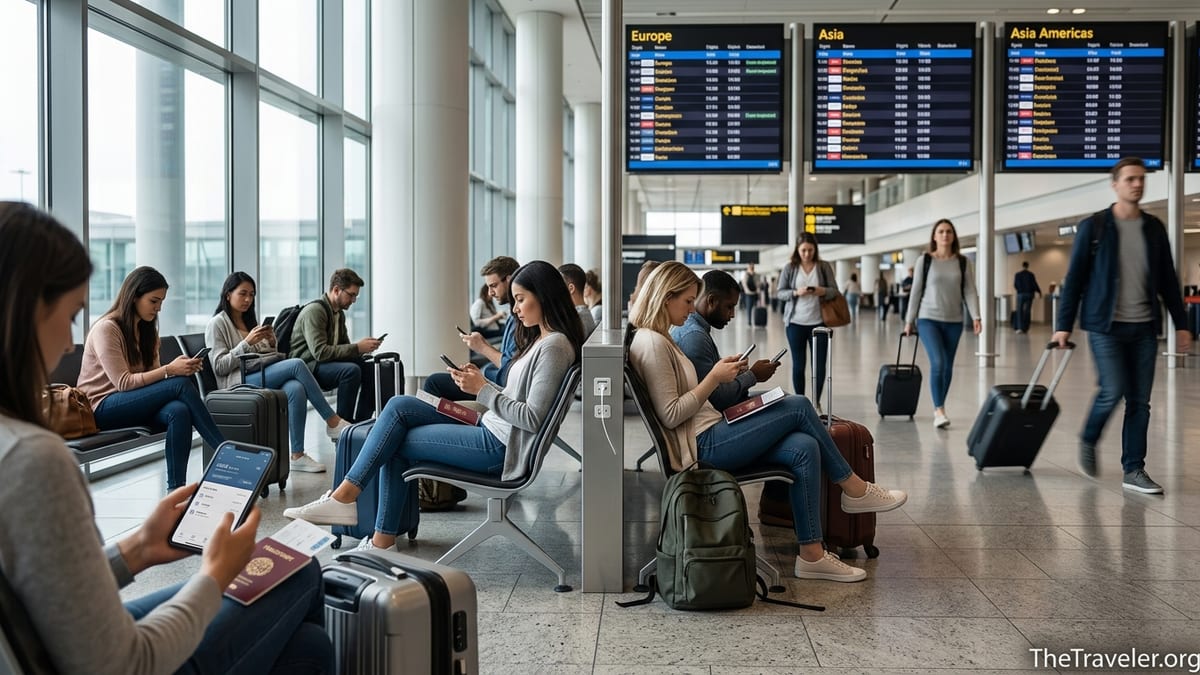
Why Travelers Are Looking Beyond Airhub
Airhub sells prepaid data, calls, and SMS eSIMs across many countries and promotes itself as a simple, low-cost way to avoid traditional roaming. In practice, reviews are highly polarized. Some users report smooth setup and cheap data, but others describe connections dropping mid-trip, plans deactivating early, or slow responses from customer support. It is this inconsistency that has led many travelers to treat Airhub as a risky bet rather than a dependable default.
The pain points tend to show up at the worst possible moments. Travelers have reported losing data service after only a few days of a 30-day plan, or landing in a new country to discover that the Airhub QR code will not activate and that support is only reachable by email with multi-hour delays. If you are relying on that data to order an airport rideshare in an unfamiliar city, a failure like this is more than an inconvenience.
Another concern is transparency around networks and fair use limits. Some Airhub plans advertise large data bundles at very low prices, but real-world users sometimes find that speeds are throttled after heavy use or that the advertised coverage does not match the actual partner networks on the ground. None of these issues are unique in the eSIM world, yet other providers have built stronger reputations by communicating limitations more clearly and backing them with responsive support.
Because of this, an increasing number of digital nomads, backpackers, and business travelers now treat Airhub as a last resort and instead rely on a small set of better-established eSIM brands. The alternatives below are the ones that repeatedly show up in independent tests and real trip reports as offering a steadier balance of price, coverage, and reliability.
Airalo: The Broad-Coverage Marketplace
Airalo is often the first name people encounter when they search for travel eSIMs, and for good reason. It offers coverage in more than 200 countries and regions through a mix of local, regional, and global plans. Instead of a single generic global SIM, you can choose, for example, a country-specific eSIM for Japan, a regional plan that works across much of Europe, or a Discover Global eSIM that covers a large set of destinations on one profile.
Pricing is typically mid-range rather than rock-bottom, but still far cheaper than roaming with a US carrier. For instance, for travel in the United States, Airalo has historically offered data-only plans that start around the cost of a few dollars for 1 GB valid for a week, with larger bundles like 5 GB or 20 GB valid for 30 days. Those prices shift over time, but they illustrate the general order of magnitude: a weekend city break might cost less than what a big carrier would charge for a single day of international roaming.
In real-world terms, Airalo excels when you are hopping between several countries and want one app to manage everything. A traveler flying from New York to Lisbon, making a side trip to Barcelona, then continuing to Morocco can buy three separate country plans inside the same interface, or a broader regional plan to simplify things. In testing by major tech publications, setup typically takes only a few minutes: scan the QR code, install the eSIM, and toggle it on as you land.
The trade-offs are important to understand. Most Airalo plans are data-only, so there is no local phone number for calls and SMS. Apps like WhatsApp, Signal, and iMessage fill most of that gap for many travelers, but if you frequently need to receive SMS codes for banking or make local voice calls, you might need a separate solution such as a VoIP number or a different eSIM provider that offers voice service. For heavy users, a local physical SIM or a specialist unlimited provider can sometimes be cheaper than stacking multiple high-data Airalo bundles.
Holafly: Unlimited Data for Heavy Users
Holafly has carved out a niche with its focus on unlimited-data travel eSIMs. Instead of calculating whether 3 GB or 5 GB will be enough for your 10-day trip, you pick an unlimited package for a specific destination or region and stop worrying about the meter. Holafly now covers well over 190 countries, including major destinations in Europe, Asia, and the Americas, and has introduced global plans that include a phone number on some tiers.
This model is particularly attractive for travelers who stream a lot of video, use maps constantly, or tether a laptop throughout the day. Imagine you are working remotely from a month-long apartment stay in Rome; you might be using dozens of gigabytes for video calls, backups, and streaming. An unlimited eSIM can be more predictable than juggling multiple capped plans that might each throttle you after a certain point.
There are caveats. Holafly’s unlimited plans generally cost more upfront than the smallest bundles from competitors, and “unlimited” often still comes with a fair use policy. That can translate into speed reductions after very high usage, especially on crowded networks. In practice, though, many travelers report comfortably using navigation, social media, and moderate streaming without hitting painful slowdowns during typical vacations.
One realistic scenario where Holafly shines is for a family trip. If you and your partner both need data and you have a teenager streaming music and video, coordinating multiple small data packages can become tedious. Buying two or three unlimited eSIMs for the adults and relying on phone hotspots for the kids can be simpler, even if the total cost per gigabyte is slightly higher than with the cheapest capped plans on the market.
Nomad, Saily and Ubigi: Value-Focused All-Rounders
Beyond the biggest names, a trio of providers tends to come up repeatedly in 2026 comparison guides as strong all-round Airhub alternatives: Nomad, Saily, and Ubigi. Each has a slightly different personality, but all three focus on transparent pricing, straightforward apps, and broad destination coverage.
Nomad positions itself as a budget-conscious yet reliable option. Plans often start at only a few dollars for small data allowances in popular destinations, with options like 1 GB for a week or 5 GB for a month across many countries in Europe and Asia. Independent tests frequently highlight its clean app and simple onboarding: you can purchase and install a plan within minutes of landing at a hub such as London Heathrow or Singapore Changi.
Saily, backed by a major security company, leans into ease of use and integrated privacy features. Its global plans are designed to be as close to “set it and forget it” as possible, making it a good fit for travelers who are not especially technical. For example, someone visiting multiple cities on a guided tour across Central Europe can activate Saily once at the start of the trip and rely on it quietly handling network switches in the background, often bundled with optional security tools such as ad blocking or basic web protection.
Ubigi, on the other hand, has long experience in the connectivity space and is integrated into certain connected cars and tablets. For travelers, that translates into robust coverage, particularly across Europe and parts of Asia, and a mix of daily, 15‑day, and 30‑day eSIM plans. A road-tripper driving from Paris through Germany to Austria can, for instance, use a single Ubigi Europe plan across the route instead of juggling local SIMs in each country. The pricing tends to sit in the middle of the pack, but its reliability and clear documentation make it a strong substitute for Airhub in regions where it is strong.
Maya, aloSIM and Flexiroam: When Regional Strength Matters
In some cases, the best Airhub alternative is not the one with the biggest global marketing budget, but the one that is especially strong in the region you are visiting. Three providers that increasingly stand out in real-world reports are Maya, aloSIM, and Flexiroam.
Maya has built a reputation for particularly competitive pricing and solid speeds across many Asian destinations, while still offering global coverage that reaches well over a hundred countries. A backpacker doing a circuit from Bangkok to Hanoi and onward to Bali might find that Maya’s regional Southeast Asia plans undercut larger brands on price without sacrificing much in performance. The ability to buy a single plan that covers multiple stops reduces the risk of running out of data mid-bus-ride or during a cross-border train trip.
aloSIM often earns praise for reliability and partnerships. In countries like the United States, it leans on strong underlying carrier networks, which means visitors arriving at airports such as Los Angeles or Chicago can typically get online within a minute of landing. Its app makes it easy to top up data mid-trip without reinstalling the eSIM, and in some markets aloSIM is known to work seamlessly with third-party services that can provide a temporary phone number for calls and texts.
Flexiroam, one of the earlier players in the eSIM arena, is still relevant for travelers who prioritize flexibility. Its data-only eSIMs can be handy for long-term travelers who move slowly across regions and want to keep topping up a single profile rather than juggling multiple short validity plans. For instance, a digital nomad spending several months rotating between Kuala Lumpur, Singapore, and Bali might keep a Flexiroam eSIM active and add data as needed while relying on local Wi‑Fi where available.
Local eSIMs, Roaming Add-ons and Other Practical Alternatives
Replacing Airhub does not always have to mean selecting another global eSIM brand. Depending on your destination and travel style, a local eSIM from a domestic carrier or a fairly priced roaming add-on from your home provider can be more practical. Increasingly, major carriers in Europe and Asia sell eSIMs directly through their websites and retail stores, often with tourist-oriented plans that bundle data with local calls and SMS.
Consider a traveler from the United States spending two weeks in Tokyo. Instead of using Airhub, they might buy a Japanese carrier’s tourist eSIM at the airport, which could include several gigabytes of data plus an allowance of local calls for restaurant reservations and train information lines. The total cost will often be comparable to or better than international eSIM providers, especially when factoring in voice minutes and domestic SMS.
Similarly, some US and European carriers now offer international passes that, while not as cheap as the very lowest-cost eSIM providers, can be sensible for short corporate trips. For example, a three-day business visit to Toronto where you must retain your primary number for two-factor authentication and client calls might be less hassle with a roaming day pass than with a separate eSIM. In that scenario, the premium is really paying for continuity and simplicity rather than raw data value.
Hybrid setups are increasingly common too. A frequent traveler might keep a main physical SIM with their home carrier, use its roaming pass for very short trips, rely on a provider such as Airalo or Nomad for multi-country vacations, and still occasionally pick up a local eSIM in destinations where it is clearly cheaper or offers better speeds. The common theme is flexibility rather than total loyalty to any single provider, especially not to one with as uneven a track record as Airhub.
How to Choose the Right Airhub Alternative for Your Trip
Choosing the best Airhub alternative starts with clarifying your own priorities. If you are price-sensitive and comfortable managing data usage, providers with small, cheap bundles like Nomad or Maya can offer excellent value. Business travelers who cannot tolerate downtime might lean toward well-established players such as Airalo, Holafly, or Ubigi, whose apps and support channels have been extensively tested by large numbers of users and independent reviewers.
Destination is the next crucial variable. Before you buy, check whether a provider is using top-tier local networks in the countries you are visiting or relying on lower-priority roaming agreements. For a trip across Western Europe, a regional eSIM from Airalo, Saily, or Ubigi that specifically names the countries you will visit is often more reliable than a generic global plan. In parts of Africa or Central Asia, coverage maps may be more patchy, and in those cases it is sensible to compare several providers or consider a local carrier’s offering.
Support should not be an afterthought. One of the major criticisms of Airhub has been slow or unhelpful responses when something goes wrong. When evaluating alternatives, look for companies that offer 24/7 in‑app chat or at least a well-documented support flow. A traveler arriving in Istanbul at midnight who cannot activate their eSIM will care far more about getting through to a real person in minutes than about saving a dollar or two on the plan.
Finally, consider how eSIMs fit into your broader connectivity strategy. For a once-a-year vacation, it may be enough to pick a single well-reviewed provider and forget about the rest. For digital nomads, location-independent workers, or students studying abroad, building familiarity with two or three trusted eSIM brands plus local options can reduce the risk of being caught offline in a critical moment. The key is to treat Airhub as just one of many options, not an automatic default.
FAQ
Q1. Why should I consider an Airhub alternative instead of sticking with Airhub? Many travelers find Airhub’s pricing attractive, but reports of inconsistent service, dropped connections, and slow support make it less reliable than competitors. If you depend on stable data for navigation, messaging, or work, using a provider with a stronger record for uptime and customer care reduces the risk of being stranded offline mid-trip.
Q2. Which Airhub alternative is best for a multi-country Europe trip? For a typical itinerary covering several countries in Europe, options like Airalo, Nomad, Saily, or Ubigi are often more practical than Airhub. They offer regional Europe eSIMs that work across many neighboring countries on one profile, making border crossings seamless. The best choice depends on current pricing and the specific countries on your route, so it is worth comparing plans before you buy.
Q3. I use a lot of data. Which provider is better than Airhub for heavy usage? If you routinely stream video, tether a laptop, or work remotely, Holafly’s unlimited plans can be a good alternative to Airhub’s capped bundles, especially on trips lasting a week or more. Just keep in mind that “unlimited” usually includes fair use policies that may reduce speeds after very high usage, so it is still wise to avoid nonstop high-resolution video streaming where possible.
Q4. Are Airhub alternatives more expensive than Airhub? Not necessarily. Airhub sometimes advertises very low headline prices, but once you factor in reliability, plan validity, and potential top-ups, its real cost can be similar to or higher than rivals. Providers like Nomad, Maya, and Airalo often have small data packages priced competitively, and local carrier eSIMs in your destination can sometimes be cheaper still, especially when they include local calls.
Q5. Can I get a local phone number with an Airhub alternative? Yes, but not every provider offers this. Most eSIM brands focus on data-only plans, while a few, such as Holafly on certain global packages or local carrier eSIMs, include a phone number for calls and SMS. If you need to receive verification codes or make regular local voice calls, check carefully whether the plan you are buying includes voice and text, or consider pairing a data-only eSIM with a separate VoIP or virtual number service.
Q6. Is it safe to switch between several eSIM providers while traveling? For most modern smartphones that support multiple eSIM profiles, switching between providers is safe and routine. Many frequent travelers keep several eSIMs installed at once, such as a global plan and one or two local or regional plans, and simply toggle the active line as needed. The main thing to watch is that your device remains locked with a passcode and that you only purchase eSIMs from reputable apps and official carrier channels.
Q7. How do I know if my phone can use an Airhub alternative eSIM? You will need an eSIM-compatible device, which includes most recent iPhone models and many newer Android handsets. To check, open your phone’s settings and look for an option to add a mobile or cellular plan. If your device mentions eSIM or allows you to scan a QR code to add a plan, you can use Airhub alternatives such as Airalo, Holafly, Nomad, or local carrier eSIMs without extra hardware.
Q8. What happens if my eSIM from an alternative provider stops working during the trip? If your eSIM fails mid-trip, first try the basics: restart your phone, toggle airplane mode, and ensure data roaming is enabled for that line. If the issue persists, contact the provider’s support through their app or website. One advantage many Airhub alternatives have is faster support via in‑app chat or detailed troubleshooting guides. As a backup, consider downloading at least one extra eSIM app before you travel, so you can quickly purchase a new short-term plan if needed.
Q9. Are local physical SIM cards still a better option than Airhub alternatives? In some destinations, a physical SIM from a local carrier can still beat eSIMs on price, particularly for long stays with high data usage. However, eSIMs offer clear convenience advantages: you can install them before you land, avoid searching for a kiosk after a long flight, and keep your primary number active. For shorter trips and multi-country itineraries, many travelers now find eSIMs more practical than queueing for a physical SIM at every border.
Q10. How far in advance should I buy an Airhub alternative eSIM? Most providers allow you to purchase an eSIM days or even weeks before departure, but activation usually starts when you first connect in the destination. A sensible approach is to compare plans and complete the purchase the day before or the day of your flight, then install the eSIM while you still have reliable Wi‑Fi at home or at the airport. That way, when your plane lands and you switch off airplane mode, your alternative eSIM is ready to go without the stress of last-minute setup.