


More news on this day
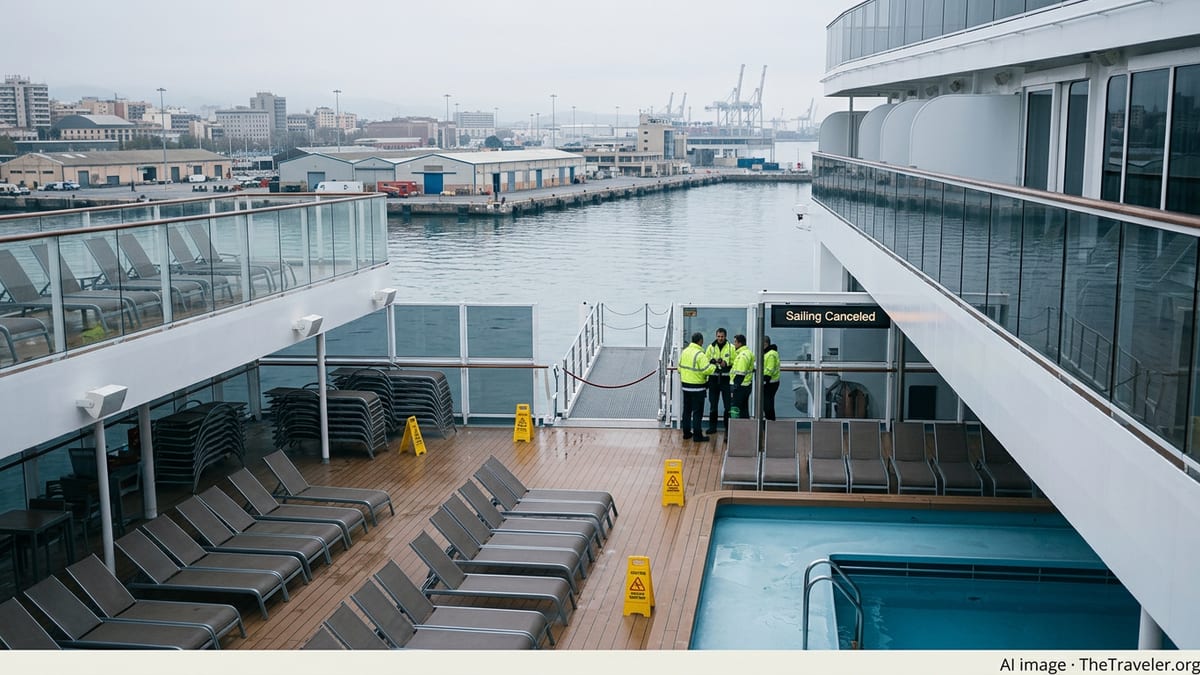
A coordinated walkout by tourist bus operators on Santorini has prompted cruise lines to cancel all scheduled calls to the Greek island on Monday, June 22, disrupting plans for thousands of passengers at the height of the Aegean season.
Get the latest news straight to your inbox!
Island Transport Stoppage Ripples Across Cruise Schedules
According to published coverage from Greek and cruise industry media, Santorini’s association of tourist bus operators declared a 24 hour abstention from work, effectively suspending the main means of moving cruise passengers between the tender pier, Fira and the island’s most visited villages. With no guarantee of ground transport for shore excursions or independent touring, multiple cruise lines elected to remove Santorini from itineraries for the day.
Reports indicate that at least three large cruise ships scheduled to anchor off Santorini on June 22 have canceled their calls, turning the day into an unplanned sea day or redirecting to alternative ports. Industry tracking suggests that the affected vessels collectively represent more than 8,000 passengers, highlighting how dependent cruise operations are on local bus capacity at tender ports such as Santorini.
The decision to cancel en masse reflects operational and safety concerns. Without organized buses to disperse crowds from the tender landing, thousands of visitors would have been funneled into the narrow cable car corridor and steep footpath up the caldera, a flow that local stakeholders have already described as strained on busy summer days.
Travel forums and cruise community discussions in recent weeks had already warned of pressure on Santorini’s transport network this season, urging passengers to allow extra time for tenders and transfers. The bus stoppage has sharply exposed those vulnerabilities in a single day of concentrated disruption.
Dispute Tied to New Limits on Cruise Visitor Numbers
The walkout is closely linked to a new management framework for cruise tourism on Santorini. Publicly available local documents outline a berthing and passenger allocation system for 2025 and 2026 aimed at capping daily cruise arrivals and spreading ship calls more evenly across the season.
Regional media describe a so called “70 30” approach that divides passenger capacity between advance allotments and more flexible space, as authorities seek to balance cruise demand with the island’s infrastructure limits. The policy sits alongside an 8,000 passenger per day ceiling and new peak season levies on cruise visitors stepping ashore.
Reports indicate that bus operators view the current framework as threatening the viability of their businesses, arguing that the combination of stricter caps and changing allocations leaves them with reduced, less predictable volumes. The one day abstention has been framed as a protest aimed at pushing for revisions to the system and for a greater say in how cruise flows are managed.
The dispute comes against a backdrop of wider debate over overtourism in the Cyclades. Santorini, in particular, has been singled out in recent years as a symbol of crowded alleys, long queues and infrastructure stretched by short, intense peaks in visitor numbers delivered by cruise tenders and day trips.
Cruise Lines Adjust Itineraries and Passenger Guidance
Cruise tracking data and industry reports show that affected ships have chosen a mix of responses to the strike. Some vessels have dropped Santorini entirely for June 22, substituting an additional sea day and revising onboard programming. Others have adjusted timing, attempting to re schedule their Santorini call for a different day when regular transport is expected to resume.
Passengers booked on these itineraries are being notified through line specific channels, with guidance to monitor official cruise apps and onboard announcements for revised port times and excursion options. Based on information shared through cruise communities, many pre booked shore excursions tied to Santorini for June 22 have been automatically canceled, with refunds or onboard credit offered according to each line’s policy.
For future calls later in the season, cruise companies are expected to review contingency plans for days when local transport disruptions arise. These may include scaling back passenger loads for tender operations, modifying call durations, or enhancing communication about the island’s transport constraints so guests can plan independent touring more conservatively.
Travelers with upcoming Aegean sailings are being encouraged in publicly available advisories to watch for updates not only from their cruise line but also from national and local news sources covering industrial actions in the Greek tourism and transport sectors.
Impact on Local Businesses and Visitor Experience
While the primary operational impact of the bus strike has fallen on cruise lines and passengers, the cancellation of all calls in a single day also affects Santorini’s onshore economy. With several thousand fewer day trippers arriving, shops, cafes, tour companies and seasonal workers who rely on cruise traffic face a sudden, if temporary, drop in revenue at the start of the peak summer period.
Local commentary in Greek media underscores the tension between short term economic losses and longer term concerns over quality of life for residents. Some stakeholders have argued that reducing crowding and regulating cruise arrivals more strictly could make the island more sustainable, even if it means fewer high volume days like those that have become common in recent years.
For visitors, the disruption adds another layer of uncertainty to planning in a region where strikes among transport and tourism workers are a recurring feature of the summer calendar. Passengers who had hoped to see Santorini’s caldera, Oia’s sunsets or the archaeological site of Akrotiri during a brief cruise call are now facing the prospect of missing the island entirely, at least on this voyage.
Travel experts often advise that iconic but infrastructure constrained destinations such as Santorini are especially vulnerable to these kinds of stoppages, and that travelers with a strong wish to visit may prefer longer land based stays that offer more flexibility around individual days of disruption.
What Cruise Passengers Should Do Now
For those booked on cruises scheduled to visit Santorini in the coming days and weeks, publicly available guidance stresses vigilance and flexibility. Passengers are urged to check their itinerary before departure, monitor for notifications about possible timing changes, and review the terms and conditions associated with shore excursions and port cancellations.
Prospective travelers may also wish to consider how reliant their planned day in Santorini is on organized bus transport. Options such as exploring Fira on foot from the cable car station, using licensed taxis where available, or simply enjoying views from onboard the ship can offer partial alternatives when full scale coach operations are constrained.
The current strike is officially limited to one day, and there is an expectation in local coverage that regular services will resume afterward. However, the underlying dispute over cruise visitor management remains unresolved, suggesting that further negotiations and, potentially, additional industrial action could resurface later in the 2026 season.
In a year when Greece is recording strong cruise demand and the eastern Mediterranean is drawing increased capacity, the Santorini stoppage serves as a reminder of how quickly a single link in the tourism chain can affect travel plans for thousands of people, even when ships, seas and skies are otherwise clear.