


More news on this day
A wave of 126 delayed departures at Cairo International Airport has triggered severe travel disruption on key regional and long haul routes, with EgyptAir, Emirates and Qatar Airways racing to rebook passengers and stabilize schedules on flights bound for London, Dubai and Jeddah.
Get the latest news straight to your inbox!
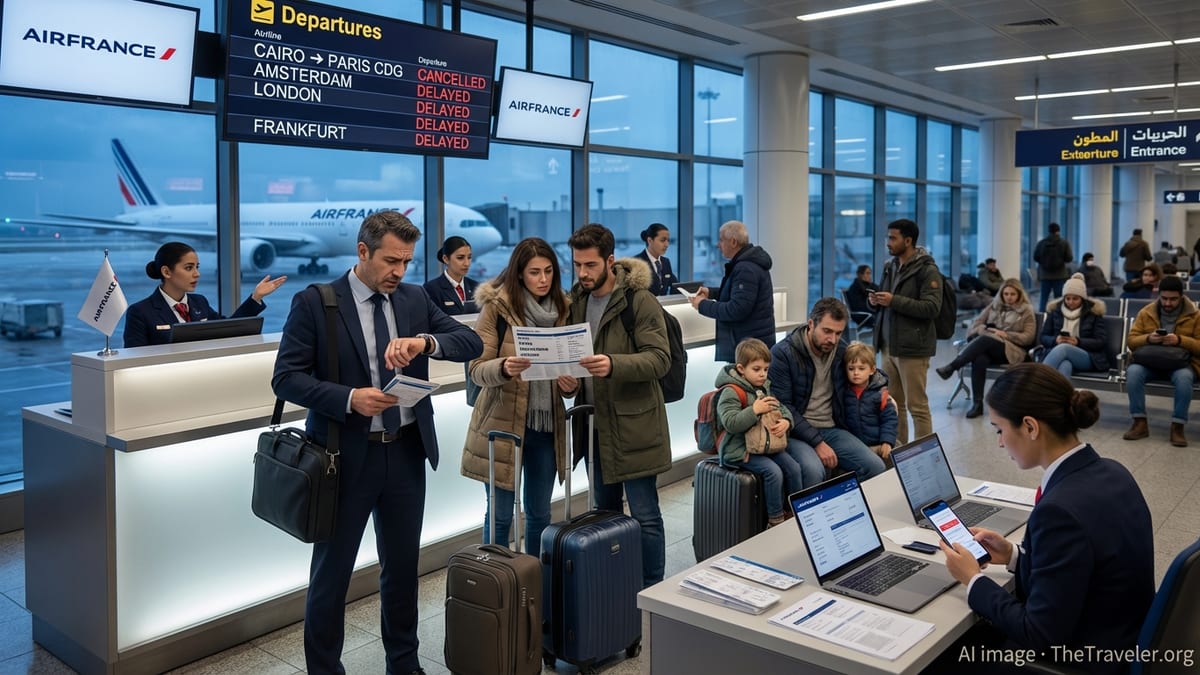
Major Hub Struggles Under Sudden Operational Strain
The disruption has hit Cairo International Airport at a time when traffic through Egypt’s primary gateway has been growing, with recent public data showing year on year increases in passenger volumes and aircraft movements. The latest episode of delays has exposed how quickly pressure can build when punctuality deteriorates on multiple banks of departures.
According to published airport data and independent flight tracking platforms, dozens of services to major transit hubs and religious travel gateways were affected, with rolling delays accumulating across several hours. The knock on effect left transfer passengers stranded between connections and created heavy queues at check in, security and boarding points.
Previous reporting on Cairo’s operations has already highlighted vulnerabilities created by infrastructure bottlenecks and airspace constraints across the wider Middle East. The current spike in delayed departures appears to have amplified those underlying stresses, particularly during peak departure waves when several wide body aircraft are scheduled to depart in quick succession.
Travel industry analysts note that when large numbers of departures are pushed back at a hub like Cairo, airline control centers often need several scheduling cycles to re balance aircraft and crew, meaning disruption can persist well beyond the initial incident that triggers the delays.
Key Routes to London, Dubai and Jeddah Disrupted
Publicly available flight information shows that services from Cairo to London, Dubai and Jeddah were among the most heavily disrupted, reflecting their importance as high demand corridors for business, leisure and religious travel. These routes are typically operated by a mix of national and Gulf carriers, with EgyptAir, Emirates and Qatar Airways among the most visible brands on departure boards.
Services to London link Cairo with one of Europe’s busiest hubs and are vital for onward transatlantic and intra European connections. Even moderate delays on these flights can cause passengers to miss tightly timed onward links, prompting a cascade of rebookings and overnight stays that strain both airline and airport resources.
Dubai bound flights represent another critical artery, feeding connections across Asia, Australasia and Africa. Schedules published by airline and travel platforms show a dense pattern of Cairo Dubai services across the day, so extended disruption on this route can quickly clog gate areas and put pressure on ground handling and baggage systems as multiple delayed departures overlap.
Jeddah, as a primary gateway for pilgrims and workers traveling between Egypt and Saudi Arabia, is particularly sensitive to schedule reliability. Delays on this corridor can have outsized impact on group travel, especially when large tour groups or religious travelers move on fixed itineraries that leave little room for missed departures.
EgyptAir, Emirates and Qatar Airways Activate Contingency Measures
Airlines with significant operations at Cairo appeared to move quickly to manage the disruption, based on publicly available statements and customer guidance distributed through official channels and travel partners. EgyptAir, as the home carrier, has in earlier incidents promoted the use of its digital tools and call centers to help passengers track real time flight status and request changes when delays extend.
Emirates and Qatar Airways, both heavily reliant on precise scheduling to feed their global connecting banks in Dubai and Doha, typically respond to major delay events by adjusting connection windows, prioritizing certain transfer flows and coordinating with partner airlines. Industry observers indicate that such measures were again in evidence as Cairo’s delays began to impact onward connections to Europe, North America and Asia.
Reports from travel agents and passenger forums describe long waits at transfer desks as customers sought new routings, as well as expanded use of self service tools to rebook itineraries without visiting a physical counter. These accounts suggest that while airlines were able to keep most delayed flights operating rather than canceling outright, the cumulative effect on onward journeys was significant.
Available operational data also points to aircraft and crew being re assigned across networks in order to restore rotations disrupted by the Cairo delays. This kind of recovery plan can take several days to fully normalize schedules, meaning travelers departing well after the initial incident may still experience altered departure times or equipment changes.
Passengers Confront Long Queues, Missed Connections and Uncertain Plans
For passengers on the ground, the rapid build up of delayed departures translated into crowded terminals, extended waits at security lanes and uncertainty about departure times. Social media posts and traveler reports referenced repeated changes to boarding times for flights to London, Dubai and Jeddah, as well as confusion among connecting passengers about whether they would make onward flights.
Disruption of this scale often places particular pressure on families, elderly passengers and those with limited language skills or tight visa conditions. Some travelers reported concerns about overstaying transit permissions or missing visa appointments and events in destination cities due to missed connections and overnight delays.
Consumer advocates underscore that, when extensive delays occur, travelers should keep boarding passes, receipts and written confirmation of new itineraries in case they decide to pursue compensation or reimbursement under applicable regulations. While rules differ between jurisdictions and carriers, documentation of the delay and its consequences is often essential.
Travel insurers also tend to see a spike in claims after major hub disruptions, especially from passengers who incur additional accommodation, meal or ground transport costs. Market observers indicate that the latest Cairo episode is likely to generate a similar pattern as affected travelers return home and begin filing claims.
Guidance for Travelers Using Cairo in the Coming Days
Given the scale of the recent disruption, aviation analysts suggest that passengers booked to travel through Cairo in the short term should build in additional time and take a more proactive approach to monitoring their journeys. Publicly available airline guidance consistently stresses the importance of checking flight status through official channels before leaving for the airport.
Passengers with tight connections in London, Dubai or Jeddah may wish to contact their carriers or travel agents in advance to explore options such as earlier feeder flights into Cairo, longer connection windows or, where possible, rerouting via alternative hubs. Such measures can reduce the risk of missed onward flights if residual delays continue to affect certain departure banks.
Observers also note that carrying essential items such as medications, chargers and a change of clothes in cabin baggage can ease the impact of unexpected overnight stays or lengthy time in terminal areas. While these steps cannot prevent disruption, they can help travelers remain more comfortable and flexible when schedules change at short notice.
Published coverage of the latest delays reinforces a broader message that Cairo International Airport, like many major hubs, is operating close to capacity during peak periods. For travelers, that reality makes careful itinerary planning and vigilant monitoring of real time updates increasingly important when using Cairo as a gateway to London, Dubai, Jeddah or beyond.