


More news on this day
A wave of delays affecting roughly 20 departures and arrivals at Cincinnati/Northern Kentucky International Airport on Sunday triggered cascading disruption across several key Midwest and East Coast routes, snarling travel plans for passengers bound for Chicago, Dallas, and New York on Delta Air Lines, American Airlines, and United Airlines.
Get the latest news straight to your inbox!
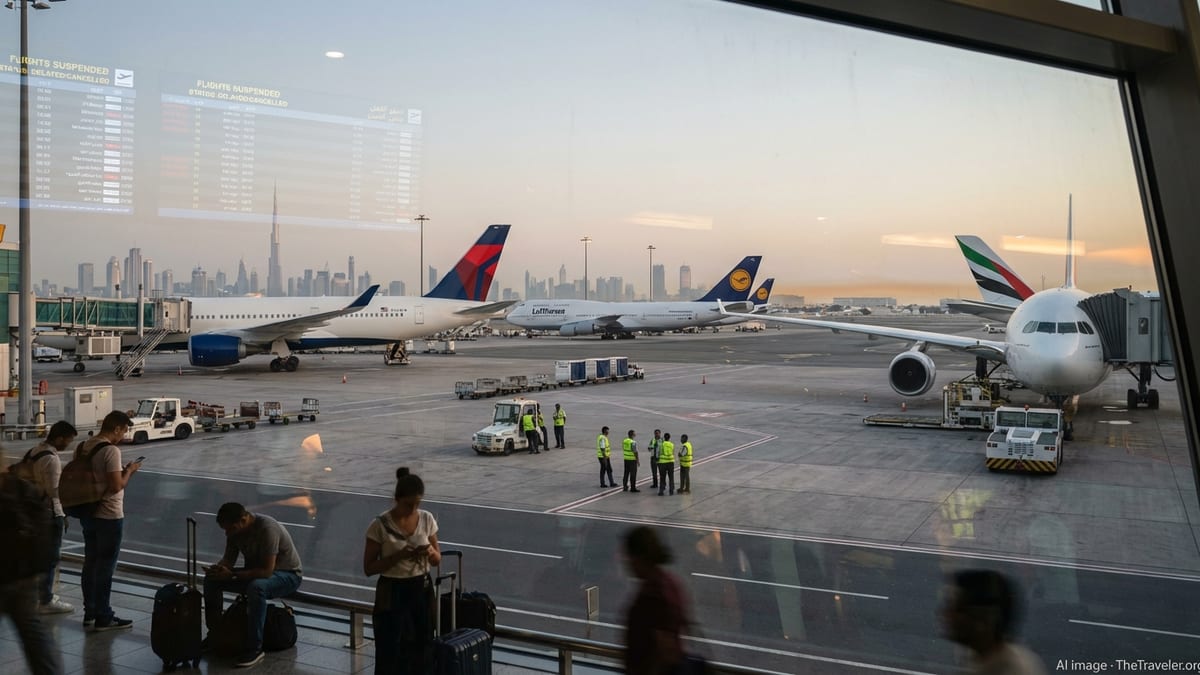
Cluster of Delays Snarls CVG Operations
Publicly available flight boards for Cincinnati/Northern Kentucky International Airport on Sunday indicated a concentrated band of delays across afternoon and evening departures, including multiple services to major hubs. The disruption involved a mix of regional and mainline flights, with some pushed back by more than an hour and others experiencing rolling, shorter holds at the gate. Tracking data showed the impact extending to connections at Chicago O'Hare, Dallas Fort Worth, and New York area airports.
Operational data across airline and aviation tracking platforms pointed to around 20 affected flights within a several hour window, a significant spike compared with typical patterns at the airport. While cancellations remained limited, the timing of the delays during peak connection periods amplified the knock-on effects for travelers, particularly those relying on tight links to onward domestic and international services.
Reports from consumer-facing delay monitors described the issues as part of a broader pattern of schedule strain in the national network during May, with Cincinnati serving as a focal point for some Midwest routing challenges. The airport, which functions as a key regional hub and a connective node for multiple carriers, saw gate changes, reassignments, and re-timed departures as airlines worked to keep aircraft and crews in position.
Delta, American, and United Adjust Midwest Schedules
Delta Air Lines, American Airlines, and United Airlines, all of which operate multiple daily departures from Cincinnati to Chicago, Dallas, and New York, appeared to absorb the brunt of the disruption. Flight tracking services showed select Delta and American departures from Cincinnati to Dallas Fort Worth and connections into Chicago O'Hare running behind schedule, with revised departure times and updated estimated arrival times posted throughout the day.
On the Chicago corridor, United and American both had aircraft departing Cincinnati toward O'Hare under delay advisories, according to live schedule feeds. Even modest schedule slips on these high-frequency routes can cascade through the system, affecting aircraft availability for subsequent rotations and compressing connection windows at one of the country’s busiest hubs.
Services into New York area airports, including John F. Kennedy and LaGuardia, also showed timing adjustments on Sunday based on flight tracking data. Several Delta and American regional jets operating between Cincinnati and New York were listed with delayed pushback or arrival times, which can complicate afternoon bank structures at those congested East Coast gateways.
Publicly available timetables and recent federal air travel reports suggest that the three carriers have already been operating in a tight scheduling environment in 2025 and early 2026, particularly during weather and demand spikes. The latest Cincinnati disruptions added another layer of complexity to network management at a time when airlines are under scrutiny for on-time performance.
Weather, Airspace Congestion, and Crew Positioning Cited as Factors
While a single dominant cause for Sunday’s Cincinnati disruption was not immediately evident in early reporting, aviation trackers and recent federal consumer reports point to a familiar cluster of contributing factors. Spring weather patterns in the Midwest and along key jet routes into Chicago, Dallas, and New York have repeatedly triggered ground holds, reroutes, and airborne spacing in recent weeks, tightening already crowded schedules.
Airspace management advisories from recent storm events show how convective weather and low ceilings in hub regions can instantly reduce arrival and departure capacity, forcing carriers to delay or resequence flights even when local conditions at an origin airport appear relatively stable. When those constraints intersect with peak weekend demand, relatively small disruptions can quickly widen into multi-airport bottlenecks.
Industry analyses and recent government air travel consumer reports have also highlighted crew and aircraft positioning as an ongoing vulnerability. When earlier flights in an aircraft’s rotation or a crew’s duty day are disrupted, subsequent segments out of cities such as Cincinnati can be held while operators adjust duty time, aircraft swaps, and maintenance clearance. Sunday’s pattern of staggered delays across several carriers at CVG mirrored this type of ripple effect often seen during busy travel periods.
Knock-On Impacts for Passengers Across the Network
The immediate effect for travelers at Cincinnati and downline hubs was a mix of missed connections, extended layovers, and compressed transfer times. Passengers booked on itineraries connecting through Chicago, Dallas, and New York faced particular challenges, as delays on the initial Cincinnati leg reduced the buffer built into schedules to absorb minor disruptions.
According to consumer travel advisories that have circulated since early spring, one recurring recommendation for passengers flying through Midwest and East Coast hubs has been to build in longer connection windows and to monitor flight status proactively on day of travel. Sunday’s events at Cincinnati illustrated the reasoning behind that guidance, as same-day rebooking options tightened once a critical mass of flights in and out of the airport picked up delays.
The disruption also underscored the vulnerability of regional routes feeding into large domestic and international banks at major hubs. Even where long-haul flights from Chicago, Dallas, or New York remain on time, delayed feeder flights from cities like Cincinnati can leave travelers racing across terminals or facing overnight stays. Aviation analysts have noted that such dynamics can amplify passenger frustration even when headline cancellation numbers stay comparatively low.
Airlines and Airport Emphasize Real-Time Updates and Resilience
In the wake of the latest round of delays, publicly available guidance from airlines and federal transportation agencies continues to emphasize the importance of real-time information for travelers. Carriers including Delta, American, and United direct passengers to monitor mobile apps and airport displays for gate changes and revised departure times, particularly during periods of active weather systems or high demand.
Recent policy updates and consumer reports also highlight expanded use of travel waivers during large-scale disruption events, allowing passengers to change itineraries without additional fees when weather or air traffic constraints significantly impact operations. While Sunday’s Cincinnati disruptions did not appear to reach the scale of nationwide storm-related events earlier in the season, they fit into a broader pattern of operational volatility that has kept travelers alert to waiver announcements and schedule changes.
Airport planning documents and service reports for Cincinnati/Northern Kentucky International Airport note ongoing efforts to bolster resilience, including gate expansion, upgrades to passenger information systems, and coordination with airlines on schedule planning. As the busy summer travel season approaches, the latest cluster of delays at CVG serves as a reminder of how quickly conditions can shift across the interconnected networks linking Midwestern airports with major national hubs.