


Alberta’s two big cities often get bundled together, but for travelers, Calgary and Edmonton offer very different experiences. One is the jumping-off point for the Rocky Mountains and a polished, sunlit downtown. The other leans into big festivals, a legendary mega-mall, and a surprisingly creative food and arts scene. If you are planning a trip in 2026 and wondering which city fits your style, this guide breaks down how Calgary and Edmonton actually feel on the ground, what they cost, and which is the better base for the kind of itinerary you have in mind.
Get the latest updates straight to your inbox!
Overall Vibe: Western Energy vs Festival City
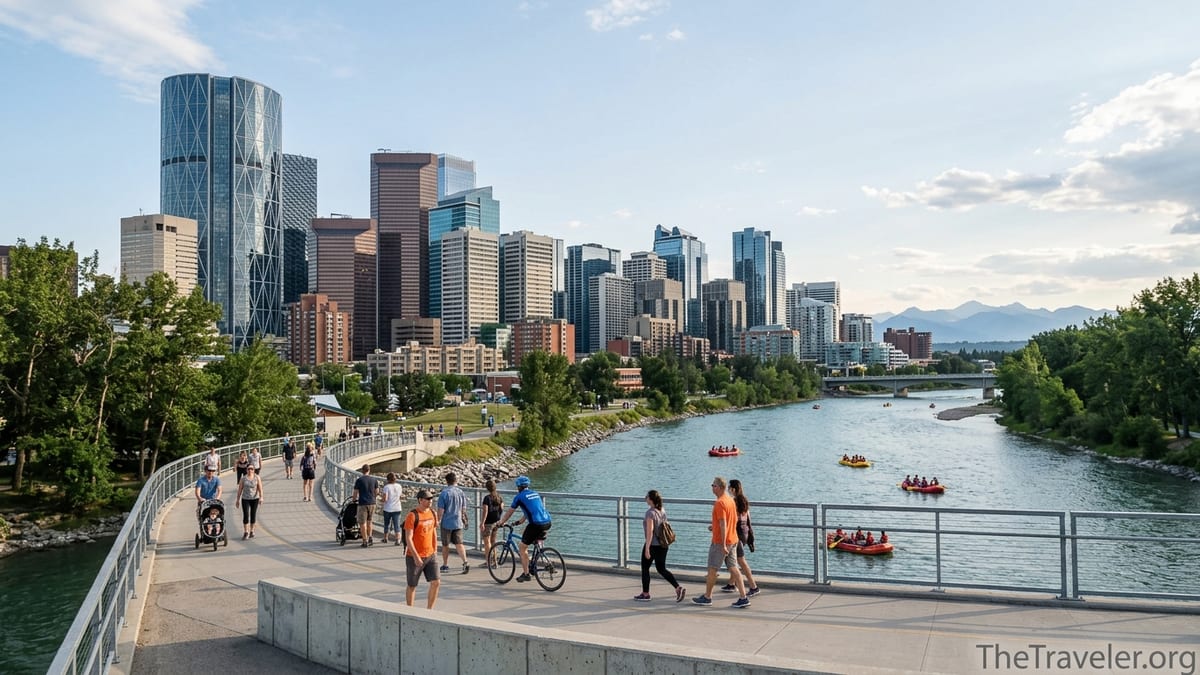
Calgary feels like a modern, confident city that grew up on oil money and mountain dreams. The downtown core is dense and walkable, with sleek towers, new condo developments, and the Bow River pathway threading green space through the center. On a summer afternoon, you will see office workers eating lunch along Prince’s Island Park, cyclists commuting on separated bike lanes, and rafting groups floating lazily down the river. The city brands itself as a gateway to the Rockies and it shows: outdoor gear shops, mountain tour desks, and hotel lobbies buzzing with people coming back from Banff or Canmore.
Edmonton’s energy is different. The capital of Alberta stretches out along the North Saskatchewan River in a series of neighborhoods that feel more local and less polished. The downtown has been steadily improving, but many visitors fall in love with the city’s river valley park system and artsy districts like Old Strathcona around Whyte Avenue. In summer, patios are busy and side streets fill with small music venues, craft breweries, and fringe theaters. Locals often say Calgary is a great city to visit and Edmonton is a great city to live in, and that sums up the more community-focused feeling you get walking around.
If you want a compact first impression of “big city Canada” with plenty of skyline photos, Calgary fits the bill. If you prefer discovering local haunts, street murals, independent cafés, and a slightly scruffier but more creative atmosphere, you may feel more at home in Edmonton.
Getting There and Getting Around
Both cities are easy to reach by air from major Canadian and US hubs. Calgary International Airport sits about 17 kilometers northeast of downtown. Recent airport guides put driving time at roughly 20 to 30 minutes in normal traffic, and travelers typically pay around 40 to 55 Canadian dollars for a metered taxi into the core, with rideshares often coming in closer to 20 to 40 dollars depending on demand. Budget-minded visitors can use Calgary Transit’s Route 300 airport bus, which connects to the CTrain light rail and gets you downtown in about 45 to 55 minutes, at a day-pass style fare that is higher than a regular ticket but still far cheaper than a taxi.
Edmonton International Airport is farther from the city, about 30 to 35 kilometers south of downtown. A taxi into the city center usually runs in the 60 to 75 Canadian dollar range, and rideshares can be a bit cheaper. Public transit here is more basic: an express bus links the airport to the Century Park LRT station, where you transfer to the train for downtown or the University of Alberta. The total trip by bus and LRT is usually around an hour, so it works well if you are packing light and staying near a train stop.
Within each city, you can comfortably visit main sights without a car, at least in summer. In Calgary, the CTrain’s Red and Blue lines run through downtown and out to key neighborhoods; many downtown hotels sit within a few minutes’ walk of a station, and the core has a fare-free zone that makes short hops between attractions effortless. Edmonton’s LRT system is smaller but convenient for reaching areas like downtown, Rogers Place arena, the university, and Whyte Avenue. In both cities, rideshare coverage is strong and bike share or e-scooter programs typically operate during the warmer months, giving visitors flexible ways to explore.
Costs, Hotels, and Practical Budgeting
Calgary is generally a bit pricier than Edmonton, but both still feel more affordable than Vancouver or Toronto. A recent national hotel trends report from early 2026 shows the average daily rate in Calgary in the mid to high 150-dollar range, with downtown properties pushing above that, and Edmonton’s citywide average a little lower, closer to the high 130s to low 140s. In real terms for travelers, a standard midrange downtown room in either city often lands around 170 to 230 dollars per night before taxes, with occasional deals just under 150 in Edmonton, especially outside peak summer or big-event dates.
To make this concrete, in summer 2026 you might see a recognizable midscale chain like a Holiday Inn or Best Western in downtown Calgary pricing standard rooms around 190 to 230 Canadian dollars on a midweek night. In downtown Edmonton, similar brands often post rates closer to 160 to 210 for the same dates. Upscale options such as Calgary’s Fairmont Palliser or Edmonton’s riverside Fairmont Hotel Macdonald typically start above 300 dollars a night in high season and climb significantly when there are major conventions or festivals.
Day-to-day costs are similar between the two cities. A casual sit-down meal in a central neighborhood usually runs 20 to 30 dollars per person before drinks; a craft beer in a bar is often 7 to 9 dollars; a standard coffeehouse latte ends up around 5 to 6 dollars. Calgary’s lack of provincial sales tax is shared with the rest of Alberta, so you will see only goods and services tax added at the till. Both cities offer plenty of budget choices, from food courts in central malls to fast-casual chains and ethnic eateries where you can easily eat for under 15 dollars per person.
For travelers watching every dollar, Edmonton tends to be slightly more forgiving on hotel and rental costs, while Calgary often compensates with better value on tour logistics to the Rockies, since you avoid an extra leg of driving or shuttles from farther away.
What You Will Actually Do: Key Attractions in Each City
Calgary’s main draw for many visitors is its proximity to the mountains, but the city itself has plenty to fill two or three days. The Calgary Tower, rising above downtown, offers panoramic views that stretch toward the Rockies on clear days. Along the Bow River, Prince’s Island Park hosts summer festivals and is a favorite picnic and jogging spot. Nearby, the Eau Claire and East Village areas mix condos with cafés, breweries, and riverfront promenades. Families gravitate to the Calgary Zoo and the Telus Spark Science Centre, while culture-minded travelers spend time at the Glenbow, a major museum of art and history now in the midst of a significant renewal project, and performance venues like Arts Commons and the Jack Singer Concert Hall.
Edmonton, on the other hand, is home to West Edmonton Mall, a destination-sized shopping and entertainment complex whose indoor water park, ice rink, and amusement rides can easily occupy a full day. But the city is more than its mall. The Royal Alberta Museum and the Art Gallery of Alberta anchor the downtown cultural district, and the Legislature grounds offer lawns, fountains, and guided tours of the provincial parliament. The North Saskatchewan River valley, often called one of the largest urban park systems in North America by area, provides dozens of kilometers of trails, picnic spots, and viewpoints like those in Hawrelak Park or Victoria Park.
For nightlife and dining, Calgary’s 17th Avenue SW and the Beltline neighborhood are packed with restaurants, bars, and patios that spill onto the street in summer. In Edmonton, Whyte Avenue in Old Strathcona delivers a slightly grittier mix of pubs, vintage stores, comedy clubs, and live music spaces. Travelers who like to walk out of their hotel and be surrounded by options will likely prefer staying near these streets.
Seasonality, Weather, and Festivals
Both Calgary and Edmonton experience long, cold winters and short but lovely summers. Calgary is famous for its sunshine; locals regularly point out that the city enjoys a high number of sunny days even in the snowy season. Winter temperatures often hover slightly milder than Edmonton’s, though cold snaps can hit both cities hard. For travelers, that extra degree or two sometimes makes Calgary a bit more comfortable for winter walking days, especially when you can duck into the city’s network of enclosed walkways connecting downtown buildings.
Edmonton has a well-earned reputation as a festival city, especially from June through August. The Edmonton International Fringe Theatre Festival, one of the largest fringe festivals in the world, takes over Old Strathcona for nearly two weeks each August, filling outdoor stages and small theaters with hundreds of shows. Earlier in the season, the Edmonton International Jazz Festival, the Works Art & Design Festival, and the Edmonton Folk Music Festival draw crowds to downtown squares and river valley hillsides. Booking a hotel during these times requires planning ahead and being ready for higher rates, but the atmosphere can be electric, with food trucks, buskers, and pop-up beer gardens all over the core.
Calgary’s marquee event is the Calgary Stampede, usually held over ten days in early July. Billed as “The Greatest Outdoor Show on Earth,” it combines a huge rodeo, chuckwagon races, concerts, a midway, and citywide pancake breakfasts and western-themed parties. Hotel prices during Stampede routinely spike, and it is common to find central properties selling out months in advance or charging double their shoulder-season rates. Outside Stampede, Calgary still sees a steady lineup of events such as the Calgary Folk Music Festival on Prince’s Island, the Sled Island music and arts festival, and various food, beer, and culture festivals that rotate through the calendar.
If your main goal is to experience a high-energy Canadian festival and you enjoy dense event schedules and street crowds, timing a trip to Edmonton in peak summer or visiting Calgary during Stampede can be thrilling. If you prefer quieter, less crowded urban exploration, consider shoulder seasons like late May, early June, September, or early October, when temperatures are still manageable and parks are beautiful but demand is calmer.
Gateway Duties: Rockies, Road Trips, and Regional Exploring
The most important practical difference between Calgary and Edmonton for many international visitors is how each city connects to the rest of Alberta. Calgary is the primary gateway to the Rocky Mountains. Banff is roughly 130 kilometers west, typically about a 90-minute drive on the Trans-Canada Highway under normal conditions. Canmore lies just before the park gates, and Lake Louise is another 40 to 45 minutes beyond Banff. Tour companies run daily shuttles and guided day trips from Calgary hotels, so it is realistic to base in Calgary without renting a car and still enjoy full days in the mountains.
From Edmonton, reaching the same Rockies destinations is a much longer haul. Driving to Jasper National Park is feasible, at about four hours in good conditions, and many travelers pair Edmonton with a north-south itinerary that runs Edmonton–Jasper–Icefields Parkway–Banff–Calgary. But if you hope to pop into Banff for a simple day trip, Calgary is vastly more convenient. The drive between Edmonton and Calgary themselves is about three hours along Highway 2, a straightforward four-lane divided highway that many locals consider an easy intercity commute, but for a typical visitor, that distance makes same-day returns from mountain excursions more tiring.
Edmonton shows its strength as a base for road trips to northern Alberta and beyond. From the city, it is easier to access destinations like Elk Island National Park, a wildlife-rich reserve with bison and dark skies less than an hour east, or to push toward the boreal forest and lake country if you are on a longer Canadian road trip. Travelers interested in seeing a broader cross-section of the Prairies and northern landscapes may find Edmonton slots nicely into that kind of itinerary, especially when combined with its festival scene.
Food, Drink, and Neighborhood Character
Food-focused travelers will find strong scenes in both cities. Calgary has leaned into its role as an oil-and-head-office town with a polished dining culture. In and around downtown and the Beltline you can book tasting menus at contemporary Canadian restaurants, sample regionally focused dishes like Alberta beef with locally sourced vegetables, or explore international flavors from high-end Japanese omakase to busy Vietnamese pho shops along 17th Avenue and in the northeast. Breweries such as those clustered in the “Barley Belt” south of downtown give you easy afternoon-hopping itineraries between taprooms.
Edmonton’s culinary reputation has grown quietly but steadily, with a focus on chef-driven, independent restaurants in neighborhoods like Old Strathcona, Downtown, and 124 Street. Here you might find a small bistro highlighting seasonal Prairie ingredients one block away from a family-run Ethiopian spot or a creative vegan café. The city’s extensive Ukrainian community influences everything from casual perogy joints to bakery counters laden with poppy-seed pastries. Edmonton’s craft beer and cocktail scene has followed suit, with taprooms and speakeasy-style bars popping up in renovated warehouses and side streets.
In terms of neighborhood character, Calgary’s central zones feel more vertical and corporate, particularly on weekdays. The Beltline and Inglewood provide some softer edges, mixing historic brick buildings, live-music venues, and boutiques. Edmonton, with fewer high-rises overall, feels more horizontal; even downtown streets can seem surprisingly quiet outside events, but pockets like Whyte Avenue and 124 Street reward slow strolling and café-hopping. Travelers who like “neighborhood tourism” and exploring where locals actually hang out may give Edmonton the edge, while those who enjoy big-city skylines and a clearly defined central entertainment district will gravitate toward Calgary.
The Takeaway
Choosing between Calgary and Edmonton comes down to what you want your Alberta trip to revolve around. Calgary is the natural choice if the Rockies are your priority. The city’s location makes 1- or 2-day trips to Banff and Lake Louise simple, and its downtown offers a compact, modern Canadian city experience. You will likely pay a bit more for central hotels and see a more corporate-feeling skyline, but you also gain easier airport logistics, strong transit connections, and a steady calendar of urban festivals layered on top of mountain access.
Edmonton, meanwhile, shines if you are drawn to festivals, river valley parks, and discovering a city through its neighborhoods rather than its postcard skyline. Hotel and dining costs run slightly lower, and if you time your visit with major events like the Fringe or the Folk Music Festival, you experience the city at its most alive. West Edmonton Mall and the Royal Alberta Museum provide strong anchors for families and culture buffs, and the city links nicely into longer northern road trips and a classic Edmonton–Jasper–Banff–Calgary loop.
If you have a week or more, consider flying into one city and out of the other, driving or taking a bus between them and linking both urban stops with time in the mountains. If you must choose only one for a short trip, pick Calgary if you see yourself snapping sunrise photos over Lake Louise or joining Stampede crowds in a cowboy hat, and pick Edmonton if your ideal day is wandering a river valley, catching a fringe play, and closing the night in a neighborhood bar that feels more local than touristy.
FAQ
Q1. Which city is better if I only have three days in Alberta?
For a short trip, Calgary is usually the better choice because it combines a compact downtown with easy day-trip access to Banff, Canmore, and the Rockies.
Q2. Is Edmonton much cheaper than Calgary for hotels and food?
Edmonton is typically a little cheaper, especially for midrange hotels, but the difference is modest. Day-to-day costs like meals and transit are broadly similar in both cities.
Q3. I am visiting without a car. Which city is easier to navigate?
Both are manageable without a car, but Calgary’s combination of airport bus, CTrain light rail, and walkable downtown makes it slightly more straightforward for first-time visitors.
Q4. Where should I stay if I want nightlife and restaurants within walking distance?
In Calgary, look near 17th Avenue SW or the Beltline. In Edmonton, stay around Whyte Avenue in Old Strathcona or in the downtown area near Rogers Place.
Q5. Which city has better winter activities for visitors?
Calgary is better if you plan to ski or snowboard in the Rockies, since major resorts are within a few hours. Edmonton offers indoor options like West Edmonton Mall and plenty of winter festivals.
Q6. Is it realistic to visit both Calgary and Edmonton in one trip?
Yes. The drive between them takes about three hours on Highway 2. Many travelers fly into one city, drive through the mountains, and depart from the other.
Q7. Do I need to book far in advance for Calgary Stampede or Edmonton festivals?
Yes. For the Calgary Stampede in early July and major Edmonton summer festivals like Fringe or Folk Fest, it is wise to reserve hotels and key tickets several months ahead.
Q8. Which city is more family friendly?
Both are family friendly but in different ways. Calgary offers the zoo, science centre, and mountain day trips, while Edmonton has West Edmonton Mall, the Royal Alberta Museum, and expansive parks.
Q9. If I am mainly interested in museums and galleries, which city should I choose?
Edmonton has a slight edge for museum-focused trips, with the Royal Alberta Museum and the Art Gallery of Alberta, though Calgary’s Glenbow and other institutions are also strong.
Q10. What is the best season to visit Calgary or Edmonton?
Late June to early September offers the warmest weather and most festivals. For fewer crowds and decent temperatures, consider late May, early June, or September.