


Calgary is no longer just a gateway to the Rockies. In 2026, it is a city where inventive chefs, craft breweries and multicultural mom-and-pop spots share the streets with wide boulevards and big prairie skies. With Banff, Canmore, Kananaskis and the Drumheller Badlands all within roughly 90 minutes, Calgary is also one of the easiest Canadian cities for memorable day trips. Planning your time well lets you enjoy both: mornings on mountain trails, evenings over Alberta beef tartare or Nepali momos, and a rhythm that feels more local than rushed.
Get the latest updates straight to your inbox!
How Many Days in Calgary, and How to Split Them
If you are using Calgary as a base for food and easy excursions, three to five nights usually works best. That gives you one full day focused on the city’s neighbourhoods and restaurants, and two or three days for classic outings such as Banff or Canmore, Kananaskis Country and the Drumheller Badlands. With less than three nights, you risk seeing only the inside of a car or tour bus and grabbing dinner at the nearest chain restaurant.
A practical structure for a four-night stay is to arrive, settle in and keep your first evening easy with a casual dinner and a short walk along the river. Spend day two in the city, exploring the Beltline and Inglewood on foot and planning at least one standout meal at a restaurant you have booked ahead. Use days three and four for day trips, ideally one to the mountains and one into the Badlands. That pattern balances early starts with at least one slower city morning, rather than packing a long drive after every late dinner.
Time of year affects how much you can sensibly do. In summer, longer daylight lets you leave after breakfast, spend six to eight hours in the mountains or Badlands, and still be back for a 8 p.m. reservation. In winter, earlier sunsets and icy highways mean you may want to cap driving at about 90 minutes each way and choose closer options like Bragg Creek or Kananaskis Village instead of pushing as far as Drumheller or Lake Louise in a single day.
If you are arriving on an evening flight and collecting a rental car at Calgary International Airport, factor in that it takes around 20 to 30 minutes to drive downtown in normal traffic. Booking a late seating at a popular spot like a French bistro on Stephen Avenue or one of the newer Japanese or Middle Eastern restaurants can work, but avoid planning your first big meal for within an hour of landing. Leaving a buffer makes it more likely you actually enjoy that first plate of Alberta lamb or sashimi instead of rushing through it to make last call.
Understanding Calgary’s Food Neighbourhoods
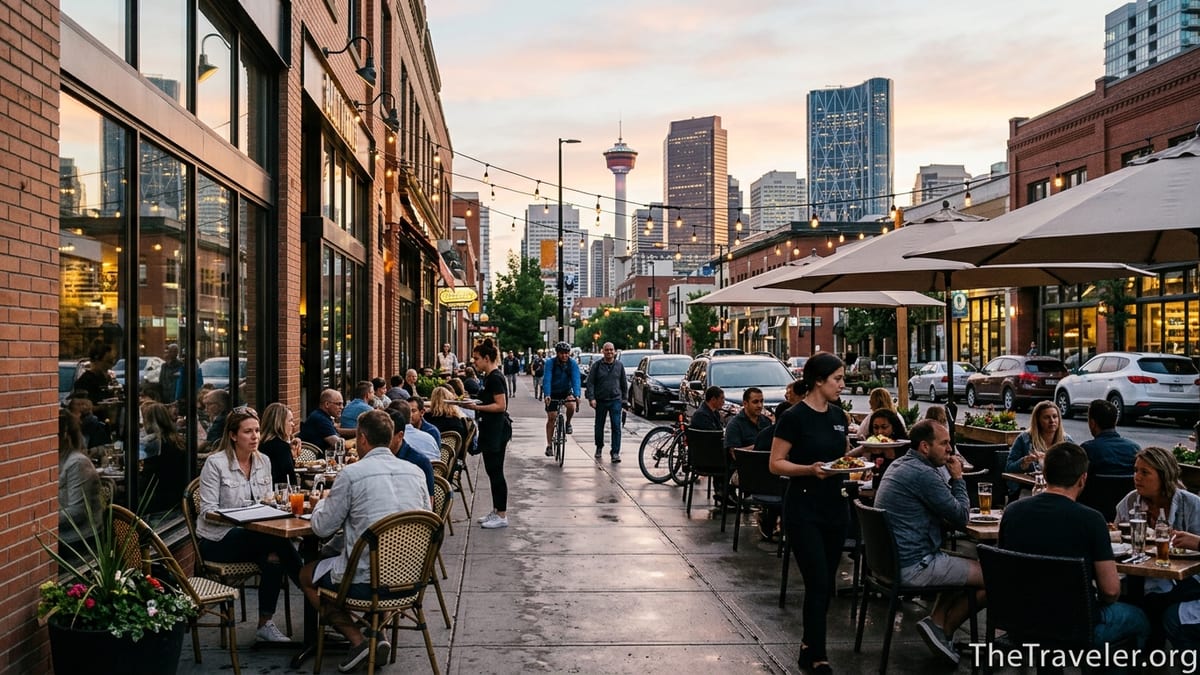
Calgary’s most interesting eating is concentrated in a handful of central districts, each with a different feel. The Beltline, just south of downtown, is compact enough to walk and has everything from sleek cocktail bars to tiny ramen counters and plant-forward cafes. Here you might start a night with small plates and natural wine at a modern French spot like FinePrint in an 1890s brick building on Stephen Avenue, then stroll a few blocks for late-night gelato or whisky. Even on a weekday, sidewalks stay active into the evening, which makes it a comfortable area for visitors to walk between venues.
East of downtown, Inglewood pairs heritage shopfronts with a growing cluster of destination restaurants and specialty grocers. You can spend an afternoon browsing record stores and galleries, then sit down at a neighbourhood bistro for duck confit or try a small sushi bar where the chef works directly behind the counter. Within a few blocks you will also find bakeries selling kouign-amann and cardamom buns, bottle shops focused on Canadian producers and cafes roasting their own beans. This density makes it ideal for a loose “food crawl” without needing a car once you arrive.
Further out, 17th Avenue SW stretches several kilometres with patios, sports bars and mid-range dining. It is a good bet if you want a lively atmosphere during events like the Calgary Stampede or a Flames or Stampeders game, and it is where you are likeliest to find familiar chains alongside independent venues. Meanwhile, in the north and east of the city, deeply multicultural areas such as the International Avenue corridor and strip malls in communities like Marlborough or Falconridge host excellent Vietnamese, Filipino, Ethiopian and South Asian food. Reaching them generally requires a car or a Calgary Transit bus ride, but the payoff is memorable meals such as injera platters shared by hand or late-night pho at prices well below downtown hotspots.
This neighbourhood map should guide where you stay. If food is your priority and you do not plan to drive every evening, pick a hotel or short-term rental in or within walking distance of the Beltline, downtown or East Village. That lets you walk to dinner and safely enjoy Calgary’s growing craft beer and cocktail scene without worrying about parking or driving back across town after dark.
Making the Most of Calgary’s Food Scene
Calgary’s restaurant culture in 2026 is defined by a mix of polished, chef-driven rooms and casual spots where the focus is on a single great idea. To experience that spectrum, aim for at least one special-occasion dinner, one relaxed neighbourhood meal and one lunch that connects directly to Alberta’s landscape. A special dinner might be at a French dining room like FinePrint, where multi-course tasting menus often highlight local bison, Hutterite chickens and Prairie grains, or a contemporary Japanese counter led by a chef known for omakase menus built around carefully sourced fish and wagyu.
For a more spontaneous evening, follow the lead of local chefs and hospitality staff. Recent roundups in Calgary food media have highlighted their own “off duty” favourites, from a tiny taqueria for al pastor tacos carved straight from the trompo to a Lebanese bakery where manousheh comes topped with za’atar and olives. These are the places where you will see line cooks and servers from fine dining rooms eating on their nights off, and where a filling meal can cost less than a single tasting-menu course. Do not worry if the decor is basic or the spot is tucked into a modest strip mall. In Calgary, that is often where the boldest flavours live.
Food tours are a smart way to orient yourself early in the trip. Operators offer guided walks through areas like the Beltline and Inglewood that combine four to six tastings with local stories about how the city’s dining scene evolved. A typical downtown or brewery district tour runs three hours, includes samples at multiple stops such as a craft brewery, a chocolate shop and a modern bistro, and costs roughly what you would spend on a mid-range dinner. Doing one on your first or second day can help you decide which places deserve a full return visit.
Even if high-end restaurants are not on your agenda, look for local ingredients on menus and at markets. Calgary chefs work closely with ranchers, Hutterite colonies and market gardeners to feature grass-fed beef, heritage pork, root vegetables and Prairie grains like Red Fife wheat. Weekend farmers’ markets around the city showcase these producers directly. Spending an hour strolling a market, tasting cheese curds and chatting with a bison rancher about how they raise their herd, gives a tangible sense of what “Alberta cuisine” really means before you encounter it on the plate that night.
Practicalities: Getting Around and Booking Smart
Calgary is spread out, but the core where most visitors eat and stay is easy to navigate. The CTrain light-rail system runs east-west and north-south through downtown, and within the free-fare zone you can hop on and off without paying. Beyond that zone, Calgary Transit currently charges a flat adult fare of around 4 Canadian dollars, with youth paying less and children under 12 generally riding free. Buying a day pass can make sense if you plan to string together breakfast, a market visit and dinner across the city without a car.
For late-night returns after a multi-course meal, rideshare and taxis are common and relatively affordable inside central neighbourhoods. Short trips within the core can often be under 20 Canadian dollars, depending on surge pricing. If you plan to explore multicultural corridors like International Avenue or suburban food hubs, consider using transit outwards and a rideshare back after dark. Parking in the inner city is metered and can add up quickly if you leave a rental car on the street all evening, so factor that cost into your accommodation choice.
Reservations matter more than they used to, especially on weekends and during major events such as the Calgary Stampede in July or when Calgary hosts large sporting events and conventions. Well known restaurants in the Beltline and on Stephen Avenue often book out prime times weeks in advance. Aim to secure key dinners before you arrive, then leave at least one night open for spontaneity or for a recommendation you receive during your stay. For casual spots, you can often walk in if you arrive early in the evening or later in the night after the main rush.
In terms of budgeting, Calgary’s restaurant prices are comparable to other large Canadian cities. A main course at a mid-range bistro might run 25 to 40 Canadian dollars, while a tasting menu at a top-tier restaurant can easily exceed 100 dollars per person before drinks. At the other end of the spectrum, excellent Vietnamese pho, donair wraps or Ethiopian platters can come in under 20 dollars. Planning a mix of experiences, rather than back-to-back fine dining, keeps your overall food budget reasonable while still giving you standout culinary memories.
Classic Day Trips: Banff, Canmore and Kananaskis
Banff is the day trip most visitors imagine when they land in Calgary, and it remains a rewarding one if you plan it carefully. The town of Banff is roughly 130 kilometres west of downtown, which usually means a 90-minute drive on the Trans-Canada Highway in good conditions. In summer, independent bus operators run scheduled coaches from Calgary to Banff, Canmore and sometimes Lake Louise. Companies such as Ebus and several shuttle outfits serving the airport offer services where a one-way adult fare from Calgary to Banff might be in the range of 40 to 70 Canadian dollars, with travel times similar to driving.
If you are visiting without a car, focus on one main mountain hub per day. For Banff, that might mean a mid-morning bus, lunch in town, an afternoon walk along the Bow River or up to viewpoints like Tunnel Mountain, and an early evening return. Once in Banff itself, Roam Transit buses link the town with nearby highlights such as the Banff Gondola, the hot springs and Lake Minnewanka, usually for only a few dollars per ride. Trying to squeeze Banff and Lake Louise into the same day from Calgary is technically possible in summer but often leads to more time waiting for buses than enjoying the scenery.
Canmore and Kananaskis offer a slightly different rhythm. Canmore sits about an hour and fifteen minutes from Calgary, just outside the national park boundary, with a walkable centre filled with bakeries, taprooms and casual dining rooms. A typical Canmore day trip from Calgary might involve coffee and pastries on Main Street, a half-day hike like Grassi Lakes or Grotto Canyon, and early dinner at a local brewery or bistro before driving back. In recent years, many locals have shifted their day trips to Canmore and Kananaskis to avoid Banff’s heavier crowds and higher prices, a trend you can follow if you want more relaxed trails and easier parking.
Kananaskis Country, south of Canmore, is a vast network of valleys, lakes and peaks inside provincial parks. Popular spots such as Kananaskis Village and the trailheads around Upper and Lower Kananaskis Lakes are between 60 and 90 minutes from Calgary by car. There is a daily conservation pass fee per vehicle to access much of the area, which you can buy online or at kiosks. Once there, you can choose between family-friendly lakeside walks, moderate ridge hikes and simple picnic days. Pack a cooler with picnic supplies from a Calgary market in the morning, and you can avoid racing back into town hungry after a full day outdoors.
Badlands and Prairie: Drumheller and Beyond
For a completely different landscape, plan at least one day trip east into the Badlands. Drumheller, home of the Royal Tyrrell Museum of Palaeontology, lies about 135 kilometres northeast of Calgary, again roughly 90 minutes by car. The drive trades mountains for rolling prairie and eroded coulees, and as you approach the town the highway drops into the Red Deer River valley carved out of layered rock. This is one of the easiest Alberta road trips for families, thanks to the combination of a world class dinosaur museum, short outdoor walks and quirky roadside attractions like giant dinosaur statues.
A simple Drumheller day might start with an early departure from Calgary, a mid-morning arrival at the Royal Tyrrell Museum and two or three hours exploring exhibits that include mounted dinosaur skeletons and interactive displays about Alberta’s ancient environments. After a quick lunch in town, you can spend the afternoon climbing the iconic Hoodoos, visiting viewpoints like Horseshoe Canyon or walking the suspension bridge in nearby Rosedale. Expect fuel costs similar to a Banff run, with parking and admission fees that are modest compared to national park gondolas or lake shuttles.
If you have already done Banff and Drumheller, consider shorter prairie and foothills outings. West of Calgary, the Bragg Creek and Elbow Valley areas are only about 45 minutes from the city and make for easy half-days of hiking, mountain biking or creekside picnics. South, the newly amalgamated town of Diamond Valley is emerging as a weekend destination for small-town cafes, craft breweries and viewpoints over the Sheep River valley. These closer trips fit well on days when you have a restaurant reservation back in Calgary at 7 or 8 p.m., since you can comfortably be back in the city by late afternoon.
Because the Badlands and foothills have fewer formal transit options than the mountain corridor, these trips are easiest with a rental car. If you prefer not to drive, look for small-group tours that bundle transport, a guide and timed entry to the Royal Tyrrell Museum or multiple stops in the foothills. These often run as 9 to 10 hour excursions from Calgary and cost more than renting a compact car for the day, but they remove the stress of navigating rural roads and parking lots.
Balancing Food Days with Excursion Days
The key to a satisfying Calgary itinerary is alternating intensities. Think of your days as “food-focused,” “mountain-focused” or “mixed,” and avoid stacking too many early starts and late finishes in a row. A classic pattern for a four-night stay is to devote your full second day to Calgary’s neighbourhoods and eateries, then follow it with a dedicated mountain day, a lighter city morning and a shorter foothills or Badlands outing. This gives you time to process what you have tasted and seen, and to follow new suggestions you pick up from locals along the way.
On food-focused days, choose one neighbourhood and explore it in depth instead of criss-crossing the city. For example, you might spend a morning in Inglewood visiting a butcher shop, bakery and specialty grocery store, followed by lunch at a casual spot serving seasonal salads and flatbreads. In the afternoon, walk or rent a scooter along the river pathway into East Village, stop for coffee, then return to your hotel to rest before a late dinner in the Beltline. That kind of loop keeps most of your travel on foot and lets you spend money on food and experiences rather than transportation.
For mountain-focused days, be realistic about what you can enjoy after a big dinner the night before. If you have a 6:30 a.m. departure for a Banff shuttle, avoid a late multi-course tasting menu; instead, opt for an earlier bistro meal or a lighter share-plate concept so you can sleep well. Pack snacks from a Calgary bakery or grocery store and a reusable water bottle so you are not relying solely on convenience stores along the highway. Plan your return to be back in Calgary by early evening, leaving time for a casual meal or takeout rather than another elaborate reservation.
Mixed days, where you do a half-day outing and then return to the city for a special dinner, can be some of the most memorable if used sparingly. A good example is a morning hike in Bragg Creek or a short visit to a Kananaskis viewpoint, followed by a mid-afternoon return and a few hours to clean up before dining at a top Calgary restaurant. You still get a taste of Alberta’s landscapes that day, but you are not showing up to a white-tablecloth dining room in hiking boots and a sunburn.
The Takeaway
Calgary rewards travellers who treat it as both a city break and a base camp. By planning a stay of at least three to five nights, you give yourself time to discover its maturing food culture and still make unhurried day trips to the mountains, the Badlands and the nearby foothills. Focusing each day on either eating or exploring, rather than trying to do everything at once, helps you keep a sustainable pace and a clear sense of place.
Whether you are sipping coffee in a Beltline cafe before a day in Kananaskis, wandering Inglewood’s main street after a long lunch or watching the sunset over the prairie on the way back from Drumheller, the combination of urban flavour and big Alberta landscapes is what makes Calgary stand out. With a bit of advance planning for restaurant reservations, transit and day-trip logistics, you can let the rest of the trip unfold through conversations with bartenders, bakers, guides and fellow hikers. Those small, unscripted moments will often be what you remember long after your last bite of bison tartare or your final look back at the Rockies from the airplane window.
FAQ
Q1. How many days should I spend in Calgary if I want both food and day trips?
Most visitors who want a balance of dining and excursions are happiest with three to five nights. That allows one full city-focused day and at least two dedicated day trips, such as Banff or Canmore and Drumheller or Kananaskis, without feeling rushed.
Q2. Is Calgary a good base without renting a car?
Yes, if you choose your priorities carefully. You can easily explore Calgary’s central food neighbourhoods with transit, rideshare and walking. For the Rockies, scheduled bus and shuttle services connect Calgary with Banff and Canmore, though options are more limited than in past years. For places like Drumheller or Kananaskis, a rental car or organized tour is usually the most practical option.
Q3. Which Calgary neighbourhood is best to stay in for food?
For most travellers, staying in or near the Beltline, downtown or East Village works best. These areas put you within walking distance of many top restaurants, cafes and bars, as well as the CTrain free-fare zone. Inglewood is another strong choice if you prefer a more residential, boutique feel and do not mind a slightly longer walk or short rideshare into the core.
Q4. How far is Banff from Calgary, and can I do it as a day trip?
Banff is about 130 kilometres west of downtown Calgary, usually around a 90-minute drive in good conditions. Many travellers do it as a day trip, leaving after breakfast, spending the middle of the day in town and nearby viewpoints, then returning for dinner. Just be prepared for heavy summer traffic, higher parking fees and the need to reserve some services in advance.
Q5. What is an easier alternative to Banff for a mountain day?
Canmore and Kananaskis are excellent, slightly less crowded options. Canmore offers a walkable town with cafes, bakeries and hikes within a short drive, about an hour and fifteen minutes from Calgary. Kananaskis Country has lakes, ridges and family-friendly trails roughly 60 to 90 minutes away by car, with a per-vehicle conservation pass instead of national park entry fees.
Q6. Is Drumheller worth a day trip from Calgary?
Yes, especially if you are interested in dinosaurs or unique landscapes. Drumheller is about 90 minutes northeast of the city and combines the Royal Tyrrell Museum, Badlands scenery and short walks around hoodoos and canyons. It makes a great contrast to a mountain day and is particularly appealing for families.
Q7. How expensive is it to eat out in Calgary?
Prices vary widely. A main course at a mid-range downtown restaurant usually costs around 25 to 40 Canadian dollars, while tasting menus at top-tier spots can exceed 100 dollars per person before drinks. At the same time, excellent Vietnamese, Middle Eastern, Ethiopian or Mexican meals in more modest settings can easily come in under 20 dollars per person for generous portions.
Q8. Do I need to book restaurants in advance?
For popular Calgary restaurants, especially in the Beltline and along Stephen Avenue, reservations are strongly recommended on weekends and during events like the Calgary Stampede. Booking key dinners before you arrive ensures you get a table at the places you most want to try. For casual spots and neighbourhood eats, you can usually walk in if you time your visit earlier or later than the main dinner rush.
Q9. What is the best time of year to combine Calgary’s food scene with day trips?
Late spring through early fall offers the most flexibility. From May to September you will find longer daylight hours, more frequent buses and shuttles to the mountains, open hiking trails and a full slate of patios and food events in the city. Winter has its own charms, like skiing and cozy dining rooms, but requires more planning around road conditions and earlier sunsets.
Q10. How should I balance my days between eating and exploring?
Aim to alternate heavier activity days with more relaxed city days. For example, follow a full Banff or Drumheller outing with a slower day exploring one or two Calgary neighbourhoods on foot and focusing on food. Build in at least one evening without fixed plans so you can act on new recommendations from locals, chefs or guides you meet along the way.