


Deep in Virginia’s Blue Ridge, Whiteoak Canyon is one of Shenandoah National Park’s most loved hikes, a rocky gorge carved by tumbling waterfalls and clear, cold pools. For many visitors, the question is not just whether to hike here, but whether they can cool off with a swim along the way. The answer is yes, with some important caveats. Here is what travelers should know before wading in.
Get the latest updates straight to your inbox!
Can You Legally Swim in Whiteoak Canyon?
Whiteoak Canyon lies inside Shenandoah National Park, where the National Park Service allows swimming in park streams. Official guidance notes that there are no swimming pools or lakes in the park, but visitors may swim in streams, which are typically shallow, rocky, and very cold even in summer. In practice, this includes the series of pools and cascades along Whiteoak Run, the stream that forms the canyon.
There is no specific rule that bans swimming in Whiteoak Canyon’s pools, and day hikers regularly wade or take brief dips below Lower Whiteoak Falls and at smaller pools higher up the trail. The park’s rules instead focus on safety and resource protection: do not climb on or around waterfalls, keep pets leashed, and follow Leave No Trace principles. Rangers are more concerned with people scrambling in dangerous spots or disturbing fragile stream banks than with someone carefully easing into a pool.
However, regulations and temporary closures can change. In recent years, heavy rains and hazardous conditions have forced short-term closures of waterfall trails in Shenandoah, including Whiteoak Canyon itself. Because of this, it is smart to check the park’s current alerts and conditions page or call a ranger station shortly before your trip. If a section of trail around a falls is closed for safety reasons, you should not attempt to reach the pools below it, even if swimming in streams is generally allowed.
In short, you can swim in Whiteoak Canyon’s stream pools when the trail is open, but you do so at your own risk and are expected to stay off slick rocks, respect closures, and avoid any behavior that could damage the stream corridor.
Where People Actually Swim: Pools and Access Points
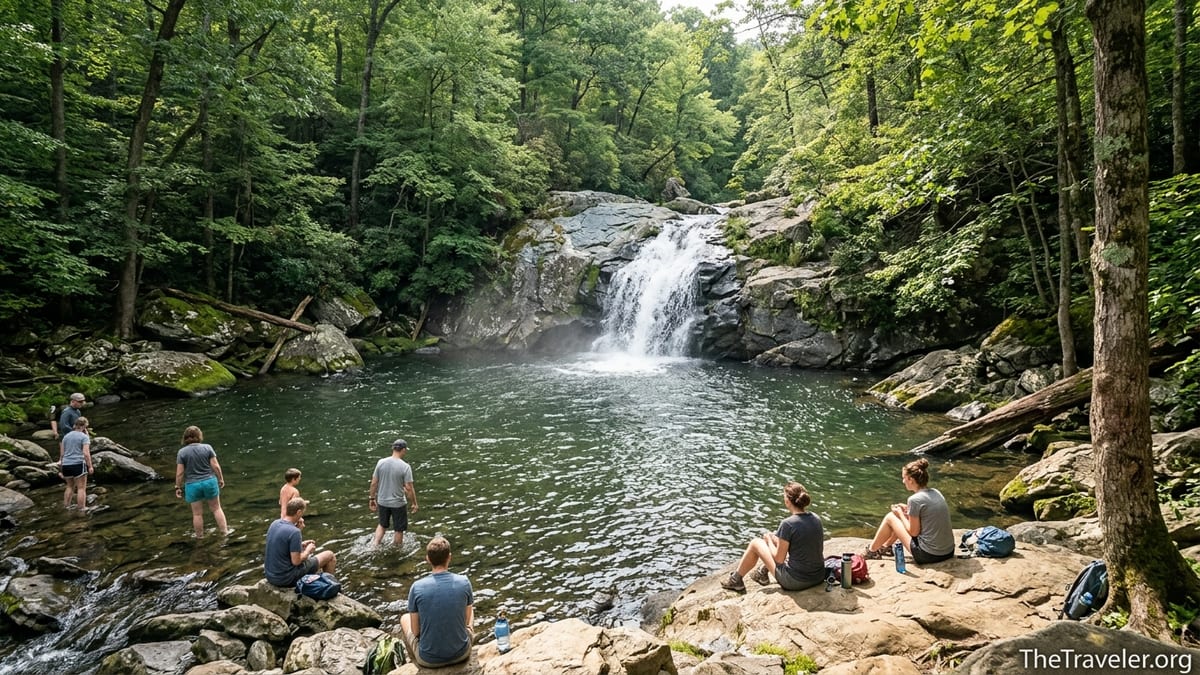
On a hot July weekend, Whiteoak Canyon’s most popular swimming spots are easy to identify: you will likely see day hikers spread along the lower portion of the canyon, picnicking on boulders and taking quick plunges into deep green pools. The most recognized area is just below Lower Whiteoak Falls, reached from the Whiteoak Canyon boundary parking area near Syria, Virginia. From this lower trailhead outside the park’s fee stations, it is roughly a 2-mile hike up to the base of the lower falls, gaining several hundred feet of elevation along a rocky path.
At the base of Lower Whiteoak Falls, the creek tumbles into a sizable plunge pool, often deep enough for short swims in late spring and early summer. Visitors commonly describe this as a classic mountain swimming hole, with water that can be chest-deep for adults near the center when flows are moderate. Downstream, a few smaller pools and calmer stretches offer wading opportunities for children, though the rocks remain uneven and slippery.
Upstream from the lower falls, additional waterfalls and pools punctuate the canyon, but many of these require more strenuous hiking and careful footing to reach. Some hikers combine Whiteoak Canyon with the neighboring Cedar Run Trail in a longer loop of 7 to 8 miles, encountering natural rock slides and smaller swimming holes on Cedar Run. That loop is rewarding but steep and rough underfoot, better suited to fit, experienced hikers prepared for a full day out rather than families simply looking for a casual swim.
Most visitors who want to swim focus on the lower canyon because it is relatively easier to reach from the boundary parking area and keeps the steepest climbing to a minimum. Even here, expect uneven terrain, stream crossings that may be shin-deep after rain, and a steady uphill grade on the way in that becomes a long downhill on tired legs when you head back to the car.
What the Water is Really Like: Temperature, Conditions, and Seasons
Shenandoah’s streams originate high on the Blue Ridge, and Whiteoak Run is no exception. Even in midsummer, water temperatures in this canyon are often cold enough to take your breath away. Day hikers who have visited in late May and early June frequently describe the pools as refreshing but shockingly chilly, especially after a rainy spell or in shaded sections where the sun barely reaches the water. On Memorial Day weekend or earlier in spring, you should expect brief, bracing dips rather than long, leisurely swims.
By late June through August, the water warms somewhat, especially in sunny shallows, but it rarely feels truly warm. In hot, humid weather, this can be a blessing: a quick plunge after hiking uphill in 80 to 90 degree air temperatures can feel like instant air conditioning. However, hypothermia is still a concern if you linger too long, particularly for children or anyone who is already chilled from sweat and wind.
Stream depth and flow change throughout the year. In spring, snowmelt and rain can swell the creek, making stream crossings trickier and the plunge pool at Lower Whiteoak Falls deeper and more turbulent. In late summer or during drought, the same pool can shrink significantly, with exposed rocks and shallower sections that may not be safe for jumping. Because Whiteoak Run is not a controlled or lifeguarded swim area, there are no depth markers or staff monitoring conditions. Each visit is different, and you should assess the water carefully before entering.
Weather plays a major role in conditions. After thunderstorms, the water can run high, fast, and silty, with poor visibility that hides submerged rocks and logs. A day or two of dry, mild weather often produces the clearest and safest pools. If you are planning a special trip around swimming, aim for a stretch of stable summer weather, check the forecast for severe storms that could raise water levels, and be ready to pivot to a simple hike if the creek looks too rough when you arrive.
Safety First: Risks Around Waterfalls and How to Manage Them
The same features that make Whiteoak Canyon beautiful also make it hazardous. Shenandoah’s safety messaging is clear: never walk around on top of a waterfall, and stay off slick, algae-covered rocks near the lip and in the spray zone. Previous serious and even fatal accidents in the park have come from slips and falls near waterfalls, not from people cautiously wading in calm pools below them.
In Whiteoak Canyon, the key risk areas are the ledges and boulders directly adjacent to the falls. The rock here can be polished smooth by constant water, and a thin film of algae can make it feel like ice. Visitors sometimes attempt to scramble closer to the buckets of falling water for photos or jump from wet rocks into the plunge pool. This is where the danger spikes: an unexpected slip can send you tumbling into shallow, rock-studded water or over the falls themselves.
Practical safety habits make a major difference. Wear footwear with good grip that can get wet, such as trail runners or water shoes with sticky soles, instead of flip-flops or smooth-bottom sandals. Before committing your weight to a rock, test it with one foot and a trekking pole if you have one. Enter pools slowly at the edges, feeling for drop-offs and submerged rocks rather than diving or jumping. If your group includes children, establish a clear boundary they cannot cross near the falls and keep an adult within arm’s reach when they are in the water.
Remember that there are no lifeguards, no rescue equipment staged at the pools, and cell service is spotty to nonexistent in the canyon. In an emergency, help must be hiked in by rangers or volunteer rescuers, which can take significant time. Plan and behave as if you are on your own: move cautiously, avoid alcohol before swimming, and be willing to say no to risky behavior even if others around you are taking chances.
Practical Trip Planning: Access, Parking, and Crowds
Whiteoak Canyon is one of Shenandoah’s marquee waterfall hikes, so logistics matter, especially on weekends between late spring and early fall. There are two main access points: the lower boundary trailhead near the village of Syria, and the upper access from Skyline Drive around mile 42.6. Most people targeting swimming holes choose the lower boundary parking because it brings them directly up the canyon from below the waterfalls.
On busy Saturdays in June, July, and October foliage season, the boundary lot can fill by mid-morning. When that happens, drivers arriving later may have to circle and wait for spots to open or use limited overflow options farther down the road, adding walking time. To improve your odds of finding parking and enjoying a quieter experience at the pools, aim to arrive by 8 to 9 a.m. or visit on a weekday. Travelers coming from Washington, D.C., often leave the city around 6 a.m., making the roughly 2 to 2.5 hour drive in time to start hiking before the crowds arrive.
Standard Shenandoah entrance fees apply if you enter via Skyline Drive, purchased as either a single-vehicle pass or an annual park pass that covers your car for multiple visits in a year. If you use the boundary parking on private land near Syria, expect to pay a modest per-vehicle or per-person parking fee to the landowner at the lot, typically in cash. The amount can change, but visitors often describe it as similar to a small day-use fee at a state park, and it helps maintain the access road and parking area.
Given the canyon’s popularity, you should also plan for company. On a warm Sunday afternoon, the pool below Lower Whiteoak Falls can feel busy, with families, college groups, and hikers sharing space on the rocks. If you prefer a more serene experience, prioritize early morning or late afternoon visits, seek out smaller pools downstream, or visit during shoulder seasons like early September, when the water is cooler but still swimmable and school schedules thin out the crowds.
Environmental Etiquette: Protecting a Fragile Mountain Stream
Despite the steady flow of visitors, Whiteoak Canyon remains one of Shenandoah’s most beautiful and ecologically sensitive areas. The stream supports native brook trout, aquatic insects, and mosses and ferns that cling to damp rocks and banks. Heavy foot traffic and careless behavior can quickly erode this environment, so it is important to think beyond just your own swim.
First, keep chemicals out of the water. That means no soapy bathing, even with biodegradable soap, and no sunscreen reapplications while standing mid-stream. Apply sunscreen at the trailhead and give it a few minutes to absorb before entering the water later. Insect repellent is best used sparingly and away from the water’s edge. Small shifts in water quality can have outsized impacts in high-elevation streams.
Second, respect the stream banks and vegetation. Avoid creating new paths down to pools and instead use existing access routes, even if they are slightly less convenient. Steep, trampled banks quickly turn to mud and can collapse into the creek, clouding the water and damaging habitat. Pack out every piece of trash, from snack wrappers to bandages, and double-check resting spots on rocks before you leave. On crowded days, consider leaving the area cleaner than you found it by picking up a few stray items if you see them.
Finally, remember that quiet is part of the experience for many hikers. While excited shouts from cold-water plunges are inevitable, prolonged loud music from portable speakers can detract from the natural feel of the canyon. Keeping noise levels moderate helps wildlife and fellow visitors and maintains the sense of being in a wild mountain gorge, not a crowded pool party.
The Takeaway
Swimming in Whiteoak Canyon is possible, popular, and memorable when approached with a realistic understanding of conditions and an attitude of respect. The pools below Lower Whiteoak Falls and along the creek offer a rare chance to cool off in a wild, high-country stream inside a national park, but they are not managed swim beaches. The water is cold, the rocks are slick, depths and flows change with the weather, and help is far away if something goes wrong.
If you decide to take a dip, do so after a careful look at the creek that day. Stay well away from the top of the falls, move slowly over wet rock, and keep an eye on children and less confident swimmers. Check Shenandoah’s current alerts before you go, arrive early to navigate parking, and treat the canyon as the fragile mountain ecosystem that it is.
Handled with care, a quick plunge into Whiteoak Canyon’s clear water can be the highlight of a Shenandoah trip: a bracing, unforgettable moment in one of Virginia’s most beautiful gorges.
FAQ
Q1: Is swimming officially allowed in Whiteoak Canyon?
Yes. Shenandoah National Park allows swimming in its streams, which includes Whiteoak Canyon. There is no designated swimming area or lifeguard, so you enter at your own risk and must obey general park rules about staying off waterfall tops and protecting streamside habitats.
Q2: How cold is the water in Whiteoak Canyon?
The water is typically quite cold year-round because it comes from high-elevation springs and runoff. In late spring and early summer it can feel near-icy, while in mid to late summer it may be cool but comfortable for short swims, especially after you have warmed up hiking.
Q3: Where is the most popular swimming hole in Whiteoak Canyon?
The best-known swimming hole is at the plunge pool below Lower Whiteoak Falls, reached from the lower boundary trailhead near Syria, Virginia. This pool is often deep enough for short swims when water levels are moderate and is surrounded by flat boulders where hikers rest and picnic.
Q4: Is it safe for children to swim there?
Many families visit Whiteoak Canyon, but safety depends on conditions and supervision. The rocks are slick, currents can be strong after rain, and the water is cold. If you bring children, choose calmer pools away from the main falls, keep them in shallow water, use well-fitting footwear, and maintain close adult supervision at all times.
Q5: Can I jump from rocks or slide down the falls?
Park guidance strongly discourages jumping from rocks or sliding on natural rock chutes. Water depth and submerged rocks change with conditions and are hard to judge from above. Serious injuries have occurred in Shenandoah from slips and falls near waterfalls, so it is much safer to ease into pools from the edges than to jump or slide.
Q6: Do I need a special permit or reservation to hike and swim in Whiteoak Canyon?
No special permit is required for a day hike or casual swim. You will need to pay the standard Shenandoah National Park entrance fee if you come in via Skyline Drive, and you may be asked to pay a small parking fee if you use the boundary lot on private land near Syria. Backcountry camping in the area has its own separate permit rules.
Q7: When is the best time of year to swim in Whiteoak Canyon?
Late June through early September usually offers the warmest combination of air and water temperatures, though the water remains cool. Spring can bring higher flows and deeper pools but much colder water, while late summer drought can leave pools shallower. Weekdays and early mornings are best if you want to avoid crowds.
Q8: What should I wear for hiking and swimming there?
Sturdy footwear that can handle wet, slippery rocks is essential, such as trail shoes or water shoes with good traction. Many visitors hike in lightweight hiking shoes and then change into water shoes at the pools. Quick-drying clothing, a small towel, and a dry layer for the hike out are helpful because the cool air in the shaded canyon can chill you once you leave the water.
Q9: Are there facilities or changing areas near the swimming spots?
Facilities are limited. At most, you may find restrooms near the main parking areas, but there are no developed changing rooms or amenities along the trail. Plan to change discretely using a large towel or over your swimsuit, and pack out all trash, including any wipes or packaging.
Q10: How can I check if the trail or swimming areas are open before my trip?
The most reliable way is to consult Shenandoah National Park’s official information channels shortly before your visit. Check the park’s current conditions and alerts page or call a park information line to confirm whether Whiteoak Canyon is open and if there are any temporary closures or safety advisories affecting access to the falls and pools.