


Shenandoah National Park is famous for its waterfalls, but two hikes come up in almost every traveler’s research: Whiteoak Canyon and Dark Hollow Falls. Both deliver classic Shenandoah scenery, tumbling cascades, and lush forest, yet the on‑trail experience is very different. Choosing the right one can shape your entire day in the park. This guide compares them side by side so you can decide which waterfall experience truly wins for your style, schedule, and group.
Get the latest updates straight to your inbox!
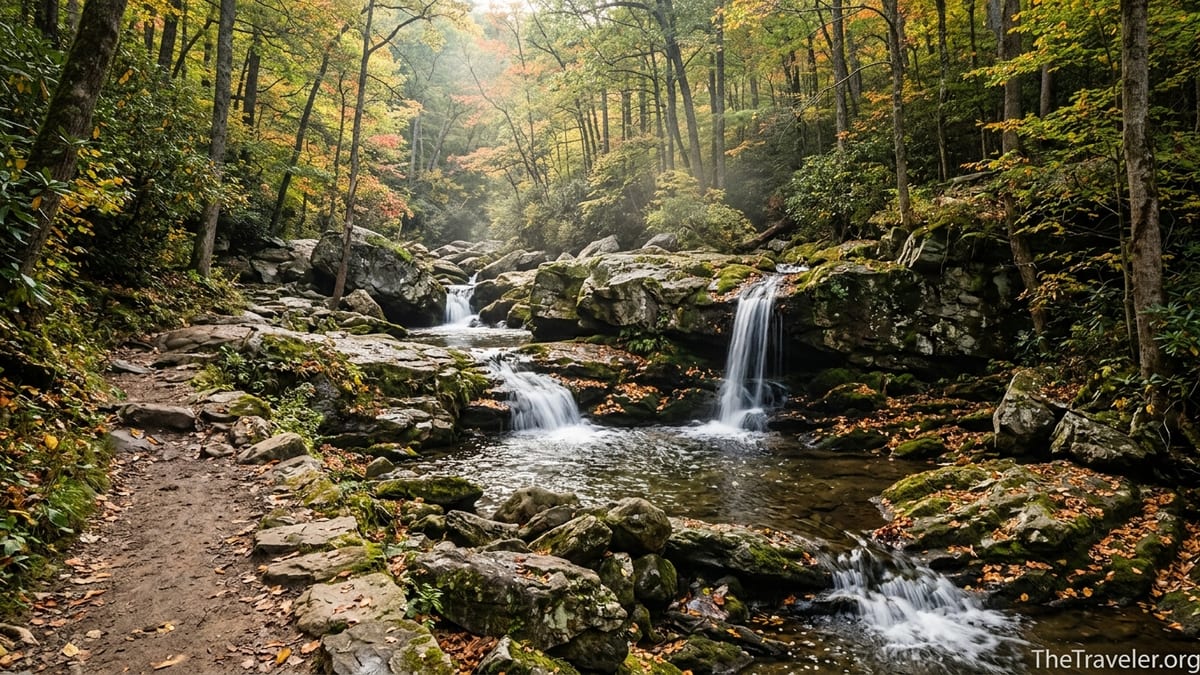
Overview: Two Very Different Waterfall Adventures
Dark Hollow Falls is Shenandoah’s crowd pleaser. The trail starts from Skyline Drive near Big Meadows at mile 50.7 and drops quickly to a 70 foot waterfall. The round trip is only about 1.4 miles with roughly 440 feet of elevation gain, which makes it one of the shortest waterfall hikes in the park. That convenience is exactly why it is often described as one of Shenandoah’s most traveled trails.
Whiteoak Canyon, by contrast, is a full‑scale waterfall corridor rather than a single destination. The trail connects Skyline Drive at mile 42.6 to a boundary parking area off State Route 600, passing a series of six named falls and numerous smaller cascades along the way. Hikers typically tackle sections of it, such as a 2 to 4 mile out and back to one or two major falls, or link it with Cedar Run for a demanding all day loop.
For many visitors staying at Big Meadows Lodge or Skyland, Dark Hollow is the easy choice for a quick hit of waterfall scenery between scenic overlooks. Whiteoak Canyon tends to attract hikers willing to trade convenience for more time on trail, a wider range of viewpoints, and a sense of being deeper in the backcountry even though you are still fairly close to Skyline Drive.
In practical terms, you might think of Dark Hollow Falls as a focused, one waterfall experience, and Whiteoak Canyon as a sampler of Shenandoah’s classic steep ravines, pools, and cascades that can fill anything from a half day to a full day depending on how far you choose to go.
Trail Stats and Difficulty: Short and Steep vs Long and Layered
If you are deciding based on difficulty and time, Dark Hollow Falls is the simplest to understand. From the Dark Hollow Falls parking area, you descend roughly three quarters of a mile to reach the main viewpoint at the base of the 70 foot cascade, then retrace your steps uphill to your car. Even though the distance is modest, the grade is steep and the dirt and rock surface can be slick after rain or leaf fall, so the National Park Service classifies it as a moderate hike rather than easy.
Most reasonably fit hikers complete Dark Hollow in about an hour to an hour and a half, allowing time for photos and a short break at the falls. Families with younger kids often need more time on the way back up, and it is not unusual to see visitors pausing at trailside rocks to catch their breath on hot July afternoons. Many people who underestimate the climb hike down in casual sneakers with just a small water bottle and find the return leg more strenuous than expected.
Whiteoak Canyon does not have a single tidy statistic, because you can customize the length. From the upper parking area on Skyline Drive, it is roughly 2 miles one way to reach Upper Whiteoak Falls, with several viewpoints and smaller cascades along the route. If you continue further or start from the lower boundary parking near Syria, Virginia, you can turn the day into a 5 to 8 mile outing with cumulative elevation gain easily exceeding 1,500 feet on steeper routes that link to Cedar Run or side trails.
For a typical first visit, a realistic plan is a 4 mile out and back from the upper Whiteoak Canyon parking area to one or two main falls, which most hikers complete in 3 to 4 hours with breaks. The grade is steady rather than brutally steep, but there are rocky sections, roots, and wet areas near stream crossings, so this feels like a serious mountain hike rather than a stroll. If your group includes novice hikers, Whiteoak requires more preparation and time than Dark Hollow.
Scenic Payoff: One Iconic Cascade or a Whole Waterfall Corridor
On Dark Hollow Falls, the scenic focal point is clear. After a forested descent along Hogcamp Branch, you arrive at a stone wall and viewing area across from a classic Shenandoah waterfall. Water tumbles in white curtains over dark rock ledges, framed by moss and rhododendron. In spring, the flow is typically strong and the sound of the falls fills the ravine. In autumn, russet leaves collect on the rocks and the waterfall provides a photogenic contrast to orange and yellow canopy above.
The framed viewpoint makes Dark Hollow particularly friendly for casual photographers. You can arrive with a smartphone, lean on the stone wall, and capture a postcard style image of the 70 foot drop in seconds. On busier weekends it is common to see tripods set up just off the main path, with photographers experimenting with long exposures to blur the water while managing the crowd around them.
Whiteoak Canyon’s scenery is more varied and layered. Instead of a single cascade, you get a sequence of six falls and numerous smaller chutes, slides, and pools carved into the narrow gorge. Some viewpoints look straight down into the canyon, while others bring you almost eye level with the water. Sections of the trail offer high rock ledges where you can peer into a wide amphitheater of cliffs and forest, while other segments follow the stream closely, with the sound of rushing water beside you for long stretches.
In practice, this means Whiteoak offers more chances to step off onto a rock for a quiet snack beside a pool or to find your own composition for photos. One traveler might spend 20 minutes photographing the main upper falls from a clifftop overlook, while another may be equally captivated by a smaller cascade along the way where sunlight catches the spray and rhododendron branches arch over the water. If you are the kind of visitor who enjoys lingering in multiple spots rather than arriving at one big “finish line,” Whiteoak Canyon is often more satisfying.
Crowds, Parking, and Logistics
Crowding is where the two experiences diverge most sharply. Dark Hollow Falls is one of the closest waterfalls to Skyline Drive and sits near the busy Big Meadows hub, where many visitors already stop for fuel, food, lodging, and the Harry F. Byrd Visitor Center. As a result, its small trailhead lot at mile 50.7 often fills by mid morning on summer weekends and during peak foliage in October. It is not uncommon for arriving drivers around 11 a.m. to circle slowly, wait for someone to pull out, or give up and continue down Skyline Drive to another stop.
On the trail itself, Dark Hollow can feel more like a procession than a backcountry hike in peak times. You are likely to encounter families with strollers near the top turning back after a short descent, international visitors in jeans and city shoes, and groups stopping frequently to take photos or negotiate rocky steps. For some travelers, this energy is enjoyable; for others, the sense of crowding can detract from the waterfall’s natural drama.
Whiteoak Canyon’s parking is split between the upper lot on Skyline Drive and the lower boundary lot outside the park off Route 600 near Syria. The upper lot can fill on busy Saturdays, particularly in May and October, but turnover tends to be steadier and the crowd disperses more along the longer trail. At the lower boundary, local landowners sometimes open their fields for overflow parking for a small cash fee when the main lot is full, a practical if unglamorous solution that hikers appreciate when they have driven in from Washington, DC, or Charlottesville for the day.
In both cases, you still need to pay the Shenandoah entrance fee if you are entering at a main gate or trailhead inside the park. As of mid 2026, that typically means either a per vehicle entrance fee for a 7 day pass or presenting an America the Beautiful annual pass at park entrances. Boundary access points like the lower Whiteoak lot may be staffed with fee stations during busy seasons, so carry a card or cash and be prepared to show your pass or pay on arrival.
Who Each Hike Fits Best
If you have only a couple of hours in Shenandoah and want a reliable, relatively short walk to a photogenic waterfall, Dark Hollow Falls is usually the better match. It works well for road trippers driving Skyline Drive who are building a day of overlooks, a picnic at Big Meadows, and a brief hike. It also makes sense for visitors staying in the park lodges who want to squeeze in an outing before dinner without committing to a full day.
Families with young children, multigenerational groups, and travelers adjusting to elevation or summer heat should still take Dark Hollow seriously despite its reputation as “easy.” The return climb can be tough for those unused to hills. Still, the ability to turn around at any point and the clear, single destination makes it easier to manage than a longer canyon hike with multiple decision points.
Whiteoak Canyon tends to appeal more to hikers who already enjoy moderate to strenuous trails and want to make waterfalls the centerpiece of their day. If you are used to 6 to 8 mile mountain hikes back home, a Whiteoak route that visits several falls will feel rewarding without being extreme. Backpackers sometimes use the canyon as part of overnight routes, and day hikers often pair it with Cedar Run for a figure‑eight loop that becomes one of the most memorable hikes of their Shenandoah visit.
For photographers, both trails are strong candidates, but the variety in Whiteoak Canyon often wins out. On a busy Saturday, a serious landscape photographer might opt to start before sunrise from the upper lot to reach the main falls ahead of crowds, then spend hours working different angles of mist, rock texture, and forest reflections as light shifts through the gorge. Casual phone photographers who just want a single strong waterfall shot to share with friends will likely be happier with the straightforward setup at Dark Hollow.
Seasonal Considerations and Safety on the Trail
Season plays a big role in how each experience feels. In early spring, usually March and April, snowmelt and rain boost flow in both Hogcamp Branch at Dark Hollow and the streams of Whiteoak Canyon. Trails are often muddy, rocks are slick, and temperatures at higher elevations along Skyline Drive can still be chilly. This is arguably the best time for dramatic waterfall photos, but also a period when sturdy waterproof footwear and trekking poles are especially helpful.
Summer, from late June through August, brings lush foliage and comfortable water temperatures in lower pools. Dark Hollow can be especially crowded on clear weekends, and afternoon thunderstorms are frequent. On the short out and back, some visitors underestimate how much water they need. A simple, real world guideline is at least a half liter per person for Dark Hollow and a full liter or more per person for a half day in Whiteoak Canyon, with extra packed in for hot days when the humidity makes the return climbs more taxing.
Autumn, particularly late September through late October, is the most popular season overall in Shenandoah. Both trails showcase brilliant foliage: orange and red maple leaves over Dark Hollow’s dark rock, and golden light slanting through the tall trees of Whiteoak Canyon. Parking pressure increases significantly during this window. It is realistic, for instance, for a traveler driving up from Richmond on a peak color Saturday to find the Whiteoak upper lot full by 9:30 a.m. and Dark Hollow’s lot backed up even earlier.
Winter hiking is possible on both routes, but conditions can change quickly. Ice forms on shaded rock steps around Dark Hollow, and sections of Whiteoak Canyon may hold snow or form ice flows beside the trail. Travelers without traction devices or experience on winter trails may find the footing unnerving. The park sometimes closes sections of Skyline Drive during winter storms, which can limit access entirely; always check park alerts before driving up from lower elevation towns like Luray or Waynesboro.
Practical Tips: Gear, Timing, and Nearby Amenities
Good footwear makes a noticeable difference on both trails. Visitors in lightweight trail shoes or hiking boots with aggressive tread handle the steep, rocky sections of Dark Hollow and the mixed terrain of Whiteoak Canyon far more comfortably than those in smooth‑soled sneakers or sandals. Trekking poles are not required but give extra stability on the descent and ascent, especially if you have knee issues or are carrying a child in a backpack carrier.
Timing your visit around crowds is equally important. For Dark Hollow Falls, arriving before 9 a.m. or later in the afternoon after 4 p.m. typically offers a quieter experience and easier parking. In practice, a traveler sleeping at Big Meadows Lodge can enjoy breakfast at opening, walk across or drive a short distance to the trailhead, and have the falls relatively uncrowded by 8:30 a.m. before midday travelers from Washington, DC, and Northern Virginia arrive.
For Whiteoak Canyon, a similar early start from the upper Skyline Drive lot gives you cooler temperatures on the climb back and a better chance at a parking space. Starting from the lower boundary trailhead near Syria requires a slightly longer drive from most gateway towns but can be convenient if you are staying at a cabin or short term rental in the foothills. Local country stores in the area sell simple trail snacks, drinks, and often a basic trail map, but it is wise to download a digital map in advance in case cell coverage is spotty.
Nearby services matter if you are planning a full day. After finishing Dark Hollow, many visitors stop at Big Meadows Wayside for a burger, ice cream, or the park’s well known blackberry ice cream pie, and refuel before continuing their Skyline Drive tour. Hikers coming out of Whiteoak Canyon commonly head to local diners or breweries in Luray, Elkton, or Madison, depending on which side of the park they exit. These real world routines reinforce a simple pattern: Dark Hollow fits neatly into a Skyline Drive sightseeing day, while Whiteoak tends to anchor the day with a more substantial hike and a meal on either side.
The Takeaway
So which waterfall experience wins, Whiteoak Canyon or Dark Hollow Falls? The answer depends less on which is “better” and more on what you want from your time in Shenandoah. Dark Hollow delivers a classic 70 foot cascade on a short, steep trail that even casual visitors can fit between overlooks and meals. Its strengths are convenience, immediate payoff, and a clear sense of destination, tempered by frequently heavy crowds and a challenging climb back that catches some visitors by surprise.
Whiteoak Canyon offers a more immersive journey, with multiple waterfalls, varied viewpoints, and the feel of traveling along a living mountain stream corridor. It requires more time, effort, and preparation, but rewards that commitment with quieter pockets away from the most popular overlooks and a stronger sense of adventure. For many hikers who value time in the woods as much as a single iconic photo, Whiteoak ultimately feels like the richer experience.
If you have just one afternoon, young kids, or limited mobility, Dark Hollow Falls is likely the better choice. If you have a full day, solid hiking fitness, and a desire to explore deeper into Shenandoah’s waterfall country, Whiteoak Canyon will almost certainly be the more memorable outing. Travelers with several days in the park can enjoy the best of both worlds, visiting Dark Hollow early one morning and dedicating another day to exploring as far down Whiteoak Canyon as time and energy allow.
FAQ
Q1. Which hike is better for beginners, Whiteoak Canyon or Dark Hollow Falls?
Dark Hollow Falls is generally better for beginners because it is shorter and easier to navigate, though the climb back is steep. Whiteoak Canyon can work for fit beginners on a shorter out and back, but it feels more like a serious mountain hike.
Q2. How much time should I plan for Dark Hollow Falls?
Most visitors should plan about 1 to 1.5 hours for Dark Hollow Falls, including time to stop for photos and a short rest at the waterfall. Families with small children or frequent photo stops may want closer to 2 hours.
Q3. How much time do I need for Whiteoak Canyon?
For a first visit, plan 3 to 4 hours for a moderate out and back to one or two main falls. If you intend to hike the full canyon or link with Cedar Run for a long loop, reserve most of the day.
Q4. Are pets allowed on these trails?
Pets are not allowed on the Dark Hollow Falls Trail. Whiteoak Canyon has pet friendly sections, but regulations can change, so verify current rules with Shenandoah National Park staff or posted signs before you start.
Q5. Is parking difficult at Whiteoak Canyon and Dark Hollow Falls?
Parking can be challenging at both during peak seasons. Dark Hollow’s small lot near Big Meadows often fills by mid morning on busy weekends. Whiteoak’s upper and lower lots also fill, but overflow parking on nearby private land is sometimes available near the lower boundary for a small fee.
Q6. Can I swim at the waterfalls?
Neither Dark Hollow Falls nor the main Whiteoak Canyon waterfalls are managed as official swimming areas, and water conditions can be hazardous. In Whiteoak Canyon, some hikers wade or cool off in shallower pools below smaller cascades, but you should treat any water play as at your own risk and stay well away from the tops of falls.
Q7. Which hike is better for photography?
For a single iconic waterfall shot, Dark Hollow is hard to beat. For variety, changing compositions, and multiple cascades and pools, Whiteoak Canyon usually offers more creative opportunity, especially if you have several hours and are comfortable carrying a tripod.
Q8. Do I need special gear for either hike?
Sturdy footwear with good traction is strongly recommended for both, and trekking poles can help on steep or slippery sections. For Whiteoak Canyon, bring extra water, snacks, and layers, since you may be out for several hours and conditions can change as you move up or down the canyon.
Q9. Are these hikes suitable for young children?
Many families hike Dark Hollow Falls with school aged children, though parents often carry toddlers part of the way and should be prepared for the steep return climb. Whiteoak Canyon can be suitable for older children who are used to hiking, but the longer distances and rougher terrain make it less ideal for very young kids.
Q10. If I only have one day in Shenandoah, which waterfall should I choose?
If you want to combine Skyline Drive sightseeing with a short waterfall walk, choose Dark Hollow Falls. If your priority is a longer, more immersive hike with multiple waterfalls and you are comfortable with a few hours on trail, Whiteoak Canyon will likely feel more rewarding.