


More news on this day
Canada’s air travel network faced a sharp disruption on June 10, 2026, as 79 flight cancellations and 299 delays were recorded across eight major cities, snarling schedules, stranding passengers and underscoring ongoing fragility in the country’s aviation system.
Get the latest news straight to your inbox!
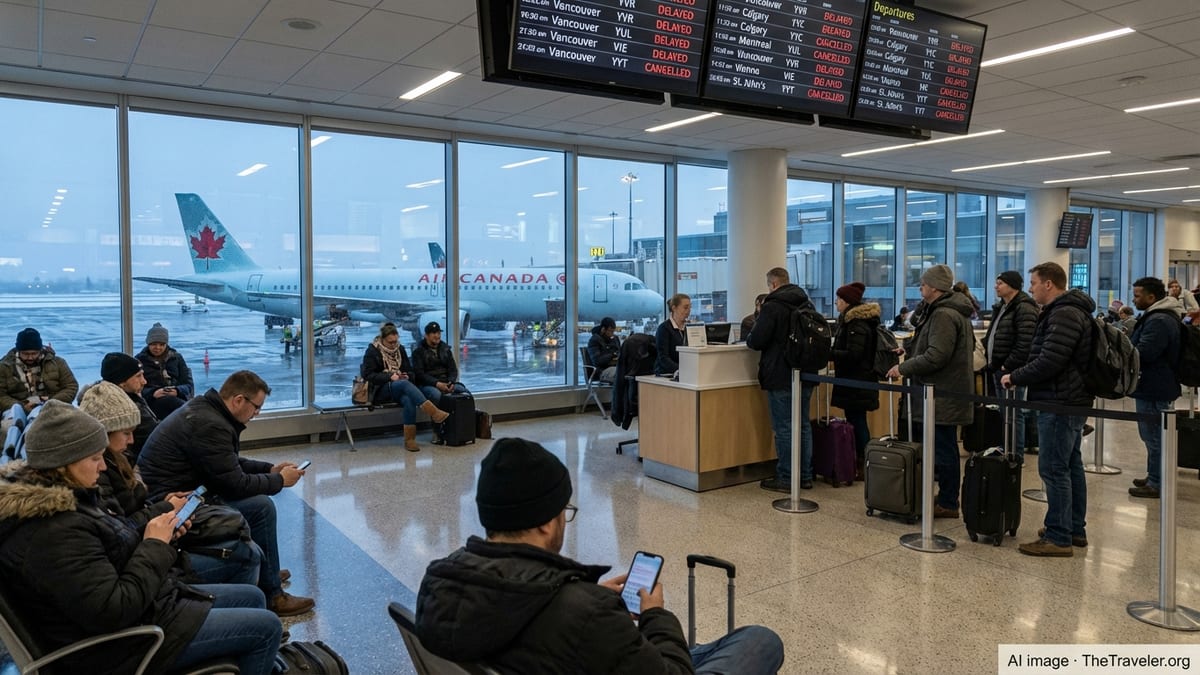
Nationwide Disruption Across 8 Urban Hubs
Publicly available tracking data and media coverage for June 10 show a patchwork of disruptions affecting eight of Canada’s busiest air travel markets. The day’s tally of 79 cancellations and 299 delayed departures and arrivals represented a significant hit to capacity, particularly in peak morning and late afternoon periods when business and connecting traffic are heaviest.
The impact was concentrated at the country’s largest hubs, with Toronto, Vancouver and Montreal bearing the brunt of the schedule changes. Secondary cities including Calgary, Edmonton, Ottawa, Winnipeg and Halifax also reported notable levels of disruption, creating knock-on effects for regional routes and connections to the United States and Europe.
Operational data indicate that the cancellations removed thousands of seats from the system in a single day, while the volume of delays introduced rolling congestion as aircraft and crews fell out of position. Travelers faced missed connections, extended ground holds and last-minute gate changes as airlines worked to compress disrupted schedules into the remaining operating windows.
Although Canada’s aviation sector has grown more resilient since the chaotic summer of 2022, the pattern on June 10 suggests that the system remains vulnerable when several stress factors converge, particularly at already busy hubs.
Weather, Staffing and Air Traffic Constraints Intersect
Reports from airport operations summaries and aviation trackers attribute the June 10 disruption to a mix of causes rather than a single incident. Localized weather patterns, including low ceilings, rain and gusty winds in parts of central and western Canada, contributed to arrival spacing restrictions and slower turnaround times at key airports.
Industry analyses of Canadian performance in recent travel seasons have also highlighted persistent staffing challenges in specialized roles such as ground handling, maintenance and air traffic management. When crew or technical resources are tight, even moderate weather can trigger a round of preemptive cancellations and extended delays, as carriers and airports work within reduced buffers.
Air navigation capacity has been a recurring theme in public discussions of Canadian punctuality, with previous summers marked by reports of flow-control measures and ground stops at peak times. On June 10, similar constraints appear to have played a role in limiting the rate at which traffic could be safely processed at the busiest hubs, compounding schedule pressures across the network.
Analysts note that these overlapping factors are consistent with broader global patterns in 2025 and 2026, in which airlines are operating close to system limits amid robust demand, making them more susceptible to cascading disruption when conditions deteriorate.
Travelers Confront Missed Connections and Overnight Stays
The operational ripple effects on June 10 were felt most acutely by passengers whose itineraries depended on tight connections at Toronto Pearson, Vancouver International and Montreal-Trudeau airports. Cancellations on short-haul feeder routes from smaller Canadian cities and U.S. destinations forced many travelers to rebook entire journeys, often onto flights departing the following day.
Social media posts and traveler reports described long lines at customer service desks, difficulty reaching airline call centers and limited same-day alternatives on popular transcontinental and transatlantic routes. With many flights departing close to full, rebooking options were constrained, and some passengers were forced to accept re-routed itineraries with additional stops or longer layovers.
Hotel availability near major airports tightened as evening cancellations accumulated. While some travelers were able to secure accommodation and meal support through standard disruption policies, others reported relying on personal funds or remaining overnight inside terminal buildings when nearby hotels reached capacity.
Experts in passenger rights point to Canada’s Air Passenger Protection Regulations, which distinguish between disruptions within an airline’s control, those required for safety and those outside carrier control such as severe weather. The mixed causes behind the June 10 disruptions mean that eligibility for compensation and reimbursements is likely to vary from case to case, depending on the specific flight and documented reason.
Strain on Airlines and Airport Operations
The June 10 disruption placed additional operational strain on airlines that have already been navigating high summer demand, labor negotiations and ongoing fleet transitions. Clearing a backlog of delayed aircraft and restoring normal rotations requires careful sequencing of crews, aircraft maintenance checks and gate availability, often extending recovery into the following day.
Airport operators in the affected cities also faced a more complex operating environment. Extended delays increase aircraft ground time, intensify gate and stand usage and require additional coordination for baggage handling and de-icing or ramp safety checks when weather is unsettled. Congestion at security and customs points can also rise as flights bunch together outside their normal slots.
Aviation analysts note that disruptions of this scale can carry financial consequences for both carriers and airports, from overtime and rebooking costs to waived change fees and potential passenger compensation. At the same time, operational metrics such as on-time performance and completion factors are closely watched by investors and regulators, adding pressure on management teams to limit the duration and frequency of such events.
The pattern seen on June 10 is likely to renew scrutiny of scheduling practices, contingency planning and investment in infrastructure and staffing, particularly as the peak Northern Hemisphere summer travel period advances.
What June 10 Signals for Summer 2026 Travel
For travelers planning trips through Canadian airports over the coming months, the events of June 10 serve as a timely reminder that buffers and flexibility remain essential. Industry observers continue to recommend longer connection times, especially at Toronto, Vancouver and Montreal, and suggest avoiding the tightest possible minimum connection windows when booking complex itineraries.
Travel planning experts also highlight the value of early-morning departures, which are statistically less likely to be affected by the accumulated delays that build throughout the day. Monitoring flight status through airline apps and third-party trackers, and registering for automatic alerts, can provide earlier notice of developing issues and increase the chances of securing rebooking options before alternatives are exhausted.
From a policy perspective, the June 10 disruption is likely to feed into ongoing debates about air passenger protections, airport capacity and the balance between aggressive scheduling and operational resilience. Consumer advocates have called for more transparent reporting of delay and cancellation causes, arguing that clearer information helps travelers understand their rights and plan around systemic weaknesses.
With global air travel demand expected to remain strong through 2026, Canada’s experience on June 10 illustrates how a combination of weather, staffing and infrastructure constraints can quickly translate into visible disruption. How airlines, airports and regulators respond over the rest of the season will help determine whether such days remain exceptions or become a recurring feature of the Canadian travel landscape.