


More news on this day
A preliminary investigation has tied the wave of flight cancellations and delays that rippled across the United Kingdom on September 8, 2026 to a software defect that played out in roughly a millisecond, underscoring how tightly coupled aviation’s digital systems have become to day-to-day travel reliability.
Get the latest news straight to your inbox!
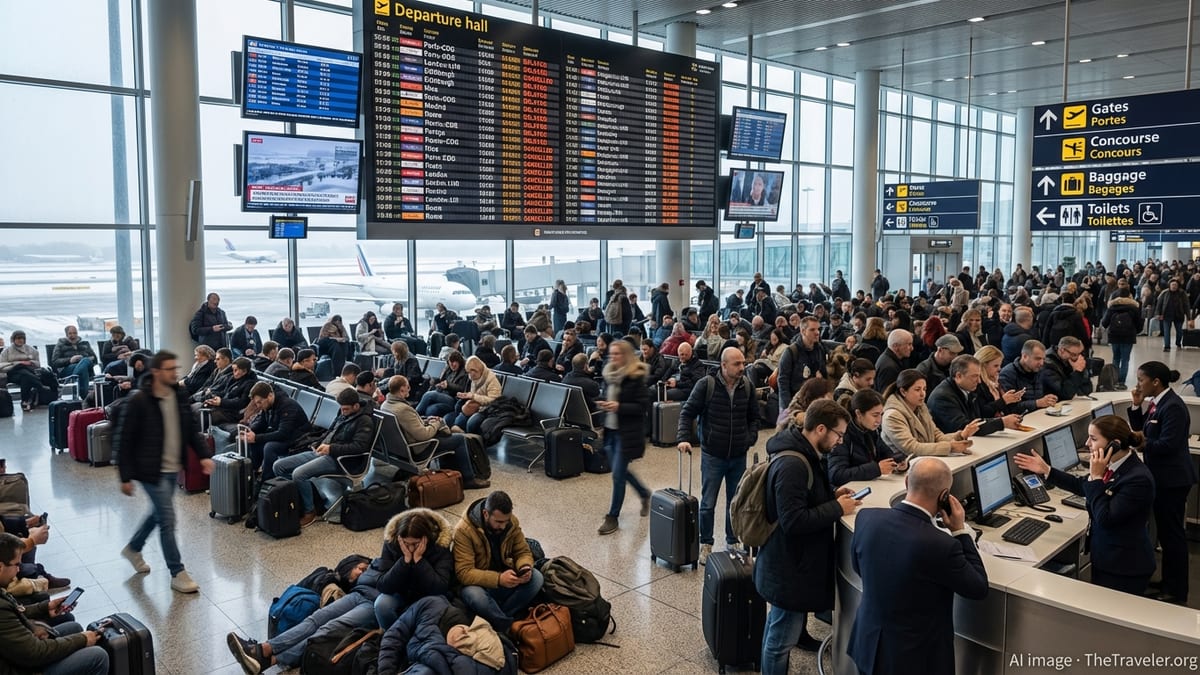
What happened on September 8, and why it spread nationwide
Published coverage and NATS documentation describe a chain reaction that began inside the National Airspace System (NAS), the platform that underpins UK airspace management. The defect surfaced during a manual request to allocate an aircraft identification code, a task that is normally handled automatically but can be initiated manually in certain circumstances.
During that manual request, the system received a higher-priority message, which paused the first request. When processing resumed, the software did not restart cleanly, producing corrupted output and interfering with subsequent flight data updates. NATS characterized the triggering event as occurring in the space of a millisecond, a tiny window that nonetheless created a broader operational problem once corrupted data propagated through the workflow.
Even though the underlying issue affected flights handled in the London Area Control centre, restrictions were introduced across the UK to maintain safety while the NAS was restarted and flight data was reloaded. NATS described the impacted traffic as higher-level flights operating mainly above 24,500 feet, and stated that constraints were required because controllers were working with reduced information.
NATS indicated the restrictions lasted about six hours, with operations returning to normal the same evening. However, the passenger impact extended beyond the day of the outage, as aircraft and crews ended up out of position and schedules had to be rebuilt, contributing to a multi-day recovery across airline networks.
How many flights were affected and what travelers experienced
Multiple outlets reported that roughly 2,000 flights to, from, and within the UK were canceled during the disruption, affecting hundreds of thousands of journeys. Passengers encountered long airport lines, delayed departures, and rolling changes to itineraries as airlines worked to reposition equipment and personnel after the traffic management restrictions.
The disruption was not limited to one airport or one carrier. Heathrow and other major hubs saw knock-on effects because reduced flow rates into UK airspace can quickly cascade into gate shortages, missed connections, and aircraft arriving late for their next rotation.
For travelers, the most visible consequence of an air traffic management incident is often the uneven recovery: some flights operate with minimal delay while others are canceled outright, depending on where aircraft and crews are located, how quickly schedules can be re-optimized, and what spare capacity is available to rebook displaced passengers.
Questions raised about resilience and oversight
The millisecond detail has drawn attention not because it suggests an unusually fast failure, but because it highlights how rare timing conditions can expose edge-case weaknesses in complex systems. NATS described the defect as being located within a small subsection of code, and said mitigation was put in place while a permanent fix is tested and deployed.
Political and regulatory attention followed quickly. Publicly available information shows the UK government requested a formal report from NATS on the cause of the incident and the actions taken in response, and asked the UK Civil Aviation Authority (CAA) to carry out an independent review focused on what happened and how well NATS is set up to deliver a resilient service in the future.
In parliamentary materials published after the incident, the Department for Transport framed disruptions of this scale as rare but high-impact events, and described the independent review as expected to report within six months. That timeline suggests the full public accounting of root causes, testing practices, and contingency procedures may extend well beyond the immediate travel disruption.
Airlines also intensified scrutiny. Ryanair, which has previously criticized NATS after earlier disruptions, issued statements in early September calling for leadership changes and highlighting the passenger impact on its network during the outage. While airline statements reflect commercial and reputational pressures, they also signal how operational reliability at the air navigation service provider level can directly translate into customer-service costs for carriers.
Passenger rights: refunds, rebooking, and compensation expectations
In the days after the disruption, the CAA published guidance reminding airlines of their responsibilities toward passengers whose flights were delayed or canceled, including obligations to provide care such as meals, refreshments, and hotel accommodation when appropriate, and to offer choices following cancellations including refunds or rerouting.
The same CAA guidance indicated that disruption caused by the NATS incident was likely to be considered “extraordinary circumstances” under passenger rights rules, meaning passengers would typically not be entitled to compensation for delays or cancellations directly caused by the incident. At the same time, the CAA emphasized that passengers should still be looked after and kept informed, and that airlines may need to reimburse reasonable costs when carriers cannot provide care proactively.
One practical complication for international travelers is that rights can differ depending on route and airline. The CAA noted that the UK’s passenger-rights framework, based on Regulation 261/2004 as assimilated into UK law, applies broadly to flights departing the UK and to UK and EU carriers arriving into the UK, while different rules may apply to passengers arriving on non-EU carriers such as flights from the United States operated by US airlines.
For travelers seeking to recover costs after a large-scale air traffic disruption, the key is separating “care” obligations, which often still apply, from “compensation” for inconvenience, which is commonly restricted when extraordinary circumstances are involved. The independent review process underway may also shape future expectations about transparency, resilience investments, and how disruption costs are allocated across the aviation system.