


More news on this day
Flight schedules across Asia are facing renewed volatility in mid-September 2026, as weather-driven disruption near Tokyo and Shanghai combines with rain-related complications in Mumbai, increasing the risk of delays, cancellations, and missed onward connections at three major hubs.
Get the latest news straight to your inbox!
Shanghai: Pudong slowdown adds risk for long-haul connections
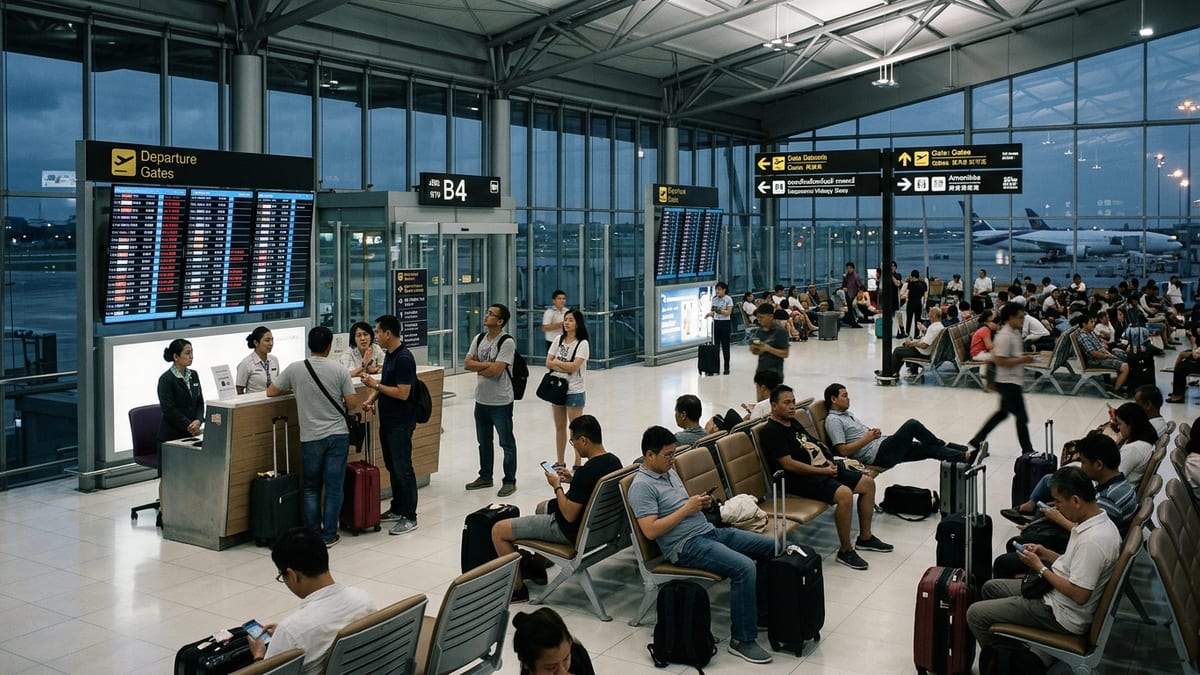
Publicly available airport and flight-tracking data shows elevated disruption at Shanghai Pudong International Airport (PVG), where delays and a smaller number of cancellations have been showing up in live operational snapshots in recent days. For travelers, the practical effect is less about a single headline-grabbing shutdown and more about unpredictability: departure times that slide, gates that change late, and connection buffers that quickly disappear.
On September 18, FlightAware’s airport-level summary displayed hundreds of delays for PVG during the day, along with a smaller count of cancellations. That kind of imbalance, many more delays than cancellations, often signals constrained arrival rates or intermittent flow controls rather than a blanket stop, which can still create long queues at check-in, security, and at the gate as banks of departures bunch up.
Published coverage earlier in September also pointed to typhoon impacts affecting the broader Shanghai area, which can reduce runway throughput and trigger airline schedule adjustments. Travelers connecting through PVG should expect airlines to protect aircraft rotations first, which can mean retiming short-haul feeder legs that support long-haul departures later the same day.
Tokyo: Typhoon Dujuan raises late-weekend disruption odds
Forecast-focused reporting dated September 18, 2026 indicates Typhoon No. 25 (Dujuan) is expected to bring a higher risk of heavy rain and strong winds around the Tokyo region as it approaches, with Narita (NRT) and Haneda (HND) in the potential impact zone around September 21. Even if airports remain open, crosswinds, lightning, and low visibility can push air traffic management initiatives that slow arrivals and departures.
Airlines have already begun preparing travelers for possible knock-on effects. All Nippon Airways posted a travel-waiver style notice time-stamped September 18, 2026, covering flights involving Tokyo-area airports during specified windows from September 20 into September 21, allowing changes and refunds without fees for eligible tickets regardless of the eventual operating status. Japan Airlines also posted a Typhoon Dujuan advisory on September 18, 2026 noting flights were expected to operate as usual at that time, while warning service could still be affected depending on the storm track.
Separately, Haneda Airport’s passenger-terminal site has published operational notices during 2026, including an August item about a malfunction in the international check-in system with a subsequent restoration notice. While not directly tied to the September weather risk, it underscores that disruptions can stack: passengers may face both meteorological delays in the air and processing slowdowns on the ground, especially at peak travel times.
Mumbai: heavy rain and waterlogging keep operations fragile
Mumbai’s Chhatrapati Shivaji Maharaj International Airport (BOM) is contending with the recurring friction of monsoon-season weather, where heavy rain and wind can quickly ripple through tightly scheduled operations. In July 2026, published coverage described an episode where runway operations were suspended for about an hour due to heavy rain and gusts, with cancellations, diversions, and broad delays before activity normalized.
More recently, September 2026 reporting has highlighted severe waterlogging near the airport during heavy rain in the city, a condition that can complicate road access for passengers and staff even when runway operations continue. For travelers, that means disruption is not only measured in airborne holding or departure slots, but also in whether it is possible to reach the terminal on time.
Mumbai Airport’s own flight-status pages can confirm near-real-time arrival and departure states, but conditions can change quickly during intense rain cells. Travelers should treat airport status boards and airline apps as the primary source of timing in the final hours before departure, because short ground stops and flow restrictions often appear with little lead time.
What travelers can do now: recheck timing, protect connections, and plan ground access
With disruption spanning multiple countries and weather systems, travelers should assume schedules may remain fluid through the weekend of September 20 to September 21, 2026, especially for itineraries touching Tokyo-area airports. If your ticket is on a carrier that has posted a waiver window, using it early can preserve seat availability on alternate flights before mass rebooking begins.
For Shanghai, consider increasing connection buffers if you are booking new travel or can proactively adjust an existing itinerary. When an airport shows widespread delays, a “legal” connection on paper can become unrealistic if inbound flights arrive late and terminals are congested. If your itinerary is built on separate tickets, the risk is higher because re-accommodation protections may not apply across carriers.
For Mumbai, plan ground access conservatively on days with heavy rain forecasts, because waterlogging and slow traffic can become the hidden cause of missed flights even when the airport remains operational. Arriving earlier than usual, keeping luggage minimal if possible, and monitoring both airline alerts and local weather updates can reduce the chance that a citywide downpour turns into a missed departure.