


More news on this day
Travelers at Cleveland Hopkins International Airport faced hours of disruption after a physical altercation between Delta-affiliated cabin crew prompted a police response, gate lockdowns and a wave of flight cancellations that rippled through Delta’s regional network.
Get the latest news straight to your inbox!
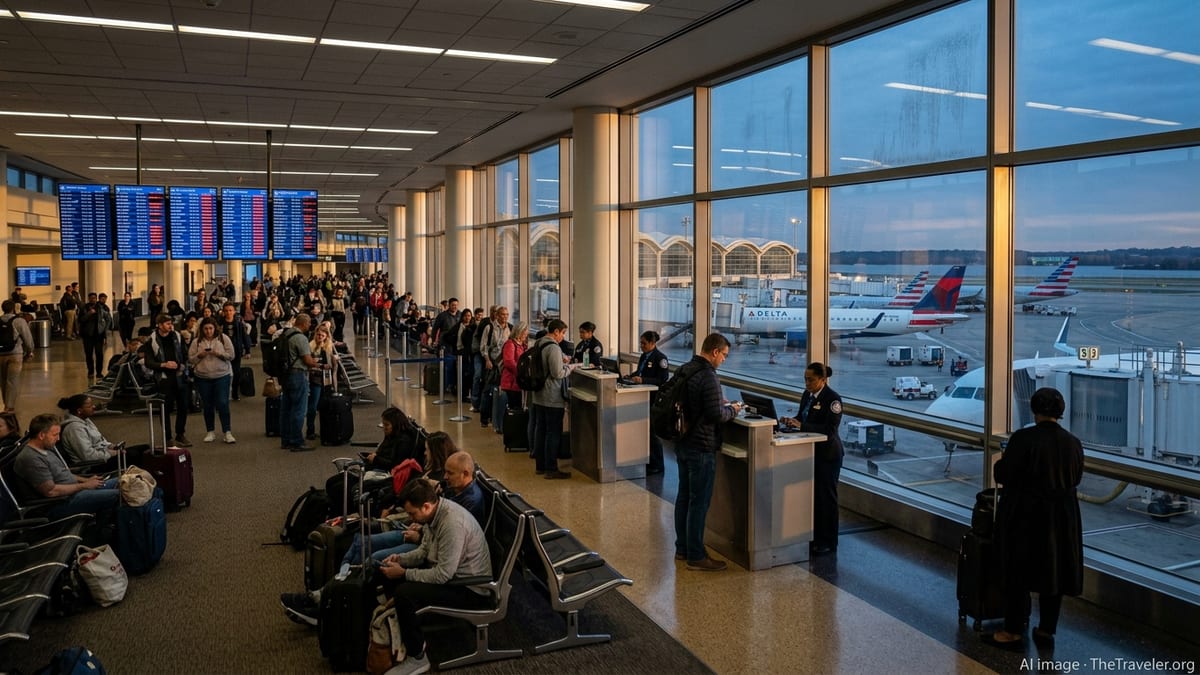
Cabin Crew Clash Halts Delta Connection Departure
According to regional aviation reports and local coverage, the incident unfolded on May 27 at Cleveland Hopkins International Airport, where Delta Connection flight 4854 to Detroit was preparing for departure. The service was being operated by Endeavor Air, a regional carrier that flies under the Delta brand on routes across the Midwest.
Accounts from passengers and airport observers indicate that a dispute between two cabin crew members escalated into a physical confrontation near the aircraft door prior to boarding completion. Police were called to the gate area and subsequently escorted at least one flight attendant off the aircraft. Delta’s public information listed an initial operational disruption, but internal updates and passenger communications later referenced a crew availability problem as the formal cause of cancellation.
The combination of a police presence at the gate, a grounded aircraft and conflicting explanations led to confusion among travelers who had already boarded or were lined up to embark. Several passengers reported being asked to return to the terminal while officers and airline staff worked to separate crew and secure the immediate area.
Airport activity logs and schedule data show that flight 4854 was ultimately canceled from Cleveland to Detroit, with the aircraft remaining on the ground while Delta and Endeavor reassigned crew and rebooked passengers onto later departures.
Police Response and Localized Lockdown at Cleveland Hopkins
Publicly available information from Cleveland Hopkins operations and traveler accounts suggests that the confrontation triggered a short, localized security lockdown around the affected gate. Uniformed Cleveland police officers were observed stationed at the podium and jet bridge access point while crew members were questioned and removed from duty.
While there is no indication that the broader terminal was shut down, access to the immediate gate area was restricted for a period as officers cleared the aircraft and verified that no additional security concerns existed. Passengers nearby described being kept away from the jet bridge and asked to remain in the seating area while law enforcement and airline staff completed their initial assessment.
The incident took place at a busy period for evening departures, amplifying the sense of disruption. Cleveland Hopkins, a key regional node for several major carriers, has previously managed diversions and security checks tied to disruptive passengers and operational events, but reports indicate that an open conflict between on-duty cabin crew is highly unusual.
Airport operations records show that once law enforcement completed its immediate response, the affected gate was gradually reopened to regular traffic. However, by that point, the original flight’s scheduled departure window had passed and the crew roster no longer met regulatory requirements for duty time and staffing.
Chain Reaction of Cancellations and Missed Connections
Although only one Cleveland to Detroit departure was directly canceled in the immediate aftermath, the disruption quickly cascaded through the Delta and Delta Connection network. Travelers bound for Detroit were rebooked on later flights or rerouted through alternative hubs, which added pressure to already busy services and reduced spare seat capacity.
For many passengers, Detroit was an onward connection point for late-night and early-morning flights to domestic and international destinations. The loss of the Cleveland segment meant missed connections and unexpected overnight stays, as limited remaining seats out of Cleveland and Detroit constrained rebooking options.
Public schedule data for the evening of May 27 show knock-on delays on several short-haul services into Detroit operated by Delta’s regional partners. While airlines frequently cite weather or air traffic control as dominant causes of disruption, this event highlighted how a single crew-related incident can create disproportionate operational challenges, particularly on thinly staffed regional rotations where spare crew are not always available on short notice.
Airline reliability metrics for late May already reflected seasonal thunderstorms and congestion in parts of the domestic network. The Cleveland incident added another layer of complexity, forcing schedulers to shuffle aircraft and personnel while travelers faced extended waits at gates and customer service counters.
Delta and Endeavor Face Fresh Scrutiny Over Onboard Conduct
The confrontation in Cleveland comes amid broader public attention on in-flight behavior and workplace culture in the airline industry. Recent years have seen a rise in reported unruly passenger incidents, as well as a growing number of legal cases and complaints involving interactions among crew members themselves.
Published coverage over the last year has pointed to multiple disputes involving Delta-affiliated personnel, ranging from allegations of harassment and sexual misconduct among crew to lawsuits claiming inadequate responses to reported assaults. While each case has distinct circumstances, advocacy groups and labor representatives have argued that airlines must strengthen policies, reporting channels and support systems for front-line staff.
Operational specialists note that cabin crew are trained to de-escalate conflict and maintain a safe environment in a confined space at altitude. A physical altercation between staff in view of passengers undercuts that role and raises questions about screening, fatigue management and conflict resolution procedures inside crew teams.
In public statements about previous incidents, Delta has typically emphasized its commitment to safety and to maintaining professional standards on board. The Cleveland confrontation is likely to renew debate over how airlines vet, train and supervise regional partners, whose staff wear the mainline brand but are directly employed by separate companies.
Traveler Confidence Tested as Summer Peak Approaches
The timing of the Cleveland disruption is particularly sensitive, coming just as the United States enters the peak summer travel period. Airlines including Delta have been promoting expanded schedules and new routes while assuring passengers that investments in staffing and operations have improved resilience compared with earlier years of widespread delays and cancellations.
Travel analysts observing the Cleveland episode note that many passengers are less concerned with the specific cause of a cancellation than with the speed and clarity of the response. Confusion at the gate, vague announcements and limited rebooking options can deepen frustration, especially when the underlying issue is not weather or airspace congestion but an avoidable dispute among staff.
Consumer advocates suggest that events of this kind may influence traveler perceptions of brand reliability, even when overall cancellation rates remain relatively low. Social media posts and online forums quickly amplified descriptions of the crew altercation and its aftermath, placing additional reputational pressure on both Delta and its regional partner.
As airlines move into the busiest weeks of the year, the Cleveland incident serves as a reminder that passenger experience and operational reliability depend not only on aircraft and schedules, but also on the professionalism and cohesion of the crews on board.