


More news on this day
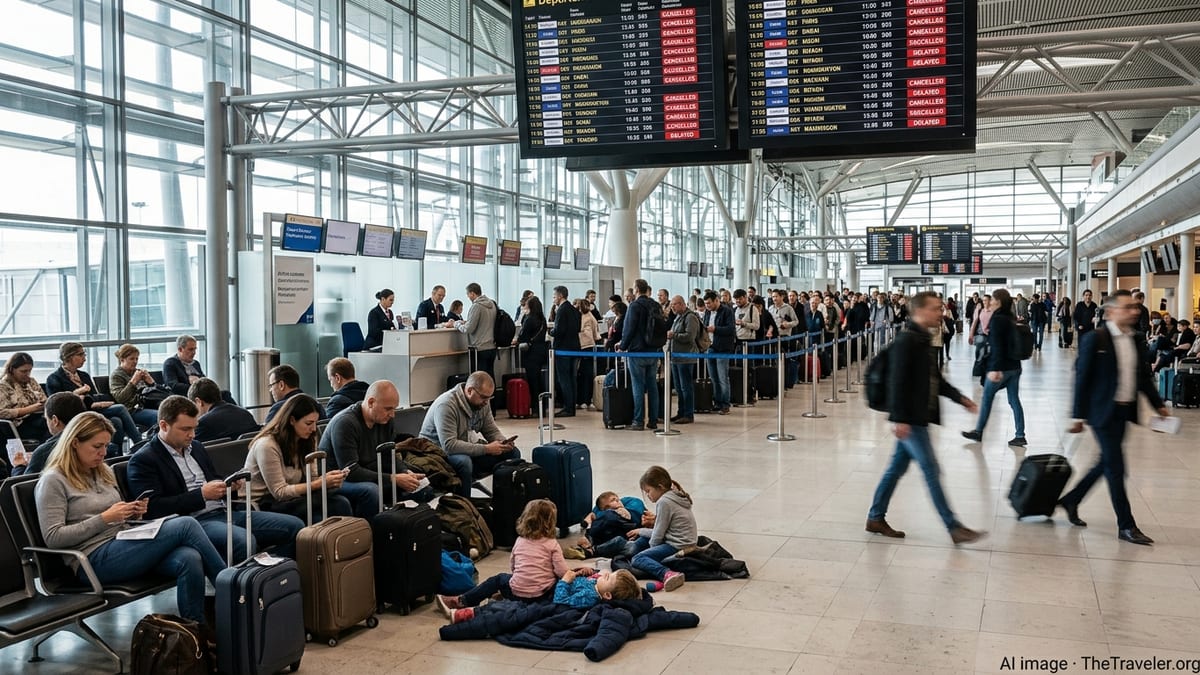
France’s airports entered summer 2026 facing the familiar stress test of peak tourism, heat and operational strain, but newly published rankings and punctuality snapshots show a widening gap between airports that deliver a smoother trip and those where delays became a defining feature of the season.
Get the latest news straight to your inbox!
How “best” and “worst” were measured this summer
There is no single official scoreboard that captures every traveler pain point, so the clearest summer 2026 picture comes from combining three kinds of public data: global passenger surveys, composite airport scorecards, and delay-focused performance tracking. Each lens tells a slightly different story.
For passenger-experience reputation, Skytrax’s World Airport Awards 2026, released at its March 18, 2026 event in London, remains one of the most widely referenced survey-based benchmarks. In the 2026 Top 100 list, Paris Charles de Gaulle (CDG) placed 6th worldwide, and Skytrax also listed CDG as “Best Airport in Europe” for 2026. Skytrax additionally named Paris Orly (ORY) as “Best Regional Airport in Europe” and placed ORY 34th worldwide.
For an all-in score that weights punctuality most heavily, AirHelp’s AirHelp Score 2026 uses a 60% punctuality component alongside passenger experience and services, producing a different ranking where some mid-sized airports can outperform big hubs. French coverage of the 2026 AirHelp results highlighted Lyon Saint-Exupery (LYS) as the highest-ranked airport in France (102nd worldwide), followed by Paris Orly (108th), then Bordeaux (BOD) and Toulouse (TLS), while noting that no French airport made the global top 100.
For a summer-specific read on operational pain, French media coverage drawing on Flightright analysis of summer 2026 delays pointed to exceptionally high shares of delayed flights at several airports, with Beauvais (BVA) and Nice (NCE) among the worst affected in that dataset, and a notable gap between the two Paris airports for delays.
Best performers: Paris hubs for amenities, Orly for smoother operations
On the “best airport” side, CDG’s strongest argument in summer 2026 was its global standing in passenger surveys and the breadth of services expected of a major intercontinental hub. Skytrax’s 2026 list put CDG 6th worldwide, a notable result for a high-volume airport that is often judged harshly during peak periods. For travelers, this typically translates into strong terminal offerings, lounge options, and a large network of long-haul connections that can reduce the need for multiple stops.
Orly, meanwhile, emerged as a standout “best” option for many leisure travelers using Paris as a gateway. Skytrax’s 2026 awards labeled ORY the best regional airport in Europe, and ORY’s global placement (34th) put it far ahead of most airports in its peer group. That recognition aligned with the airport’s role as a high-throughput point for domestic, European, and leisure-heavy routes, where the passenger experience can be judged as much on clarity and speed as on sheer scale.
Punctuality tracking also favored Orly in key snapshots. In ACI Europe’s March 2026 punctuality report, Orly posted 85.6% arrival punctuality (A15) and 81.0% departure punctuality (D15), with average arrival delay per flight at 7.7 minutes and average departure delay at 10.2 minutes. In the same report, CDG’s arrival punctuality was 84.3% and departure punctuality 76.6%, with average delays of 9.4 minutes (arrival) and 12.6 minutes (departure), illustrating how large-hub complexity can weigh on on-time performance even when overall passenger ratings are strong.
Best of the regions: Lyon, Bordeaux, and Toulouse rise in scorecards
Outside Paris, the most consistently “best” signals in 2026 composite rankings came from Lyon, Bordeaux, and Toulouse. AirHelp’s 2026 scorecard, as summarized in French national coverage, placed Lyon Saint-Exupery as the top-ranked airport in France, with Orly next, followed by Bordeaux and Toulouse. The ranking’s structure matters: with punctuality carrying the majority of the score, airports that balance service quality with dependable operations can climb.
There is also evidence that Lyon and Toulouse performed well in delay-focused studies that look beyond passenger reviews. Coverage of a Luko study using Eurocontrol pre-departure delay data across 2020 to 2025 cited Toulouse and Lyon as the best-performing French airports overall in that research, reflecting a long-run operational strength rather than a single-season spike.
That said, summer 2026 demonstrated how even airports that score well overall can be dragged down by peak-season disruption. Travelers using “best” airports outside Paris still faced weather-driven knock-on effects and network-wide strain, particularly on days when storms or airspace constraints hit multiple cities at once.
Worst for delays in summer 2026: Beauvais, Nice, and several sun routes
For travelers, “worst airport” often means missed connections, extended waits on hot aprons, and late-night arrivals with limited ground transport options. Summer 2026 delay-focused reporting in France highlighted Beauvais as the worst in one summer ranking, with 45.38% of studied flights delayed in that dataset. Nice was close behind at 44.98%, also reflecting the pressure on Mediterranean gateways during peak leisure demand.
The same summer delay roundup also placed several leisure-heavy airports high on the list for delayed-flight shares, including Figari in Corsica (43.54%), and a cluster of large regional airports such as Bordeaux (37.05%), Biarritz (36.55%), Marseille (35.82%), Lyon (34.88%), and Toulouse (34.18%). While the exact percentages depend on methodology, the pattern is consistent with a summer where leisure peaks, staffing constraints, and meteorological disruption converged.
Beauvais also appeared as a recurring “worst for delays” outlier in separate coverage earlier in 2026. Reporting on a Luko analysis described Beauvais-Tille as the poorest performer in that study, with passengers experiencing around 75 minutes of delay per 100 flights, reinforcing that the airport’s low-cost model and tight schedules can magnify disruption when conditions deteriorate.
What drove the summer 2026 gap: strikes, storms, and wildfire impacts
Public reporting on summer 2026 disruption emphasized how multiple forces stacked together. Coverage of the season’s delay spikes pointed to an easyJet France cabin-crew strike over the weekend of August 15, 2026, which was widely reported to have caused roughly a hundred flight cancellations departing from France, affecting airports including Orly, CDG, Lyon, Nice, Nantes, and Bordeaux.
Summer weather also played a direct role. The same reporting referenced wildfires in southern France and storm episodes, including major disruption around August 24, 2026, that affected operations at Bordeaux, Toulouse, Marseille, Nice, and Paris-area airports. For travelers, that meant the “worst” airports on a given day could be determined as much by the regional weather footprint as by the airport’s underlying quality.
The summer’s lesson for passengers is that “best” and “worst” are no longer fixed labels. A hub can rank among the world’s top airports for service and still deliver punishing delays at peak moments, while a regional airport can score highly overall yet swing into disruption when strikes or extreme weather ripple through the network.